

PROFESSIONAL: Show Creator. Screenwriter. Script Editor. Story Consultant. PERSONAL: Family. Good food. Animal lover. Anime lover. Bass and piano player.
Joined April 2018
- Tweets63.9K
- Following2.6K
- Followers12.8K
- Likes74.9K






Pinned Tweet
MY SCREENWRITING JOURNEY
Growing up under apartheid in South Africa, a screenwriting career was unthinkable. We were socially engineered by the government into specific industries and steered away from certain sectors through job reservation policies. People of colour were explicitly excluded from ANYTHING in media. Despite loving film, television, and storytelling, I never imagined I could work in that space.
Everything changed when I spotted a newspaper ad for a week-long filmmaking course at a local university. As a creative, I was intrigued. I applied and was selected as one of twenty participants. The course covered all aspects of filmmaking - lighting, camera work, directing, blocking, editing, etc. I hated everything except the writing. When workshops were offered during the Durban International Film Festival, I chose screenwriting without hesitation.
That workshop transformed my life. I fell in love with screenwriting and was blown away that I could actually have a career in this field. The reality, however, was daunting: I lived on a cattle farm in a rural area, worked in a hardware store, had no computer or laptop, and virtually no internet access.
But I was determined. For five years, I worked full-time at the hardware store plus two extra jobs to support my family while studying screenwriting. Every night from 10pm to 2am, I wrote on an old Blackberry(That's the one in the pic). There was only one spot in the house with cell phone signal, so I'd stand there to research, send emails, or submit assignments. I took on free writing gigs to build my credibility and CV.
Finally, breakthrough came. My first paid gig earned me $25, and I felt like a king. After two more years of relentless writing, I sold my first short film. Two years later, my first feature script was commissioned—and I resigned from my day job. A year after that, I landed my first TV writing job. I never looked back.
Since then, I've written on 16 local TV shows and 12 paid features. I've been a Final Draft Big Break Winner, signed by a manager, and hired to write a feature for one of the directors of BBC's Doctor Who. I was hired to create a show for Netflix, adapted Ugly Betty for a local network, and now have an Academy Award Winner attached to one of my feature scripts that's being shopped.
My goals remain ambitious: secure an agent, break fully into Hollywood and the international industry, write big-budget features, and become a showrunner on a premier streamer like HBO.
Through this journey, I've learned three crucial lessons:
You never stop learning, so stay humble and teachable. The surest roadblock to learning is thinking you already know. I enter every experience as a student, and it's served me well.
You must love what you do, including the hard work, challenges, and craft itself. Many people love the idea of being writers but don't really love writing. I love everything about the art and craft, and that love brings me back to storytelling repeatedly. I write because I must.
Be stubborn and determined, because the people who succeed in this business never give up. Talent alone isn't enough—you need to be tough. You must take knocks and disappointments, learn from them, make adjustments, and keep moving forward. If you can't outlast the challenges, you won't make it, no matter how talented you are.

New #drawing from my son. He does concept art, character designs, posters, book covers, comics, & graphic novels. He also creates top notch pitch decks.
His work is professional & his rates are affordable. If you're looking to support & work with a young artist, feel free to DM.


If you want to see your work on screen, it's not enough to believe in yourself or for other people like you to believe in you.
You need someone with money and/or decision-making power to believe in you too.
It helps if that person is you, but if it's not, you need someone else.

At this late stage in the game, with so much invested, I'm either going to win it all, or lose it all.
If you ever feel discouraged and wonder if your movie will ever be made, remember, these got made, so anything is possible. Keep believing.
DISCLAIMER: I love SHARK SIDE OF THE MOON, and I'm probably gonna watch ZOMBEAVERS this weekend.


It's not always about writing, we need to do other things to keep us in touch with reality & to help our creativity & mental health.
Today it's fitting a sink & portable geyser, & then on to tiling & fitting doors.
Working with my hands helps me relax. What's your chill go to?


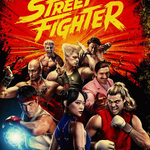
As a lifelong STREETFIGHTER fan who grew up playing this in the arcades in the 80s, I'm totally hyped for this, even though I actually love the original campy live action with Jean Claude Van Damme. Raul Julia was sublime as Bison, and was dying of cancer at the time.

Just know with certainty, that Chatgpt/Claude on ANY AI, absolutely CANNOT write a better script than you can.

Don't ignore the deep connection between your physical, mental and emotional state, and your writing. Often what we interpret as creative bankruptcy, self-doubt, or even a lack of motivation and discipline, are symptoms of a far deeper struggle. Creativity mirrors the inner self.
Quick sketch from my son. He does concept art, character designs, posters, book covers, comics, & graphic novels. He also creates top notch pitch decks.
His work is professional & his rates are affordable. If you're looking to support & work with a young artist, feel free to DM.

Beware of internet writing gurus or any writing coach telling you to execute things they can't execute themselves...
You can't become a good MMA fighter by watching MMA, reading martial arts books, & discussing martial arts.
Likewise, you can't become a good writer by watching movies, reading screenwriting books, & discussing writing.
Writing with intent trains you to be a better writer.
EDIT TIP - Cut clumsy, redundant words.
"Sensing the rising tension, Anna tries to intervene. She reaches out and takes Arthur’s hand."
- Don't try to, do it
- You have to reach out to take a hand
- No internals
Rather:
"Noting tension, Anna intervenes, grabs Arthur’s hand."
There's nothing like putting a little time and distance between you and a script, and then reading it, to help you realize it really wasn't as great as you previously thought it was...
NEVER underestimate the power of plodding.
If you're consistent & keep grinding, there's nothing you can't do, no matter how overwhelming it is initially. Just eat the elephant 1 bite at a time.
If you wrote just 1 page a day, in 3 months you will have a new feature script.