

Beekeeper 48 years
Paulton
Joined February 2009
- Tweets52.7K
- Following16.3K
- Followers94.6K
- Likes449


Bernard Newton retweeted
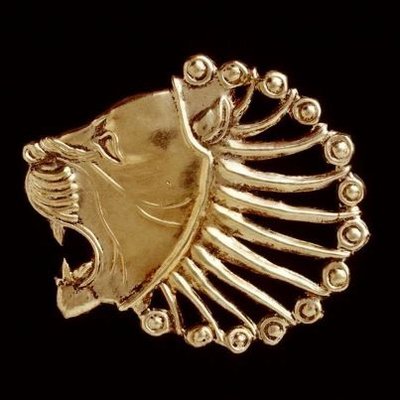
The purported skull of Mary Magdalene, housed inside a gilded reliquary in the crypt of the Basilica of Saint-Maximin-la-Sainte-Baume in Provence, southern France 🇫🇷
A 1974 analysis indicated the skull belonged to a woman of Mediterranean descent who was around 50 years old, though it has remained sealed behind glass without radiocarbon dating to confirm its age.
The reliquary is kept in the basilica's crypt and paraded annually during her feast day on July 22.
. . .
According to medieval legend, Mary Magdalene fled the Holy Land after Jesus' crucifixion, traveled to southern France, and spent her final years living in a cave.
In 1279, Charles II of Anjou uncovered what were believed to be her remains, prompting the construction of a grand basilica that became an important pilgrimage destination. Today, the skull is displayed inside an elaborate gilded reliquary created in 1860.
The practice of preserving and venerating saints' remains has been part of Catholic tradition for centuries, with bones, skulls, and other relics often housed in ornate containers.
Although the skull has been revered for more than 700 years, there is no conclusive evidence that it actually belonged to Mary Magdalene.
#drthehistories

NASA is aiming to launch its first nuclear-powered spacecraft to Mars in 2028, ahead of President Donald Trump leaving office in January 2029. The mission, called Space Reactor-1 Freedom, is planned as a robotic demonstration that would use a nuclear fission reactor to drive electric propulsion and carry a science payload called SkyFall toward Mars.
Unlike radioisotope thermoelectric generators that convert heat from decaying isotopes into electricity for deep-space probes and rovers, Space Reactor-1 Freedom is designed around a fission reactor fueled by high-assay low-enriched uranium to generate roughly 20 kilowatts of electric power for electric thrusters. NASA plans to build on existing hardware, including repurposing the Power and Propulsion Element originally developed for the lunar Gateway, while working with the Department of Energy on reactor hardware and safety approvals. Once near Mars, the mission concept calls for flybys and deploying three Mars helicopters evolved from the Ingenuity design.
Meeting a 2028 launch window is an aggressive schedule, especially given past delays and cancellations across decades of U.S. space nuclear power and propulsion projects, alongside rising cost estimates and complex engineering hurdles. Whether the spacecraft launches on time or faces schedule shifts, demonstrating fission-powered electric flight beyond Earth orbit would test hardware intended to support future deep-space missions.
With past space nuclear efforts running into delays and cost hurdles, what do you think will be the biggest test for NASA in trying to hit a 2028 launch to Mars?

19
Bernard Newton retweeted

360° Walkaround of the Historic Vostok Capsule That Carried the First Human to Space 🚀🌍 | Immersive 4K Museum Tour | Beyond Cosmos

🚨 USS YAMATO NCC-71807: THE STARSHIP DESTROYED BY A COMPUTER VIRUS
In 2365, one of Starfleet’s most advanced Galaxy-class starships was destroyed without a single enemy torpedo being fired.
Under Captain Donald Varley, the USS Yamato encountered an ancient Iconian probe that transmitted a program into its computer systems.
The alien software began rewriting the ship’s systems, causing increasingly dangerous malfunctions.
Eventually, the Yamato suffered a catastrophic failure and exploded, killing everyone aboard.
Even worse, the Enterprise-D unknowingly downloaded the same infection through the Yamato’s logs.
🖖 Here’s the question: Was the Galaxy class too dependent on computer automation, or could this have happened to any Federation starship?
👇 Could the crew have saved the Yamato?
#StarTrek #USSYamato #StarTrekTNG #GalaxyClass #TheNextGeneration #Iconians #StarfleetEngineering #StarTrekTheAIGeneration

22


Sixty-three years ago today, a mysterious and cranky, white-haired old man, his granddaughter, and two of her schoolteachers took off on a trip into the prehistoric past - and into TV history.
"An Unearthly Child", the premiere episode of "Doctor Who", was broadcast Nov. 23,1963, on BBC TV.
Despite its budget and technical limitations, the series would prove to have legs (even when some of its characters did not).


1
123
📷 WEATHER TRENDS | GFS 12Z UPDATE – IS HIGH PRESSURE ABOUT TO TAKE CONTROL?
Good evening everyone!
Let’s take a look at the latest GFS 12z output, and unfortunately, for those hoping for a significant spell of cold and snow, the latest modelling isn’t particularly encouraging at the moment. 📷
However, there are still some interesting developments worth keeping an eye on!
📷 WHAT’S HAPPENING WITH TEMPERATURES?
Looking at the latest charts, temperatures are expected to fluctuate over the coming period, with no convincing indication of a prolonged, severe cold spell developing across the UK just yet.
The ensemble guidance for Kettering suggests temperatures could generally remain close to seasonal averages, perhaps dipping slightly below at times.
So although we aren’t looking at anything particularly mild, we shouldn’t be getting carried away with expectations of widespread cold and snow either.
📷 HIGH PRESSURE – AN IMPORTANT DEVELOPMENT?
One feature worth watching is the potential influence of higher pressure as we move into December.
The latest GFS operational run develops an area of higher pressure towards northern and eastern Europe, with the positioning of these pressure systems remaining particularly important.
Depending on where high pressure eventually establishes itself, we could see calmer conditions developing across parts of the UK.
This could bring:
* 📷 A greater chance of mist and fog.
* 📷 Frosty nights and chilly mornings.
* 📷 Some settled and potentially drier weather.
* 📷 Temperatures remaining close to average, with locally colder conditions overnight.
Of course, the exact positioning of high pressure will make a significant difference to what we experience.
📷 IS THERE STILL POTENTIAL FOR WINTER WEATHER?
Absolutely, winter is certainly not over!
However, we have to be realistic about what the latest charts are showing. The stronger signals for widespread cold and snow have become less convincing in recent operational runs.
There is still considerable uncertainty further ahead, and we cannot rule out colder developments later in December.
We have always said that we will report what the models are actually showing rather than simply telling people what they want to hear.
And that’s exactly what we’ll continue doing!
📷 WHAT HAPPENS NEXT?
We’ll be keeping a particularly close eye on the next few model updates to see whether the developing high-pressure pattern becomes more established and, importantly, whether the positioning of that high could eventually open the door to colder air moving towards the UK.
I know plenty of you are desperate for a proper cold spell, and we’ll certainly be watching for any changes!
📷 MORE WEATHER CONTENT TOMORROW
We’ll also be looking into some additional weather developments tomorrow, including further analysis of the wider atmospheric patterns and what they could mean for December.
Some of this additional content will be available on our subscriber side for those who wish to support us. Subscriptions start from as little as 99p, with some people seeing 89p depending on the price displayed by Facebook.
Thank you so much to everyone who continues to support Weather Trends. It really does mean a lot to us! 📷
📷 KEY TAKEAWAYS
* 📷 No convincing sign of a prolonged severe cold spell for the UK currently.
* 📷 High pressure could become increasingly influential.
* 📷 Frost, fog and colder nights could feature under settled conditions.
* 📷 No strong indication of a particularly wet pattern from this output alone.
* 📷 Further colder developments remain possible, but confidence is low.
* 📷 December remains one to watch as the models continue to evolve.
Remember, one model run never tells the whole story. We’ll keep tracking every development and bring you the latest updates!


54
The sci-fi drama about telepathic teens was progressive, diverse and pretty edgy for children's television in the 1970s.
When The Tomorrow People arrived on ITV in 1973, it offered something rather different from Doctor Who. Instead of an adult travelling through time and space, here were ordinary youngsters discovering that they possessed extraordinary powers.
Created by Roger Price, the series followed a group of young people who represented the next stage of human evolution. Known as Homo superior, they possessed the powers of telepathy, telekinesis and the ability to teleport, or "jaunt", with the aid of special belts.
Interestingly, the inspiration behind the programme was partly drawn from Price's own childhood. Having attended boarding school alongside German boys shortly after the Second World War, he was struck by how easily the children formed friendships despite the hostility that still existed between members of their parents' generation.
This inspired one of the programme's most important principles: the Tomorrow People were genetically incapable of killing.
Another, perhaps more surprising, influence was David Bowie, whom Price had worked with during his television career.
"He helped me quite a bit with working on Tomorrow People in my own mind," Price recalled.
Bowie had already explored the concept of Homo superior in his 1971 song "Oh! You Pretty Things".
Price was also determined that the programme should feature youngsters from different ethnic backgrounds, something relatively unusual in British children's television at the time. He even threatened to walk away from the production when he encountered resistance to casting black actors in leading roles.
The programme wasn't afraid to tackle challenging subjects either. Storylines explored prejudice, warfare, political extremism and the dangers of blindly following fashionable trends.
One particularly controversial story, Hitler's Last Secret, featured youngsters adopting Nazi uniforms as a fashion craze. Another, The Dirtiest Business, shocked viewers by killing off a newly introduced young character.
Despite its ambitious storylines, The Tomorrow People operated on a remarkably modest budget.
"It had about a fifth of the budget of Doctor Who," Price recalled.
The special effects might look rather primitive today, but they certainly didn't prevent young viewers from becoming completely absorbed in the adventures of John, Stephen, Elizabeth, Mike and their fellow Tomorrow People, aided by their trusty living computer, TIM.
And how many children imagined discovering their own telepathic powers or wished they could simply "jaunt" wherever they wanted?
For Price, that was an important part of the programme's appeal. He wanted to reassure children who were experiencing the doubts and insecurities that came with growing up and encourage them to believe in themselves.
The original series ran until 1979 and was subsequently revived in 1992, with a further American adaptation appearing in 2013.
More than half a century after it first appeared on our screens, many of the themes explored in The Tomorrow People remain remarkably relevant.
It was ambitious, imaginative and occasionally quite unsettling. It certainly never underestimated the intelligence of its young audience.
Who remembers watching The Tomorrow People after school?

1
94
Bernard Newton retweeted

Those cracked steps you've been ignoring? 🏡
Fix minor chips, fill cracks, and refresh your home's curb appeal before the holidays.
Get yours →ruchig.com/concrete
🤖 Made with AI
The winter of 1962 into 1963 was the coldest England and Wales had seen since 1740.
The cold arrived on 22 December and simply never left. Snow fell on Christmas Eve and reached the south by Boxing Day, then on 29 and 30 December a blizzard buried Wales and the West Country under drifts six metres deep. Villages were cut off for days. On Dartmoor around 6,000 animals went four days without food until helicopters got through with supplies.
The lowest reading was minus 22.2C at Braemar on 18 January, and that January remains the coldest since 1814. Rivers, lakes and canals froze solid, the sea turned to ice a mile out from Herne Bay in Kent, and on 22 January somebody drove a car across the frozen Thames at Oxford.
The country more or less seized up. Ice brought down thousands of telephone lines and power cables, and the cuts were widespread. Pipes froze in houses up and down the country and children were photographed queuing in the street to fill buckets. Coal could not be delivered, so people went to the pits and carried sacks home themselves. Schools shut for want of fuel. Food prices rose by around 30 per cent and councils put up the rates to pay for the clearing up.
Airports closed, trains were cancelled and roads stayed blocked for weeks. The Navy brought in an icebreaker to keep Chatham dockyard open. On 20 January the RAF lifted 283 men off Fylingdales after they had been snowbound for days.
The thaw came in the first week of March. By the 6th there was not a frost anywhere in the country and London reached 17C.
Does anyone remember that winter?

89
Part 1: Hello, Computer!
On this day in Geek History, November 26, 1986, Star Trek IV: The Voyage Home arrived in theaters.
40 years ago, we laughed at Scotty for trying to talk to a computer. The idea of simply speaking to a computer and expecting it to understand us seemed like something out of science fiction.
This morning, I talked to my computer to help create this very post.
Computer Note: If he would just accept whatever crap I gave him the first time, he wouldn’t have to talk nearly as much.
(Don’t worry, a human wrote that joke too.)
Think about how far we’ve come in 40 years.
Scotty wasn’t doing anything ridiculous. He was just ahead of his time.
Happy 40th anniversary to one of the greatest Star Trek movies ever made!
#StarTrek #TheVoyageHome #Scotty #ThisDayInGeekHistory #80sNostalgia #EliteGeek

42
Who remembers the long-suffering Mr Hedges trying to keep his unruly pupils under control in "Please Sir!"?
Wishing the wonderfully talented John Alderton a very happy 86th birthday today.
Born in Gainsborough, Lincolnshire, on 27 November 1940 and raised in Hull, John became one of British television's most familiar faces during the 1960s and 70s.
His portrayal of the well-meaning but rather naive schoolteacher Bernard Hedges in "Please Sir!" endeared him to television audiences. His attempts to maintain order among the mischievous pupils of class 5C provided some classic comedy moments.
He went on to play chauffeur Thomas Watkins in "Upstairs, Downstairs", alongside his real-life wife, the wonderful Pauline Collins, who played Sarah.
Their natural chemistry made them such an enjoyable couple to watch, and they went on to star together in "Thomas & Sarah", "No, Honestly", "Wodehouse Playhouse" and "Forever Green".
John also played Yorkshire vet James Herriot in the 1976 film "It Shouldn't Happen to a Vet" and appeared in "Calendar Girls", "Doc Martin" and "Little Dorrit".
And here's something younger generations might not realise. John was also the voice behind the original "Fireman Sam", narrating the children's series and providing the voices for its characters.
Of course, today's birthday will be particularly poignant for John, following the sad loss of his beloved Pauline just over 12 months ago.
The couple shared more than five decades of marriage, raised three children together and enjoyed a remarkable professional partnership. Their relationship was one of British showbusiness's most enduring love stories.
Pauline sadly passed away on 5 November 2025, aged 85, having lived with Parkinson's disease for several years.
After spending so much of their adult lives together, both on and off screen, her loss must be particularly difficult for John.
We hope he's able to spend his special day surrounded by his family and loved ones.
Happy 86th birthday, John, and thank you for giving us so many memorable television characters over the years.

97
Bernard Newton retweeted

#OnThisDay 220 years ago in 1806, Rear-Admiral Sir Edward Pellew in HMS CULLODEN and 6 RN ships destroyed a Dutch Squadron of 6 ships and 20 merchantmen at Batavia (Djakarta).

Bernard Newton retweeted

As far as we know, Earth is the only planet with potatoes – and for that, we’re thankful! 🥔🌎
NASA satellites monitor crop health from space, helping farmers around the world grow Thanksgiving foods like cranberries, corn, and pumpkins. What are you getting seconds of?

ALT Satellite image of southern Idaho. A curved belt of green agricultural fields, including where potatoes are grown, stretches across the brown landscape. Credit: NASA
Bernard Newton retweeted
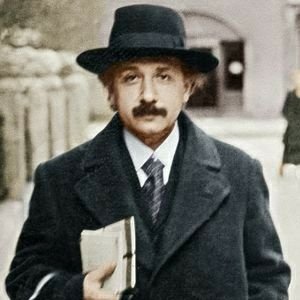
Barred from Russian universities as a woman, Sofya Kovalevskaya entered a fictitious marriage so she could study abroad. In 1874 Göttingen awarded her a doctorate in mathematics summa cum laude, without exams or lectures. In 1889 she became the first woman to hold a full professorship in Northern Europe, at Stockholm.

Again, we just lost another legend today 😔
Gerald R. Molen, the Oscar-winning producer behind Schindler’s List, Jurassic Park and a remarkable run of blockbuster films, has passed away at 91 🕊️
Behind some of Hollywood’s biggest movies was a producer whose name may not have appeared on the poster, but whose work helped make those films possible.
Molen became one of Steven Spielberg’s trusted collaborators and spent decades working on films that reached completely different generations of moviegoers. In 1994, he shared the Academy Award for Best Picture with Spielberg and Branko Lustig for Schindler’s List, a film whose impact extended far beyond awards and box office success.
His career also helped bring audiences some of the most recognizable movies of the late 1980s, ’90s and early 2000s.
Some of his most famous mainstream works:
• Schindler’s List — Producer
• Jurassic Park — Producer
• Rain Man — Co-Producer / Unit Production Manager
• Hook — Producer
• Minority Report — Producer
• The Lost World: Jurassic Park — Producer
• Twister — Executive Producer
• Casper — Executive Producer
• Days of Thunder — Executive Producer
• The Meg — Executive Producer
His résumé crossed prestige drama, science fiction, family films and massive studio spectacle. He even occasionally stepped in front of the camera, appearing in films including Rain Man and Jurassic Park.
Gerald R. Molen helped create movies that people didn’t simply watch once. They became films families revisited, quoted, remembered and passed on.
Rest in peace, Gerald R. Molen. 1935–2026 🕊️

2
67