

Systems Biology Lab @ 🔬Weizmann Institute of Science. # Understanding design principles of biological circuits.
Israel
Joined September 2017
- Tweets402
- Following894
- Followers2.5K
- Likes771
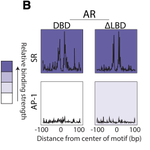


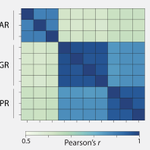
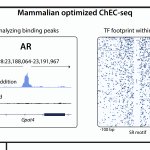
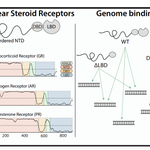


(1/7) How do steroid receptors identify their target sites within the mammalian genome, despite the abundance of similar DNA motifs? We tackled this question by adapting ChEC-seq for mammalian tissue culture, enabling footprint-resolution mapping of transcription factor binding.
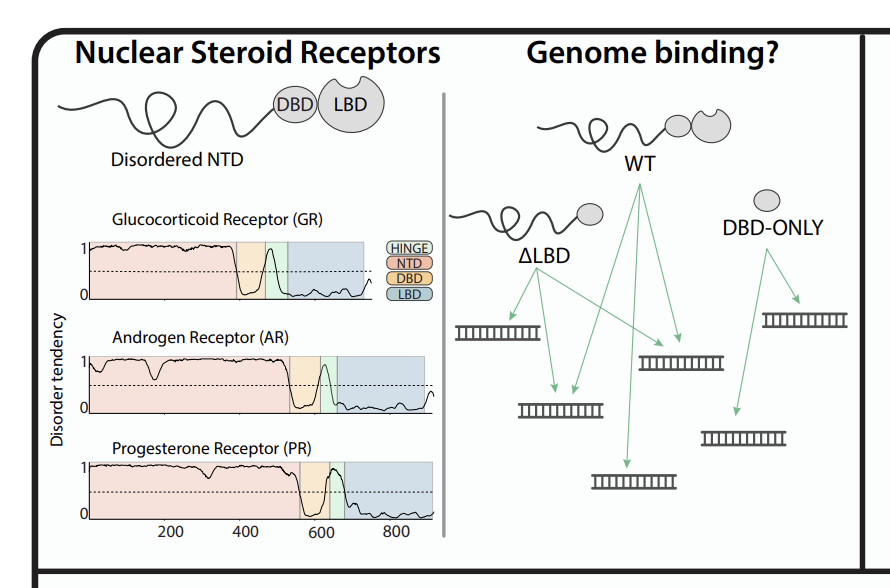
(7/7) This is the lab’s first mammalian study, extending principles of IDR-directed genome targeting from yeast to mammalian transcription factors while introducing a mammalian ChEC-seq platform for high-resolution mapping of protein-DNA interactions. genome.cshlp.org/content/ear…
(6/7) The NTDs also direct genome targeting to distinct SR motifs, but not to other Transcription factor’s motifs in budding yeast, where mammalian cofactors are absent.

(5/7) Footprint analysis uncovered an unexpected role for AP-1. Rather than simply recruiting steroid receptors, AP-1 strongly shapes binding when the NTD is absent. The NTD relieves this AP-1 bias, enabling receptors to efficiently bind canonical steroid response elements.

(4/7) Progressive NTD truncations reveal that this targeting is encoded by many weak determinants spread throughout the disordered sequence.

(3/7) Although androgen, glucocorticoid, and progesterone receptors recognize the same DNA motif through similar DNA-binding domains, their intrinsically disordered N-terminal domains (NTDs) direct them to distinct genomic targets.

(2/7) Our mammalian ChEC-seq workflow generates reproducible, high-resolution maps of steroid receptor binding. Beyond identifying binding peaks, it resolves footprints at individual DNA motifs.

The paradigm says that coactivators are passively recruited to targets by transcription factors (TFs). But is that the whole story?
We explore the Mediator subunit Med15 to ask: Do its activator-binding domains (ABDs) alone drive UAS targeting?
biorxiv.org/content/10.64898…
Analysis of a strain deleted of 12 recruiting TFs showed that a subset of Med15 UAS specificity does not depend on recruiting TFs.


Barkai Lab retweeted
How do transcription factors (TFs) that recognize the same DNA motif end up binding different places in the genome? 🧬
We're excited to show you how we tackle this question in our new bioRxiv pre-print!
doi.org/10.64898/2026.04.27.…
How do transcription factors (TFs) that recognize the same DNA motif end up binding different places in the genome? 🧬
We're excited to show you how we tackle this question in our new bioRxiv pre-print!
doi.org/10.64898/2026.04.27.…
So what’s driving this genomic selectivity?
Our data point to disordered regions outside the DNA-binding domain as major determinants of binding strength and genomic preference, even in the absence of specific cofactors.

