




Barabula Pentagon retweeted
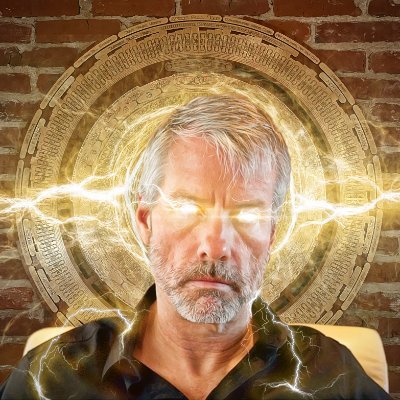
The year is 2026. San Francisco tells the Vatican it has the power of God to put a soul in a computer program.
The last Crusade begins.
🤖 Made with AI
Barabula Pentagon retweeted

The value of Terafab’s output will place it in the top 20 of country GDP in a single building

According to Korean media, Elon Musk's Terafab is now talking to almost EVERY Korean chip supplier it can find.
Until now, the only known Korean suppliers were HPSP and Hanmi Semiconductor.
Now TheElec reports that Tesla and SpaceX are in talks across nearly every category Korean companies can supply, from basic piping parts to process materials to test components.
At SEMICON West in San Francisco last week, Terafab staff walked straight to around 10 Korean booths on the morning of day one, including ENF Technology, Dongjin Semichem, Hanmi Semiconductor, Unisem and MiCo.
Several companies have already signed NDAs. One got an NDA by email the same evening Terafab visited its booth.
Hanmi Semiconductor is discussing TC bonders for Terafab, and HPSP has agreed to supply one high pressure hydrogen annealing tool to the R&D line.
MiCo's cleaning unit Komico signed a three way NDA with Tesla and SpaceX about a month ago, and ISC is already swapping samples for rubber test sockets.
Tesla and SpaceX do not buy from Chinese suppliers. One Korean supplier put it simply, without China there are only a few options, and Japan is expensive.
They also want prices that are CHEAPER than China.
$LRCX and $AMAT have reportedly built dedicated Terafab teams, and Fujifilm is meeting Terafab buyers regularly on slurries, photoresist and etchants.
The goal is a fab with 1 million wafer starts per month within 10 years, with $16.8 billion of initial investment and more than 3,000 jobs.
SpaceX broke ground in Grimes County, Texas this month, and the first 100,000 wafer per month phase is expected before 2030.
Logic is being done with $INTC, talks with $TSM are ongoing, and memory will be built separately.
One supplier said that if they email Terafab in the middle of the night in the United States, they get an answer in 30 minutes to an hour.
$TSLA and $SPCX are building a chip supply chain at Elon speed.

Barabula Pentagon retweeted
J.P. Morgan Asset Management’s base case projects Bitcoin to outperform U.S. stocks, bonds and gold over the next decade. Wall Street is doing the math.

Barabula Pentagon retweeted

Invest in things that do things that are measured in wattage and tonnage…

Barabula Pentagon retweeted
Objectively, the “Great Replacement” has already occurred

🇧🇪 Brussels
1955: 95% native Belgian background
2025: 21% native Belgian background
🇬🇧 London
1955: 97% native British background
2025: 36% native British background
🇳🇱 Amsterdam
1955: 98% native Dutch background
2025: 40% native Dutch background
🇩🇪 Berlin
1955: 98% native German background
2025: 57% native German background
🇦🇹 Vienna
1955: 95% native Austrian background
2025: 51% native Austrian background
🇸🇪 Stockholm
1955: 97% native Swedish background
2025: 65% native Swedish background
Barabula Pentagon retweeted

The Grok Bot wave. Massive growth in just a few days.
Why?
It is the easiest most accessible agent platform thus built, and it keeps getting better,
I am not guessing, I have been using agent systems before we had LLMs and today I can use any bot, but I find @Grok @Bot to be the best on all my test points.
It has not retreated from anything I threw at it. But that’s only half of it. The suggestions are great and unlike any other platform.
The chart is a wave and I say catch it…

Barabula Pentagon retweeted
“Lack of electricity” is an oversimplification. Everything is hard about bringing massive compute online at extremely high speed.
If there was twice as much time, this would be relatively easy, but there is not.

Former $GOOGL employee on why data center capacity and electricity are the real bottlenecks, not GPU production itself, and how unreliable some of the neoclouds are ($AMZN, $GOOGL, $MSFT, $NVDA):
1. According to the expert, open-source models are closing the gap with frontier models faster than expected, with customers increasingly replacing Anthropic and OpenAI models in multi-agent architectures with open-source alternatives starting from Q2 of this year. The shift started with simple tasks like tool calling and MCP, but has moved up the stack to low-level orchestration.
2. The expert identifies capacity as the biggest constraint at the moment, with certain companies' traffic growing 5x while GPU availability, particularly in the U.S. where latency requirements are tightest, simply cannot keep up. Sourcing capacity overseas in Asia or Australia is technically possible but adds latency that most customers will not accept.
3. Hyperscalers offer reliability but are expensive, require multi-year commitments of three or more years, and have limited availability of the latest hardware, with customers already chasing B300s. AI-native companies tend to gravitate toward neoclouds due to hyperscaler pricing and contract rigidity, but neoclouds come with their own reliability issues, with GPUs dropping off unexpectedly and requiring engineering resources to manage fleet stability around the clock.
4. The third tier consists of smaller independent operators who have invested in GPU racks, seeing the opportunity to lease out capacity and recoup costs within a year or two, with the remainder being pure profit. The expert describes these as essentially unusable in practice, with operators who do nothing more than find land, install racks, connect electricity, and set up cooling, with no real cloud management, maintenance, or operational expertise behind them.
5. The expert expects overall GPU availability to increase meaningfully over the next year or two, with $NVDA continuing to ramp production. The real bottleneck is not GPUs themselves but data center capacity and electricity in the U.S. On the supply side, the expert also sees players $SPCX beginning to lease out spare capacity to the market, with more likely to follow.
6. The expert notes that U.S.-based neoclouds typically require 20-30% prepayment upfront, with the remainder paid monthly or quarterly over the contract term, and rebates negotiated at the end for any reliability incidents like traffic loss. APAC-based providers operate differently, with no prepayment required at all.
found on @AlphaSenseInc


Barabula Pentagon retweeted

This is why Elon will ultimately win the SI race. Elon can do both software and hardware. Most other companies can only do software. The real bottleneck was working in the world of atoms, something that Elon specializes in.
Barabula Pentagon retweeted

⚡️The greatest deception requires no liar.
Only a system that rewards every mind for repeating the same mistake
Barabula Pentagon retweeted

Do not do good unless you have the strength to endure ingratitude.
— Confucius
Barabula Pentagon retweeted

Starting today @xPortalApp has the highest amount of supported assets and best outputs across @StellarOrg ecosystem for all type of swaps 🫡
From RWAs such as @Ondo, @centrifuge up to the latest @USDT0_to listing of $USDT0
They support all venues from @SushiSwap, @AquariusDeFi to @SoroswapFinance and soon a big one coming live later this year 🫡
If you are a wallet looking to get access to the best routes of Stellar reach out to @XoxnoNetwork or feel free to read our docs 🔥

More routes = better trades 📊
Starting today, we’ve integrated @XoxnoNetwork into our routing engine for @StellarOrg swaps, bringing an extra layer of liquidity to your in-app trades.

Barabula Pentagon retweeted

2.5M+ @xPortalApp users now get @StellarOrg swaps routed through the XOXNO Swap Aggregator.
More routes, better trades 🤝
More routes = better trades 📊
Starting today, we’ve integrated @XoxnoNetwork into our routing engine for @StellarOrg swaps, bringing an extra layer of liquidity to your in-app trades.
Barabula Pentagon retweeted

More routes = better trades 📊
Starting today, we’ve integrated @XoxnoNetwork into our routing engine for @StellarOrg swaps, bringing an extra layer of liquidity to your in-app trades.

