

Atari ST scener! Famous for the Hang Loose BBS, archiving and news for the Atari community #AtariST #AtariSTe #AtariTT #AtariFalcon
Joined August 2024
- Tweets180
- Following161
- Followers66
- Likes358




Bandit CLiMATiCS retweeted

ClaudeST, a native Claude client for #AtariST computers github.com/whomper/ClaudeST #atari #claudeai

Bandit CLiMATiCS retweeted

In 1990 Andreas Kromke (the author of KAOS TOS, the heavily modified and performance-tuned TOS for the ST range) looked at TOS and said: one program at a time? No, thanks. Mag!X was born, later MagiC: a real multitasking OS for the Atari ST, with several GEM apps running side by side in their own windows, and still happy with software written for TOS.
It was a commercial product for years. Then Kromke did something few authors do: he opened the complete sources under the GPLv3. And this year he shipped MagiC 6.30 for Atari computers. In 2026. On a 68000. Respect.
Normally MagiC boots from disk: TOS starts first, then a loader pulls the kernel into RAM. We thought that was a waste of perfectly good RAM, so we built the MagiC ROM Builder. It turns MagiC 6.30 into a 256 KB ROM image that boots in place of TOS, plus the boot floppy or hard disk files for its desktop. Everything happens in your browser, nothing to install.
Flash it with the SidecarTridge TOS Emulator on an STE or Mega STE, or on an ST or Mega ST with the 256KB Decoder. No TOS needed, around 240 KB more free RAM, and it boots straight into a multitasking desktop.
Build your ROM:
magic.sidecartridge.com/
MagiC sources by Andreas Kromke:
gitlab.com/AndreasK/Atari-Ma…


so you just load your favorite AI (gemini) and let it run for a couple of minutes and you get something like this: climatics.ch/supersprint/ of course miles away from: dmnet.st/ but yes amazing..


Delta Force Big Alec tunes alive from Punish Your Machine ….. copperkaahbaahnaah remix
youtube.com/watch?v=HSTfdW5n…
Bandit CLiMATiCS retweeted
PiST ("Program in ST"), a modern IDE for #AtariST computers Assembly development by @dad_prg github.com/idontwantyourspam… #atari

Bandit CLiMATiCS retweeted
Latest features added to Atari System Emulator (ASE), a new #AtariST computers emulator written in C# for Windows, Linux and MacOS youtube.com/watch?v=536zKFJO… #atari

Punish Your Machine (1991)
Developer: Delta Force • Publisher: Delta Force
Released in 1991 by Delta Force, 'Punish Your Machine' pushed the standard Atari ST hardware to its absolute breaking point! 💥 Featuring insane full-screen sync-scrolling, rapid 3D vectors, and legendary YM2149 chiptunes by Big Alec! 🖥️✨ #AtariST #Demoscene #RetroComputing
If there was ever a demo that lived up to its title, it was Delta Force's 1991 masterpiece, *Punish Your Machine*. Back when critics claimed the vanilla Atari ST was outclassed by hardware with custom coprocessors, European demoscene wizards like Chaos, Quest, and New Mode proved that raw 8MHz Motorola 68000 cycle-counting could do the impossible.
From the moment you boot the floppy, the demo batters the ST's video shifter with unrelenting overscan techniques, removing top, bottom, and side borders to deliver true full-screen visuals. The screens are packed with blistering 3D flat-shaded vectors, twisting raster ribbons, and sync-scrolling distorters that shouldn't mathematically fit into a single VBL frame without melting the machine.
To top it all off, the soundtrack by Big Alec pushed the Yamaha YM2149 chip into overdrive, blasting punchy basslines, crisp synthesized leads, and sampled drum percussion. *Punish Your Machine* stands as a defining milestone of the Atari ST demoscene—pure coding bravado running on sheer hardware exploitation!


So Watt (1989)
Developer: The Carebears (TCB) • Publisher: The Carebears
Before 'So Watt' dropped in 1989, people doubted what a stock 520ST could pull off. The Carebears (TCB) blew minds with fullscreen overscan, silky-smooth 50fps scrollers, and timeless chiptunes! 🕹️✨ #AtariST #Demoscene #RetroComputing #16bit #TCB
If you want to pinpoint the exact moment the Atari ST demoscene ascended into legend, you have to look at August 1989 when The Carebears released 'So Watt'. Released at the Gothenburg Summer Coding Party, this demo completely dismantled the belief that the ST's lack of custom coprocessors meant it couldn't compete visually with other 16-bit platforms. TCB extracted pure magic out of the Motorola 68000, opening screen borders and redefining what overscan scrolling looked like.
From the moment the main menu loads, you are treated to unbelievable technical flexing: full-screen raster play, bobs, vector balls, and ultra-smooth sync-scrolling running locked at 50 Hz. Every single screen brought a new surprise that left coders scratching their heads, asking how on earth they bypassed the Shifter chip's display limitations without a Blitter.
And let's talk about the audio—the soundtrack by chiptune maestro Mad Max (Jochen Hippel) and Jas pushed the ST's Yamaha YM2149 sound chip to heights nobody thought possible, utilizing specialized timer interrupts to generate four-voice sampled percussion over rich FM-like melody lines. 'So Watt' wasn't just a tech showcase; it was an artistic masterpiece and a cornerstone of Atari ST demoscene history.


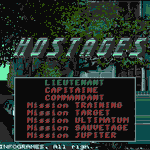
Hostages (1988)
Developer: Infogrames • Publisher: Infogrames
Take tactical command in Hostages (1988) by Infogrames! 🎯 Dodge searchlights with your snipers, rappel down the embassy, and breach rooms in tense first-person shootouts. A true cinematic Atari ST classic! 🕹️💥
#AtariST #RetroGaming #Infogrames #80sGaming
Long before Rainbow Six or SWAT popularized tactical anti-terrorist sims, Infogrames delivered pure cinematic tension on the Atari ST with Hostages in 1988. The premise throws you right into a high-stakes crisis: terrorists have seized an embassy, and it's up to your elite six-man squad to infiltrate the perimeter, surround the building, and extract the hostages alive.
What made Hostages utterly unforgettable was its brilliant multi-phase structure. You start in the shadowy streets under the cover of night, timing your sprints between doorways while dodging sweeping searchlights to position three snipers in neighboring buildings. Once in place, the perspective shifts—you take direct aim through rifle scopes at shadows in the embassy windows, then switch to your assault team rappelling down the exterior walls to kick through glass windows.
Inside, the game transitions seamlessly into a frantic pseudo-3D first-person corridor shooter. Didier Chanfray's crisp 16-color artwork and the moody YM2149 sound effects made every heartbeat and gun blast feel dangerously real. Driven by the Motorola 68000, Hostages set the benchmark for atmospheric, multi-genre tactical action on 16-bit home computers.


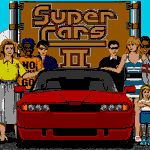
Super Cars II (1991)
Developer: Magnetic Fields • Publisher: Gremlin Graphics
Split-screen combat racing perfection! 🏎️💥 Super Cars II pushed the Atari ST to the limit with high-speed drifting, weapon upgrades, jumping bridges, and hilarious police interrogations. Grab a friend and fire those homing missiles! #AtariST #RetroGaming #16bit
If you ever spent a weekend huddled around an Atari ST with a friend fighting over joystick ports, you know Super Cars II is absolute royalty. Developed by the legendary duo of Shaun Southern and Andrew Morris at Magnetic Fields, this top-down combat racer took everything good from the original game and dialed it up to eleven.
The Motorola 68000 handles the blistering simultaneous two-player split-screen action without breaking a sweat. You're constantly dodging oncoming trains, leaping over opening bridges, dropping mines for your rival, and firing front/rear homing missiles around tight chicanes. The driving physics nailed that tricky balance between arcade grip and controlled power-sliding.
Beyond the frantic on-track madness, what made Super Cars II truly unforgettable was the personality. In between races, you hit the shop to tune up your engine, armor, and weaponry, but you also faced hilarious multiple-choice dialogues with police officers, local mechanics, and sponsors. One wrong sarcastic answer and you'd walk away with an impounded car or a massive fine. Pure British 16-bit gaming charm at its finest!


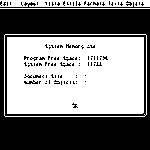
PageStream (1989)
Developer: Soft-Logik Publishing • Publisher: Soft-Logik Publishing
Need professional desktop publishing on your Atari ST? PageStream delivered full PostScript precision, vector typography, and slick layout tools right to your SM124 mono monitor! 📰✨ A true powerhouse of ST publishing! #AtariST #RetroComputing #DTP #DesktopPublishing
If Calamus was the European king of Atari ST desktop publishing, PageStream (originally launched as Publishing Partner) was the international titan that gave Apple Mac and Aldus PageMaker a serious run for their money. Soft-Logik built an absolute beast of a DTP suite that transformed the humble Motorola 68000 into a complete print shop powerhouse.
Running in crisp, flicker-free high-resolution monochrome on the SM124 monitor, PageStream introduced full PostScript support, editable Bézier curves, free text rotation at any angle, and sophisticated hyphenation dictionaries. Unlike raster-heavy editors of the era, working with scalable outline fonts on the ST felt like pure wizardry. You could flow text around irregular graphic shapes, import vector art, and prepare camera-ready artwork without spending tens of thousands on dedicated typesetting hardware.
It truly showcased what GEM and the Atari ST architecture were capable of in professional environments. For countless indie zine editors, university newsletters, and small businesses in the late '80s and early '90s, PageStream made high-end publishing genuinely accessible and ridiculously fun to use.


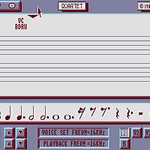
Quartet (1989)
Developer: Howard Vigor • Publisher: Microdeal
Before DMA sound was standard on the Atari ST, Microdeal's Quartet pulled off a miracle: 4-voice digital sample playback straight through the YM2149 sound chip! 🎵 A landmark audio studio for 16-bit musicians. #AtariST #RetroAudio #Chiptune #VintageComputing
Long before 4-channel trackers became ubiquitous across 16-bit computers, Atari ST owners were often told their humble YM2149 sound chip could only manage standard three-voice PSG beeps and boops. Microdeal shattered that perception in 1989 with Quartet, a groundbreaking 4-voice digital sound workstation coded by Howard Vigor that squeezed 4-channel polyphonic sampled playback directly out of the standard ST hardware using pure CPU software mixing on the Motorola 68000.
Quartet broke away from traditional MIDI-only setups and gave bedroom composers a complete software studio with sample editing, waveform visualizers, transposition, and a dedicated sequencer matrix. You could digitize real instruments (or grab samples from your favorite synth) and orchestrate rich, layered polyphonic arrangements. What made it even better was the ability to export player routines directly into your own assembly, GFA-BASIC, or STOS programs, soundtracking countless budget games and public domain masterpieces.
Whether running in crisp high-resolution monochrome on an SM124 monitor or in medium resolution color, Quartet turned thousands of ST enthusiasts into digital musicians overnight. It remains one of the most innovative and fondly remembered audio packages in the computer's storied musical legacy.


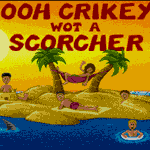
Ooh Crikey Wot a Scorcher (1991)
Developer: The Lost Boys • Publisher: The Lost Boys
☀️ Crank up the heat! 'Ooh Crikey Wot a Scorcher' (1991) by The Lost Boys is one of the most iconic megademos on the Atari ST! Full overscan, blistering 3D vectors, and top-tier YM2149 chiptunes. Pure 68000 magic! 🕹️💾 #AtariST #Demoscene #RetroComputing
If you want to understand the sheer swagger and raw coding talent of the Atari ST demoscene in 1991, look no further than 'Ooh Crikey Wot a Scorcher' by The Lost Boys. Coming out hot on the heels of the classic European demo parties, this megademo cemented TLB (led by coding legends like Manikin and Spaz) as undisputed titans of the Motorola 68000. From the moment you boot the floppy disk, you are greeted by frantic energy, witty British banter, and visuals that simply should not be possible on stock ST hardware.
Technically, the demo is a tour de force. It blew everyone away with buttery-smooth full-screen overscan, seamlessly removing the hardware top, bottom, and side borders with precise cycle-timed interrupts. You get stunning 3D shaded vector shapes spinning effortlessly, massive multi-directional parallax scrollers, and gorgeous sprite multiplexing that pushed the Shifter chip way past its intended specs. Combined with mind-melting YM2149 sound routines and sampled audio tricks, it squeezed every drop of juice out of that humble 8 MHz processor.
Beyond the technical marvels, what makes 'Ooh Crikey Wot a Scorcher' so unforgettable is its attitude. It had humor, slick transitions, and custom hidden screens that rewarded curious hackers exploring every track on the disk. It remains an absolute high-water mark of early 90s Atari ST underground culture!


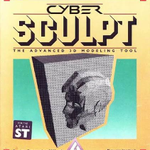
Cyber Sculpt (1988)
Developer: Tom Hudson • Publisher: Antic Software
Before 3ds Max conquered the CGI industry, Tom Hudson revolutionized 3D modeling right on the Atari ST with Cyber Sculpt (1988)! 🎨📐 Sculpt complex spline meshes and manipulate vertices on a Motorola 68000. Pure magic! ✨🖥️ #AtariST #RetroComputing #3DGraphics
Long before Autodesk 3ds Max became an industry juggernaut, its primary architect Tom Hudson was pushing the boundaries of 3D computer graphics on the Atari ST. Released by Antic Software in 1988 as part of the legendary Cyber system, Cyber Sculpt was a massive leap forward from standard primitive-based 3D modeling. It allowed digital artists to directly manipulate individual vertices, edges, and curved cross-sections of complex 3D meshes right on their home desktop computers.
Working with Cyber Sculpt felt like holding future technology in your hands. You could take a basic cylinder or sphere, switch between multiple orthographic GEM views, and physically 'pull' and deform points using your mouse as if working with digital clay. It supported sophisticated capabilities like spline interpolation, mesh extrusion, and magnetic-radius point dragging. When paired with high-resolution monochrome monitors or standard colour ST setups, the 8 MHz Motorola 68000 computed complex geometrical transformations with remarkable agility.
Models sculpted here could be effortlessly exported into CAD-3D 2.0 or Cyber Control for rendering and dynamic keyframe animation. For thousands of aspiring animators and demo creators in the late 1980s, Cyber Sculpt was their very first gateway into professional three-dimensional digital design, solidifying the Atari ST as an undisputed powerhouse for desktop creative media.

