

Think Better. Plan Better. Do Better.
Fishers, IN
Joined December 2010
- Tweets537
- Following155
- Followers669
- Likes87





Still on perspective.
If you knew your time was shorter than you thought,
what would you do differently?
Would you love your family and friends more?
Forgive someone you’ve been holding onto?
Thank God more often?
Be more deliberate about the legacy you leave?
Be more intentional with your money?
Stop postponing that dream?
What should have been a 37-minute drive kept stretching.
45 minutes.
1 hour.
2+ hours...still increasing.
GPS kept warning about crashes ahead.
My ETA kept getting worse.
I was getting frustrated… until a different thought crossed my mind:
This traffic that’s slowing me down
may have cost someone their life.
And just like that, the frustration left.
Perspective has a way of rearranging priorities.
Funny enough, money works the same way: when we remember what actually matters, we start making different financial decisions too.
He kept every receipt for tax season.
But kept no receipt
for the time spent earning the money.
Yet time was the real cost.
He works a 9–5.
Earns reasonably well.
One day he did the math differently.
He realized part of his day goes to taxes.
Part goes to housing and food.
Part goes to everything else.
By the time he got to his “own” hours,
the day was almost gone.
He paused and thought,
there has to be a smarter way to structure this.
He checked his bank balance often.
He rarely checked his time balance.
Years later, he discovered
he had managed the smaller account
more carefully than the larger one.
If 2026 were a driver, it would already be pulled over for speeding.
How did we get to February so fast?
Blink twice and it’s December.
Good reason to make your money move on purpose, not by accident.
He got the raise he had prayed for.
Celebrated it. Adjusted to it. Outspent it.
Six months later, nothing had changed —
except the numbers.
That’s when he learned:
income growth and wealth growth are not twins.
It's Parkinson's Law at play - expenses will always rise to meet income.
It applies to time too - work expands to fill the time available for its completion.
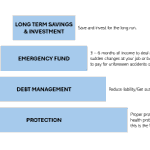
One thing that helps is setting percentages ahead of time — not after the money comes in. If you’ve decided that 8% goes to enjoyment, keep it there. If 20% goes to savings, let it stay that way.
That way when income increases, yes — you can enjoy more — but your savings grow automatically too.
The discipline is proactively having a defined structure.
1
2
40
He had more than enough by any visible measure.
More deals. More assets. More zeros than most people would ever see.
Yet every win felt temporary.
Each milestone quickly became the next one to chase.
Eventually, he noticed the issue wasn’t money.
It was the constant feeling of being behind —
behind someone richer, faster, louder.
That’s when it hit him:
wealth without contentment is just motion.
Always moving. Never arriving.
Because if someone can have billions and still feel short, money was never the full definition of wealth.
Some wealth shows up on a balance sheet.
Others show up as peace… and knowing when “enough” is enough.
And maybe that’s the kind of wealth
most people are actually searching for.
He didn’t save because he had excess.
He saved because he understood seasons.
Some seasons are for sowing,
even when nothing seems to be growing.
So he set aside a little when it felt inconvenient.
Not for emergencies alone,
but for a future he knew would eventually arrive.
Years later, the harvest didn’t come loudly.
It came quietly — as options, as peace, as room to breathe.
That’s when he realized:
saving was never about money.
It was about time.
A lot of us didn’t move countries just to work endlessly.
Yet somehow, even when income improves,
the cycle doesn’t stop.
If we don’t change how we think about money,
the grind won’t end — it will just change location, like we did.
Cheers to a great 2026.
Some people say life insurance wasn’t really a thing back home.
And that may be true — in systems where mortgages and long-term consumer debt were less common.
But when you live in a place where your debts don’t disappear, even after death, the rules are different.
Context matters.
Most of us don’t intentionally sabotage our finances.
We just underestimate how quickly the future arrives.
Life has a way of pulling our attention to the present.
But wisdom asks us to prepare for tomorrow.
Even small steps count.
Yesterday’s example showed that saving $500/month for 40 years at a 6.5% compounded return grows to roughly $1.14 million.
Here are two follow-up scenarios:
1. Double the amount, half the time
$1,000/month for 20 years → $490,421
2. Half the amount, double the time
$250/month for 80 years → $8.2 million
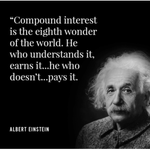
These outcomes highlight a simple truth about compounding:
The amount matters, but time matters more.
Time is the real multiplier.
Start early if you can.
Start small if you must.
But start.
Think about this for a moment.
If you saved $500/month for 40 years at a modest 6.5% compounding interest rate, you’d end up with $1.14 million.
Here’s the challenge though:
Our minds tend to focus on today, not decades ahead.
That’s why numbers like this feel unreal.
But you don’t have to start with $500.
Just start with something.
We rarely admit it, but money quietly sits underneath many of our choices.
We go to school for knowledge — yes.
But the knowledge prepares us for opportunities… which usually tie back to money.
We take certifications to increase our earning power.
We chase promotions because they change our financial reality.
For business owners, behind the value, innovation, and impact they want to create… is the simple truth: the business still has to make money.
Even many of our daily stresses trace back to money in one form or another.
But here’s the real question:
If so much of life is shaped by money, why do we spend so little time learning how money actually works?
In accounting, an asset is “retired” when it stops producing value. Funny how we use the same word for people.
You’re an income-producing asset — to your employer,
but even more to yourself and your family.
So ask yourself:
What happens when the asset (you) stops producing — whether by retirement, illness, or the unexpected?
Companies insure their assets — especially their most valuable ones. Maybe it’s time you did the same — and protected your most valuable asset: you.
2
3
66