



how about this, the developer didn't think it was negative to associate DS with a walking simulator as their job was mechanical--rather it being some sarcastic passing in an otherwise hefty resume.
BadHumans retweeted

I see.
I can understand how you feel.
From this point on, I’m not going to give you my personal opinion. Instead, I’ll talk about this from a general perspective, based on my experience working at a major game company.
If the company that owns the rights to that IP analyzes the business potential and concludes that it could generate profits commensurate with the company’s size, then a remake, sequel, or reboot is certainly possible. The phrase “commensurate with the company’s size” is actually a pretty important keyword here, so I can’t leave that part out.
Timing is another factor, of course.
For example, as Producer Ono has mentioned in interviews in the past, there was a 10-year gap between SF3 and SF4.
During that period, people were saying things like “the fighting game boom is over.” But in reality, namco had been consistently releasing fighting games for both arcades and home consoles throughout that entire period, and was essentially enjoying a complete monopoly on the market.
The scale of that market was actually quite substantial, averaging around 5 to 6 million units in home console sales. And in the arcade business, the revenue generated in the year a game was released was equivalent to the revenue generated during the first two years of its home console release.
Ono-san thoroughly researched those figures and apparently used that data as one of his convincing arguments to get the SF4 project approved.
In other words, finding the right moment when you can identify both a business opportunity and a realistic chance of success in a particular genre is extremely important. So it’s possible that the rights holder is simply waiting for that moment.
What’s interesting about timing is that it’s not just about the competitive landscape or the overall state of the genre. Sometimes, the longer an IP has been dormant, the more excitement its eventual revival can generate. (Although I have no idea whether Bloody Roar would fall into that category.)
Another factor is whether someone will emerge within the organization that owns the IP who has the confidence to BET on that IP, the authority to make it happen, and the willingness to take that risk.
The reality is that even when market conditions and business circumstances are favorable, an organization ultimately needs someone to take the lead.
And unless that leader has genuine passion or affection for the IP, the project isn’t going to get off the ground in the first place. (Or, in the worst case, even if they have absolutely no passion or affection for it, there at least needs to be a very strong business case with a high probability of success.)
When you look at it this way, getting all of these circumstances and conditions to align might sound relatively simple, but in reality, it’s quite difficult, especially when you factor in timing.
On the other hand, there have also been cases in the past where things were actually moving behind the scenes while everyone had pretty much given up hope.
A recent example would be DOA.
After DOA6 was released in 2019, there was a long period during which DOA fans were lamenting the fact that there had been no announcements of new games or even updates.
But behind the scenes, Producer Hayashi was actually carefully watching for the right timing and developing his strategy.
How can I say that with such confidence?
Well, that’s because Hayashi himself was regularly coming to me directly for advice, so I knew what was going on.
He would ask me about the market conditions for 3D fighting games, the state of the community (I was still on the front lines at the time, attending FGC events and observing the community firsthand), and what factors he should be taking into account if he were to start planning something new.
He was surprisingly passionate and thorough in the way he sought advice, and he was genuinely serious about bringing DOA back.
And as a result, we saw the announcement this year, didn’t we?
The same thing happened with VF, didn’t it?
Everyone had pretty much lost hope, but that despair eventually turned into hope.
As for Bloody Roar, I genuinely don’t know anything about it.
That’s why all I can offer is this kind of general perspective. But if you’re going to make your voice heard, I’d recommend making sure that your message reaches the company that actually owns the rights to the IP.
I’ve personally witnessed several cases where feedback like that became the catalyst for a producer to start seriously considering an idea, which eventually led to an actual game being made.
Or maybe one of the fans could even get a job at that company!
In any case, telling me what you want from Bloody Roar isn’t going to change anything.
So if you want to create even the slightest opportunity for something to happen, you need to communicate your wishes directly to the company that owns the IP, and do so
“in a positive and friendly manner.”
(This is really important, by the way. If you start your request with something like “I know you guys probably won’t listen to anything we say anyway, but…” remember that the people receiving those messages are human beings too. A lot of people would simply get irritated by that kind of opening and end up disregarding the request entirely.)
I also wouldn’t recommend online petitions.
(Of course, it depends on the scale of what you’re asking for, but even if you manage to collect tens of thousands of signatures, they generally don’t carry much weight. Anonymous online petitions are so easy to participate in that they tend to lack not only credibility but also any real sense of significance or commitment.)
Instead, figuring out how to communicate your genuine passion and enthusiasm directly to the people who can actually make decisions would be far more effective.
Well, that’s about all I can tell you.
I realize this is all pretty general advice, and you might be thinking, “Yeah, I already know all that.”


The bit about arrogance is in the MGS4 blog posts. The writing bit, one of those instances was in a video interview where he downplays he writing. Don't remember the 2nd occurrence.
Regardless, Death Stranding ultimately turned that negative connotation on its head. The walking was most enjoyable aspect of the game. It was the shooting that's the problem.
Back toward the tail end of the pandemic, I came across a LinkedIn profile belonging to a Kojima Productions employee who had worked on Death Stranding 1 & described it as a “walking simulator.”
There might be a screenshot of the profile in a now-deleted Reddit DM, but I never made much of an effort to preserve it because I didn’t want to fuel anything—much like Kojima’s blog post reflecting on his own arrogance, or the two occasions when he’s belittled his own writing.

Hideo Kojima says people who have never played Death Stranding but call it "a walking simulator" are proof that social media can form hivemind narratives.
He finds it "scary" that AI may one day shield people from being exposed to differing opinions.
videogameschronicle.com/news…

BadHumans retweeted

🧟 Highlights from a new interview with Shinji Mikami, creator of Resident Evil.
• Resident Evil was originally planned as a supernatural horror game involving ghosts. Mikami spent about a month developing the initial concept before switching to zombies. He personally preferred supernatural horror but felt zombies offered a better balance between fear and combat.
• Resident Evil began when Capcom wanted to make another horror game based on Sweet Home, which hadn't sold as well as expected. Mikami kept the idea of surviving with limited resources from that game.
• • George A. Romero's Dawn of the Dead inspired Resident Evil. While watching the movie, Mikami imagined how he would survive in the same situation and realized that a video game could allow players to make their own decisions instead of following a predetermined story.
• The original Resident Evil faced issues during the approval process because of its graphic violence. Sony allowed the game to be released with a warning sticker about its graphic scenes.
• Resident Evil's live-action opening and ending were originally planned as CGI sequences. The decision to use real actors was made to reduce production costs.
• Approximately 20 million yen was allocated for the live-action sequences, in-game CGI, much of the music, and English and Japanese voice recordings. Mikami recalled that the budget was far too small, forcing the team to make numerous cuts.
• Capcom was facing serious financial difficulties before Resident Evil became a hit. According to Mikami, the game's success helped the company avoid collapse.
• Despite Resident Evil's success, Mikami's monthly salary was reduced by 140,000 yen following changes to Capcom's producer system. His salary eventually increased after Resident Evil 2 and Resident Evil 3 became successful.
• After Resident Evil 1, 2, 3, and CODE: Veronica, Mikami felt the series had become too repetitive and players were growing tired of the formula. He believed Resident Evil 4 needed significant changes.
• Mikami gave the Resident Evil 4 team two years and three chances to try something different. But in the end, the team decided to play it safe and stick close to the old formula. That version didn't work out either, so Mikami took over as director.
• Mikami removed traditional zombies from Resident Evil 4 because he had grown tired of them. He had always believed humans could be scarier than zombies.
• Resident Evil 4 deliberately moved away from the main storyline because Mikami knew he would eventually step away from the franchise. He didn't want future developers to feel restricted by the story he had established.
• Mikami wanted future developers to have a choice. If Resident Evil 4's new direction worked, they could stick with it. If it didn't, they could always bring back zombies and Umbrella, which he thought fans would be happy to see again.
• Mikami said that when players see a dead body in a horror game, he wants them to feel scared. But instead, they immediately start pressing buttons to see if the body has any ammo. He said this has been a problem for him for decades.
• Mikami believes making combat feel satisfying is much harder than balancing difficulty. Getting the aiming, shooting, enemy reactions, and weapon sounds right is one of the most challenging parts of development.
• Resident Evil's worldwide success didn't fundamentally change Mikami's approach to game design. He believes the basic elements that make games enjoyable are largely universal, although cultural differences still need to be considered.
• Mikami prefers experimenting with new ideas rather than repeatedly making similar games. He said he gets bored doing the same thing and enjoys taking creative risks, even when a familiar approach would be safer.
(via: YT/culture-yabai)

BadHumans retweeted

I understand why some suspect that RE7 was inspired by P.T., but the truth is that a lot of the game's conceptual characteristics (such as the switch to a first-person view) were decided very early. Still, maybe P.T. inspired some things during development. Who knows?
BadHumans retweeted
Development for RE7 began in January 2014, and was built in Unity for a year until the RE Engine was stable enough for a conversion. VR was an early consideration, but wasn't being pursued until 2015. The Kitchen demo was built to test the viability of adding VR to the full game.


BadHumans retweeted

We teamed up with @emannland and @othatsraspberry for these Meowtal Gear Solid inspired posters! They are special for CatCon so don't miss out.
📦CATCON DETAILS📦
❗CatCon 10/10-10/11
❗Pink Love Box, Barrel Box, Cat Accessories + Posters by @emannland + @othatsraspberry available for preorder during CatCon with @OKSGear
❗Meet @one_eared_uno from 2-3PM on 10/10 (Subject to change based on Uno's availability.)


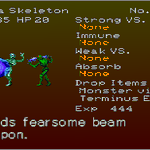
The weapon the Nova Skeletons drop (Terminus Est/Hrunting /フルンティング) may also be a sexual innuendo. (credit: twitch.tv/highgai)


Comparing Zoe from SH Townfall crying to Lisa from P.T.
reddit.com/r/silenthill/s/sk…

BadHumans retweeted

شكلها النسخة ذي

◤#コジプロ展 見どころ紹介◢
2016年に試作品として制作された
プロトタイプ版「DEATH STRANDING」を
会場にて初公開いたします👍
コジマプロダクションの10年、その原点の一つをお見逃しなく!
#KojimaProductions #BeyondTheStrand
BadHumans retweeted

Please please please let tune my guitar and retake again. This is one of the worst lazy work attitude to regret strongly lately. Such a great composition but damn guitar tuning. D'oh D'oh D'oh!

The Tragic Prince - Castlevania : Symphony of the Night (1997, PS1)
Composer: Michiru Yamane
Electric Guitar: Takayuki Fujii (@Tak_Fujii)
Rhythm Arrange: Akira Yamaoka (@AkiraYamaoka)
#SaturdayVGM