

Physics PhD, Nanotechnologist, Entrepreneur, Director, Advisor, Standards expert, Speaker - let me tell you about new and old technologies that impact our lives
UK and Poland
Joined March 2010
- Tweets2.6K
- Following2.1K
- Followers2.2K
- Likes247




AI captured 64% of global VC in Q3 2026
Crunchbase data: $159B global venture in Q3, $102B (64%) to AI. North America still up ~50% YoY vs Q3 2025 despite sequential cooling. Concentration is extreme—record 27 $1B+ rounds; large M&A includes Nvidia–Hugging Face. Capital continues to favor AI infrastructure and platforms over broad software.
joineta.org/blog/ai-venture-…
#AIInvestment #VentureCapital #TechStrategy #AIInfrastructure #DeepTech

10
Nanobubbles for high-efficiency water treatment
Nanobubbles (<200 nm) stay suspended far longer than conventional bubbles, delivering >85% oxygen transfer efficiency in shallow water versus 10–20% for coarse aeration. Ozone + nanobubbles reach target disinfection levels in minutes instead of over an hour. Practical for wastewater, aquaculture, irrigation, and AI-data-center cooling water.
bgr.com/2307337/nanobubble-p…
#Nanobubbles #WaterTreatment #AdvancedMaterials #Nanotechnology #CleanTech
🤖 Made with AI

17
Advanced materials innovation is moving into the next generation of insulation foams.
Solstice Advanced Materials has announced a development milestone for a new foam blowing agent, with customer sampling planned for early 2027.
The candidate targets several demanding requirements simultaneously: thermal performance, nonflammability, low global warming potential and reduced environmental concerns.
According to the company, its internal assessment indicates the candidate would not meet the cited PFAS definitions and would not generate atmospheric trifluoroacetic acid.
These are promising claims, but independent verification and commercial performance data are still needed.
Conclusion: The next competitive frontier in insulation materials may be combining thermal efficiency with stronger environmental performance.
Source: investor.solstice.com/news-r…
#AdvancedMaterials #Insulation #Sustainability #MaterialsInnovation

6
Can AI agents help us understand nanoparticle oxidation?
Researchers at Tohoku University have demonstrated MLP Copilot, a human-supervised AI framework for developing machine-learning interatomic potentials.
Using approximately 88,833 atomic configurations, the team investigated how aluminium nanoparticles oxidise under different simulated temperatures.
The simulations revealed two distinct mechanisms: temporary transport pathways through the oxide shell and, at higher temperatures, shell rupture that accelerates oxidation.
The important advance is not AI replacing scientists. It is AI coordinating calculations, model validation and scientific evidence while researchers retain responsibility for decisions.
Conclusion: AI-assisted atomistic modelling is becoming a more systematic tool for materials research.
Source: wpi-aimr.tohoku.ac.jp/en/ach…
#AIMaterials #Nanotechnology #MaterialsScience #Nanoparticles #ArtificialIntelligence

1
43
ISO TC24/SC 4 Particle Characterisation committee is in an online Plenary meeting this week. Some 54 people attending and covering all characterisation methodology, terminology and data processing including machine learning and AI. I wish all of our colleagues a successful meeting this week.
iso.org/committee/47176.html
🤖 Made with AI

25
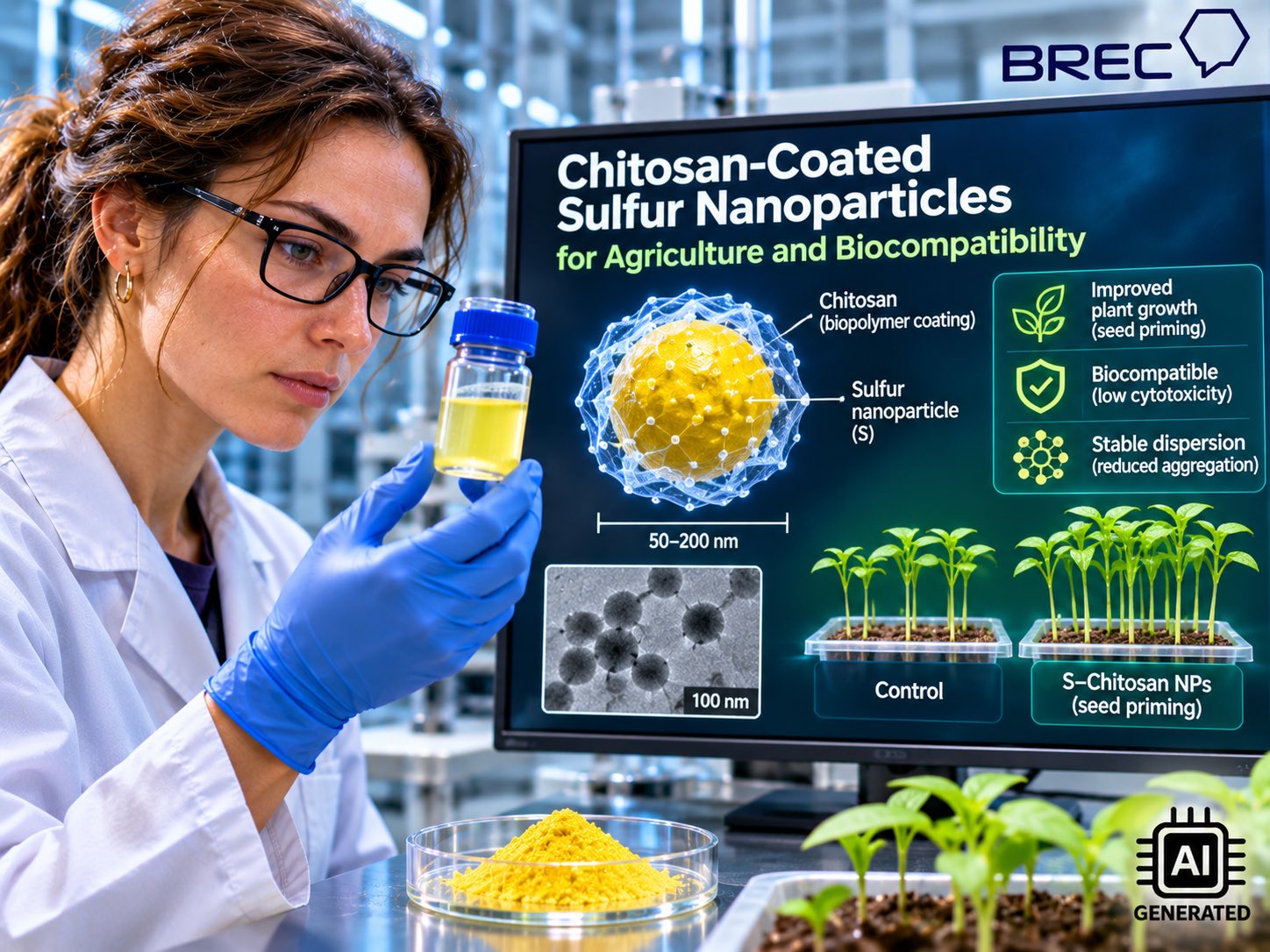
Chitosan-coated sulfur nanoparticles for agriculture and biocompatibility. The article dated 8 November describes sulfur nanoparticles prepared using sodium thiosulfate, acetic acid and chitosan. Reported measurements include nanoparticle tracking analysis, dynamic light scattering and electron microscopy, making the study particularly relevant to particle-metrology applications. The experiments also examine keratinocyte viability and alfalfa seed priming. However, the underlying paper, Chitosan-stabilized sulfur nanoparticles tailored via chemometric design, carries DOI 10.1186/s44331-025-00009-z.
link.springer.com/article/10…
Its publication date has not been established as 8 November 2026, so the secondary article cannot be treated as evidence of a new research result.
The reported agricultural findings also require field validation before commercial conclusions can be drawn.
🤖 Made with AI
Nanobubbles accelerate crystallization
A Journal of Nanoparticle Research study shows surfactant-stabilized nanobubbles (<1 µm) act as active promoters of crystal nucleation in supersaturated solutions, collapsing induction times (e.g., from minutes to seconds with SDS). Related IIT Ropar work improved paracetamol yields up to 65% without extra hazardous chemicals.
Source: scienmag.com/nanobubbles-eme…
#Nanobubbles #Crystallization #Pharma #Nanotechnology #AdvancedMaterials
🤖 Made with AI

30
AI materials discovery sees heavy capital concentration: Periodic Labs (autonomous AI labs for materials/scientific discovery, ex-OpenAI/DeepMind founders) reported at ~$7.5B valuation after large 2026 funding; CuspAI at ~$2.6B post-$450M Series B. Platforms combine generative models with experimental/robotic loops for faster, targeted materials.
Source: newmarketpitch.com/blogs/new…
#AIMaterials #Startups #DeepTech #Investment #MaterialsDiscovery
🤖 Made with AI

37
MIT researchers (Nature Materials, 2 Nov 2026) showed super-flexible, charged polymer connector ligands enable tunable nanoparticle superlattices by letting chains reorganize, overturning the ~20-year assumption that rigid ligands are required. Enables previously inaccessible open structures for photonics, catalysis, and other applications.
Source: news.mit.edu/2026/flexible-n…
#Nanotechnology #AdvancedMaterials #MaterialsScience #ScientificDiscovery #MIT
🤖 Made with AI

22
SLB launched its ChampionX nano-enabled chemical portfolio (4 Nov 2026).
First product, Extended Release, uses engineered nanoparticles for scale-squeeze treatments and has shown >2× treatment life vs conventional systems in offshore deployments, cutting interventions and operating costs on mature assets. Platform targets further production chemistry uses.
Source: slb.com/newsroom/press-relea…
#Nanotechnology #AdvancedMaterials #EnergyTech #Nanobubbles #OilAndGas
🤖 Made with AI

27
Europe takes another step towards semiconductor design independence.
On 4 November 2026, Synopsys announced an agreement with the European Chips Joint Undertaking to expand access to advanced chip-design software through the European Chips Design Platform.
eqs-news.com/de/news/corpora…
The agreement covers AI and high-performance-computing processors, photonic integrated circuits and analogue/mixed-signal technologies.
For European startups and research teams, access to professional electronic design automation tools can be a major barrier between a promising concept and a manufacturable chip.
Conclusion: Europe's semiconductor ambitions depend not only on fabrication facilities, but also on accessible design infrastructure.
#Semiconductors #AdvancedMaterials #Photonics #EuropeanChipsAct #Innovation
🤖 Made with AI

44
Nanobubble injection at a clean-water plant resolved persistent foaming, improved settling, and delivered $200k-$250k annual savings by reducing chemical use and optimizing DO setpoints.
tpomag.com/editorial/2026/11…
#Nanobubbles #WaterTreatment #AdvancedMaterials #ProcessOptimization #CleanTech
🤖 Made with AI

10
CuspAI closed a $450M Series B at $2.6B valuation, backed by Bezos Expeditions and UK Sovereign AI Fund, launching AI Materials Foundry with 45+ partners including NVIDIA and Meta to accelerate materials for semiconductors and beyond.
reuters.com/business/uk-gove…
#AIMaterials #Nanotechnology #MaterialsDiscovery #DeepTech #StartupInvestment
🤖 Made with AI

45
New review evaluates next-generation cancer nanovaccines
A newly published review examines the engineering of cancer nanovaccines to influence the tumour microenvironment and improve antigen-specific immune responses.
dovepress.com/next-generatio…
The authors discuss biomimetic carriers, mRNA delivery, neoantigen vaccines, stimuli-responsive nanoparticles and the integration of artificial intelligence into antigen selection and formulation optimisation.
A particularly important distinction is made between true nanovaccines, which promote antigen-specific immune priming, and other nanoparticle immunotherapies that deliver drugs or immune modulators without a vaccination mechanism.
Commercial interpretation: The review provides a useful framework for evaluating nanovaccine platforms and their translational challenges, including reproducibility, biodistribution, protein-corona effects, immunological safety and manufacturing quality. It is not a new experimental demonstration or clinical breakthrough.
🤖 Made with AI

25
Near-infrared-responsive nanoclay formulation demonstrates controlled anticancer activity
Researchers from Chongqing University developed a natural attapulgite-based formulation incorporating gypenosides, inulin, folic acid and a lauric-acid phase-change component.
dovepress.com/nir-sensitive-…
The formulation used 808 nm near-infrared irradiation to generate heat and trigger release as the lauric acid melted at approximately 43°C.
The resulting microspheres had a reported specific surface area of 27.0 m²/g and average pore diameter of 22.3 nm.
Combined formulation and irradiation reduced HeLa cell viability to 24.9%, compared with 51.6% for chemotherapy alone and 83.3% for photothermal treatment alone.
Commercial interpretation: This demonstrates laboratory feasibility for controlled, light-responsive drug delivery. It remains an in-vitro study. Tissue penetration, targeting specificity, nanoparticle safety and in-vivo therapeutic performance are unverified.
🤖 Made with AI

29
Researchers at Chengdu University investigated pomegranate seed oil as a means of modifying Lactobacillus-derived extracellular vesicles.
The treatment increased vesicle production approximately threefold, while a nanoemulsion formulation produced approximately fivefold higher yield.
dovepress.com/pomegranate-se…
Changes to membrane composition promoted formation of an apolipoprotein E-enriched protein corona after plasma exposure. This was associated with enhanced blood–brain barrier transport through an LDL-receptor-mediated mechanism.
Vesicles carrying oleuropein achieved approximately five- to sevenfold higher brain exposure than free oleuropein in the reported experimental system.
Commercial interpretation: The combination of improved production yield and targeted delivery is particularly relevant to EV manufacturing and nanomedicine. However, protein-corona composition can vary across biological environments. Robust particle counting, size-distribution analysis, purity assessment and batch reproducibility will be essential. The study does not establish treatment efficacy in patients with neurodegenerative disease.
🤖 Made with AI

1
29
Researchers from Hebei Medical University and collaborating institutions combined liposomes with U87MG glioma-cell-derived membrane vesicles to deliver irinotecan.
dovepress.com/hybrid-liposom…
The hybrid formulation had a reported hydrodynamic diameter of 178.4 ± 4.6 nm, polydispersity index of 0.22 ± 0.01, and drug encapsulation efficiency of 61.6%.
Freeze–thaw processing followed by co-extrusion produced the selected formulation. FRET analysis was used to assess membrane mixing.
In orthotopic glioma models, median survival increased from 16 days with free irinotecan to 21 days with the hybrid formulation.
Commercial interpretation: This is a promising biomimetic drug-delivery platform, particularly for difficult-to-access central nervous system tumours. Manufacturing consistency, cell-membrane sourcing, immunogenicity, sterilisation and clinical translation remain substantial barriers. The survival results are preclinical, not human clinical outcomes.
🤖 Made with AI

17
Researchers at the University of Reading have demonstrated a promising new approach to combating bacterial infections using nitric-oxide-releasing particles.
Announced on 3 November 2026, the research reports approximately 90% survival in treated, infected wax moth larvae, compared with around 60% in untreated controls.
reading.ac.uk/news/2026/Rese…
Nitric oxide is a potent antimicrobial molecule, but its short lifetime makes sustained delivery challenging. The researchers used particles to release it gradually over several hours.
The potential applications include advanced wound dressings, antimicrobial coatings and local drug-delivery systems.
Conclusion: Controlled-release particle engineering could offer an important additional approach to antimicrobial treatment, although human clinical validation is still required.
🤖 Made with AI

36
MIT researchers have demonstrated a surprising new way to assemble nanoparticles into programmable materials.
Published on 2 November in Nature Materials, the work challenges the long-standing assumption that directional nanoparticle assembly requires rigid molecular connectors or carefully engineered particle shapes.
nature.com/articles/s41563-0…
Instead, highly flexible polymer ligands reorganise spontaneously between nanoparticles, producing effective bonding valency and allowing less densely packed superlattices.
The researchers controlled assembly by changing particle dimensions and ligand lengths.
Conclusion: Molecular flexibility could become a powerful design parameter for future photonic, catalytic and functional nanomaterials.
The approach is experimental; industrial scalability and application-specific performance still require validation.
🤖 Made with AI

2
100