
The institutional rail between Brazil and the world.
Brazil
Joined December 2025
- Tweets311
- Following61
- Followers1.1K
- Likes48





BRD is now listed on @Anchorage 🧵
Institutions, fintechs and HNW clients there can hold BRD, a 1:1 BRL token backed by Brazilian treasury bills, in the custody account they already use.
Solana today, Ethereum L1 and L2s next.
4/ Next up: DeFi, @Morpho. Morpho is already a Connected App at Anchorage, so clients will be able to allocate to BRD and sBRDusd, backed by Brazil's USD-issued sovereign bonds, in one click from inside custody.
5/ On custody: BRD Digital doesn't hold client tokens.
Self-custody for those who want it. Qualified custody at Anchorage for mandates that require it.
Onboard your institution at brd.digital to earn on BRD.
As of today, October 1, 2026, Brazilian eFX providers can no longer settle with their foreign partners in stablecoins.
Much of the market read it as a stablecoin ban.
It isn't. 👇
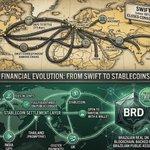
BRD's cross-border rail:
→ Payout in USDC/USDT, via regulated distributors, or in USD/EUR/CNY/HKD
→ BRL off-ramp D+1 to any Brazilian bank
Brazilian banks: 4.3% to 7.5% all-in.
The caveat: stablecoin-settled transfers are IOF-exempt today. That could be revisited after 2027.
And after Oct 30, the onchain BRL FX rail is reserved for authorized VASPs. BRD Digital is filing.
brd.digital
BRD Digital retweeted

@BRD_Digital is giving access to high interest rates in Brazil to everyday investors by tokenizing the carry trade.
That spread is the point. Washington borrows at 4% while Brazilian sovereign debt pays 14%. The difference isn't credit risk alone. It's access. Brazil's rate has always been locked inside the domestic banking system.
sBRD pays that rate onchain. 14% yield to maturity, backed by Brazilian sovereign instruments, settled on Solana. PIX in, self-custody, no minimum ticket, no Brazilian bank account.
👇👇
brd.digital
🇧🇷 Bets are in Brazil's GDP now. That's correct.
They shouldn't be *excluded* from the accounts.
But here's the problem: they're destroying the economy
while being counted as "growth."
The math isn't wrong. The activity is. 👇👇
81.7 million Brazilians blacklisted in Feb 2026.
81.7 million people removing themselves from normal credit.
That's not "growth." That's structural damage.
And it scales: less credit → less consumption → less business investment → lower real wages.
But it's in the GDP, so it counts.