






Behnam Dayanim retweeted

Jewish artists are being canceled, blacklisted and pushed out of American cultural life. We knew the situation was bad, but we just didn't know how bad. No one had documented the problem in a systematic manner. Until now.
The new @ADL State of the Arts report offers a series of shocking findings:
- 40 leading museums across the U.S. and not a single one includes Jewish identity among its diversity & inclusion commitments.
- Authors are being told to strip Hebrew words from their works and change Jewish character names just to get published.
- Jewish and Israeli performers are being harassed off stages, dropped from lineups and never invited back.
This is antisemitism, plain and simple. Blocking someone because of their nationality is bigotry, full stop. Canceling someone because of their faith isn't courage — it's cowardice.
The arts and culture sector needs to wake up and stop silencing Jewish voices. Patrons of the arts need to step up and demand, not special treatment, but simply equal treatment for Jewish and Israeli artists. Now is the time.
Explore the research: state-of-the-arts.org

Behnam Dayanim retweeted

September 24, 2026: Noam Dworman sits down with "the world's leading famine expert" and reads him his old predictions and declarations about famine in Gaza.
Alex de Waal wrote the standard textbook on famine, runs the World Peace Foundation, and helped write starvation crimes into international law. When the media says "famine experts warn," this is who they mean.
In January 2024, he told Owen Jones famine would probably arrive by early February. February came and went. In March 2024, he told CBS it was expected between then and May. Days later, he told Democracy Now that children were dying "likely in thousands already." In April 2024, at Harvard, he called it the most intense famine since records began. In October 2025, Democracy Now brought him back.
Nobody ever asked him about any of prior predictions and declarations. On September 24, 2026, Noam Dworman did.
0:00 Alex de Waal admits to overstating catastrophes to get headlines
0:30 March 25, 2024. De Waal: The Famine Review Committee is "the ultimate arbiter, the High Court"
0:47 September 24, 2026. De Waal admits his own "high court" found no famine
1:11 March 2024: "It's too late to avert" thousands to tens of thousands of deaths
1:22 De Waal recasts it as conditional: "I said, yes, if this trajectory continues"
1:47 Dworman reads him the published wording, which was not conditional. De Waal: "We actually don't know how many have died"
2:14 Dworman to De Waal: You let Feroze Sidhwa tell my audience that 62,000 Gazans died of starvation
3:10 De Waal: We don't know the numbers. Dworman: The Gaza Ministry of Health doesn't claim anything close to your numbers
3:43 Dworman calls out the moving goalposts: "So I never said they were dying." De Waal accuses him of arguing semantics
4:21 Alex de Waal claims that the famine call "made no comment on the mortality"
—
What actually happened:
The IPC's own Famine Review Committee, June 2024: the famine claims were "not plausible," and "the available evidence does not indicate that Famine is currently occurring."
reliefweb.int/report/occupie…
After the October 2025 ceasefire, a UNICEF-led survey found 0.5 percent acute child malnutrition in Gaza, one of the lowest rates in the region.
thefp.com/p/unicef-data-unde…
Full interview: xitter.cf/noam_dworman/status/21…
--
In 2024, Alex de Waal was certain enough to tell the world it was already too late.
In 2026, Alex de Waal just isn't certain enough to say how many people died.
Alex de Waal once wrote that you need to overstate catastrophes in order to get attention. He was not joking.

October 6, 2025: Alex de Waal tells Democracy Now that famine is "one of the simplest problems in the world to resolve," and that Israel "can solve the starvation crisis...in a matter of days, should it want to do so."
In January 2024, he told Owen Jones the opposite. Even if the fighting stopped that day and Gaza were flooded with aid, the people "mainly children of course" dying of hunger would "continue to rise, will peak, and will decline over a much longer period of time." Unstoppable then. A matter of days now.
Alex de Waal wrote the standard textbook on famine, runs the World Peace Foundation, and helped write starvation crimes into international law. When the media says "famine experts warn," this is who they mean.
In January 2024, he gave Gaza until "probably by early February." On March 19, 2024, he told CBS famine was expected between then and May. On March 25, 2024, he told Democracy Now children were already dying "likely in thousands." In April 2024, he told a Harvard webinar it was already the most intense famine since records began. In June 2024, the IPC's Famine Review Committee—the body he had called "the ultimate arbiter, the High Court"—ruled the claims "not plausible." On October 6, 2025, four days before the ceasefire, Democracy Now had him back.
0:00 The introduction: his new Foreign Affairs piece, "The Return of the Starvation Weapon"
0:20 "Famine is one of the simplest problems in the world to resolve"
0:32 Every famine of the last 30 years has been "man-made, the result of political or military action"
0:45 Israel "can solve the starvation crisis or at least ameliorate starvation in Gaza in a matter of days, should it want to do so"
0:59 "It is a choice that Israel has, whether to feed the people or whether to starve them"
1:30 The children who survive "will suffer physical and cognitive harm for the rest of their lives"
1:38 There is an obligation "on those who perpetrated the crime"
2:03 Discusses his article in Jewish Currents: "the obligation of the Jewish community as a whole globally" to repair the damage of "this planned starvation"
—
What actually happened:
The IPC's own Famine Review Committee, June 2024: the famine claims were "not plausible," and "the available evidence does not indicate that Famine is currently occurring."
reliefweb.int/report/occupie…
Gaza's recorded malnutrition death rate in 2025 (74 deaths through late July, per the WHO) works out to roughly the same per-capita rate as the United States, where the CDC counted over 20,000 malnutrition deaths in 2022.
emro.who.int/media/news/maln…
Four days after this interview the ceasefire took effect. A UNICEF-led survey then found 0.5 percent acute child malnutrition in Gaza, one of the lowest rates in the region.
thefp.com/p/unicef-data-unde…
In his own words, January 23, 2024: youtu.be/0pGgFZovlAw?t=1209
Full show, October 6, 2025: democracynow.org/shows/2025/…
Gaza segment: democracynow.org/2025/10/6/f…
—
In January 2024, nothing could stop the famine, and the deaths were on Israel.
In October 2025, Israel could stop it in days, and the choice was Israel's.
Four days later the fighting stopped. The survey found 0.5 percent.
Behnam Dayanim retweeted

There was no famine.
After my interview, I don't see how anyone could conclude otherwise.
Especially with his admission that human rights organizations make claims without even a >50% standard of proof.
And your hospital point is correct. It was on my list but I never got to it. He warned that once in a famine, people could not just resume eating without medical intervention.
I'm trying to think of a claim that has turned out to be true.

I found Alex de Waal’s interview with Noam Dworman increasingly frustrating for one basic reason: what, exactly, could falsify his claim?
If large numbers of people die, that demonstrates famine. Fair enough. But what if they do not?
Then we are told that famine deaths need not be recorded as starvation. People weakened by malnutrition often die of diarrhea, respiratory infections, other diseases, or the collapse of chronic medical care. That is perfectly true. Malnutrition substantially increases vulnerability to infection, especially among children.
But this cannot mean that starvation becomes empirically invisible. In severe historical famines, many people die through diseases potentiated by malnutrition, but one also sees severe wasting and deaths directly associated with hunger and malnutrition. And there is a demographic signature. Young children are biologically particularly vulnerable. A recent review of historical famines notes that, in most famines of the nineteenth and twentieth centuries, young children and older people were the main victims in absolute numbers. Even the Dutch Hunger Winter, which de Waal invokes as a complication, saw extraordinarily high infant mortality and a very large increase in mortality among children aged one to four.
This makes Michael Spagat’s Gaza Mortality Survey especially interesting. I do not regard that survey as beyond criticism. Quite the opposite. It has serious methodological questions of its own. Among 9,729 people enumerated in its households, 52 were reported as imprisoned. After weighting, that produced an estimate of about 9,400 imprisoned Gazans, while B’Tselem reported 2,219 Gazans held by Israel at the end of December 2024. That is more than four times the known figure, a rather striking warning about representativeness or interpretation of the questionnaire.
But here is the problem for the famine argument. If we nevertheless take Spagat’s survey seriously as evidence about mortality, its demographic pattern is extremely awkward. Children were much less affected than adults, much much less affected.
De Waal can point to historical exceptions and say that children do not always show the largest proportional mortality increase. That is true. But exceptions cannot be used to make the expected demographic pattern irrelevant. If a survey produces almost no indirect child mortality, that is evidence that requires explanation. You cannot invoke the survey when it supports excess mortality and then effectively disregard its age distribution when that distribution cuts against the starvation hypothesis.
There is another potentially independent test: refeeding. De Waal explicitly warned that thousands of severely malnourished children might require hospital treatment once food became more available, because ordinary feeding could itself be dangerous. The IPC Famine Review Committee likewise warned that refeeding syndrome might become a risk for significant portions of the population.
Yet when food availability subsequently increased, where was the corresponding population wide wave of refeeding syndrome and deaths? This does not by itself prove that serious malnutrition did not exist. There may also have been isolated cases. But if severe starvation existed on the enormous scale being described, the physiological consequences of restoring food should themselves provide another observable test. The apparent absence of the predicted phenomenon on anything like the anticipated scale should cause us to update our assessment. Instead, it seems simply to disappear from the argument.
And then the definitions themselves start moving. Later in the interview (min 55), de Waal appears willing to treat the lived or psychological experience of famine, fear of hunger, desperation over food, competition for food, social breakdown, as "famine", even without mortality.
This is where the method stops looking scientific. Scientific definitions are supposed to reduce ambiguity, draw boundaries, and limit the analyst’s freedom to reinterpret inconvenient evidence. Here the opposite happens. Food insecurity, hunger, starvation, famine, famine related mortality, and even the subjective experience of famine are progressively collapsed into one another until the categories cease to constrain the argument at all. Instead of the evidence testing the definition, the definition expands to absorb whatever evidence happens to exist. That is not conceptual precision. It is methodological elasticity, and it gives the interpreter almost unlimited discretion to protect the original conclusion from refutation.
The same problem applies to prediction.
If mass starvation deaths occur, the warning was correct: Israel starved Gaza.
If the deaths are officially attributed to infection or other disease, the warning was still correct: malnutrition caused or aggravated those deaths.
If the excess deaths cannot actually be demonstrated, then the data are too poor to know.
If children, normally among the groups most vulnerable to severe nutritional stress, are barely represented among the nonviolent deaths in the available household survey (problematic as it is), then historical exceptions show that this need not matter, contrary to what de Waal himself said during the war.
If the expected wave of refeeding complications does not appear after food availability improves, that apparently does not matter either.
If mass mortality never materializes at all, then the original warning was still correct because de Waal, the UN, and others raised the alarm and catastrophe was averted.
And if none of these things can be demonstrated, then even the psychological experience of famine can apparently be brought into the definition.
So I genuinely want to know: what observation could have made de Waal say, “My assessment was wrong”?
Not “the data are incomplete.” Not “the deaths were really caused by other diseases.” Not “children are not always the most vulnerable.” Not “our warnings prevented the deaths.” Not “people still experienced famine psychologically.”
What evidence, actually observed in the real world, could count against the hypothesis?
Because that is the crucial scientific question. A scientific claim has to risk being wrong. Evidence is meaningful only if some possible evidence could force you to revise the conclusion.
If deaths count as confirmation, the absence of deaths counts as successful prevention, deaths from unrelated recorded causes can be reclassified as starvation related, missing deaths are attributed to incomplete data, an unexpected demographic pattern can be explained away by historical exceptions, the absence of a predicted physiological consequence does not matter, and subjective experience can substitute when the measurable outcomes fail to appear, then the evidence is no longer testing the hypothesis. The hypothesis is controlling the interpretation of the evidence.
At that point, it is not merely difficult to falsify. It has been constructed so that it cannot lose. And that is the opposite of an empirical scientific argument. It increasingly seems that de Waal is prepared to make almost every possible rhetorical move, treating Gaza as a unique case whenever necessary, rather than seriously entertaining the one possibility his framework never seems to allow: that he and his favorite NGOs and UN agencies might simply have been wrong.
Behnam Dayanim retweeted

@amnesty: said that the jurisprudence would preclude a finding of genocide
@hrw: did not assess the elements at all for genocide
@btselem: said that they had to use a "broader analytical framework"
@MSF: did not assess the elements at all for genocide
IAGS: misrepresented the law and elements of the crime of genocide (I'm a member and over 500 experts called this out)
@alhaq_org: did not assess the elements at all for genocide
@UNHumanRights: did not say this (you're citing the Commission of Inquiry which was led by a South African judge and did not establish the elements, even ignored the legal tests)
@UN_HRC: ibid.
@pchrgaza: did not assess the elements at all for genocide
@AlMezanCenter: did not assess the elements at all for genocide
@WarOnWant: did not assess the elements at all for genocide
@PHRIsrael: did not assess the elements at all for genocide
@fidh_en: did not assess the elements at all for genocide
@LemkinInstitute: argued that intent is not an element of genocide (it is, it's the hallmark of the definition and what makes it what it is)
@theCCR: did not assess the elements at all for genocide
@ECCHRBerlin: did not assess the elements at all for genocide
@unitedforrights: did not assess the elements at all for genocide
@JURDIasso: did not assess the elements at all for genocide
@TheElders: did not assess the elements at all for genocide
@Oxfam: did not assess the elements at all for genocide
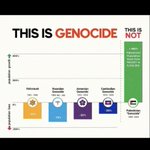
Your appeal to authority and gish galloping fallacies are failing, @_ZachFoster.

it's genocide (@amnesty )
it's genocide ( @hrw )
it's genocide ( @btselem )
it's genocide ( @MSF )
it's genocide (IAGS)
it's genocide ( @alhaq_org )
it's genocide ( @UNHumanRights )
it's genocide ( @UN_HRC )
it's genocide ( @pchrgaza )
it's genocide ( @AlMezanCenter )
it's genocide ( @WarOnWant )
it's genocide ( @PHRIsrael )
it's genocide ( @fidh_en )
it's genocide (PHROC)
it's genocide ( @LemkinInstitute )
it's genocide ( @theCCR )
it's genocide ( @ECCHRBerlin )
it's genocide ( @unitedforrights )
it's genocide ( @JURDIasso )
it's genocide ( @TheElders )
it's genocide ( @Oxfam )
"As a Jew, it's not genocide because it doesn't fit the definition of genocide I literally just made up right now" - Scott Galloway
Behnam Dayanim retweeted

BREAKING: Mohsen Mahdawi has been presented to America as a peace activst.
We uncovered 15 years of previously unseen evidence - and it tells a very different story.
Today we publish our report. This is just some of what we found.
Thread ⬇️ ⬇️⬇️
Behnam Dayanim retweeted

"Who cares whether we're legitimizing anti-Semitism, we have a Senate seat to win" is an argument that has the opposite of its intended effect on me theatlantic.com/ideas/2026/0…

Behnam Dayanim retweeted

"The genocide allegation survives only by declaring every piece of exculpatory evidence meaningless. Births supposedly tell us nothing. Vaccinations tell us nothing. Food deliveries tell us nothing. Humanitarian pauses tell us nothing. Failed famine predictions tell us nothing. The absence of measured famine mortality tells us nothing.
These academics have strayed wildly beyond their lanes and converted moral vanity into counterfeit legal authority. They profit in attention and publication from a blood libel whose human cost is paid by Jews they will never meet. Shame on them. They are shameless." @Mr_Andrew_Fox mrandrewfox.substack.com/p/s…
Behnam Dayanim retweeted

The Gaza war has been a terrible tragedy, sparked by the unconscionable horror of Hamas’s October 7 terrorist massacre but rooted in a much longer conflict in which terrible mistakes have been made on all sides—including multiple credible pathways toward Palestinian statehood that Palestinian and Arab leaders tragically rejected.
After October 7, Israel had both the right and the responsibility to dismantle Hamas’s military infrastructure and avoid the urban-warfare trap Hamas had spent years constructing. Israel also made serious mistakes, including restrictions on humanitarian aid that worsened civilian suffering. Those decisions deserve scrutiny and criticism.
But Hamas bears enormous responsibility for the catastrophe it deliberately engineered. For years, it built hundreds of miles of tunnels beneath Gaza—an extraordinary underground infrastructure capable of providing extensive protection from bombardment. Hamas explicitly said those tunnels were for Gaza’s civilians, even though the tunnels were everywhere and could have been used to save thousands of lives.
That was not merely callous indifference. Hamas deliberately provoked a devastating war and then sought to turn the deaths of the people it governed into a strategic weapon. Yahya Sinwar’s own reported messages described Palestinian civilian deaths as “necessary sacrifices” and calculated that mounting casualties would increase international pressure on Israel. Hamas kept its fighters underground while civilians remained exposed above, embedded military operations within densely populated areas, and exploited the resulting deaths to advance its political and military objectives.
The evidence points to the appalling conclusion that Hamas wanted enormous numbers of Gazan civilians to die because their deaths served its strategy. It embedded its terrorist infrastructure in civilian institutions and treated the people of Gaza as human sacrifices. This was horrific and unconscionable. Palestinians in Gaza are among Hamas’s greatest victims.
War is terrible and must be avoided to the fullest extent possible. But Hamas’s strategy was to force Israel into a painful and costly urban war in one of the most densely populated environments on earth, where Hamas had deliberately embedded much of its military infrastructure among civilians. Israel took extraordinary—and by many measures historically extensive and deeply costly in terms of Israeli casualties—precautions to reduce unnecessary civilian casualties, but even extraordinary precautions cannot prevent innocent people from being killed in a brutal urban war, particularly when the battlefield has been deliberately constructed to place civilians in harm’s way.
None of this diminishes the immense suffering in Gaza. Every innocent Palestinian and Israeli life lost is a tragedy. Israelis and Palestinians both deserve security, dignity, and a peaceful future.
But “genocide” is not a synonym for a horrific war with terrible civilian casualties. It is a specific legal charge requiring proof of an intent to destroy a protected group, in whole or substantial part, as such. the evidence clearly does not establish that Israel possessed such an intent, and the demographic record certainly does not establish genocide on its own.
What happened in Gaza was horrific enough without mischaracterizing it: a devastating war triggered by a monstrous terrorist attack, fought against an enemy that deliberately entrenched itself among civilians and viewed their deaths as strategically useful, with terrible mistakes and immense human suffering along the way.
Cynically calling this tragedy “genocide” does not bring us closer to truth, accountability, reconciliation, or peace. On the contrary, it serves the interests of the adversaries of peace, justice, and meaningful accountability for the many mistakes and terrible decisions that have been made on all sides of this conflict for the better part of a century.

Behnam Dayanim retweeted

The results of the SMART survey (high-quality survey of malnutrition) in Gaza is finally out. Very low malnutrition rates, even lower than pre-war.
Also, this slide is the coup-de-grace of the original famine declaration, which depended entirely on the premise that WHZ rates were twice as high as MUAC rates:
@MarkZlochin @YannayASpitzer

Behnam Dayanim retweeted

.@Wikipedia is literally erasing Jewish history and identity, systematically and maliciously. Everyone in the organization knows this is happening -- so none of it is an oversight or an accident.
Wikipedia is a major source on which LLMs are trained. College students are more likely to read the Wikipedia article than the textbook. This is how public knowledge is shaped.


Behnam Dayanim retweeted

🧵Hamas & PIJ’s own martyr notices now shatter claims that IDF airstrikes on homes in Gaza, many in 2023, were indiscriminate or targeted low-level fighters. Of 2,000 killed Gaza combatants identified so far, 157 were commanders killed where they were based—their homes. Details:

Behnam Dayanim retweeted

Israeli Ambassador to the UN, Danny Danon, turned the Security Council debate into a quiz when he presented a series of pictures to the council members and asked: "Terrorist or journalist?", "UNRWA worker or Nukhba commander?"
Behnam Dayanim retweeted
🚨Major admission by @pressfreedom. CPJ is finally conducting a full review of its Gaza “journalist” fatality database after Hamas & PIJ themselves exposed many listed “journalists” as their own fighters. Israel said this all along and Hamas/PIJ's own martyr notices proved it.



Behnam Dayanim retweeted
Welp, I think we're done here.
Trump himself is now saying he buckled under the pressure of Hormuz.
It's as bad as it could possibly be. He's saying aloud that Iran can have anything it wants because America can't afford the staring contest.
If this is his own explanation in his own words, then the fact that the sanctions relief is front-loaded...suddenly becomes important. The fact that the inspections regime that will verify compliance will be negotiated by an American side that has already admitted defeat, that needs this more than the opponent needs it...is now significant. And the fact that the proxy system is now recognized as legitimate by the United States -- is suddenly exactly the disaster you feared it might be.
And the fact that America has declared aloud that it's not actually capable of imposing its will even in the world's most vital energy chokepoints, causing its allies in the Gulf to already begin to seek a new accommodation with Iran -- makes all of this worse than Obama and worse than the JCPOA.
Remember: the great unfixable flaw of the JCPOA that none of its boosters ever had a good answer for was that it merely kicked the can down the road. It solved nothing.
Trump's deal, as of this moment, is not even close to accomplishing so much.
"Iran never won a war and never lost a negotiation," Trump famously said of Obama's deal (as a reporter reminded him at today's press conference). Ironic that the Iranians would win a negotiation most spectacularly against a man who styles himself the greatest negotiator to ever grace the White House.
So what does it all mean?
It means that in the coming years, nuclear programs will sprout like mushrooms after the rain throughout the Middle East. It means that many nations will now build out new and larger ballistic missile arsenals.
It means that the state system will give way before the march of the region's transnational ideological axes. Minorities will again be trampled, new wars will be fought by stronger states to dominate the power vacuums within weaker ones.
You're thinking of Israel in Lebanon -- but that's just a specific campaign against a specific enemy. Think Turkey, which right now occupies a region of Syria vastly larger than Israel's presence in Lebanon. Think heightened Iranian support for the Houthis in Yemen and a new influx of money and guns to the different sides in Libya.
It means, in other words, that we will have a few more wars to fight, a few more technologies to invent to deal with this new age of cheap missiles and drones -- and also of supersonic Chinese missiles bearing nuclear warheads that Iran will eventually, inevitably, be capable of deploying against us.
And it didn't have to be this bad. (And maybe, when he's heard all the criticism, it won't be.) He could have left something, anything, to concede later. He could have kept the Iranians a little bit in the dark, just a smidgen, as to just how defeated America feels.
Israel's position in all this is simple, and more or less unchanged from last week. America gave us more than we had a right to ask for. But we may be going it alone from here out.
Dust off the nukes. Maybe test one somewhere far away from anywhere. Quadruple the interceptor production lines, double the size of the Mossad and the Air Force. And no, don't let Hezbollah breathe, not for a second.
It's the 1960s again. And Israel will have to defeat a couple more enemies before it can once again eke out a few decades of peace.


Behnam Dayanim retweeted

Israel just published a detailed dossier on UN bias in Gaza. Most people won't read it. Here's what's in it:
🔹 OCHA undercounted aid trucks entering Gaza by nearly 10,000 vs. Israel's own records
🔹 UNRWA staff participated in Oct. 7 — the UN called it "a few bad apples" and opened no serious investigation
🔹 The IPC famine report relied on an undisclosed dataset with measurements that exceeded anything in medical literature
🔹 UN Women ignored Israeli victims entirely
🔹 The Secretary-General blacklisted the IDF while staying silent on Hamas
This isn't Israel crying bias. It's a documented, agency-by-agency breakdown.
Read it yourself: govextra.gov.il/un-gaza-bias

Behnam Dayanim retweeted

People say the left and the right can’t agree on anything these days. But there is this one thing:
Behnam Dayanim retweeted

The @nytimes and @NickKristof count on you not pulling the curtain back on their lies.
Don’t buy into their blood libels - watch and find out who’s really behind this narrative.
Behnam Dayanim retweeted

I cannot believe we have to do this.
The New York Times, the paper of record, just published an op-ed accusing the State of Israel of systematic sexual violence against Palestinian detainees, including the claim that Israel is training dogs to rape prisoners.
One of their sources is a man who left his job after multiple people, including minors, accused him of sending them threatening and sexual messages.
The other is Euro-Med Human Rights Monitor, a group whose chairman was sanctioned by Israel as a Hamas operative and who publicly called the testimonies of Israeli women raped on October 7th “fabricated lies.”
The Times is using the words of a man credibly accused of sexually harassing children, and an organization led by a man who denies the rape of Jewish women, to build a case that Israelis are sexual predators.
This is the most serious accusation you can level at a country. It demands the most serious sourcing. The Times decided the opinion section was good enough.
It is not good enough.
And spare me the crocodile tears. The same people who spent two years calling the rape victims of October 7th liars, who told us “believe women” had an asterisk when the women were Jewish, are about to share this op-ed with tears in their eyes. They never cared about sexual violence. They cared about who they could pin it on.
I do not want to spend my day writing about this. But when the largest newspaper in the world launders this against my people, silence is complicity.
@nytimes owes our community, and its readers, an apology.
