
Commentator on Lebanon’s never-ending financial crisis. International structured and project finance.
Joined August 2012
- Tweets10.3K
- Following596
- Followers22K
- Likes17.8K



Pinned Tweet
An analysis of the ceasefire deal:
The question of who won and who lost this war is not particularly interesting. Each side will claim whatever is in its best interest to claim. The more meaningful question is: what will be its impact on the various actors, particularly in Lebanon?
Hezbollah's local opponents view the ceasefire deal, and the war in general, as having diminished its domestic power. With provisions aimed at dismantling its military infrastructure and bolstering the Lebanese army, the ceasefire seems intended to reduce Hezbollah's influence by weakening its military capabilities.
But Hezbollah’s strength within Lebanon has never been confined to its weapons. Even if it were disarmed tomorrow, its domestic political objectives, its popular grassroots support, and its representation within state institutions would remain intact. This ceasefire, far from sidelining Hezbollah, nudges it to deepen its power domestically by turning its attention inward.
The structure of this agreement, if implemented as written, risks further fracturing the country. It pits an already weakened Lebanese state—represented by its army—against Hezbollah. Hezbollah remains the country’s strongest and most organized political and military entity, as well as the legitimate representative of the largest community in Lebanon.
The Lebanese Army
The Lebanese army finds itself in an impossible position. Its mandate to enforce the ceasefire is undermined by its inability to challenge Hezbollah directly. To suggest that it can disarm or dismantle Hezbollah’s infrastructure is, frankly, absurd. Hezbollah is not just an armed group; it is a deeply rooted political force with widespread popular support that extends far beyond its weaponry. It is represented in the army, in the army leadership, and in the political branches that command the army. It is not an external force but an integral part of Lebanon's social and political structure.
The army, one of the few entities that enjoys broad-based respect across sectarian lines, is being set up to fail. Any perceived weakness in fulfilling the ceasefire’s terms risks further eroding its credibility, domestically (with half the country) and internationally. Yet confronting Hezbollah, if it were even plausible, risks political and societal backlash, along with a backlash within the army ranks, further destabilizing the country.
This leaves the army walking a fine line: attempting to meet international and domestic expectations without overstepping into conflict with Hezbollah. Ultimately, this fragile balancing act reinforces the narrative that Lebanon’s state institutions are ineffective, which they are when perceived to be acting against the interests of one of Lebanon's communities.
Hezbollah
This brings us to the core issue: Hezbollah’s internal strength lies not in its arsenal (at least not exclusively) but in the fact that it is the legitimate representative of millions of Lebanese. This war and ceasefire do little to change that basic fact.
To frame Hezbollah solely as an armed militia and foreign proxy is to misunderstand its role in Lebanon and the basis of its power. It is a domestic political project as much as a regional military one—a project that, like it or not, champions the interests of the community it represents. It is fundamentally a rational actor whose actions are driven by clear incentives. It pays lip service to national unity and power-sharing while steadily increasing its control over the state and its institutions in line with the growing numbers and strength of its community. That is exactly what any other actor in its position would do given the incentive structure created by Lebanon's political system (i.e., maximizing your share of power/resources relative to others is an existential imperative in a system designed to pit communities against one another).
This is what makes the ceasefire’s disarmament provisions largely symbolic. Far from weakening Hezbollah, the terms of the ceasefire incentivize it to further entrench itself within legitimate state institutions like the army and the government (the enforcers of the ceasefire).
Lebanese communities opposed to Hezbollah’s dominance may find themselves increasingly sidelined due to their fatal misreading of the true source of Hezbollah's power and the incentives that shape its actions. These groups charactarize their problem as being *only* with Hezbollah's weapons. They demand it be disarmed and its military wing folded into the army, as if these actions would weaken the group's domestic influence or alter its political objectives.
The reality is that Hezbollah's domestic political objectives are shaped by incentives—primarily, the pursuit of power and resources within the state structure to serve the perceived interests of the community it represents (as understood by that community itself, not by Hezbollah’s opponents). The group’s influence is fundamentally tied to the size and cohesion of that community. Consequently, Hezbollah’s influence will inevitably pull the state and the army toward its own objectives rather than away from them. Even if its military capabilities were partially or entirely dismantled, the group’s domestic power and objectives would remain largely unaffected. For Hezbollah’s opponents, the core problem therefore lies elsewhere even if they fail to see it.
Israel
Israel, by agreeing to the ceasefire, consolidates international support, particularly from the United States, and positions itself as a cooperative actor regardless of the actual reason why it agreed to the ceasefire. Should the ceasefire unravel, Israel will be well-positioned to act with the moral and political backing of its allies, especially given incoming Trump administration.
For Israel, the ceasefire is a low-cost gamble. If it works, it buys temporary stability. If it fails, Israel retains the freedom to strike (as it would regardless of whether this provision is explicitly stated in the terms of the ceasefire), with the added justification of Lebanon’s inability to uphold its commitments. This ensures that Israel can respond to violations on its own terms, while placing the burden of enforcement squarely on the Lebanese government and army.
A Fragile Illusion
The ceasefire offers a welcome break after many months of war. But its terms risk worsening Lebanon's serious domestic challenges by hastening shifts in the balance of political power among Lebanon's communities and exposing the failure of its power-sharing system to manage these changes effectively. Unless these underlying issues are confronted, Lebanon's society will remain fragile and continue to fragment with communities being provoked against one another. Unfortunately, Lebanon's political leadership has absolutely no vision for how to resolve these challenges.


Over the past two years, our firm has advised the US on $50+ billion of power financings, mostly related to AI data centers. The boom has created a severe gas-turbine shortage. Lebanon's plan to build gas power plants may now be 3x as expensive and require years longer. 👇👇

The global AI boom could derail Lebanon’s power plans.
Lebanon’s long-awaited shift to gas-fired power is colliding with a global surge in electricity demand from AI data centers.
The race to power these energy-hungry facilities has created long at queues for gas turbines at manufacturers such as GE Vernova, Siemens Energy and Mitsubishi. Delivery times that once took 1-2 years can now stretch to 5-6 years or more.
For Lebanon this means higher costs (nearly triple), and longer waits to secure turbines, (and yet another delay to long-overdue power sector reforms).
With insights from @AzarsTweets @Jessica_Obeid
My report @LOrientLeJour @lorienttoday
today.lorientlejour.com/arti…

Mike Azar retweeted

The global AI boom could derail Lebanon’s power plans.
Lebanon’s long-awaited shift to gas-fired power is colliding with a global surge in electricity demand from AI data centers.
The race to power these energy-hungry facilities has created long at queues for gas turbines at manufacturers such as GE Vernova, Siemens Energy and Mitsubishi. Delivery times that once took 1-2 years can now stretch to 5-6 years or more.
For Lebanon this means higher costs (nearly triple), and longer waits to secure turbines, (and yet another delay to long-overdue power sector reforms).
With insights from @AzarsTweets @Jessica_Obeid
My report @LOrientLeJour @lorienttoday
today.lorientlejour.com/arti…
The story of Lebanon’s last executions, carried out at dawn on January 17, 2004.
___
Lebanon had already gone through one post civil war burst of executions. A 1994 law expanded the use of capital punishment, and 14 people were executed between 1994 and 1998. The last executions before the 2004 episode described below were two public hangings in May 1998.
When Émile Lahoud became president later that year, Salim Hoss became prime minister. Hoss personally opposed capital punishment and refused to sign execution decrees, which effectively stopped executions even though courts continued imposing death sentences.
There was no statutory abolition or legally binding moratorium. Lebanon's system required the execution decree to receive the necessary executive approvals, including those of the president, prime minister and justice minister. Hoss could therefore stop executions simply by withholding his signature. When Rafik Hariri returned as prime minister in 2000, that political barrier eventually disappeared.
By late 2003 and early 2004, three particularly notorious cases were moving toward execution.
Ahmad Ali Mansour had committed one of the most shocking workplace shootings Lebanon had seen. On July 31, 2002, he entered the teachers' compensation fund offices in Beirut's UNESCO district with an assault rifle and opened fire on his colleagues, killing eight and wounding five. Contemporary reports described him as an employee who had been embroiled in a financial dispute involving money he owed. He was arrested immediately afterward and subsequently sentenced to death.
Badih Waleed Hamadeh, also known as Abu Obeida, was associated with Sunni Islamist militants around Ain al-Hilweh. He had killed three Lebanese soldiers or Army Intelligence personnel who were attempting to arrest him near Sidon in July 2002. He then took refuge inside Ain al-Hilweh, creating a potentially serious confrontation because the Lebanese Army did not enter the camp. A Palestinian faction eventually handed him over to Lebanese authorities several days later.
Remi Antoine Zaatar was an employee of the Civil Defence in Zahle. He had killed two Civil Defence colleagues in 2000. Contemporary reports also say a Syrian officer was wounded in the episode and subsequently died, although contemporary sources differ slightly in describing the precise victim count. He was convicted by a military court and sentenced to death.
Then, on January 14, 2004, Lahoud signed the final execution decrees for all three. Prime Minister Rafik Hariri and Justice Minister Bahij Tabbara had approved them as well. The executions were fixed for before dawn on Saturday, January 17. Mansour would be hanged. Hamadeh and Zaatar would face firing squads.
That set off a fairly extraordinary final 48 hours.
The European Union formally appealed to Lahoud to reverse the decision. France objected, arguing that carrying out executions ran against the spirit of Lebanon's 2002 association agreement with the EU. Amnesty International, the International Federation for Human Rights and Lebanese abolitionist groups mounted appeals. Irish Taoiseach Bertie Ahern, whose country then held the EU presidency, personally wrote to Lahoud.
In Beirut on Friday, January 16, around 150 protesters gathered near Parliament. Many carried black flags. Some lay motionless on the ground to represent executed prisoners. Soldiers closed access around the Parliament area as the demonstration developed. Protesters later moved toward Roumieh for an overnight vigil.
The government made a strange concession that same evening. Six other death sentences were commuted to life imprisonment with hard labor, while the three scheduled executions were allowed to proceed. Contemporary reports identified the six as four Lebanese, one Syrian and one Egyptian. Hariri's newspaper Al-Mustaqbal reportedly predicted that the following morning's executions would probably be Lebanon's last.
Meanwhile, Roumieh was being prepared.
Police and soldiers erected barricades around the prison. By the early hours of Saturday morning, roughly 70 journalists and around 30 protesters were outside. The protesters had spent the night there carrying signs saying things such as "Do not kill" and opposing capital punishment. The authorities kept both groups well away from the prison itself.
A contemporary Lebanese account published afterward says that each man's family was allowed a private final meeting with him in the death-row cells. The relatives were not permitted to witness the executions themselves. Christian and Muslim clergy were brought in to attend to the condemned men and were present inside the prison during the executions.
At approximately 5:00 a.m. on Saturday, January 17, the three prisoners were taken into the courtyard of Roumieh.
Mansour was taken to the gallows and hanged.
Hamadeh and Zaatar were blindfolded and tied to posts in another part of the courtyard. Firing squads shot them. One contemporary Lebanese account says the two shootings occurred while Mansour's body was still hanging from the gallows, and that an officer subsequently administered a final shot to each of the two men, though that particularly grizzly detail is from an unconfirmed contemporary account.
At about 5:20 a.m., approximately twenty minutes after the executions began, three ambulances emerged from Roumieh. Journalists assumed they were carrying the bodies. Cars carrying the Christian and Muslim clerics who had been inside followed them out.
And that was it.
A government source told reporters that the three men had committed crimes that had "rocked the security and stability of the state" and deserved execution. Officials said future cases would be considered individually.
No further execution decrees were ever carried out.
There was no grand presidential declaration ending executions. Successive presidents and governments simply stopped signing and implementing death warrants. So those three men at Roumieh appear set to remain the final people ever executed by the Lebanese Republic.
If you're wondering why Lebanon used hanging for Mansour and firing squads for Hamadeh and Zaatar, it comes out of the distinction between civilian criminal jurisdiction and military jurisdiction, and Lebanon's execution practices inherited from the Ottoman/French Mandate period.

Lebanon’s decision to abolish the death penalty marks a major milestone and a victory for human rights in the country.
bit.ly/4i29NnR

Mike Azar retweeted
No memorial or tribute can to justice to the victims of August 4. None. The best I can do is keep the memory of the crime alive. Below is an audio narration of what happened on Aug 4 on my street across from the Port.
Warning: graphic language
link.medium.com/YKvr5Lujqib

Mike Azar retweeted

🟥 #EconomicCrisis | War revives debate over partial sale of Lebanon’s gold to fund return of deposits
Two courses of action with Lebanon’s gold reserves are said to be under discreet consideration to guarantee a minimum repayment to depositors.
Read @Mouniryouniss and @StephBechara's article below
today.lorientlejour.com/arti…

Mike Azar retweeted

They want to bankrupt the country completely including its last safety net.

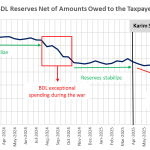
Momentum is growing to use Lebanon's gold reserves, including potentially to finance government spending, before restructuring the public debt and financial sector. I'm concerned that doing so would delay meaningful economic, governance, and political reform while squandering one of the country’s last remaining national assets.
Lebanon should keep BDL’s gold reserves off the table until it has restored a minimum level of public trust, restructured the public debt and financial sector, and placed the country on a credible path to political and economic recovery. None of that has happened yet. I am worried about the precedent we are setting: using $1 billion of gold today becomes $5 billion next year, then $10 billion the year after, until there is nothing left and nothing has changed.
A $40+ billion national asset, managed under the right governance framework, could radically change the course of Lebanon’s future and benefit generations to come. We have a responsibility not to squander it.
The GCC may have more to lose from Iran surviving this war than almost anyone else.
The Gulf’s economic model depends on capital-intensive, fixed/immovable physical assets: oil and gas fields and pipelines, LNG and gas-processing plants, refineries, petrochemicals, fertilizers, aluminum, steel, cement, power and desalination plants, ports, storage terminals, and logistics infrastructure. These assets require hundreds of billions of dollars in long-term financing, and that financing depends on the physical security of the assets for 15+ years.
If Iran retains the ability to strike and heavily damage this infrastructure at any time in the future (and shows a willingness to do so), the financing risk changes fundamentally. A persistent Iranian threat would directly undermine the GCC economic model and the bankability of its industry.

Israel’s strategy is pretty obvious.
The biggest long-term loser from the current Iran-Israel-US war may be the GCC. The Gulf’s economic model depends on capital-intensive, fixed/immovable assets: oil and gas fields and pipelines, LNG and gas-processing plants, refineries, petrochemicals, fertilizers, aluminum, steel, cement, power and desalination plants, ports, storage terminals, and logistics infrastructure. These assets require hundreds of billions of dollars in long-term financing, and that financing depends on the physical security of the assets for 15+ years.
If Iran retains the ability (after showing the willingness) to strike and heavily damage them at any time in the future, the financing risk changes fundamentally. From that perspective, the GCC may have more to lose from Iran surviving this war than almost anyone else, because a persistent Iranian threat could directly undermine the bankability of its entire industrial base.

BREAKING: Iran says natural gas facilities associated with offshore South Pars field have been attacked
🔴 LIVE updates: aje.news/b8762y?update=44128…
I have little confidence, but I hope Lebanon appoints a negotiating team with real experience in high-stakes international negotiations. Working at a think tank or being close to a political leader does not make someone an effective negotiator. Lebanon comes into these talks with a very weak hand. Israeli negotiators will run circles around any Lebanese team chosen through nepotism rather than competence.

It is difficult to see how a two-year extension is not, on its face, unconstitutional. Any suspension of the ordinary democratic process should be permitted only in truly exceptional circumstances, and only for so long as those circumstances strictly require. If elections can be postponed for two years without a valid constitutional basis or a specific justification for that period, on what principle could they not be postponed for ten years?
