

@DamonRunyon Fellow @broadinstitute @Harvard | PhD @UofT | Developmental Neuroscience | Synthetic Biology | Scientific Art and Artistic Science
Cambridge, MA
Joined February 2011
- Tweets217
- Following702
- Followers780
- Likes2.1K





Wendy Xueyi Wang retweeted

The MIT Press Bookstore is surprisingly delightful; among the best-curated bookstores I've visited.
I expected the space, in downtown Cambridge, to be almost entirely devoted to academic titles (and their own books). But it's not! There are a few thousand books on the shelves, neatly divided into scientific fields (biology, chemistry, AI, medicine, science + society, and also science fiction).
They carry lots of "popular science" books, but these titles are biased toward "deeper" or more ideas-driven writers; think Nick Lane, Siddhartha Mukherjee, and Atul Gawande. I vastly prefer this over most mainstream books about biology.
Their science fiction section is also excellent. Many titles from Neal Stephenson, Greg Egan, Ted Chiang, Vernor Vinge, etc.
And then there are books that I don't think I'd find anywhere else! I picked up a little red book about how bacteria have shaped cities and architecture over the last ~thousand years. It is packed with hundreds of images and short histories, and is from a press (Lars Müller Publishers) that I think would be difficult to find elsewhere if you weren't searching for this book explicitly.
I recommend visiting next time you're in the Boston area.


Wendy Xueyi Wang retweeted

Long-term editing of brain circuits with engineered electrical synapses! I still remember years ago when @KafuiDzirasa from @DukeU @hhmi_science called me beaming with excitement about this new technology. Here it is today @Nature.
nature.com/articles/s41586-0…

Wendy Xueyi Wang retweeted

Beautiful paper:
Thalamic activation of the visual cortex at the single-synapse level (Chen et al. 2026) science.org/doi/full/10.1126… -“Our approach enabled the identification and characterization of nearly the complete set of active dLGN synaptic inputs to a single orientation-selective L4 neuron. The spatial alignment of receptive field centers of dLGN inputs matched the preferred orientation of the corresponding neuron. Thus, our findings directly validate core predictions of the connectivity proposed by the H&W model.”

Wendy Xueyi Wang retweeted

My thoughts on connectomics and upload:
1) there is zero question connectomes are invaluable, and we need to get them for mouse, monkey, and human
2) the human, or even monkey, connectome seems a long ways off given costs (roughly $1/neuron). The projectome (map of all the axons) seems eminently reachable and should be a top priority imho
3) but even having the full connectome would only tell you numbers of synapses, not actual synaptic weights, and the two can be hugely divergent (eg only 5% of synapses onto V1 layer 4 neurons come from thalamus, even though this is the major driving input)
4) given #2 & #3, I think we can get to upload in the sense of building a functionally equivalent organism much faster through understanding the algorithms of the primate brain than through blind copying
5) in putting together something as complex as the human brain we would definitely want to check that the various pieces work as we go, which we can only do if we understand these pieces
6) I don't think upload in the sense of blindly creating a digital copy is the path to the abundant transhumanist future--actual understanding of brain structures so we can intelligently interface with them, and emulate their function in code without copying all the details, is.
All to say, we need functional understanding to go hand in hand with anatomical mapping!

Wendy Xueyi Wang retweeted

A realistic picture of how closely packed molecules are inside a synapse of a nerve cell.

Wendy Xueyi Wang retweeted

Researchers identify PGBD5, a transposase-derived gene, as an essential regulator of normal brain development in mice and humans.
Learn more in this week’s issue of Science Advances: scim.ag/4pGsjT8




Check out @cpnoct cool new study on the role of CCK neurons in the DRN for regulating satiation, out today @CellCellPress ! Excited to have contributed to this work.

Thrilled to share the latest work out of my lab at @CellCellPress on neuropeptidergic neurons in the dorsal raphe that regulate satiation. (cell.com/cell/fulltext/S0092…). Led by Srikanth Chowdhury, Nachi Kamatkar, and Wendy Wang (from Xiao Wang's lab). Congrats to an incredible team!

Wendy Xueyi Wang retweeted

Synthesizing RNA can be as fun as LEGO puzzles! This work is co-led by my incredible colleagues @LDangliang and @AbhiAditham . Huge thanks to my supervisor @WangXiaoLab for such amazing ideas. We are also grateful for the editor, reviewers, and all collaborators along the way.


Chemical and topological design of multicapped mRNA and capped circular RNA to augment translation go.nature.com/47EXbfq

Wendy Xueyi Wang retweeted

CAST enables physical alignment of spatial omics data across replicates, techs, modalities at single-cell resolution. Such accurate alignment enables spatial atlas searching, unbiased DEG identification, and reconstruction of spatial multi-omics. DM for questions and collabs!

With the growing availability of spatial omics data from different techniques, CAST offers a computational tool for reconstructing single-cell multi-omic profiles and downstream analysis in a spatially resolved manner. @WangXiaoLab
nature.com/articles/s41592-0…

Wendy Xueyi Wang retweeted

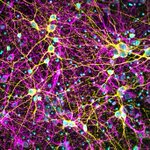
Get lost in twin neuronal universes! 😍 💫
These images taken by @FelipeCourtg with a fluorescence microscope shows neuron-glia crosstalk, which is a key phenomenon for understanding brain diseases like Alzheimer's and Parkinson's


Check out our lab's new work by the talented @xsui98 (two first author papers in one day!). He integrates new methods for probe synthesis and polymer chemistry for cheap, scalable profiling of the transcriptome and translatome in intact tissue blocks. +1 for morphology

Excited to share Deep-STARmap and Deep-RIBOmap! We enabled spatial transcriptomic and translatomic mapping of >1K genes in 200 µm thick tissue and neuron morphology co-profiling.
Thanks @WangXiaoLab for unwavering support; Jennifer for human skin study! biorxiv.org/content/10.1101/…


Wendy Xueyi Wang retweeted

Congratulations to Xiao Wang (@WangXiaoLab), the Cabot Assistant Professor of Chemistry and a Core Member of @broadinstitute , who has been promoted to Associate Professor With Tenure, effective July 1, 2024.
chemistry.mit.edu/chemistry-…

Wendy Xueyi Wang retweeted

Why did we make EzReverse? When a color image is inverted in RGB colorspace, the colors are changed and this is usually not what you want:

Wendy Xueyi Wang retweeted

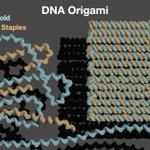
A new approach to visualize 🧬 #DNAorigami within living cells by @leochou0814 lab! 🧫🔬✨It was a great pleasure to write this #Newsandviews for @NatureNano ! Free access using this link! 👇🏿👇🏽👇🏿👇🏻
nature.com/articles/s41565-0…
Wendy Xueyi Wang retweeted

Hey #SfN2023! Mark SOC02 on your meeting planner for the Bridging the Synapse Social, on Sunday 6:45-8:45 pm. Co-hosted by @WilliamsLabUtah and I. We will have icebreakers and stimulating interactions. Please RETWEET/Repost!

Wendy Xueyi Wang retweeted

Excited to share our manuscript on @biorxivpreprint where we adapted origamiFISH (DNA origami detection in cells and tissues via fluorescent in situ hybridization, FISH) from confocal imaging to flow cytometry, origamiFISH-Flow! doi.org/10.1101/2023.10.31.5…
Wendy Xueyi Wang retweeted

Thrilled to see our work finally online! We utilized in situ spatial transcriptomic method STARmap PLUS to map 1.09 million cells in the adult mouse central nervous system at molecular resolution and identified previously unknown tissue architectures.
nature.com/articles/s41586-0…