

Protein ML Research Fellow @Align_Bio previously phd w/ @deboramarks, ml researcher @Flagship_PI, investor @pillar_vc & scientist @scribetx. 🧬🧑💻 🏳️⚧️
they/them
Joined June 2012
- Tweets882
- Following716
- Followers1K
- Likes5.3K




Pinned Tweet
1/5 Biological data is noisy, redundant, and ever-growing. 🗣️
In our new paper (first paper of my post doc!! ⚡️), we track model performance across 14 years of UniRef100 snapshots to ask: how does pLM performance scale with training data?

Bittersweet announcement: this is the final work of my research fellowship at the Align Foundation.
I am extremely proud of this experimentally heroic effort to benchmark generative AI models for protein design.
doi.org/10.64898/2026.05.08.…

Benchmarking generative protein models at scale with GROQ-SEQ 📊
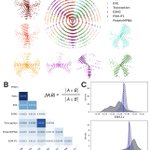
We built a unified benchmarking framework and experimentally tested alignment-based, language, and structure-based models on TEV protease.
Structure-based models achieved up to 74% hit rates, a remarkably high level of experimental success, while computational predictions showed weak agreement with experimental activity.
This collaboration with the @Deborah Marks Lab enabled large-scale experimental benchmarking of today’s leading generative protein models.🔬
🔗 Dive into the details: hubs.la/Q04gpnfg0
#ProteinEngineering #ProteinDesign #MachineLearning #SyntheticBiology #Biotech #AIinBiology #DataScience #GROQseq

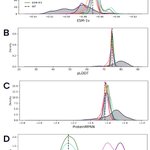
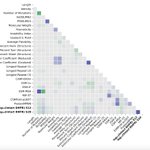
Common filtering metrics have surprisingly limited predictive power.
We compared a large panel of sequence metrics, structure metrics, and model scores against actual measured protease activity (intact DNFH levels)....
One thing I find especially interesting:
The distributions of computational scores across models were relatively tight...but the experimental distributions were broad!

Really stoked to share this work!!! What if every MSA had experimentally measured function labels attached?! GROQ-seq profiled function across 11,722 sequence-diverse protease variants, including natural homologs sampled across evolution and AI-designed “shrunken” proteases
🧬 How Much Diversity Can Proteases Handle? GROQ-seq Has Answers
We profiled 11,722 sequence-diverse protease homologs, including AI-designed minimized variants, and uncovered robust activity across surprisingly distant sequences.
Even across extreme sequence divergence, protease function against the canonical TEV protease substrate persists, with distinct homologs showing activity at as low as 19% sequence identity.
Datasets like this are key to unlocking the next generation of machine learning models for protein engineering 🤖
🔗 Read more: hubs.la/Q04fz4l80
#ProteinEngineering #MachineLearning #SyntheticBiology #Biotech #EnzymeEngineering #HighThroughput #DataScience #AIinBiology #GROQseq

We didn’t just test a few conditions either - this library was profiled across 20 experimental conditions, generating the kind of rich, high-quality functional measurements that protein ML has been missing.
Aviv Spinner retweeted

This tube is a library of bacteria with every single-base-pair genome mutation, all DNA-barcoded.🧪Growth + barcode sequencing = data on millions of mutations.
📄 Report: biorxiv.org/content/10.64898…
Retweet if you want more data, and read on if you want to use the library! 🧵
