

Exploring health, diet, neurological disorders, the brain & nervous system. Keen surfer - Student of psychology. #SystemsThinking
Joined September 2025
- Tweets891
- Following257
- Followers81
- Likes3.3K



Glen retweeted

Doing this for 10 minutes a day will improve your focus:
- Sit or lie down, close your eyes and focus on your breathing for 5-10 min a day
- Your attention will drift. Bring it back to the breath. That is the practice
- Eyes-open version works too: hold a visual target, blink freely, return your attention to it over and over
- Any time of day works, though late night disrupts sleep for some people
- Miss a day, no big deal. Get right back to it the next day
Wendy Suzuki's lab at NYU: 10 min a day improves focus, memory and recall. Zero cost.
@hubermanlab
Glen retweeted

One thing I’ve learned is that these transformations rarely happen alone. The presence of good human energy is required. People ❤️, inspire & relate to one another. Machines cannot. Efficiency? How about humanity? We have billions of humans under-invested/loved in-waiting.

Glen retweeted

Instead of complaining about your team’s culture, do something about it. Be the change you’d like to see!
Glen retweeted
I've just finished Thinking in Systems by Donella Meadows.
The book is about systems, & I found myself constantly relating many of its ideas to the nervous system, which is itself a complex system.
Here are some of the quotes I wrote down in my notes that really stood out to me


Glen retweeted
Be a leader, not a follower. Don’t be afraid to go against the grain. Always choose the right path in life, no matter how unpopular it is.


Glen retweeted

A little boost for this today please #pwME . We need services and safe care for those with severe/very severe #MECFS in Wales. Non Wales and non UK signatories welcome! petitions.senedd.wales/petit…

Glen retweeted

One of the most fearless and uncompromising players of his generation. Now, Lewis Moody faces a very different fight: his battle with MND.
Lewis Moody vs MND premieres Friday at 10pm on TNT Sports 1 with HBO Max.

Glen retweeted

The outrage is that so many have recovered and when we share how and why we’ve recovered we’re attacked and silenced. And yes, I was very very sick. I thought I was dying
Glen retweeted

Free link here: voices.nejm.org/doi/full/10.…

Glen retweeted

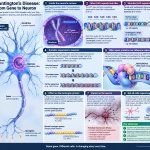
Why do some people with Huntington disease develop symptoms a decade earlier than others? UBC researchers have identified a genetic mechanism that accelerates disease progression and revealed a potential treatment target.
Read more: news.ubc.ca/2026/09/why-some…

Glen retweeted
Neuroscientists publish papers. I shoot videos. I’m just out here having fun. I like to think I make you think. 🤣 I like to think I have empowered some of you.
Glen retweeted

Your breathing and your brainwaves match shape, breath by breath.
Cycle-by-cycle respiration waveforms are coupled with the shape of neural oscillations
jneurosci.org/content/early/…
#neuroscience

Glen retweeted

One of the most unfortunate aspects of ME/CFS, POTS and Long COVID is that predictive processing, active inference and interoceptive processes are often neglected in treatment. 🚨
Because this regulatory world is not well understood, the moment it is introduced it is often rejected as “psychologising”
- which is why FND is also rejected and misunderstood.
These are core brain–body regulatory processes operating largely outside conscious awareness.
They shape cognition, emotion and behaviour, but also autonomic function, immune responses and the way the body prepares for and responds to threat.
But that is exactly the misunderstanding.
Predictive processing is not about symptoms being imagined or consciously generated.
When what we observe does not fit our existing model, we have three options:
1/ Change the model.
2/ Ignore what does not fit.
3/ Change the environment or act on the system to test the prediction and learn.
That third process is active inference.
If we cannot conceive of a brain–body regulatory world outside conscious awareness, we may simply refute it because we do not understand it.
And in doing so, we risk ignoring an entire level of illness, and an entire level of treatment.
As a clinician i see it in practice. Not everyone needs this approach - but in ‘resistant’ long standing cases it is crucial to integrate this formulation.

Absolutely shocking from @JanetDafoe. Functional Neurological Disorder is a real, disabling neurological condition. Patients fought for years against stigma and disbelief. Telling us where our diagnosis can be shoved is disgraceful. Is this really a face of #MECFS advocacy? #FND

Glen retweeted

The brain learns faster when an expected reward does not arrive. Every time a familiar trigger appears and you respond differently, you create a prediction error: the nervous system expected the old outcome and got something else. Enough repetitions teach the brain that the cue no longer guarantees the behavior.
Glen retweeted

Autistic children show atypical development of brain regions connected to the amygdala, a brain structure involved in processing emotion. This 2022 study used structural MRI to track the growth of 32 brain regions connected to the amygdala in 282 autistic children and 128 non-autistic children thetransmitter.org/spectrum/…


