

The Threatened Species Index tracks changes in the abundance of Australia's imperilled species. Part of @TERN_Aus at the University of Queensland.
Australia
Joined June 2020
- Tweets1.3K
- Following526
- Followers921
- Likes1.2K




Pinned Tweet
We are thrilled to announce the release of the 2024 Threatened Species Index! The latest data indicate that threatened and near-threatened species in Australia have declined by an average of 73% since 1985. View the latest trends here: tsx.org.au/tsx2024
@TERN_Aus 🐸🐦🌿🐨

Up next for #WildlifeWednesday is one of the species included in the Threatened Species Index (TSX): the Fleay's Frog (Mixophyes fleayi). This endangered frog is found in south-east Qld and north-east NSW, and grows up to 9 cm!
📷 Geoff Heard
tsx.org.au/tsx2025
#WildOz

For this #WildlifeWednesday is the vulnerable Hawksbill Turtle (Eretmochelys imbricata) which feeds and nests in Australia along the tropical coasts of NT, Qld, and WA. Adult females return to where they were born to lay their eggs!
📷 Nicolas Rakotopare
#WildOz

ALT A Hawksbill Turtle.
Up next for #WildlifeWednesday is the vulnerable Pink-tailed Worm-lizard (Aprasia parapulchella). These worm-like lizards spend much of their time in burrows made by ants or termites, feeding on the eggs and larvae of the ants inhabiting the same burrow!
📷 Geoff Heard
#WildOz

For this #WildlifeWednesday is the vulnerable Yellow-bellied Glider (south-eastern; Petaurus australis australis) which occurs from central Qld down to western Vic. This nocturnal and vocal marsupial lives in family groups and can glide over 100m!
📹 Nicolas Rakotopare
#WildOz
The vulnerable Striped Legless Lizard (Delma impar) is up next for #WildlifeWednesday. This grassland specialist is found in parts of NSW, ACT, Vic and SA. Females begin to breed at 3-4 years old and usually lay two eggs a year during early summer!
📷 Geoff Heard
#WildOz

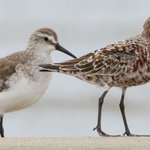
For this #WildlifeWednesday is the critically endangered Curlew Sandpiper (Calidris ferruginea). These migratory shorebirds breed in Siberia in June-July. During the non-breeding period, they can be found in Africa, Asia, New Zealand and Australia!
📷 John Barkla
#WildOz

For this #WildlifeWednesday is the endangered Baudin's Black-Cockatoo (Zanda baudinii) found in south-western WA. They can live for over 50 years and they have a narrower and longer bill than the Carnaby’s Black-Cockatoo, which they are sometimes mistaken for!
📷 Keith Lightbody

🐸 For today’s #WildlifeWednesday is the endangered Pugh's Sphagnum Frog (Philoria pughi) found in far north-east NSW at mid-to-high elevations. They breed in spring and summer, and eggs are laid in a foam mass into water-filled breeding chambers in the ground!
📷 Jasmine Vink

Threatened Species Index retweeted

🐨🌿🦎 Today is #ThreatenedSpeciesDay, a moment to ponder the past and prevent similar outcomes for Australia's native flora and fauna. Kudos to the @AusTSX team for their continuous efforts in monitoring and data collection!
Share your data with the TSX: tsx.org.au/growing-the-index…

Threatened Species Index retweeted
🎤 Hurry! Join our Ecoacoustics workshop at #UQResearchAndInnovation Week!
📅 10 September | 2–3pm AEST
Learn how to leverage TERN's sophisticated multi-sensor infrastructure that utilise new technologies for sound #BiodiversityMonitoring.
Register: research-support.uq.edu.au/e…

For this #WildlifeWednesday is the vulnerable Superb Parrot (Polytelis swainsonii) located in Victoria, ACT and NSW. They breed from September to January, and during this time, males may form flying flocks, sometimes consisting of over 30 individuals!
📷 Matthew Fitzgerald

🐸 For today’s #WildlifeWednesday is the vulnerable Pouched Frog (Assa darlingtoni). This small frog (up to 2 cm in length) is found in north-east NSW and south-east Qld. Tadpoles develop inside the male’s brood pouches, located on both sides of its lower body!
📷 Hines, H.; DES

🐸 For today’s #WildlifeWednesday is the endangered Mahony's Toadlet (Uperoleia mahonyi) which was formally described in 2016. This small frog – growing up to 3.5 cm in body length – inhabits the mid-north coast of NSW and breeds in autumn and spring!
📷 Stephen Mahony
#WildOz

For this #WildlifeWednesday is the vulnerable Painted Honeyeater (Grantiella picta), which grows up to 16 cm in length and is found in open forests and woodlands. This honeyeater is a specialist feeder, mostly feeding on the fruit of mistletoes!
📷 Andrew Silcocks

Next up for #WildlifeWednesday is the endangered Woylie (Bettongia penicillata ogilbyi). The diet of this small, nocturnal marsupial includes underground fungi, bulbs, tubers and seeds. Their digging helps the ecosystem by spreading seeds and fungal spores!
📷 Wayne Lawler/AWC

🐸 For today’s #WildlifeWednesday is the critically endangered Spotted Tree Frog (Litoria spenceri), found in mountainous river systems in north-eastern Victoria and southern NSW. This frog grows up to 6cm in length and breeds from late October to early December!
📷 Adam Parsons

For this #WildlifeWednesday is the endangered Lord Howe Woodhen (Hypotaenidia sylvestris) found on Lord Howe Island. These flightless birds feed mostly on invertebrates including snails and worms. Adults pair for life and defend their territory of 2-3ha!
📷 Patrick Kavanagh

Next up for #WildlifeWednesday is the endangered Dibbler (Parantechinus apicalis) which was presumed extinct until 1967. This small marsupial is found in WA. They breed in autumn and adult females can carry up to 8 joeys in their pouch at one time!
📷 Cathy Lambert, Perth Zoo

🐸 For today’s #WildlifeWednesday is the vulnerable Sunset Frog (Spicospina flammocaerulea). This small frog is found in south-west WA and was only discovered in 1994. Inhabiting Australia for least 30 million years, it is one of the country’s oldest frogs!
📷 Adam Parsons

For #WildlifeWednesday today, we have the endangered Pretty Beard Orchid (Calochilus pulchellus). This herbaceous orchid occurs in southern NSW and eastern Victoria and flowers between late-October and late-November, producing up to 2 open flowers at a time!
📷 John Briggs, OEH
