

Accelerating Spatial Multi-Omics
New Haven, CT
Joined November 2020
- Tweets117
- Following867
- Followers762
- Likes75





What is your tissue doing that RNA alone can't explain?
We're launching the 2026 AtlasXomics Spatial Epigenomics Research Grant to help researchers find out what's controlling gene activity in their tissue.
🔬 Grand prize: $20,000 in White Glove services. That's about four Spatial ATAC-seq or Spatial CUT&Tag assays, or two Spatial CoProfiling (ATAC + RNA) assays, with sequencing, analysis and data delivery included.
🧪 Research awards: up to 30% off kits or services for selected finalists, depending on project scope.
🤝 Referral award: $10,000 in services if a colleague who names you as their referrer wins.
Open to academic, nonprofit, clinical and industry researchers working with tissue (fresh-frozen, or FFPE for Spatial ATAC-seq).
Apply by November 6: atlasxomics.com/grant
The grand prize winner will be announced November 13. Research awards go out on a rolling basis, so apply early.
Know someone with the right question? Tag them below.
#SpatialBiology #Epigenetics #cancerbiology #RNA #SpatialOmics #ResearchGrant

Spatial epigenomics in Cell 🔬
AtlasXomics Spatial ATAC-seq was used to map chromatin accessibility directly in non-melanoma skin cancer—resolving tumor +TME states and regulatory programs associated with immunosuppression.
Even better: the spatial ATAC annotations were independently supported by scMultiome, Xenium and a second cohort.
From where cells are → to the regulatory programs driving their state.
Naara S, Kochat V, Rao X, et al., Cell 2026


Excited to see the Deng Lab apply DBiT-seq to explore 3D genome organization!
Congratulations to the entire team on this impressive preprint!

Excited to share Spatial Hi-C-RNA, enabling genome-wide co-mapping of chromatin conformation and transcriptome at near-single-cell resolution! Fantastic collaboration with @CreminsLab, @zhou_jingtian, and @ZhiHuangPhD. Congrats to @pengfeo, Yan, and team! biorxiv.org/content/10.64898…

AtlasXomics retweeted

Let’s #ThrowbackThursday to #AGBT2026! Our collaboration with @AtlasXomics, NYU Langone Health, & @UltimaGenomics combined spatial ATAC-TAPS+ to map chromatin accessibility + DNA methylation in one tissue section. Full poster in the comments. 👇

Another exciting example of DBiT-seq expanding the boundaries of spatial omics.
Congratulations to Rong Fan, Prof. Chuan He’s team at the University of Chicago, and all collaborators on the publication of m6A-ARTR-DBiT in @NatureMethods!

Excited to share that our collaborative work with Prof. Chuan He’s team at the University of Chicago that developed the first spatial RNA modification sequencing technology (m6A-ARTR-DBiT) has been published in @naturemethods 🥳🥳
nature.com/articles/s41592-0…

The next leap in AI for medicine isn't bigger datasets — it's spatially resolved ones.
On June 1 at NY Tech Week, we're bringing together six leading scientists from Yale, Columbia, IAS Princeton, MSK, and KAUST — including Arnold Levine, @RongFan8 , Benjamin Greenbaum, Raul Rabadan, Xin Gao, and @ZongmingMa — for a frank panel on how spatial multi-omics is building the next generation of tissue-level foundation models.
Five questions on the table:
1. What is spatial multi-omics, and why does it change AI in biology?
2. Can spatial data close the ancestry gap in precision medicine?
3. What does a 100M-cell virtual tissue model unlock?
4. How does AI move from molecule to clinical context?
5. What's the real path to the clinic — and what's still in the way?
Fireside + live Q&A. In-person seats are full; join us free online.
🗓 June 1 · 11 AM ET → Register: lnkd.in/gFSBy7Vf
#NYTechWeek #SpatialOmics #AI #DrugDiscovery

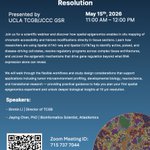
Excited to share that we’ll be speaking at the upcoming UCLA TCGB/JCCC GSR seminar on spatial epigenomics and spatial multiomic assays!
We’ll discuss how Spatial ATAC-seq, Spatial CUT&Tag, Spatial CoProfiling (RNA + ATAC), and Spatial ATAC-TAPS+ (ATAC + DNA methylation) enable in situ mapping of gene regulation directly in tissue context at 10 µm resolution.
Looking forward to connecting with the @UCLA research community and discussing applications in cancer biology, neuroscience, and translational research.
📅 May 15, 2026
⏰ 2:00 PM – 3:00 PM ET (11:00 AM – 12:00 PM PT)
📍 UCLA TCGB/JCCC GSR Seminar
Thank you to Dr. Xinmin Li and the UCLA TCGB/JCCC GSR program for the invitation! @UCLAJCCC @UCLA_Pathology
#SpatialBiology #SpatialMultiomics #Epigenomics #SpatialATAC #CUTandTag #DNAMethylation #AtlasXomics

Thrilled to see this exciting work from our founder @RongFan8 and collaborators published in Nature Communications.
Using Epi-Patho-DBiT spatial multiomics technology, the team mapped chromatin accessibility and histone modifications directly from FFPE tissues to reveal genomic and epigenetic mechanisms driving lymphoma transformation.
Congratulations to the entire team on this outstanding achievement and impactful contribution to spatial epigenomics research. 👏
Read the paper: nature.com/articles/s41467-0…
#SpatialBiology #SpatialEpigenomics #FFPE #Multiomics #CancerResearch

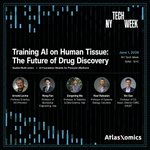
Excited to bring together leaders across AI, spatial biology, genomics, and drug discovery for our @Techweek_ by a16z symposium:
“Training AI on Human Tissue: The Future of Drug Discovery”
From spatial multi-omics to foundation models for biology, this discussion will explore how next-generation tissue-scale data is reshaping the future of precision medicine and therapeutic development.
Featuring:
ArnoldLevine
@RongFan8
@ZongmingMa
Paul Rabadan
XinGao
Hosted by our CEO: Kenneth Wang
📍 NY Tech Week
📅 June 1, 2026
📌 Stifel · NYC
Looking forward to conversations at the intersection of AI and human biology.
RSVP here: partiful.com/e/CoVrmdYxgwtHl…
#Techweek #NYtechweek #Genomics #Epigenetics #SpatialBiology

Excited to share our poster at @AACR 2026: Simultaneous Spatial RNA and Chromatin Accessibility Profiling Reveals Regulatory Underpinnings of Metastatic Transition.
Using AtlasXomics Spatial CoProfiling, we simultaneously measure RNA expression and chromatin accessibility from the same tissue section—linking regulatory state with transcriptional output in spatial context.
Our data reveal distinct tumor states across primary breast tumor and liver metastasis, with evidence that chromatin accessibility changes can precede transcriptional shifts during tumor progression.
This work was made possible through collaboration with @VarleyLab and colleagues, and highlights the power of integrated spatial multiomics to uncover mechanisms of metastasis and therapeutic resistance.
Can’t make it to the poster session? Check out the full Spatial CoProfiling poster here: lnkd.in/edATqfuy
#AACR2026 #SpatialBiology #CancerResearch #Epigenetics #Genomics #NGS

Tumor progression and metastasis are driven by regulatory programs that often remain invisible to gene expression alone.
What if you could simultaneously map chromatin state and transcription directly in tissue context?
At AACR Annual Meeting 2026, we’re presenting new data showcasing how spatial multi-omics uncovers regulatory mechanisms underlying tumor progression, metastasis, and heterogeneity.
🧬 Poster #815 (Board #27)
Simultaneous spatial RNA + chromatin accessibility profiling reveals regulatory drivers of metastatic transition
📍 Session: Spatial Protein Profiling and Multi-Modal Mapping of Tumor and Circulating Ecosystems
📅 April 19 | 2:00–5:00 PM | Poster Section 32
What this enables:
• Link chromatin accessibility with gene expression in the same tissue section
• Identify active, poised, and repressed regulatory states in situ
• Reveal epigenetic heterogeneity across tumor regions
We’re grateful to collaborate with Katherine (K-T) Varley on this exciting spatial coprofiling work.
👉 If you're attending AACR, stop by our posters to connect.
👉 Visit our website to learn more, or contact us to discuss applying this workflow to your own research.
#AACR2026 #CancerResearch #Epigenetics #SpatialBiology #genomics

From discovery to validation: uncovering regulatory drivers with spatial epigenomics
A new preprint from the groups of @YangXiaoBME and @DengYanxiang demonstrates how spatial epigenomics can be used to identify and validate regulatory drivers of biological response in traumatic brain injury (TBI).
Using spatial ATAC-seq, the study identified:
• Region-specific transcription factor activity, including enrichment of the AP-1 family in injured tissue
• Atf3 as a key regulatory driver, with increased chromatin accessibility at its binding motifs in the injured isocortex
These findings were then validated through integration with transcriptomic data:
• Activation of the Atf3 regulon (89 target genes) in the injured hemisphere
• Direct linkage between chromatin state and downstream gene expression programs
This highlights a powerful workflow for researchers:
👉 Use spatial ATAC to discover candidate regulators and region-specific programs
👉 Integrate with RNA to validate functional impact and downstream targets
Together, this approach enables identification of high-value therapeutic targets and provides a deeper understanding of how regulatory programs drive biological responses in situ.
🔗 Read the preprint: biorxiv.org/content/10.64898…
#SpatialBiology #Neuroscience #Epigenetics #Genomics #TraumaticBrainInjury

Excited to visit @nyulangone to discuss how spatial epigenomics is advancing our understanding of gene regulation—beyond RNA.
While transcriptomics shows what genes are expressed, it often misses the regulatory programs driving those patterns. In this seminar, we’ll highlight how Spatial ATAC-seq, CUT&Tag, and multiome approaches map chromatin accessibility, histone modifications, transcriptome, and DNA methylation directly in situ—enabling identification of disease-relevant cell states in their native tissue context.
📍 NYU Langone Health, Science Building 113 (SB113)
🗓 April 3 | 12:30–2:00 PM
Looking forward to connecting with the NYU research community!
#SpatialEpigenomics #SpatialOmics #spatialbiology #Epigenetics #Genomics #transcriptomics

How tightly does chromatin accessibility reflect gene expression — in the same tissue?
With Spatial CoProfiling, we measure chromatin accessibility and whole-transcriptome RNA from the same tissue section, enabling direct, spatially resolved regulatory inference.
In our latest dataset, we observe:
Concordant accessibility and expression → active regulation
Accessibility preceding expression → poised states
Discordant signals → alternative regulatory mechanisms
This integrated view links chromatin state to transcription — in situ.
👉 Explore the dataset and white paper: atlasxomics.com/coprofiling-…
#SpatialEpigenomics #SpatialOmics #SpatialTranscriptomics #GeneRegulation

Introducing Spatial ATAC-TAPS+
Following our AGBT 2026 presentation, we're excited to share our poster introducing our dual-modality spatial assay — developed in collaboration with Watchmaker Genomics, Matija Snuderl, and Ultima Genomics.
Spatial ATAC-TAPS+ integrates chromatin accessibility and DNA methylation (5mC & 5hmC) profiling within the same tissue section, revealing regulatory heterogeneity that bulk assays miss.
📄 View the full poster: lnkd.in/e9MAiveY
🔬 Explore Spatial ATAC-TAPS+ and our broader spatial epigenomic platform at AtlasXomics.com
#AGBT2026 #SpatialEpigenomics #DNAMethylation #ChromatinAccessibility

Excited for @agbt 2026 — see you in Orlando!
📅 February 23–26, 2026
📍 Signia by Hilton Orlando Bonnet Creek
We’re proud to present:
📌 Poster #450
🎤 Presenter: Colin Ng — Vice President, AtlasXomics
🗓 Wednesday, Feb 25 | 4:45–6:10 PM
📍 Bonnet Creek Ballroom I–VI
🧬 Integrating Spatial Open Chromatin and DNA Methylation Profiling with Spatial ATAC-TAPS+
In this work, Colin presents Spatial ATAC-TAPS+, a first-in-class dual-modality assay that maps chromatin accessibility and DNA methylation (5mC/5hmC) in intact tissue at near single-nucleus resolution. By linking epigenetic states with histology, we reveal spatial tumor heterogeneity — including poised and resistant niches invisible to bulk profiling.
🤝 In collaboration with Watchmaker Genomics, Matija Snuderl (NYU Langone), and Ultima Genomics.
If you’re interested in spatially resolved epigenomics, tumor biology, or the next generation of integrated accessibility-methylation profiling, we’d love to connect! Learn more about our spatial epigenomics solutions at AtlasXomics.com
#AGBT2026 #SpatialEpigenomics #DNAMethylation #ChromatinAccessibility #CancerEpigenetics #SpatialOmics #AtlasXomics #TumorHeterogeneity #GenomicsInnovation #CollaborativeScience

Great to see the rapid advances in DNA methylation technologies highlighted in @GenomeWeb
year-end feature last December — including emerging directions toward single-cell and spatial epigenomics.
In its outlook toward 2026, the article points to early progress in bringing DNA methylation analysis into tissue context, and we’re proud that AtlasXomics was included in this discussion.
Exciting to see where the field is headed as spatial and epigenomic tools continue to evolve — and stay tuned as we work toward expanding our spatial epigenomics portfolio into DNA methylation.
Read the full article: genomeweb.com/sequencing/dna…
#SpatialOmics #Epigenomics #DNAMethylation #GenomicsInnovation

We’re excited to share a new partnership milestone for AtlasXomics!
Through our collaboration with Forge and CPS Fluidics, LLC, we’re strengthening the manufacturability and scalability of our spatial epigenomics technology — helping bring powerful tools for studying gene regulation in tissue context to more researchers.
This partnership brings together innovation, engineering expertise, and ecosystem support to accelerate impact in spatial biology.
Grateful to FORGE Impact and CPS Fluidics for being incredible partners on this journey!
🔗 Read the full success story:
forgeimpact.org/success-stor…
#SpatialBiology #Epigenomics #BiotechInnovation
