

Providing a bipartisan forum to address preeminent challenges in U.S. economic policy.
Washington DC
Joined October 2019
- Tweets2.2K
- Following1.5K
- Followers2.8K
- Likes876


“It certainly looks like family formation and parenthood is a less central force shaping people’s decisions in their twenties and thirties. But this is why we say shifted priorities and not preferences. Because if you look at survey data, people still say they want to have kids. They still say their ideal family is about two kids. So what people are saying doesn’t look like they’ve dramatically changed their preferences. But what people are doing certainly looks like they’ve changed their prioritization.”
AESG Director @kearney_melissa recently joined the @Freakonomics podcast to unpack the data behind the declining US fertility rate and explore what policymakers can do to help close the gap between the families people want and the ones they’re actually having.
Listen to the full episode here: freakonomics.com/podcast/can…

1
70
Kearney and Phillip Levine outline their “shifting priorities” framework in their AESG paper, “The Causes and Consequences of Declining US Fertility”:
economicstrategygroup.org/pu…

35
"What does it take to think about the jobs first and ensuring that the quality of what we offer on the training side links to a real job that pays well? That's really the first job to be done here." — Rachel Lipson
Advanced technologies are reshaping the American economy faster than talent pipelines can keep up.
At the AESG’s recent book talk, Resident Scholar @Rachel_Lipson joined @byHeatherLong (@NavyFederal), @EsauPearl (TechSmart Learning Fund), Garrett Groves (Austin Community College), and Hope Morrow (Idaho Advanced Energy Consortium) to discuss how policymakers, educators, and private companies can fill jobs in critical frontier technology industries.
Watch the full conversation here: youtube.com/live/inDgD45NJBU

HAPPENING NOW: “The New American Frontier” book launch
Join AESG Resident Scholar @Rachel_Lipson as she discusses her new book, “The New American Frontier: Job Training for the Next Technological Age.” She’s sitting down with @byHeatherLong (@NavyFederal) to outline how the latest wave of technological innovation is creating opportunities for workers without four-year degrees and explore how policymakers can strengthen pathways into these careers.
Later, she’ll join a panel discussion with education and workforce development leaders featured in the book: @EsauPearl (TechSmart Learning Fund), Garrett Groves (Austin Community College), and Hope Morrow (INEC Tech Hub).
Tune in to join the discussion: youtube.com/live/inDgD45NJBU
Advances in artificial intelligence are poised to reshape the US economy at an unprecedented scale and speed. In a new AESG paper, Glenn Hubbard (@Columbia_Biz) and @parduel (@AspenEcon) argue that managing the transition to an AI-enabled economy will require a robust response from policymakers and business leaders.
1
150
Read Hubbard and Pardue's full paper, "Advancing Economic Participation in the AI Era: A Private- and Public-Sector Agenda," here: economicstrategygroup.org/pu…

1
29
Hubbard and Pardue also expand on the paper’s themes in a recent @barronsonline op-ed: “How to Ensure That AI Disruption Doesn’t Leave Workers Behind.”
Read the full piece here: barrons.com/articles/how-to-…

32
AESG author @MichaelRStrain recently published an op-ed in @FT arguing that the goals of increasing manufacturing employment and reducing the trade deficit are wrong-headed.
He cites his 2024 AESG paper, which points out that policies aimed at increasing manufacturing jobs and reducing the trade deficit have failed to raise employment and reduce the country’s reliance on China. More broadly, he suggests that seeking to boost manufacturing employment is a fundamentally misguided goal, since the decline in US manufacturing jobs is largely a result of productivity increases that have raised living standards for typical American households. Rather than attempting to turn back the clock, economic policy should be focused on connecting workers to the jobs of the future.
Read the op-ed here: ft.com/content/800da770-639b…


2/ The goals of the trade war were to boost manufacturing employment and to reduce the goods trade deficit. These are wrongheaded goals. economicstrategygroup.org/pu…
@AspenEcon

And read Strain’s full paper, “Protectionism is Failing and Wrongheaded: An Evaluation of the Post-2017 Shift Toward Trade Wars and Industrial Policy,” here: economicstrategygroup.org/pu…
NEXT WEEK: “The New American Frontier” book launch
AESG Resident Scholar @Rachel_Lipson studies seven regions at the forefront of frontier technologies—from electric vehicle plants in Austin to small modular reactors in Idaho—to explore how educators, employers, and policymakers can improve America’s job training system to fill critical roles in emerging industries.
Join us on November 17 for a conversation on the book’s key findings and policy solutions to strengthen the pathways into these careers.
Agenda highlights:
- Book discussion: Lipson sits down with @byHeatherLong, @NavyFederal Chief Economist and former Washington Post economics columnist
- Expert panel: Insights from education and workforce development leaders @EsauPearl (TechSmart Learning Fund, Arizona), Garrett Groves (Austin Community College), and Hope Morrow (@INL)
- Networking reception: Open to in-person attendees in Washington, DC
Register today to attend in person or via livestream: economicstrategygroup.org/ev…

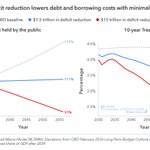
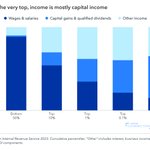
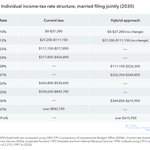
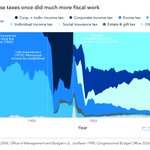
“My colleague Kim Clausing and I just put out a paper with the Aspen Economic Strategy Group that offers a way to raise $15 trillion to meet an extraordinary fiscal moment in kind of ordinary ways.”
On @BloombergTV, @NatashaRSarin (@YaleLawSch; @The_Budget_Lab) discussed her latest AESG paper that addresses one of the country’s most pressing economic challenges—the high and rising federal debt.
Co-authored with @KClausing, the work lays out an agenda to meaningfully raise government revenue by implementing ordinary, time-tested tax mechanisms.
Watch her discussion with @DavidWestin here: youtu.be/AUJA7d08ZeM?si=AeFJ…


America’s national debt has climbed past $40 trillion and persistent deficits are putting upward pressure on long-term interest rates. Economists including Natasha Sarin of the Yale Budget Lab argue that heavier government borrowing ultimately filters through to households in the form of higher mortgages, car loans and other financing costs. More on Wall Street Week bloom.bg/3EMZYZX
1
211
And read Sarin and Clausing’s full paper, “$15 Trillion on the Table in 2029: Ordinary Taxes to Meet an Extraordinary Fiscal Moment,” here: economicstrategygroup.org/pu…

64
America’s competitiveness in advanced industries depends on building critical talent pipelines to fill new jobs emerging across the country—from semiconductor fabs to quantum labs to battery plants.
On November 17, join the AESG for a live discussion about Resident Scholar Rachel Lipson’s (@Rachel_Lipson) new book, “The New American Frontier: Job Training for the Next Technological Age.”
We’ll explore this next generation of technical jobs and how leaders can better prepare and connect workers to new careers.
🗓️Tuesday, November 17, 2026 at 3:30 p.m. ET
📍Aspen Institute (Washington, DC) or via livestream
Agenda Highlights:
- Book discussion with Lipson and Chief Economist at Navy Federal Credit Union Heather Long (@byHeatherLong)
- Expert panel with education and workforce development leaders Pearl Chang Esau (@EsauPearl), Garrett Groves, and Hope Morrow
- Post-panel reception (in-person attendees only)
Sign up here to secure your spot: economicstrategygroup.org/ev…

In a @nytimes essay, AESG authors Owen Zidar (@omzidar) and Eric Zwick argue that taxing a handful of billionaires “misses the forest of wealth in the Golden State for a few redwoods in Silicon Valley.” To raise meaningful revenue, they argue, the state needs to close existing loopholes that favor incumbent homeowners and “everywhere millionaires,” who figure little in the tax policy debate today.
Zidar and Zwick estimate California is home to about 450,000 households that own a private business and have at least $5 million in wealth. This group is collectively worth about $9 trillion, nearly five times as much as the billionaires.
The AESG recently sat down with Zidar and Zwick to discuss their research on everywhere millionaires. Watch the clip below for one of their key findings, and read their full op-ed here: nytimes.com/2026/10/29/opini…
For their perspectives on US tax policy, see Zidar and Zwick’s AESG paper, “The Next Business Tax Regime: What Comes After the TCJA.”
economicstrategygroup.org/pu…
