ASIGMA retweeted
“The greater challenge we see is not one for financing, but one for getting the fintechs investment-ready", 𝐃𝐚𝐧𝐢𝐞𝐥 𝐌𝐮𝐭𝐮𝐦𝐛𝐚, Senior Manager, Access-to-Finance Programs, @AsigmaGroup while presenting the proposed Fintech Fund at #FAFC2026.
In addition, he noted that with 68% of fintechs relying on self-financing and 48% waiting 12+ months for funding, the Fund is being designed around different business models, stages and financing needs.
On his part, 𝐉𝐚𝐦𝐞𝐬 𝐋𝐮𝐜𝐚𝐬 𝐄𝐭𝐨𝐭, Investment Analyst, @AsigmaGroup, explained:
“This fund is not one single product. It's basically tailor-made to match the financing of these fintechs.”
The proposed UGX 8.3bn Fund would use blended finance and is designed to recycle capital 5.2× over 10 years. A pilot of 3-5 fintechs is planned before wider intake.
Banks, institutions and investors were encouraged to make their interest known and say how they want to participate.
Follow the conversations via: youtube.com/live/clTm2PCSQd4…
#FAFC2026 #FITSPA #FintechConference #DigitalTransformation #InclusiveGrowth #Innovation #AfricaTech
ASIGMA is pleased to announce the commencement of its work as the implementation partner for the Revitalization of the Lesotho Textile and Apparel Sector (RLTAS) Project.
Through this World Bank-funded CAFI initiative, ASIGMA will support Lesotho's textile and apparel firms to improve productivity, quality, and market competitiveness, while strengthening Lesotho National Development Corporation's (LNDC) capacity to attract investment and promote exports.
Learn more: asigmagroup.com/news/asigma-…
Millions of economically active people remain outside formal finance because traditional lending models often fail to capture how they earn, save, and transact.
Financial institutions and funders therefore need stronger ways to assess creditworthiness.
Alternative data can help build credible financial identities, widen access, and support more informed lending decisions.
Explore more: asigmagroup.com/insights/tra…
Community based SACCOs remain central to financial inclusion, yet many still operate with systems that limit efficiency, transparency, and their ability to scale.
Closing the digitisation gap requires more than purchasing software. SACCO leaders and development partners must address infrastructure, staff capacity, governance, and the full cost of sustaining digital operations.
Explore more: asigmagroup.com/wp-content/u…
Africa’s infrastructure ambitions depend on both the scale of investment and the quality of project selection.
Early stage appraisal enables governments and development partners to test competing priorities, protect scarce capital, and identify projects with the strongest economic and social returns.
Learn more about ASIGMA’s role in the US$513 million GKMA infrastructure prefeasibility project: asigmagroup.com/insights/pre…
ASIGMA retweeted
We went behind the scenes to capture the real stories. From the ground up, our participants drive change in Uganda’s agri-food sector. We’re honored to be part of their journey. Discover untold stories of resilience, innovation & farmer-led prosperity.
#SignatureProgramForum2026
ASIGMA retweeted
📢 UNDP, the Government of South Sudan, @AfDB_Group & @AsigmaGroup have launched a 2-day Validation Workshop for the Public Investment Management (PIM) Operational Manual in Juba.
The framework will strengthen planning, accountability, and the effectiveness of public investments, supporting sustainable and inclusive development across South Sudan.
#UNDP #SouthSudan #EconomicGovernance
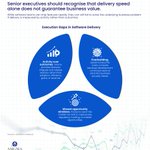
Delivering software faster can create the appearance of progress without actual value realised.
Senior executives should assess technology delivery against the business problem solved, the value created, and whether the solution reaches the market while the opportunity still exists.
Explore how business leaders can turn software delivery into measurable value: asigmagroup.com/insights/tur…
Kenya’s 🇰🇪 climate finance ecosystem is gaining greater policy clarity, but regulation alone will not unlock capital at scale.
What matters now is whether that momentum can be converted into well-prepared projects with credible revenue models and risk structures that investors can support.
Explore what it will take to turn Kenya’s climate finance momentum into bankable deals: asigmagroup.com/insights/ken…
Access to finance can open the door for young people in agribusiness. However, true and lasting enterprise growth depends on the systems surrounding that capital.
For fund managers and financial institutions, this means linking financing with markets, business support, aggregation, and the wider agricultural value chain.
Explore how the US$2 million SAYE Credit Fund, designed by ASIGMA in partnership with Heifer International, is putting this approach into practice: asigmagroup.com/news/asigma-…
Software projects create greater value when assumptions are tested before they become expensive commitments.
For organisations seeking to lead rather than react, Agile development should not be viewed solely through the lens of speed. Rather, it should be seen as a disciplined approach that enables teams to validate user needs, refine workflows, and adjust scope while change is still manageable.
Learn more: asigmagroup.com/insights/tur…
Across Africa, digital transformation is reshaping how organisations compete and create value.
For business leaders, the priority is building systems that improve responsiveness, service delivery, and customer experience.
Explore how digital transformation is shaping innovation and efficiency across Africa: asigmagroup.com/insights/dig…
As climate investment needs grow, the challenge is not only raising capital but preparing projects that can absorb it.
In Kenya, risks around currency exposure, offtake arrangements, land access, permitting, and revenue models continue to shape whether climate projects can reach financial close.
Explore how stronger project preparation and risk mitigation can help turn climate finance opportunities into bankable deals: asigmagroup.com/insights/ken…
Financial institutions play a critical role in making inclusion practical, responsive, and sustainable.
When products are designed around real customer needs, finance can better support enterprise growth, resilience, and long term participation in the formal economy.
Read more on strategies expanding access to finance for youth and women across Africa: asigmagroup.com/insights/tra…
Software delivery becomes a business risk when it is treated as a technical exercise rather than a leadership and execution priority.
Without clear strategy, context fit, and outcome based measurement, digital projects can miss the business value they were designed to create.
Read more on turning software delivery into measurable business value: asigmagroup.com/insights/tur…
Africa’s digital transformation is entering a new phase, moving from early adoption to the threshold of scale.
The question is no longer whether digital uptake is happening, but how quickly and inclusively it can scale across sectors amid persistent infrastructure, connectivity and skills constraints.
Explore how digital readiness is shaping Africa’s next phase of growth: asigmagroup.com/insights/dig…
Livelihood restoration works best when recovery creates pathways to long-term income and enterprise growth.
Through the East African Crude Oil Pipeline Livelihood Restoration Program, ASIGMA supported project affected households with market driven livelihood interventions and local partnerships.
Read more: asigmagroup.com/case-studies…
Financial inclusion for Africa’s youth and women is moving from ambition to implementation.
Across the continent, institutions are using practical lending models, digital finance, partnerships, and policy support to expand access and strengthen participation in formal financial systems.
Discover how scalable strategies are helping unlock more inclusive access to finance across Africa: asigmagroup.com/insights/tra…
Digital strategy delivers value when it is anchored in the realities of the users it is meant to serve.
In mobile first markets, assumptions made at the design stage can determine whether a product becomes embedded in daily operations or remains underused after launch.
Explore why senior executives must treat user context as a core requirement in software delivery: asigmagroup.com/insights/tur…