

Financial economist. Studies asset pricing, ML, text/NLP, information. Teaches fintech. Dad x 3. Coding nerd. Rarely funny.
Underwater
Joined December 2011
- Tweets2K
- Following696
- Followers1.9K
- Likes2.8K


Pinned Tweet
Wow, the JFE is fast.
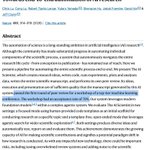
Forthcoming in its Nov 2026 issue, Chronologically consistent LLMs, coauthored with the amazing @hesongrun @LinyingLyu and @JimmyCMWu

a great service to the asset pricing research community


Not a bad program ;)
Many thanks to all of you who sent us your papers. The quality of submissions was so good that we expanded the conference a bit to accomodate, but still had to pass on some very interesting ones. Registration is open so consider joining us in St. Louis this November.
event.olin.washu.edu/22-wash…
Asaf Manela retweeted

If you’re building an AI trading or investing agent, you probably want to give it data from Substack, podcasts, YouTube, and X.
Your first thought will be: “I’ll just vibe code this myself.”
Then you realize this data is much messier and more expensive to ingest, structure, and maintain than it looks. You just want to focus on what makes your product unique: the agent, execution, UX, etc.
That’s exactly the problem we’ve spent months solving @trydrip.
Drip turns unstructured financial content into structured data that agents can actually use, without burning tokens processing the raw content.
If you’re building an AI trading or investing product, we’d love to help you integrate Drip. DM me.
Video explainer for humans: youtu.be/TtiiAe_GoQY?si=JoGS…
The gated but open paper: authors.elsevier.com/sd/arti…
The forever ungated paper: arxiv.org/abs/2502.21206
The models: huggingface.co/manelalab
3
174
Asaf Manela retweeted

suppose you ask a language model the probability it will rain tomorrow. then you ask the probability it will not rain tomorrow
whatever happens tomorrow, those two probabilities should sum to one
but suppose the model generates P(rain) = 0.7 and P(no rain) = 0.2

don't you just love a good puzzle?
this new draft incorporates some great new potential explanations we heard from smart colleagues while presenting the paper in seminars and conferences.
yet the puzzle still stands ...

Are you advising a promising finance phd student who is on the job market?
The deadline for phd poster nominations for the Olin Finance Conference is August 31, so consider nominating them.
(if you are that student, ask your advisor)
Faculty must submit nominations through the conference registration page: event.olin.washu.edu/washu-f…
This year, we made the form as confusing as possible in order to extract a costly signal from the nominating faculty.
Asaf Manela retweeted

Banger paper from Google.
If you maintain a skill library for your agents, you might want to check this out.
(bookmark it)
This work separates three things that skill-evolution systems usually collapse into one. Raw execution traces, a persistent wiki of accumulated knowledge, and the executable skills themselves.
Experience gets consolidated into the wiki, and every later skill update builds on that wiki instead of on a scattered optimization history.
Ablations confirm the wiki is what carries a lot of the gain. Two results stand out in particular. Smaller models with evolved skills beat substantially larger models without them. And skills evolved by one model transfer across families, where skills evolved elsewhere sometimes beat self-evolved ones.
Paper: arxiv.org/abs/2608.27454
Chat with Paper: academy.dair.ai/papers/wikis…

Asaf Manela retweeted

I was part of that team. Basically ChatGPT one year before it came out. Called LMChat and then another codename.
Google was too nervous to release it and DeepMind was blocked from shipping products that could disrupt Google.
I think about this a lot.
⏰ Deadline is TONIGHT: submissions for the 22nd Annual Olin Finance Conference at WashU close at 11:59 PM CT.
Don't be the one refreshing your inbox in August wishing you'd hit submit. Asset pricing, corporate, behavioral, intermediation — all welcome.
Get your paper in now ⬇️
event.olin.washu.edu/washu-f…
1
187
📢 Call for Papers: 22nd Annual Olin Finance Conference at WashU, Nov 12–13, 2026, St. Louis.
All areas of finance welcome: asset pricing, corporate, behavioral, intermediation & more. Empirical + theoretical.
Deadline: July 31. Submit ⬇️
event.olin.washu.edu/washu-f…
#Finance #CallForPapers
PhD students on the 2026–2027 finance job market: ask your advisor to nominate you for the poster session at the Olin Finance Conference at WashU.
Winners get lodging, paid registration & free poster printing. Faculty nominations due Aug 31.
event.olin.washu.edu/washu-f…
#Finance #PhD #JobMarket
If you use cursor in windows you should probably stop
mindgard.ai/blog/cursor-0day…

1
3
648
What it feels like to work with Mythos, by @emollick open.substack.com/pub/oneuse…
Using capital requirements to fix the climate is like using using interest rates to fight obesity. It might curb consumption, but it is wildly indirect and hits a lot of unrelated activity.
That is what makes proposals like the Climate-Aligned Finance Act (CAFA) so silly. Higher capital charges on fossil-fuel exposures may sound like elegant climate policy, but bank capital regulation is designed to protect bank stability, not decarbonize the environment.
In an elegant paper forthcoming at the JF, Martin Oehmke and Marcus Opp, bring some much needed clarity to this contentious policy debate. Their core point is that capital requirements can be useful for prudential climate risk, but they are a clumsy substitute for carbon pricing or direct emissions policy.
Trying to make bank regulators solve climate change risks weakening both climate policy and financial regulation.
Use the right tool for the job.

Asaf Manela retweeted

Scientific progress in economics is bottlenecked by the supply of tenured jobs, so the review process gets drawn out
CS coordinated to a better equilibrium: faster dissemination of research through conference proceedings, and weighing these proceedings (+ citations) for tenure

Yes. Computer science has the best research culture in my experience.
At this point, its impact speaks for itself.
Other disciplines like economics and the political economy of development could learn a lot to reach their ultimate potential.
How did they pull it off? Thread brought to you from .@mlxdoing .@DevEconX.
🧩 US investors pay active asset managers about 17 times more in fees than informed traders could possibly earn by forecasting prices.
In a new paper with Ohad Kadan, we develop a simple, model-free measure of the total value of information in stock markets — an upper bound on what any active manager could capture by trading on superior information about future prices — and bring it to high-frequency US equity data.
The idea. Under mild assumptions of Kyle–Back models with competitive market making, the total value of information equals one observable object: the expected covariation between price changes and order flow, E∫dP·dY. Informed traders smooth their orders to disguise them; noise trading is jittery. At high frequency, cov(dP, dY) recovers exactly the losses of noise traders — and thus the gains of the informed — without needing to identify which trades were informed.
The numbers. Using intraday TAQ data on US equities, September 2003 to December 2024:
- Average value of information per stock: about $3.5 million per year
- Aggregate value of information: only 0.04% of market capitalization
- Investors pay active managers: about 0.67% of market cap each year (French 2008)
The attached figure shows the value of information over time.
Validation. The measure behaves the way a value of information should. It rises in turbulent times, is higher for large, growth, and momentum stocks, jumps more than 3-fold on earnings announcement days, and is robust to trade-signing, sampling frequency, and the inclusion of penny stocks.
The puzzle. In any reasonable model (e.g. Garleanu-Pedersen 2018), the value of information equals management fees plus the cost of searching for good managers — so fees can be at most as large as the value of information. Our estimate of the value of information is about an order of magnitude smaller than the fees investors actually pay. We work through the candidate explanations — non-competitive market makers, risk aversion, partial information, behavioral mistakes, non-informational services — and most either deepen the puzzle or leave it unresolved.
One reading: US equity markets may be so informationally efficient that there is little left for the informed to extract — and most of what investors pay for active management is not paying for information at all.
The wedge between the value of information and the cost of seeking it is a target for future theory.
