

Senior analyst at CSA Research (@CSA_Research) focused on language technology, localization industry, and globalization. All opinions expressed are my own.
Bloomington, IN
Joined April 2011
- Tweets398
- Following158
- Followers574
- Likes33





Hey, @shop, your app requests some pretty extraordinary privileges from users. I can’t believe anyone signs up if they have to give you permission to view their email messages and settings. There is no legitimate reason to have that level of access that I can think of.

Just got a bottle of @DrinkVirgils Bavarian Nutmeg root beer to try and it was completely flat upon opening it. Not a hint of carbonation. Flavor was decent, but flat root beer is still flat root beer.
Went to @IHOP in American Fork, Utah last Friday and the waitress, Lee, made it a truly special occasion at a time when our party was commemorating a death in the family. Lee went above and beyond and made us all laugh. She was exactly what we needed right then.
Blind date on Hallowe’en. She dresses up in 60s clothes, so I did my best late 60s outfit as well. She complained to the person who set us up that I was a weirdo for dressing that way: She somehow didn’t realize I would wear a customer too. 🤷🏻
#WorstFirstDate
@jimmyfallon
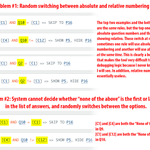
@SurveyMonkey Bug in advanced branching logic: The system randomly switched between absolute and relative numbering of questions and sometimes shows “none of the above” as C1 and sometimes as the last C in the series. This makes debugging sketchy.

My latest post on large language models and their implications for the language industry: csa-research.com/Blogs-Event… Short version: You have to be careful about what you promise.
One major difference between #Galactica and #ChatGPT: When ChatGPT doesn’t have relevant training data, it tells you so; When Galactica doesn’t, it just makes stuff up that seems reasonable. One team thought about #ResponsibleAI, the other seemingly didn’t.
And here is the response from #Galactica to the prompt "A description of the Lommel hypothesis.”:

[10/11] Since “making [new] stuff up” is the point of these models (if they are “creative”), then their makers really cannot use “hallucination” (broadly understood) as a dodge to avoid responsibility for their output. The box needs a clearer warning label.
[11/11] So, @emilymbender, I guess this means I have almost completely capitulated and have to admit you were far more correct than I initially realized, because it is used as a weasel word to get out of taking ownership of problems.
[7/11] All of these issues point out just how far the gap is between #AI and human intelligence. There has been a lot of nonsense about how ML “learns like humans do” and is “based on the human brain”. It has more in common with fruit fly visual ganglia…
[8/11] …and ML isn’t anywhere near ready to replace humans in most intellectual areas, despite hyperbolic claims to the contrary. #machinetranslation (MT), for instance, is not reliable as a replacement for #humantranslation, but instead useful when it can’t cause harm.
[5/11] More generally, blaming the public for “casually misusing” Galactica is a problem because when you put something out for the public to use, you can’t dictate how they will use it unless you code in limitations, but any such attempts to code in limitations…
[3/11] …so if the AI is actually reasoning, then where is the boundary? So calling some problematic output a “hallucination” is a dodge. By contrast, I think “hallucination” in a more limited sense can be useful, such as when Galactica gets in a repetitive loop of nonsense.
[4/11] But now I have to agree with @emilymbender that that term is deeply problematic as #Meta used it because (a) there is no way to tell what is or is not hallucination and (b) we can’t tell reliably how “making stuff up” is different from “doing what Galactica does.”