

Breakthrough results are only possible through a change in mindset. We change mindset.
Global
Joined June 2009
- Tweets5.3K
- Following10
- Followers3.4K
- Likes2K








It’s easy to see how they’re making things worse.
Much harder to see how you are.
But seeing your part is where change starts.

Holding people accountable sounds like good leadership. But who really owns the accountability if the boss has to notice, correct, and follow up?
The goal isn’t to get better at holding people accountable. It’s to develop people who hold themselves accountable.

“I should help.”
“I should listen.”
“I should apologize.”
Then we find a reason not to.
“I’m too busy.”
“They don’t deserve it.”
“Why should I?”
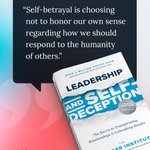
That’s self-betrayal: going against our initial sense of what we should do for another.
And it changes what follows.

We panic when the Wi-Fi drops for 30 seconds. Yet teams can go years without real human connection.
We know job titles, not what people carry. We answer emails faster than we understand each other.
Wi-Fi won’t fix that. Seeing people as people might.

Outward mindset changes everything—how we lead, collaborate, listen, give feedback, disagree, make decisions, and move through the world.


We’re so quick to fill in the gaps about other people.
“They don’t care.”
“They’re being difficult.”
“They should know better.”
“They just don’t get it.”
Certainty closes the door.
Curiosity opens it.
An outward mindset leaves room to be surprised by people.
Get curious.

People see us through stories built over time, and changing those stories usually takes time too.
When you consistently show up differently, you don't just free yourself from an old narrative. You free everyone else from relating to you through it as well.


This is a trash can.
We can blame it, use it, or ignore it.
It’s just an object.
But people aren’t objects.
People aren’t here to be used up, dismissed, or treated like they only matter when they’re useful.
Objects exist for our purposes.
People do not.


Self-focus narrows our vision. We start sorting people into those who help us, those who get in our way, and everyone else we barely notice. People become objects instead of human beings. An outward mindset begins when we recognize that blind spot.

Good intentions aren't enough. People don't experience your intentions—they experience how you treat them. They can feel the difference between being helped and managed, led and controlled, included and handled. So ask yourself: What's it like to be on the receiving end of you?

Wanting change is easy. Being the change? That's where most people stop.
Everyone's waiting for someone else to go first. What if that someone is you?


