

Applied Intuition is the physical AI company bringing intelligence to every moving machine on the planet.
Sunnyvale, CA
Joined August 2017
- Tweets1.1K
- Following218
- Followers6.7K
- Likes396
You join. You ship. You find what’s broken and fix it.
That’s the bar.
review.firstround.com/firsth…
Silicon Valley software expertise x Japanese engineering excellence.
Applied Intuition and @HondaJP are partnering to speed up Honda’s in-house development of a centralized, upgradeable SDV platform.
Learn more about how we are working together to transform the automotive industry.
appliedintuition.com/blog/ho…
AI-defined vehicles require transforming more than the software in the car, they require transforming how that software gets built.
That’s why we’re excited to partner with @Nissan to support their next-gen SDV and AI-defined vehicle efforts, built on our Vehicle OS.
This is how AI-defined vehicles get built from here.
appliedintuition.com/blog/ni…
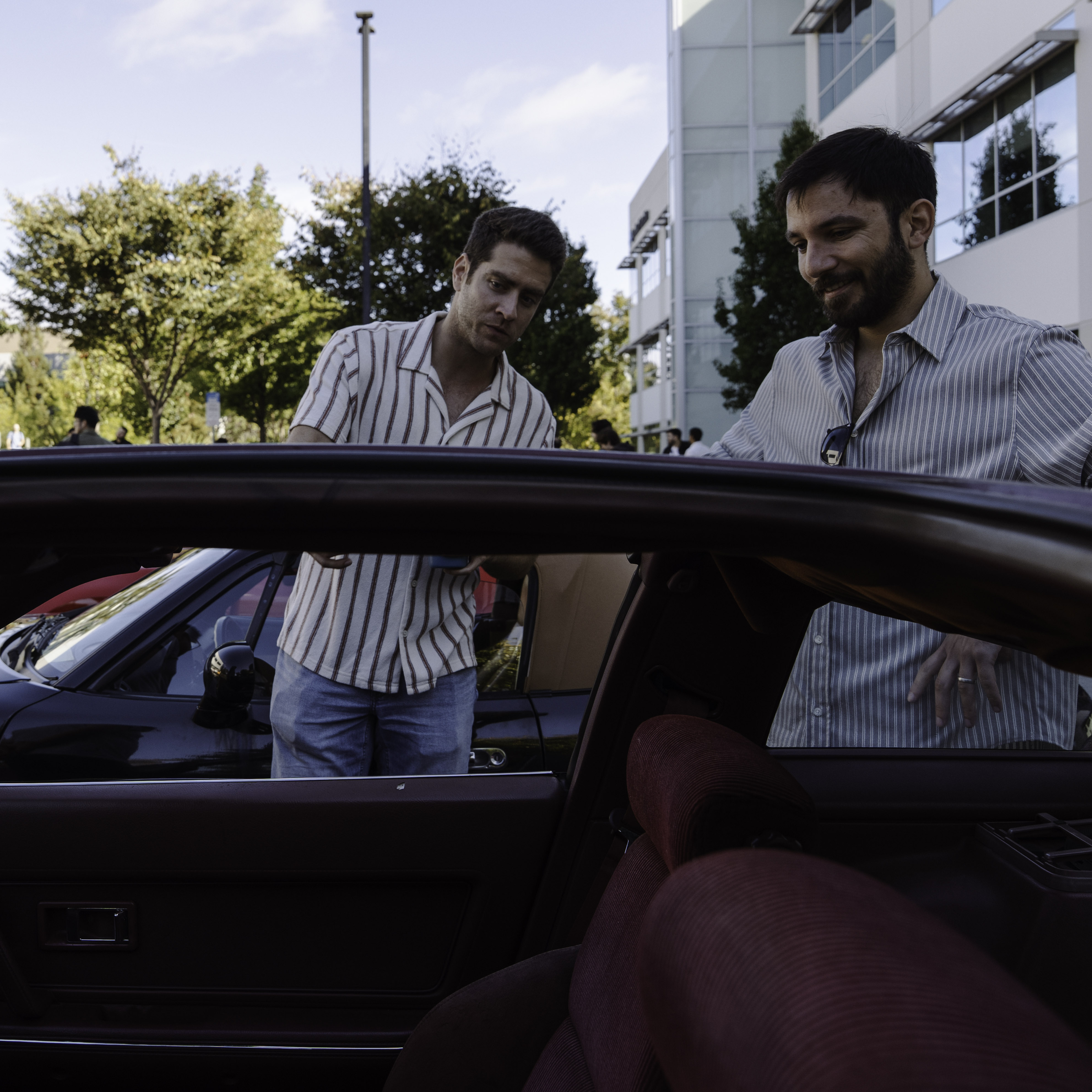


Our team is headed to @Stanford this Wednesday, October 7th, for the Stanford Computer Forum Career Fair!
Drop by McCaw Hall at the Arrillaga Alumni Center between 11am and 4pm to meet our team and learn about how our team is solving the most complex challenges in physical AI.
appliedintuition.com/careers…

The result:
→ On semantic segmentation, LFG surpasses its own teacher on future frames (0.751 vs 0.680 mIoU), despite predicting blind while the teacher saw the real images.
→ Depth predictions on future frames closely match the teacher (0.31 vs 0.26 AbsRel on KITTI-360, 0.22 vs 0.19 on Waymo Open Dataset).
→ It correctly separates moving objects from static background even when the automated labeling pipeline gets it wrong.
Architecturally, the model consists of a frozen image encoder backbone paired with trainable causal autoregressive transformers. To reconstruct scenes and generate future predictions, these transformer layers are trained under the guidance of a suite of teacher models for depth, poses, semantic and motion.
