

Research. Analysis. Solutions.
Las Vegas, NV
Joined August 2011
- Tweets1K
- Following173
- Followers825
- Likes123





Spooky season comes with a big price tag!
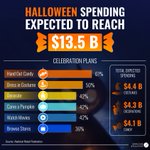
Americans are expected to spend $13.5 billion on Halloween this year, including $4.4 billion on costumes, $4.3 billion on decorations and $4.1 billion on candy.
As for Halloween traditions, 61% plan to hand out candy, while half expect to dress up in costume.
#Halloween2026 #ConsumerSpending #RetailTrends

A View From My Door: Room to Grow.
reviewjournal.com/pc/busines… @NevadaStateBank

Old-school hobbies are finding new life with Gen Z. From reading and gardening to baking and journaling, younger adults are embracing traditional pastimes, a trend that gained momentum during the pandemic. However, these new interests are also coming with added financial costs.
#GenZ #ConsumerTrends #SpendingTrends #Hobbies


Las Vegas may be the wedding capital of the world, but confidence and commitment are both trending lower.
Clark County recorded about 64,000 marriages over the 12 months through August 2026, down 12.7% from a year earlier. During the same period, average consumer sentiment fell 17.6% to 52.5.
The parallel is striking. When households feel less confident about the future, major life decisions can become easier to postpone. The data do not prove one is driving the other, but they do show that economic confidence and marriage activity have weakened at the same time.

Energy is becoming a much bigger part of the inflation conversation.
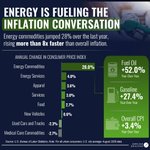
Over the 12 months ending August 2026, energy commodities increased 28.0%, more than eight times the 3.4% increase in overall consumer prices.
Energy commodities include some especially sharp increases. Fuel oil prices were up 52.0% year over year, while gasoline prices increased 27.4%.
The contrast across the CPI is notable. While energy-related prices have accelerated, other major categories have posted much more moderate increases, including food (+2.7%), services (+3.0%) and apparel (+3.6%). Prices for used cars and trucks and medical care commodities were actually lower than a year earlier.
#Inflation #CPI #Energy #GasPrices #Economy #EconomicTrends

Las Vegas Valley homes are making room for more.
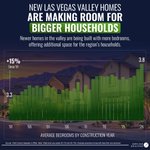
Single-family homes built in 2026 average about 3.8 bedrooms, up 15% from roughly 3.3 bedrooms for homes built in 1991.
The shift is also showing up at the larger end of the market. About 9.5% of existing homes built in 2026 have five or more bedrooms, compared with just 6.0% of homes built in 1996.
Together, the trends point to a housing stock that is gradually being built with more bedroom space.
#LasVegas #Housing #RealEstate #SouthernNevada #EconomicTren

Nevada mining is a major contributor to state and local tax revenues.
In 2025, the industry paid an estimated $686 million in major taxes, the highest total since 2008.
That included approximately $327 million in Net Proceeds of Minerals Tax and $135 million through the Mining Education Tax, along with sales and use, property and modified business taxes.
#NVMA #NevadaMining #NevadaEconomy #Mining #Taxes
Nevada Mining Association’s 2026 Annual Convention Draws Record Turnout As Industry Gathers in Lake Tahoe nevadabusiness.com/2026/09/n…

Buy Now, Pay Later has rapidly become a significant part of the consumer-credit landscape.
Annual “Pay in 4” issuance among major U.S. providers increased from $2.2 billion in 2019 to an estimated $78.3 billion in 2025. Yet that represents only half of the broader market: when short- and longer-term installment products are included, total BNPL issuance reached an estimated $156.7 billion.
The growth reflects a notable shift in how consumers finance purchases and how credit is offered at the point of sale.

Housing affordability is no longer a challenge limited to a handful of high-cost markets; it is a nationwide issue.
An average of 70.9% of households across the country cannot afford the median-priced new home in their state. In fact, there is not a single state where at least half of households can afford the median new home price.
These figures underscore the growing need for strategies that expand housing supply, reduce development barriers and support attainable housing options for working families.

AI is changing more than how work gets done. It is changing how much time it takes to do that work.
Among employees who use AI every workday, one-third report saving at least four hours each week, according to research from the Federal Reserve Bank of St. Louis.
That time savings has the potential to translate into greater productivity, more capacity for higher-value work and a meaningful shift in how organizations think about efficiency.

🔊 Sound on: Watch more than three decades of American household wealth unfold.
The story of American household wealth has evolved over time.
Around 2000, real estate surged ahead of stocks and remained a powerful driver of household wealth for more than two decades. Stocks moved into the lead by the end of 2023, and the gap has continued to widen. This shift highlights a changing balance in American household wealth, with financial assets playing an increasingly prominent role while real estate remains a major source.
Southern Nevada’s economy continues to broaden beyond its traditional tourism base.
Between June 2025 and June 2026, professional and business services employment increased 7.2 percent, while education and health services grew 6.3 percent. Both sectors significantly outpaced leisure and hospitality, which expanded 1.3 percent over the same period.
The latest employment data point to a more diversified regional economy, with growth increasingly supported by professional services, healthcare, education, construction and other industries serving residents and businesses.
The trend also reinforces the importance of continued regional efforts to attract new industries, expand the workforce and support long-term economic diversification.

Commission on School Funding looks for more revenue sources, could taxes be impacted? news3lv.com/news/crisis-in-t…

Tourism still drives Southern Nevada economy despite visitation dip, analyst says lvrj.com/post/3850816 via @reviewjournal

Only eight countries have ever won the men's World Cup, and as of today, half of them are still competing.
Today's quarterfinal between Spain and Belgium is a clear example of that history in motion. Spain is playing for its second title; Belgium for its first. Whichever team advances either extends an existing champion's run or moves a first-time contender one step closer to a breakthrough.

Last call to stock up on the Fourth of July essentials: hot dogs 🌭, cheeseburgers 🍔 and whatever secret family recipe earns you an invite back next year.
Nearly 6 in 10 Americans are planning a cookout or picnic this year for Fourth of July, with average food spending reaching $92.44 per person. Whether you are firing up the grill, heading to a community celebration or keeping it low-key at home, the Fourth is shaping up to be a full-plate kind of weekend.

A big anniversary calls for big moments, and Southern Nevada knows how to make them memorable!
From iconic landmarks and fireworks to local art and community activations, America 250 is giving residents and visitors new ways to experience the energy, creativity and unmistakable character of Southern Nevada.

Nevada is making its mark in the data center landscape.
While Texas leads the country with more than 1,100 operational, under-construction and announced facilities, Nevada ranks among the top states for overall activity, with 138 data center buildings in the pipeline or already online.
That matters because data centers are not just buildings. They are part of the infrastructure behind streaming, online banking, cloud storage, gaming, AI tools and the always-on digital services people use every day.
Nevada’s position reflects a growing presence in the broader western data center ecosystem, alongside markets such as California, Arizona, Oregon and Utah. As demand for computing capacity continues to rise, the competition will center on which locations can bring together the right sites, reliable power, connectivity and development capacity.
A lot happens behind the server racks.
