
News on animal navigation/movement ecology/migration/magnetic sense/spatial cognition/led by Dmitry Kishkinev/Keele University/ UK/Views my own
Keele, England, UK
Joined June 2017
- Tweets296
- Following289
- Followers279
- Likes208




Pinned Tweet
Liu, M., Benitez-Paez, F., Padget, O. et al. Machine-learned dimethyl sulphide (DMS) for the North Atlantic (2002–2024) to support movement studies. Sci Rep (2026). doi.org/10.1038/s41598-026-5…

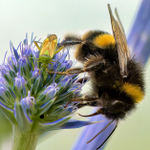
New research on migratory red admirals suggests they navigate using cues from the daytime sky, not Earth's magnetic field. Another reminder that not all migratory species use the same navigation toolkit! See the 1st post for more
Not all butterflies are monarchs: orientation using daytime celestial cues but not magnetic cues in European migratory red admirals (Vanessa atalanta) | Journal of The Royal Society Interface | The Royal Society doi.org/10.1098/rsif.2026.05…

Are young migratory birds born with a map or just a compass? A new study on reed warblers found no evidence of an innate magnetic "map" in migration-naïve birds. They seem to start with a built-in compass and develop map navigation through migratory experience. Link in 1st post
Navigation map has to be learned by migration-naïve Eurasian reed warblers - ScienceDirect doi.org/10.1016/j.cub.2026.0…
How do mole-rats sense Earth’s magnetic field? A new study found no evidence of magnetite-based magnetoreceptors in the cornea or retina, despite extensive multimodal imaging. The mystery of magnetoreception continues… 🧭Read here doi.org/10.1016/j.isci.2026.…
How do animals sense the Earth’s magnetic field? theconversation.com/how-do-a… via @ConversationUK

Do all birds really need Earth’s magnetic field to navigate? A large-scale experiment on wild Manx shearwaters found no effect of magnetic disruption on navigation. Some birds may navigate long distances remarkably well without geomagnetic cues. 🐦🧭
sciencedirect.com/science/ar…
Colleagues in Keele University, UK, are hiring a postdoc for a bat ecology project. Detaills ce0639li.webitrent.com/ce063…
How do seabirds navigate thousands of km across open ocean and still head straight home? We don’t fully know. We built the first daily 4 km maps of a key “smell” cue (DMS) + an open tool (AniDMS) to link it to bird tracks. Now we can finally test olfactory navigation. Link below.
Excited to share that our new results on magnetic and star compass and magnetic navigation in migratory Red Underwing moths is pre-printed here doi.org/10.64898/2026.03.04.…
Our cover on the recent fall armyworm paper (Ma et al) in eLife showing evidence of their magnetic compass dependent on visual landmarks: Insect Migration: A sense of direction.doi.org/10.7554/eLife.110796

First evidence that free-ranging animals (bats on a small island) do have and use Head Direction Cells in their brain to navigate in real world, not just lab. doi.org/10.1126/science.adw6…

🕊️ How do birds know when to migrate? Our new Biology Open paper shows that spring migration timing in great reed warblers has a genetic component—linked to fat metabolism genes suggesting that birds that fuel up faster may be ready to leave Africa sooner. Doi 10.1242/bio.062039
An international course for postgraduate students
This November (2025) the international PhD course on the Ecology of Animal Migration will run again in Lund Uni. More here biology.lu.se/phd-studies/ph…
Nature study showing that Australian Bogong moths possess a star compass based on Milky Way doi.org/10.1038/s41586-025-0…

Our recent exciting results about Red Admirals - Not All Butterflies Are Monarchs: Compass Systems in the Red Admiral (Vanessa atalanta), a European Diurnal Migrant biorxiv.org/content/10.1101/…

PhD Offering in movement ecology in the UK! Pls spread the word to folks who might be interested. More details in posts and here bit.ly/4h3LKkF

The supervisory team: Dr. Dmitry Kishkinev (ecology) and Pawas Bisht (public communication), both Keele University, UK. Further detail in the root post link. Apply via "Visit institution website" on the link page