




Andromeda Brief retweeted

We have big news to share today: PDF Viewer is available for Apple Vision Pro on day one! Get ready to experience documents in a way you never thought possible before. pdfviewer.io/blog/2024/pdf-v…

Andromeda Brief retweeted

🚨 I WARNED YOU. A BIG STORM IS COMING!!
Everyone's staring at red numbers this week. Almost nobody's noticing the thing that actually matters: they're all red at the same time.
Korea down 10% in a day. Japan, Europe, US futures all sliding together. Crypto rolling over. Gold off its highs. Different countries, different asset classes, different stories… one direction.
Here's what that means, in plain terms.
In a healthy market, things disagree. Stocks zig, bonds zag, gold does its own thing - because each is pricing its own reality.
But when everything starts moving as one block, that's not a bunch of separate markets anymore. That's a single, giant, leveraged bet wearing a hundred different tickers.
And we've seen what happens when that bet unwinds:
→ 2008 - correlations went to 1, and "safe" and "risky" fell together. Nowhere to hide.
→ 2020 - every screen turned red in the same week, until the Fed flooded the system.
→ Right now - the same convergence is showing up again. Quietly. Across borders.
When markets fuse like this, individual analysis stops working. You're no longer holding "stocks" and "crypto" and "gold." You're holding one trade - and it only takes one shove to move all of it at once.
Look underneath the surface and the pressure is obvious:
→ Bond yields flashing stress
→ Liquidity tightening in the background
→ A Fed boxed into a corner - ease and reflate the bubble, or tighten and crack an overextended market
Either path leads to the same place. Something breaks.
That's the part people miss. A crash doesn't announce itself with one scary headline. It announces itself when correlation goes to one - when the market stops being a market and becomes a single, fragile thing that all moves together.
That's what just started this week.
Most people will call it "a normal pullback" right up until it isn't. I've spent 10 years watching turning points form, and this is exactly how they look from the inside.
When everything moves as one, the only question left is which way and this week, it picked down.
Don't be the last one still treating it like business as usual.

🚨 A CHART FROM 1875 PREDICTED THIS EXACT YEAR. LOOK AT YOUR SCREEN.
Three indices. One blow-off top. All curling over at the same moment - exactly on the year a man circled in pencil 150 years ago.
His name was Samuel Benner.
He wasn't a banker, a quant, or a Wall Street prophet.
He was an Ohio pig farmer who got financially wiped out in the Panic of 1873 - and was so haunted by it that he spent the rest of his life trying to figure out why markets boom and bust on a clock.
In 1875, he published his answer: a hand-drawn chart labeling every future year as one of three things - panic, good times, or hard times.
"Good times," in his words, meant high prices and the time to sell. He mapped it all the way to 2059 - and never lived to see almost any of it.
Here's the uncomfortable part: his chart has shadowed the big ones for 150 years - the 1929 crash, the dot-com top, 2008. People keep laughing at the dead farmer right up until they're not.
So look at what his chart says about right now.
2026 is a "good times - SELL" year.
Now look at your screen again. Not one index - three.
The Russell 1000, the S&P 500, and the Nasdaq 100.
Large caps, the broad market, and big tech, all spiking to the same peak and rolling over together.
That's not a sector wobble. That's the entire U.S. market topping at once, on the exact year the farmer flagged before electricity was even in homes.
Do I think a 19th-century pig-iron cycle secretly governs Nvidia's stock price? No. The honest take is that Benner's chart has misfired before, and "a calendar told me so" is a terrible reason to sell anything.
But here's what makes 2026 different from every other time this chart got hyped: this time the fundamentals showed up to the party.
Valuations last seen at the dot-com peak. A Fed that's turned hawkish into sticky inflation - not cutting, threatening to hike. A tech rally so narrow it cracks the second the AI story blinks. And a market that just watched a major economy fall 10% in a single day this week.
The farmer didn't predict any of that. He just happened to circle the year the math finally caught up with the mania.
You don't have to believe in the chart. You just have to notice that the chart and reality are pointing at the exact same door - and everyone's still walking in.
When the superstition and the spreadsheet agree, that's the one time it's worth looking up.
YouTube and Instagram Built Addiction
This isn’t about $6 million.
It’s about precedent.
⸻
A federal jury in California has found Meta and YouTube guilty.
Not of bugs.
Not of mistakes.
But of design.
⸻
Platforms engineered for addiction
For the first time in U.S. history, a jury ruled that social media platforms were built to hook minors.
Deliberately.
Systematically.
⸻
The case that triggered it
A young woman.
Started using YouTube at 6.
Instagram at 9.
By her teens:
• Anxiety
• Depression
• Body dysmorphia
• Suicidal thoughts
At one point:
16 hours per day on Instagram.
⸻
What broke the case open
Internal documents.
Not opinions — evidence.
From inside Meta itself:
Target them young.
Lock them in early.
Children as young as 11.
Despite a 13+ rule.
And they came back more than anyone else.
⸻
For the first time
Mark Zuckerberg wasn’t testifying to Congress.
He was answering to a jury.
⸻
The verdict
$6 million total.
• $4.2M — Meta
• $1.8M — YouTube
For companies making $100+ billion a year?
Irrelevant.
⸻
But this was never about money
It’s about what comes next.
Because behind this case:
1,500+ lawsuits are already waiting.
⸻
Others saw it coming
TikTok and Snap Inc. didn’t stay to fight.
They settled early.
⸻
And pressure is building
One day earlier:
A court in New Mexico ordered Meta to pay $375 million in a separate child exploitation case.
This isn’t isolated.
It’s escalation.
⸻
What this really means
For years, Big Tech operated on one assumption:
Engagement = growth
Growth = success
Now there’s a new variable:
Liability.
⸻
The shift
This verdict doesn’t punish the past.
It rewrites the future.
⸻
The bottom line
The era of “we’re just platforms” is ending.
Because now, the question isn’t:
How many users can you capture?
But:
What happens to them after you do?
#youtube
#instagram

1
60
Cheap Hypersonics
America spends millions trying to stop a $99K missile.
And still fails.
This isn’t just a new weapon.
It’s a new equation.
⸻
A hypersonic shift — at scale
China’s Lingkong Tianxing has unveiled the YKJ-1000.
Speed: Mach 7
Range: up to 1,300 km
Cost: ~$99,000
Not millions.
⸻
The real breakthrough isn’t speed
It’s cost.
Because modern war is no longer just about capability.
It’s about economics.
⸻
Ukraine showed the model
Cheap drones vs expensive defenses.
$20,000 drones forcing million-dollar interceptions.
Now apply that to hypersonic missiles.
⸻
The math breaks defense
20 missiles → ~$2 million
Intercepting them?
$80–300 million.
This isn’t sustainable.
⸻
Launch from anywhere
No fixed bases.
No clear signatures.
• Shipping containers
• Trucks, ships, ports
• Civilian infrastructure
Hidden in plain sight.
⸻
Built like consumer tech
Not exotic.
Not rare.
• Commercial sensors
• Automotive chips
• Industrial production
Designed for scale.
⸻
This is mass-war logic
Cheap.
Fast.
Replaceable.
Not elite weapons — but endless ones.
⸻
Next: AI swarms
Dozens or hundreds working together.
Not just precision…
But saturation.
⸻
What it means
Power is shifting.
From best technology…
To best production.
⸻
The bottom line
The future of war won’t be won by the most advanced weapons.
But by those who can build:
More.
Faster.
Cheaper.
At scale.
#hypersonic
#ykj1000

1
44
Not Peace — A Strategic Timeout Between US and Iran
US vs Iran: The Ceasefire That Could Reshape the Region
This is not just a ceasefire.
It’s the opening move in a much larger geopolitical reset.
According to regional sources, the United States is working on a 30-day ceasefire deal with Iran.
The goal?
Time.
Time to negotiate something far bigger — a framework that could redefine power in the Middle East.
⸻
What’s really on the table
This goes far beyond stopping the fighting.
Talks reportedly include:
– limits on Iran’s nuclear program
– full international inspection access
– reduction of proxy influence across the region
– potential sanctions relief
– keeping the Strait of Hormuz open
A 15-point framework.
Ambitious. Complex. Hard to enforce.
⸻
Why now?
Because pressure is peaking.
The US wants to avoid a prolonged conflict.
Iran wants economic breathing room.
And the region is already stretched to its limits.
⸻
The reality
This is not peace.
It’s a pause.
A window where both sides test how far they can push — without crossing the line.
⸻
What comes next
If talks succeed → a historic deal is possible.
If they fail → escalation returns, faster and more intense.
⸻
For now, one thing is clear:
This 30-day ceasefire may be short…
…but its consequences could last for years.
#ceasfire

79
🚨 The Hormuz Tax
Iran just turned the world's most important oil chokepoint into a toll booth.
$2 million per ship. Cash, crypto, or barter accepted.
3,200 vessels and 40,000 sailors are currently waiting on the other side of that price tag.
For decades, the Strait of Hormuz was "free." Now it's monetized—like Suez, like Panama, but with missiles.
Why it matters:
→ ~20% of global oil passes through here
→ No realistic alternative route exists
→ Iran controls both shores
The market hasn't priced this in yet.
One energy trader put it simply: "This changes the math on every barrel that leaves the Gulf."
#hormuz
#saiftytax

61
THE MAN BEHIND TRUMP?
Jared Kushner.
Not elected.
Not military.
But at the center of power.
Described by some intelligence voices as an Israeli asset.
Not just an advisor—
A man with deep, lifelong ties to Israeli leadership.
Trump’s son-in-law.
Middle East strategist.
The one whispering during critical decisions.
Including Iran.
And this didn’t start in politics.
His father had close relationships with Israeli prime ministers.
They weren’t distant connections.
They were personal.
Visits.
Dinners.
Access.
From childhood—
He was around power most people never see.
So now the real question:
Was he advising…
Or shaping the direction entirely?
Supporters say:
“He delivered historic deals.”
Critics say:
“He aligned U.S. power with Israel.”
Either way—
Influence at that level doesn’t happen by accident.
And sometimes…
The most powerful person in the room
Isn’t the one speaking.
#Kushner
#usa

1
52
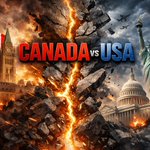
CANADA vs USA: Something is breaking.
For decades, they were inseparable.
Trade.
Defense.
Economy.
Now?
Tensions are rising… fast.
Reports suggest Canada is rethinking major long-term deals with the U.S.
At the same time:
Talks with Europe are intensifying.
Closer cooperation.
Trade alignment.
New strategic direction.
This is not random.
It’s geopolitical repositioning.
Because for the first time in years…
Canada is questioning its dependence on the U.S.
And the timing matters.
While the world is focused on Iran…
This shift is happening quietly.
In the background.
There were even past tensions:
Talks of pressure.
Economic threats.
Political friction.
And allies had to step in to cool things down.
But here’s the real story:
This isn’t about one deal.
This is about alignment.
If Canada moves closer to Europe…
The global trade map changes.
North America weakens.
Transatlantic ties strengthen.
And the question becomes:
Is this just noise…
Or the beginning of a real split?
Because if it’s real—
This is bigger than it looks.
#canada
#ue

2
2
47
ELON MUSK VS TWITTER: The $2.5B Mistake
It started in April 2022.
Elon Musk offered $44B for Twitter.
The board accepted.
Then everything changed.
Weeks later, Musk hit pause.
“Too many bots.”
He claimed Twitter was lying about fake accounts.
The market reacted instantly.
Twitter stock dropped ~10%.
Uncertainty took over.
All summer:
Threats.
Doubts.
Exit signals.
At one point, Musk officially tried to walk away.
Twitter sued.
Forced the deal.
And just before trial…
Musk reversed again.
He bought it. Full price.
But the damage was done.
Investors who sold during the chaos…
Lost billions.
So they fought back.
Their claim:
Musk didn’t care about bots.
He wanted leverage.
Lower price… or exit.
And used public statements to move the market.
After 3 weeks in court…
The jury delivered:
Musk’s tweets were FALSE.
But not intentional fraud.
Result?
~$2.5B in damages.
Appeal incoming.
But here’s the real takeaway:
When one man moves markets…
Everyone else pays the price.
Even when he wins.
#musk
#twitter
#x

42
Crypto Is Becoming Invisible Infrastructure
CRYPTO JUST ENTERED THE SYSTEM.
Mastercard isn’t experimenting anymore.
It’s integrating.
A global program.
Crypto payments for merchants.
Blockchain inside the payment rails.
And this week changed everything:
• Mastercard reportedly acquired stablecoin infra (BVNK)
• Stablecoin market → $320B
• Regulators are finally giving clarity
This is not hype.
This is infrastructure.
For years, crypto was:
Speculation.
Trading.
Narratives.
Now?
It’s becoming invisible.
You’ll use it… without knowing.
And people are split:
Some say:
“This is mass adoption.”
Others say:
“Banks are taking over crypto.”
But here’s the reality:
When Mastercard moves…
Visa follows.
And when both move…
The system changes.
Not overnight.
But permanently.
The real shift?
Crypto is no longer outside the system.
It’s becoming the system.
#crypto
#adoption
#mastercard

1
43
Humans vs Machines: Phase One
THE NEXT WAR WON’T BE HUMAN.
It already started.
Jeff Bezos is reportedly raising $100B…
Not to build AI.
But to BUY the factories.
And replace the humans inside them.
This is not software.
This is control of production itself.
Factories.
Supply chains.
Labor.
Rewritten by machines.
For decades, automation was gradual.
Now?
It’s direct.
Acquire → automate → scale.
And people are starting to notice.
Some say:
“This will create more jobs.”
Others say:
“This ends work as we know it.”
But history gives a darker warning:
When humans gave thinking to machines…
They didn’t become free.
They became replaceable.
And this time, it’s not just tasks.
It’s entire industries.
Manufacturing.
Defense.
Logistics.
All becoming machine-first.
So the real question isn’t:
“Will AI take jobs?”
It’s:
Who controls the machines that replace them?
Because whoever owns that…
Owns the economy.
And maybe more.
#bezos
#AI

48
The End of Discipline? Ozempic Changes Everything
What Happens When Effort Becomes Optional?
Ozempic at $14: The Moment Easy Became Cheap
A shift is happening.
Not in the gym.
Not in diet culture.
In the system itself.
India has just launched a generic version of Ozempic — priced at around $14 a month.
What was once exclusive… is now accessible.
What was once controversial… is now scalable.
---
For decades, the formula was clear:
Discipline.
Consistency.
Pain.
Results had a cost — paid in time, effort, sacrifice.
---
Now?
That cost is collapsing.
Biotech is doing what grind culture built its identity on.
Suppress hunger.
Reduce cravings.
Accelerate fat loss.
No more war with your body.
---
Supporters call this a breakthrough.
A long-overdue solution to a global obesity crisis.
A tool that finally aligns biology with intention.
For millions, this isn’t cheating.
It’s survival.
---
But critics see something deeper.
Because when effort is no longer required…
what happens to discipline?
When results become injectable…
what happens to identity?
---
And here’s where the real divide begins:
Not rich vs poor.
Not educated vs uneducated.
Hard vs easy.
---
On one side:
Those still choosing the hard path.
Early mornings. Clean meals. Training through exhaustion.
Building not just bodies — but character.
---
On the other:
A system offering the same outcome…
For $14.
---
This is bigger than weight loss.
The era of “Made by discipline” is fading.
We are entering the age of engineered results.
Where geopolitics, pharma, and mass production reshape even the human body.
---
Because this isn’t just about Ozempic anymore.
It’s about a world where the hardest things…
are no longer necessary.
And the question is no longer:
“Does it work?”
But:
“What happens to us… when everything becomes easy?”
#ozempic
#discipline

6
109
War… paused?
US–IRAN: It’s confirmed.
Trump orders a 5-day pause on strikes.
After:
Ultimatums.
Escalation.
War pricing in markets.
Now:
“Productive talks.”
This is the first real shift.
But don’t get it wrong:
This is NOT peace.
This is a negotiation window.
If talks succeed → de-escalation.
If they fail → strikes return fast.
Markets will move before headlines.
Stay ahead.
#war

5
105
USA ABOVE THE LAW? WHO DARES TO ENFORCE IT?
This is not just geopolitics.
This is international law.
Under the Geneva Conventions, including Article 51(2),
threats or acts of violence intended to terrorize civilians are strictly prohibited.
Furthermore, Additional Protocol I (Art. 54) protects essential infrastructure —
such as power plants — because they are indispensable for human survival.
Intentionally targeting these civilian systems
can constitute a war crime under the Rome Statute.
—
But here’s the uncomfortable question:
What happens when major powers are accused of breaking these rules?
Who stops them?
Who judges them?
Who enforces the law?
—
In theory, institutions exist:
international courts, the International Criminal Court, the United Nations.
In reality…
power often determines how — and if — the law is applied.
—
Because the hard truth is this:
international law exists…
but its enforcement is not equal.
—
Threats against civilian infrastructure
are not just rhetoric.
They carry real consequences
for millions of people.
And yet…
too often,
there are no real consequences.
—
So the question remains:
Is international law truly justice?
Or is it selectively enforced?
—
Because when no one is held accountable…
it’s no longer about law.
It’s about power.
#us

Qatar-This Attack Could Break the Global Gas Market
Iran didn’t strike randomly.
It struck where it hurts the most.
Reports suggest major gas infrastructure in Qatar has been hit — a critical hub for global LNG supply.
But the real story isn’t just the damage.
It’s who was actually targeted.
—
Qatar doesn’t operate alone.
Behind its gas fields sits a powerful network:
• American energy giants
• international consortia
• massive Western capital
This wasn’t just an attack on Qatar.
It was an attack on global energy interests.
—
Early estimates are staggering:
• over 75% of production capacity affected
• damages exceeding $26 billion
• recovery timeline: 5–7 years
This wasn’t chaos.
It was precision.
Iran knew exactly what to hit.
—
And yet…
Gas markets barely moved.
Why?
Because in the short term:
• global reserves remain high
• demand is seasonally weak (summer)
• markets don’t yet believe in a prolonged disruption
But that may be a dangerous miscalculation.
—
Energy markets don’t always react instantly.
They react violently… later.
—
If infrastructure recovery stalls and tensions escalate:
• global supply tightens
• geopolitical risk premiums surge
• energy becomes a strategic weapon again
And when that shift happens…
Prices don’t rise gradually.
They reprice — fast.
—
One possibility?
Gas prices doubling within a year — not from speculation, but from structural imbalance.
—
Watch closely.
Because this may not be a regional incident.
It may be the beginning of a global energy reset.
#gas

📉 CONSUMPTION COLLAPSE
America isn’t weakening from the outside.
It’s weakening from within.
And the epicenter isn’t real estate.
It’s not even the banking system… not yet.
It’s the consumer.
—
The U.S. economy runs on one engine:
consumer spending (≈70% of GDP).
But that engine is starting to crack.
👉 Credit card debt has surpassed $1.1 trillion (all-time high)
👉 Total consumer debt is now over $4.5 trillion
👉 Credit card interest rates are at 20–30%+
This is not sustainable.
—
Warren Buffett has been quietly warning:
Consumer behavior is changing.
Some of the biggest companies he’s invested in
are now reporting clear slowdowns in spending.
People are pulling back.
—
At the same time:
• Inflation remains elevated
• Interest rates are still high
• And the real pressure hasn’t even started yet…
Because the next wave is coming:
👉 Higher costs on consumer loans
👉 Then pressure on mortgages
But this won’t look like 2008.
This is different.
—
In 2008, people lost homes.
Now, they lose spending power.
And that changes everything.
Because when consumers stop spending:
→ Retail slows
→ Corporate earnings drop
→ Layoffs begin
→ Credit defaults rise
A slow domino effect.
—
And here’s the real risk:
Those $4.5 trillion in consumer debt
could climb toward $6–7 trillion in the next 2 years.
Not because people want to borrow…
But because they have to survive.
—
At first, banks benefit.
More debt = more interest.
But only for a short time.
Because when defaults rise…
The system turns.
Some banks will feel it harder than others.
👉 Wells Fargo — one of the largest retail banks in America —
remains heavily exposed to consumer credit.
If cracks appear, they may show here first.
—
But there’s another layer building quietly:
Energy.
A potential oil and gas crisis is forming in the background.
And when energy moves… everything moves.
👉 Higher oil prices = higher transport costs
👉 Higher gas prices = higher production costs
👉 Higher energy costs = higher prices for everything
From food… to basic goods… to housing.
—
Which leads to a dangerous cycle:
→ Prices go up
→ Consumers spend less
→ Companies earn less
→ Economy slows further
And the pressure tightens.
—
There’s also a growing issue with fertilizers and supply chains.
And in the coming months, this could mean:
→ Even higher food prices
→ Possible shortages in some regions
→ More strain on already stretched households
—
So what are we really looking at?
Not a housing crash.
Not a banking collapse.
But something new:
A CONSUMPTION CRISIS.
Driven by:
• Debt saturation
• High interest rates
• Rising energy costs
• Falling purchasing power
—
And the most dangerous part?
It doesn’t explode overnight.
It drains slowly.
Until one day…
the system simply can’t carry the weight anymore
#creditcard
#crisis
#wellsfargo

IRAN : Nothing Is Out of Reach
Iran Just Tested the Limits of Distance
Iran didn’t hit the target.
But that’s not the point.
⸻
What happened
Iran launched 2 ballistic missiles toward the US–UK base in Diego Garcia
— over 4,000 km away
•One failed mid-flight
•One was intercepted or neutralized
•No confirmed impact
⸻
Why this changes everything
This wasn’t an attack.
It was a message.
“We can reach further than you thought.”
Until now, Iran’s stated range: ~2,000 km
Reality just doubled.
⸻
What this means
•Europe is now closer than it feels
•Remote bases are no longer “safe”
•Defense is no longer regional — it’s global
⸻
The deeper signal
This may be the first real use of IRBM-range capability in this conflict
Not to destroy —
but to demonstrate.
✔ Capability test
✔ Psychological pressure
✔ Strategic repositioning
⸻
Context
•US strikes Iranian assets
•UK enables operational access
•Iran responds — not locally, but at distance
⸻
Bottom line
This was not a failed strike.
It was a successful signal.
And in geopolitics…
Capability shown = power proven
It doesn’t matter that the missiles didn’t hit.
What matters is they could reach it.
And in geopolitics, sometimes demonstration is more powerful than destruction.
#ballistic
#missiles
#iran

INSIDE BREAKDOWN.
Top U.S. Counterterrorism Official Resigns Over Iran War
—
The Director of the U.S. National Counterterrorism Center has stepped down.
The reason?
The war with Iran.
—
Joe Kent led the agency responsible for advising the U.S. president on global terrorist threats.
A former Special Forces veteran,
with 11 combat deployments in the Middle East.
He wasn’t just a military figure.
He was also an early MAGA supporter —
nominated by Trump,
and confirmed by the Senate just last year.
—
On Tuesday,
Kent posted his resignation letter on X.
It wasn’t diplomatic.
—
He said he could not, in good conscience, support a war with Iran…
A war he claims
does not represent an imminent threat to the United States —
despite what Trump has stated.
—
According to Trump,
Iran was preparing to attack the U.S.
So he chose to strike first.
—
Kent pushed back.
He reminded Trump of his own campaign promises:
That wars in the Middle East are a trap —
costing America lives…
and trillions of dollars.
He urged him:
“Change course while you still can.”
—
Trump responded within hours.
Calling Kent:
“weak on security”
and saying
“it’s a good thing he’s gone.”
—
But not everyone agrees.
This marks the first high-level resignation
since the escalation began.
—
And it raises one question:
Is this just the beginning… or the warning sign people are ignoring?
#iranwar
#middleeast

IRAN
Getting in is easy. Getting out isn’t.
Here’s what nobody is saying:
If bombing works…
why even talk about boots on the ground?
→ Because air power doesn’t finish wars.
⸻
And the moment you send troops…
You meet the Zagros Mountains.
Not magic. Not unbeatable.
But brutal terrain that slows everything down.
⸻
You can enter Iran.
Holding it?
That’s where empires fail.
⸻
Look at the Iran-Iraq War:
Iraq expected weeks.
Got 8 years.
Iran didn’t win clean.
But it didn’t break.
And in war — that matters more.
⸻
This isn’t one army.
→ Islamic Revolutionary Guard Corps
→ Multiple parallel forces
→ Decentralized structure
You don’t defeat it once.
You keep facing it.
⸻
And the bunkers?
Not invincible.
But deep. Hardened. Built for this.
Hitting them is possible.
Eliminating them? Another story.
⸻
So the real question isn’t:
“Can you attack Iran?”
It’s:
Can you control what happens after?
⸻
Because getting in is easy.
Getting out?
That’s where wars are lost.
#iran
#zagros
#army

🚨 BREAKING: $200 BILLION… AGAIN
The Pentagon is asking for another $200 billion for the Iran war.
Just weeks in…
and the cost is already exploding.
⸻
But here’s what people are starting to notice:
We’ve heard this before.
“Mission almost complete.”
“Enemy weakened.”
“Final phase.”
And yet…
More money.
More strikes.
More escalation.
⸻
In less than a month, the U.S. has already spent amounts comparable to a large portion of Iran’s economy.
Now another $200B is on the table.
And possibly more after that.
⸻
Meanwhile:
• U.S. debt → nearing $40 trillion
• Interest payments → rising fast
• Cost of living → still high
And people are asking a simple question:
Where does it stop?
⸻
Because if a war keeps getting more expensive…
even after “progress” is declared…
then maybe the real problem isn’t the enemy.
⸻
It’s the strategy.
⸻
History doesn’t punish failure immediately.
It punishes repeated overcommitment.
⸻
And right now…
this is starting to look less like a short conflict—
and more like a long financial drain.
⸻
⚡ FINAL LINE (IMPORTANT – viral hook)
If every step forward costs another $200 billion…
is this progress — or escalation?
#iran
#war
