
MENA Analyst @CentroStudiInt / RT = no endorsement
Joined December 2022
- Tweets359
- Following1K
- Followers66
- Likes910
Andrea Fusco retweeted

My first @CrisisGroup commentary:
How War is Reshaping #Iran’s Axis of Resistance
Three years of hostilities have transformed Tehran’s network of allies in the Middle East. The Islamic Republic is now relying more heavily on itself, while adapting its relationships with partners whose diminished military utility has not necessarily reduced its commitment to their protection.
crisisgroup.org/cmt/middle-e…

Andrea Fusco retweeted

It looks like the UAE and Iran are putting demands on Saudi in Yemen
The UAE-based STC leader made his first public appearance since the Saudi-UAE crisis in Yemen in a televised address last night. He called for general mobilization against the Houthis to defend the south and expressed solidarity with Saudi Arabia following the Houthi attacks on the kingdom. But he also urged the Saudi leadership to recognize the STC’s constitutional declaration establishing an independent South Yemen within its pre-1990 borders, implicitly making STC forces’ participation in the fight against the Houthis conditional on that recognition.
al-monitor.com/originals/202…

Andrea Fusco retweeted

Shocking poll results of the Shia community in Lebanon. If the survey was not conducted by a reputable company, Statistics Lebanon, I would have dismissed it because the results show a truly stunning collapse of support for Hezbollah among the Shia community. This collapse is an undeniable fact based on my conversations with Shia friends in Lebanon, following social media production by Shia (including videos and thousands of comments on popular Facebook pages for Shia communities), and the testimonies of Shia journalists and scholars. Still, the numbers are surprising.
The most shocking results:
- 42% of Shia feel disappointed, angry or worried about the conduct of the leadership of Hezbollah
- 37% trust in Hezbollah greatly, 22.4% trust to some extent, 23.6% do not trust Hezbollah much, 15% do not trust Hezbollah at all. Previously 85% expressed trust in Hezbollah
- 52% do not trust Hezbollah's social & service institutions (likely due to favoritism in distribution)
- 52.4% do not trust the media outlets affiliated with Hezbollah.
- Only 2% would prefer to send their children to schools run by Hezbollah (Mehdi and Mustafa schools)
- 42.3% believe Hezbollah has not achieved any of its goals and that the costs of the war were exceedingly high
25% believe Hezbollah achieved only part of its goals and the costs of the war were exceedingly high. A total of 67.4% put together.
14% say it's too early to tell
- 63.3% support a deal with Israel (either direct talks, through mediation, or a total regional agreement)
- 9% support a deal that will be sponsored by Iran
- 66.4% support handing over Hezbollah's weapons to the state
29.6% support preserving Hezbollah's weapons
- 51.1% see he Lebanese Army as the biggest contributor to guaranteeing security in the long run
16.5% see Hezbollah this way
- 71% Believe war & peace decisions should only be made by Lebanon's leadership
12% Support Hezbollah making its own decisions on these matters
- Only 5% believe using force is legitimate to express opposition to the government's position on disarming Hezbollah
- 80% see their Lebanese identity as more important than their sectarian or partisan affiliation
Source: al-Jadeed TV discussion with the CEO of Statistics Lebanon
youtube.com/watch?v=Tb_e5rTC…

Andrea Fusco retweeted

🇱🇾🔥 Nuovo incendio in un deposito di munizioni a #Misurata. Episodio simile era avvenuto lo scorso agosto.
Causa non ancora chiara. Circolano voci su un possibile attacco con droni, ma non ci sono conferme.
La gestione e lo stoccaggio delle munizioni in prossimità delle aree urbane sono da tempo un problema serio in #Libia, denunciato di recente anche da @UNSMILibya .
📰👀 #news su @agenzia_nova ⤵️
agenzianova.com/news/libia-i…

Andrea Fusco retweeted

The government’s adjustment of the USD–dinar exchange rate appears to be an attempt to ease financial pressure on the state by effectively reducing the value of public-sector salaries without cutting them directly. It also appears to be a politically driven decision, contrary to the Iraqi Central Bank’s advice, at least under Allaq’s leadership.
The move will also likely hurt PM Zaidi and his government’s public standing.
It is hard to imagine this passing without some economic shocks and a public backlash.

Iraqi Contractors Reject Dollar Rate Hike as PM Moves to Ease Food Costs
Contractors federation warns exchange-rate decision will hurt projects, investment and jobs as government delays customs and tax collection on imported poultry, meat and eggs
🔗: kurdistan24.net/en/story/944…

Andrea Fusco retweeted
Tehran Sees Growing Risk of a New War with the United States
🔹There are growing signs that Tehran views a new war as inevitable – and potentially imminent.
🔹Fars News Agency, affiliated with the IRGC, reports that, on several occasions in recent days, the United States appeared prepared to launch renewed attacks against Iran, with U.S. fighter jets taking off over the southern Persian Gulf, although no attack ultimately took place.
🔹According to the agency, reports emerged on September 25 of a high level of U.S. military activity, including the presence of a reconnaissance aircraft near Qeshm Island.
🔹Fars believes that “the enemy’s objective in pursuing this pattern is to normalize such activities so that it can carry out the main operation at a moment when it is least expected” – in other words, to restore the element of surprise.
🔹At the same time, the IRGC has issued an official statement warning that “any miscalculation or attempt to launch a new war or aggression against Islamic Iran will bring a painful and devastating response against the aggressor.”
🔹This follows a series of assessments and warnings by Islamic Republic officials in recent days. Last Tuesday, for example, Mohammad Akraminia, spokesperson for the Islamic Republic of Iran Army, said that “the Americans are repositioning forces and undertaking various activities in the region,” adding that Iran’s military forces are prepared for another confrontation.
🔹More importantly, however, he stated: “If we conclude that the enemy is preparing an imminent attack, we will certainly engage in preemptive warfare or conduct a preemptive operation.”
🔹The emphasis on “preemption” has increasingly entered the vocabulary of Iranian military officials since the 40-day war. In fact, regardless of whether U.S. military movements in the region genuinely represent preparations for a new war, the evolution of Iranian military thinking and the emergence of a “preemptive” element could lead Tehran to take military action in an effort to prevent what it perceives as an imminent attack – potentially igniting a new war.
🔹At the same time, confirmed reports indicate that Iran has once again intensified its attacks on vessels in the Strait of Hormuz over the past week.
🔹With diplomatic progress stalled and no indication that either side is willing to compromise on its core demands, the risk of a return to war is increasing with each passing day.
Andrea Fusco retweeted
🚨🇱🇾 BREAKING | Saddam #Haftar comes out in the open — and effectively drops Aguila Saleh.
He publicly backs Salehin Abdel Nabi as the new speaker of #Libya’s House of Representatives and endorses the new presidency.
A clear political break inside eastern Libya.
📰👀 #Libya on @agenzia_nova

Andrea Fusco retweeted

Iranian channels are understandably portraying the departure of US forces from Iraq as a victory for the Resistance, but their reading of what has happened is more nuanced than the triumphalist headlines might suggest.
- Even platforms close to Iran’s security establishment acknowledge an important point: the withdrawal is not a consequence of the current war. It follows the timetable agreed between Baghdad and Washington in 2024, well before the present confrontation.
- Nor does Tehran appear to believe that American influence in Iraq has simply disappeared. US military personnel may have left, but Washington retains a significant security relationship with Baghdad, including intelligence cooperation and training, while its regional military footprint gives it the ability to project power back into Iraq if circumstances require it, something which is well understood in Tehran.
- The significance of September 30 is therefore partly symbolic, but symbols matter in the region. After more than two decades, the longstanding American military presence that acted as a counterweight to Iranian influence has been largely reduced. Tehran sees an opportunity to turn that symbolic victory into greater political and strategic space for itself and its Iraqi allies.
- The immediate reaction of the armed factions is revealing. In a statement issued by the Coordinating Committee of the Iraqi Resistance, the factions rejected any timetable for disarmament, arguing that Iraqi sovereignty must extend beyond the departure of US troops to control of its airspace and protection from future American or Israeli military action.
- In other words, the factions are already redefining the argument: the end of the American presence does not mean the end of the Resistance’s mission.
- I guess there is a paradox here. The US departure gives Iran-aligned groups greater room for manoeuvre, but at the same time removes their strongest domestic justification for retaining an autonomous military structure. Baghdad can now reasonably argue that if the foreign military presence has ended, weapons should return to the state.
- Tehran therefore gains space, not full control. And perhaps that is the most useful way of reading the Iranian reaction: Iraq has become strategically more comfortable for Iran, but it has not suddenly ceased to be a contested arena between Iranian influence, Iraqi state sovereignty and the considerable political and security leverage Washington retains.
#Iran
Andrea Fusco retweeted

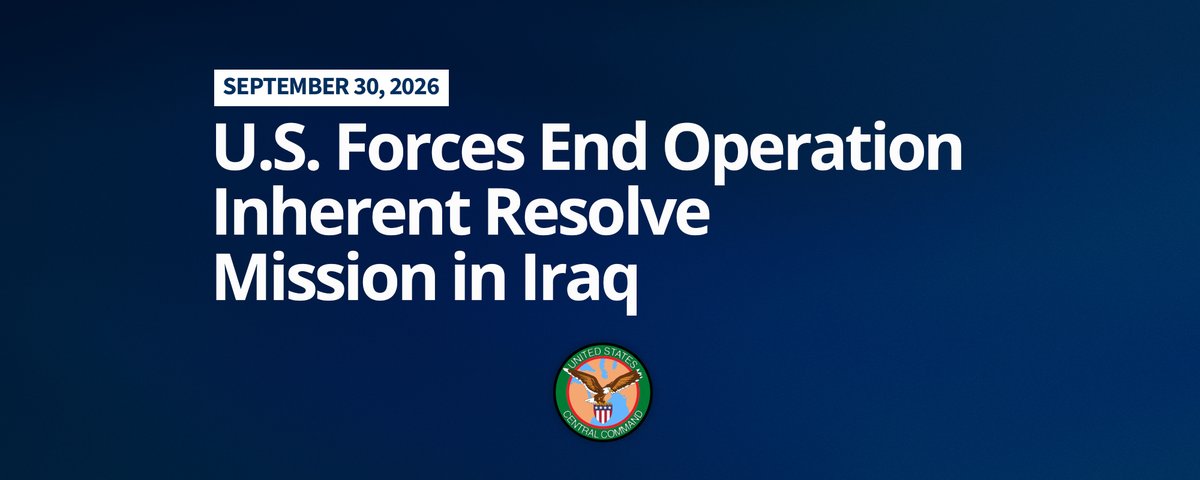
I was part of the small core group that negotiated this agreement and in fact, I had to negotiate the final words of the announcement with then Iraqi PM Sudani's team in the hours before their plane departed UNGA from New York City.
The day this was announced was the day that Hassan Nasrallah was killed and there was a brief debate about whether we had to press pause. In the end, we moved forward. The negotiation had started and stopped throughout the previous year due to the violence that erupted following October 7 throughout the region, which included militia attacks on US bases in Iraq. The negotiations over the substance of the agreement and the final wording of the announcement were tough as each side was contending with different objectives and domestic political realities. In the end, this date is a major political event in Iraq and will pass largely unnoticed in the United States.

Andrea Fusco retweeted

‼️ Accompanying Lebanese Prime Minister Nawaf Salam in his meeting with Secretary of State Marco Rubio:
• Foreign Minister Youssef Raji
• Lebanese Ambassador to Washington Nada Hamadeh Mouawad
• Ambassador Claude Al Hajal
• Diplomat Ibrahim Assaf
• Deputy Chief of Mission Wissam Boutros
• Diplomat Farah Al Khatib

Andrea Fusco retweeted

Saudi Arabia's top religious authority called on soldiers in the kingdom to be ready to lay down their lives to fight the Iran-backed Houthis until the group is ousted from power, a statement posted on the Saudi state news agency said reut.rs/4rwhR33

Andrea Fusco retweeted
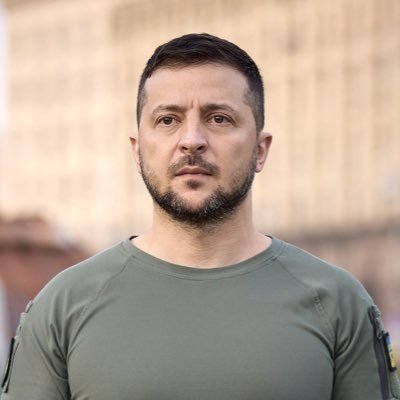
I met with President of Syria Ahmed al-Sharaa @AH_AlSharaa in New York. A year ago, here during the UN General Assembly, Ukraine and Syria restored diplomatic relations. It is important that over this past year, we have already seen political, economic, and security momentum, including our dialogue at the leaders’ level. Ukraine remains open to further developing this cooperation and working together for greater security in all domains and for every region.

Andrea Fusco retweeted
IRGC-linked Javan, in a lengthy analysis, looks at the prospects for renewed dialogue between Tehran and Washington from a particularly interesting angle. Rather than suggesting that Iran is softening its position, it argues that Tehran may be open to discussing a new diplomatic framework while keeping its conditions essentially unchanged.
- Javan pushes back against parts of the Reuters reconstruction, particularly the claim that the Iranian delegation in New York has been given “full authority” to negotiate. It says this has not been confirmed inside Iran. But the more interesting part comes immediately afterwards.
- Citing informed Iranian sources, Javan says Tehran may be ready to discuss a new plan, while stressing that Iran’s conditions have not changed. I guess that distinction matters.
- In Javan’s reconstruction, the sequence is basically this: Washington must move first. The US should fulfil its commitments, release Iranian assets, lift the blockade and reduce military pressure. Only after concrete American steps could negotiations begin. One source is quite explicit: under the present circumstances, there will “certainly” be no nuclear negotiations.
- So this is not Javan saying that diplomacy is off the table. Quite the opposite. It seems to be describing the terms under which Tehran believes diplomacy can restart: basically the framework may change, the channels may change, even the proposed plan can change, but Iran does not want to be seen as negotiating under military and economic pressure.
- This also helps make some sense of the otherwise rather confusing stream of reports we have seen over the past few days: Qatar’s mediation, the Iranian proposal reportedly transmitted on 16 September, talk of reopening Hormuz, the repeated references to Iran’s “seven conditions”, and now the reports of direct US - Iranian contacts in New York.
- And there is another reason I find the analysis significant. This interpretation is not coming from a reformist newspaper trying to create political space for negotiations. It is coming from Javan, which is closely associated with the IRGC. Ahmad Vahidi himself recently described Javan as a genuine voice of the Islamic Revolution.
- That does not mean an agreement is around the corner. It does suggest, however, that at least part of the conservative/IRGC media ecosystem is preparing its audience for the idea that diplomacy is possible, provided it can be presented not as an Iranian retreat, but as the result of Washington first changing the conditions under which negotiations take place.
Analytic confidence: Moderate (forgive me for this, but it’s funny).
#Iran
Andrea Fusco retweeted

Iran Government Airbus A340 (reg. EP-IGI – c/s IRAN02), departed from Tehran, is now landing in Algiers.




Andrea Fusco retweeted

This is not the first Houthi-American contact 🤷🏽♂️
The timing of the “leaking” and “confirming” is the interesting development

American diplomats met over the weekend with Houthi representatives at the U.S. embassy in Oman and discussed tensions in the Red Sea, a regional source familiar with the issue confirmed. My report on @axios
axios.com/2026/09/16/us-hout…

Andrea Fusco retweeted

Internal Security Command in Aleppo announces that it will launch an investigation into the Kobani prison incident.
They also claim that the administration of the Kobani (Ain al-Arab) Prison "has not yet been transferred to the official government authorities, and that the handover process is subject to a judicial and legal procedure."
via - @HasakahMC


Andrea Fusco retweeted

Government-aligned forces have launched a major offensive against the Houthis in Al Jawf, while fighting has intensified across Al Jawf, Taiz, and the newly opened Al Bayda front.

Andrea Fusco retweeted

Cornered Uzbek Foreign Fighters Denounce al-Sharaa as Trump’s 'Puppet', Drifting Toward ISIS hstoday.us/subject-matter-ar…
