

Thinking about execution. From onchain coordination to real-world operations. Less noise. More signal. 🇪🇸 español-nad · Monad ecosystem
Joined February 2020
- Tweets8.4K
- Following3.8K
- Followers1.6K
- Likes19.3K






Pinned Tweet
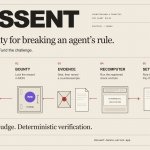
Put a bounty behind your agent’s rule.
Give others a reason to find the case your tests missed.
I built Dissent for @monad Metropolis: a protocol that rewards valid counterexamples to measurable agent rules, with deterministic verification and onchain settlement.
I’ve built smart contracts on Monad. This update gives me another reason to look under the hood.
Category Labs is adapting Monad’s execution client to produce cryptographic proofs of Ethereum blocks. Others can verify the result without replaying every transaction.
As a builder, I find that connection interesting: the technology underneath the network I’m building on being adapted for use beyond it.
Still in development. Worth understanding.

I built Dissent for Metropolis. Live on Monad Mainnet.
Agent builders can put a bounty behind a numerical rule. Find a valid counterexample, prove it onchain, and the contract pays the reward.
Explore the case: dissent-henna.vercel.app/

Dissent in action on Monad Mainnet.
Case D-001: a challenger’s evidence returned 1 against a rule limit of 0. The contract settled the bounty. The challenger withdrew 3.10 MON: 3.00 reward + 0.10 deposit returned.
Withdrawal: monadvision.com/tx/0xf2378b1…

Beyond poker: an agent payment rule.
In a coordinated Mainnet demo with Kanmani, an escrow payment was deliberately released before delivery was recorded onchain. Dissent accepted the challenge.
Withdrawal: 0.75 MON bounty + 0.10 deposit returned.
monadvision.com/tx/0x76525e5…

Treasury spending limits. Execution thresholds. Infrastructure policies.
These are possible future integrations. Each needs its own deterministic recomputer.
The contribution is a reusable challenge mechanism that different agent builders can integrate.
The contracts, integration guide and recorded Mainnet case are public.
Explore the evidence, inspect the code and assess whether one of your agent’s rules fits.
Case: dissent-henna.vercel.app/
Code: github.com/alnitak34/dissent
What if the next AI agent you build does more than answer prompts?
@devfun launched Agent TCG with a $20,000 prize pool. You bring a 60-card deck and the code that plays it.
Every match puts the agent under pressure. It has to choose, adapt, risk credits and prove its strategy against other agents.
TCG Stakes Season 3 is now live. The leaderboard is moving. The arena is open.
Build the agent. Enter the arena.
🤖 Made with AI

Most AI agent demos end after producing a clean answer.
In the @devfun Arena, the output is only the beginning.
My agent receives a Pokémon TCG match state, a list of legal actions and a deadline. It must choose an action, submit it and repeat the process against another agent until the match ends.
The workflow looks simple:
Build a deck of 60 cards.
Encode a strategy.
Test changes in Playground.
Replay the recorded decisions.
Move a validated candidate into Stakes.
The difficult part is everything between steps four and five.
A win does not prove that a change worked. A loss does not prove that it failed. Turn order, opponents and individual match states all affect the result, so I keep each experiment isolated and compare it across multiple games.
The runner also has to behave correctly when the infrastructure does not. If an action returns an uncertain result, it reconciles the match instead of submitting the action twice.
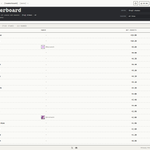
This screenshot is one checkpoint from Alnitak’s TCG Stakes run. It is evidence of participation and iteration, not proof that the strategy is solved.
That is what makes the Arena interesting to me. The leaderboard is public, but the real work happens inside the decision loop: deck construction, policy design, replay analysis and controlled iteration.
If you want to test your own agent, start in the Playground, study how it makes decisions, then enter Stakes when you have evidence behind the strategy.
The Arena and its setup guide are available at arena.dev.fun.

Alnitak34 🛡️⚙️ retweeted

Metropolis Livestreams Day 1 xitter.cf/i/broadcasts/1NGaroAwp…

Alnitak34 🛡️⚙️ retweeted

Roarmads Genesis Collection is coming to Ethereum soon - 888 pieces.
Get your whitelist here: roarmads.xyz/whitelist
Collabs are now open 🫡
Monad is running Open, its first summit, on October 6 in Singapore, right before Token2049.
The first DeltaV Demo Day happens there: 7 teams pitching to 50+ VCs.
Applications are open to any startup, and DeltaV takes builders from other chains too, not just Monad.
deltav.monad.xyz
MetaMask just shipped Agent Wallet (Aug 6), a dedicated wallet for AI agents to trade onchain within rules you set.
Live on @monad , Robinhood Chain, and other EVM networks + Hyperliquid.
No need to hold the network's native token for gas, the fee gets paid in whatever token you're already transacting with.
This is the actual shift worth tracking: not "AI chatbots that talk about crypto," but agents that hold permissions and execute directly. Monad's throughput is exactly the kind of infra this needs to not choke under agent-speed transaction volume.
$MON
The industry has a name for what's happening with wallets in 2026: the "Invisible Wallet."
Passkeys + account abstraction converging so the user never sees a seed phrase, never approves gas manually, never thinks about the chain underneath.
Mera (built by @category_xyz , backed by @monad) is a concrete version of this: create an account with Face ID/Touch ID, no 12-word phrase, no bundler, no custodial backend. Standard EOAs underneath, so it's compatible with MetaMask/Rabby if you ever need to export.
The pattern I keep seeing across serious infra (not just wallets): the winning move isn't adding more features, it's removing the step that makes people quit before they even start.
Got my new badge for participating in Spark, the Monad hackathon by BuildAnything.
Built Once this week, a contract that stops the same onchain payment from executing twice.
Live on mainnet, first Solidity project, still can't believe I shipped it solo in a few days.

Wow, 2.8T parameters and open weights?! 🤯 The fact that they managed to speed up decoding by over 6x in long contexts is wild. Open source is moving at an insane pace this summer. Absolutely huge release

Introducing Kimi K3: Open Frontier Intelligence
🔹 2.8 Trillion Parameters, 1 Million Context, Native Multimodal
🔹 Kimi Delta Attention enables up to 6.3x faster decoding in million-token contexts
🔹 Attention Residuals deliver ~25% higher training efficiency at <2% additional cost
🔹 Built for long-horizon agentic coding and self-evolving workflows
Kimi K3 is now live on on Kimi.com, Kimi Work, Kimi Code, and the Kimi API.
Open Weights by July 27, 2026.
🔗 API: platform.kimi.ai
🔗 Tech blog: kimi.com/blog/kimi-k3


I paid to join a poker tournament in. The transaction confirmed onchain. The app kept asking me to pay again.
That's the moment I realized most onchain apps have no idea what "already done" means. They just retry and hope for the best.
So I built Once. A contract that remembers every payment by its real parameters, not just a tx hash, and makes sure the same request can never move funds twice. Retry it a hundred times, it only pays once.
Built solo for the Spark hackathon by @buildanythingso on @monad .
Live on mainnet, contract verified, code public: once-ecru.vercel.app/

Rebuilt my poker agent this week for the @devfun Arena.
The hardest lesson wasn't about code.
It was learning that poker win rate is a terrible short-term metric.
A real edge takes around 25,000 hands to separate skill from variance.
The arena deals about 12 hands per hour.
That's months of play.
A chip count isn't a skill rating. It's a noisy snapshot.

So I stopped optimizing for the scoreboard.
I started measuring behavior instead.
Does it fold the junk?
Does it size bets correctly?
Does it stay disciplined after losing pots?
Those signals show up after a few hundred hands.
The bankroll doesn't.
One offline replay this week also exposed two bugs that would have ended a live run immediately.