

Joined April 2022
- Tweets87
- Following439
- Followers205
- Likes937




Pinned Tweet
What if survey-derived rubrics 📋 graded ChatGPT instead of vibes?
We benchmark LLMs & deep research systems across 75 research fields 🩺🧬🦾⚗️🏛️🎭💹: Perplexity deep research wins > 82% of head-to-heads vs the next best!
w/ @realliyifei, @cmalaviya11, and @yatskar

How well can LLMs & deep research systems synthesize long-form answers to *thousands of research queries across diverse domains*?
Excited to announce 🎓📖 ResearchQA: a large-scale benchmark to evaluate long-form scholarly question answering at scale across 75 fields, using queries 💬and rubrics📋that are mined from survey articles 📚!
Website: cylumn.com/ResearchQA
Paper: arxiv.org/abs/2509.00496
Dataset: huggingface.co/datasets/real…
Code: github.com/realliyifei/Resea…

Allen Chang retweeted

Re-sharing as #ACL2026 is coming up — I’ll be presenting UCS in San Diego!
📍 Poster 1636-FIND
🗓️ Sun Jul 5, 2:00–3:30 PM
📌 Session 3 / Poster Session B, Grand Hall
Excited to meet people working on ICL, LLM eval, UQ, or AI for healthcare. DMs open ☕

New paper at #ACL2026 Findings! 🧵 (1/8)
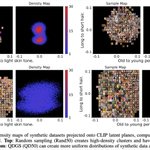
How do you pick the best in-context examples for an LLM?
Most methods focus on similarity or diversity — but they miss a more fundamental question: how much of the task's latent structure does your demo set actually *cover*?

Allen Chang retweeted

For prospective PhD students, I plan to hire in this coming application cycle (Fall 2026) with a focus on robotics, speech, and signed languages.
Allen Chang retweeted

🎯 We release MolmoPoint, the best open model in GUI grounding 💻 by training on purely synthetic screenshots. We open-source all our models, data, and generation code. Plug it into your agents!
Demo: huggingface.co/spaces/allena…
Model: huggingface.co/allenai/Molmo…
Data: huggingface.co/datasets/alle…
Code: github.com/allenai/MolmoPoin…

ALT Synthetic GUI data generation and performance.


Allen Chang retweeted

🔥Thrilled to introduce DR Tulu-8B, an open long-form Deep Research model that matches OpenAI DR 💪Yes, just 8B! 🚀
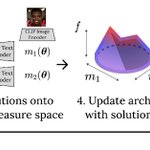
The secret? We present Reinforcement Learning with Evolving Rubrics (RLER) for long-form non-verifiable DR tasks! Our rubrics:
- co-evolve with the policy model
- are grounded on search knowledge
🧵

Allen Chang retweeted

✨ Very overdue update:
I'll be starting as an Assistant Professor in CS at University of Minnesota, Twin Cities, Fall 2026. I will be recruiting PhD students!!
Please help me spread the word! [Thread] 1/n

Allen Chang retweeted

🤖➡️📉 Post-training made LLMs better at chat and reasoning—but worse at distributional alignment, diversity, and sometimes even steering(!)
We measure this with our new resource (Spectrum Suite) and introduce Spectrum Tuning (method) to bring them back into our models! 🌈
1/🧵

Allen Chang retweeted

Future AI systems interacting with humans will need to perform social reasoning that is grounded in behavioral cues and external knowledge.
We introduce Social Genome to study and advance this form of reasoning in models!
New paper w/ Marian Qian, @pliang279, & @lpmorency!

Allen Chang retweeted

When answering queries with multiple answers (e.g., listing cities of a country), how do LMs simultaneously recall knowledge and avoid repeating themselves?
🚀 Excited to share our latest work with @robinomial! We uncover a promote-then-suppress mechanism: LMs first recall all answers and then suppress previously generated ones.
arxiv.org/abs/2502.20475
👇🧵

Allen Chang retweeted

People are relying on AI assistance to make all kinds of decisions. *How* they incorporate AI recommendations is influenced by previous user-AI interactions and their evolving trust in the AI, which AI assistants are typically blind to. But what if they weren’t?
We show that having AI assistants adapt their behavior in response to user trust levels can mitigate under- and over-reliance!
Pre-print: arxiv.org/abs/2502.13321

Allen Chang retweeted

Last Friday I gave an hour long talk at the Penn ILST Seminar about the particular linguistic features that characterize AI text (e.g. "delve", repetitive syntax, agreeable tone) and how they affect detectability.
Highly recommend giving it a listen.
youtube.com/watch?v=j73X_Rvu…

Allen Chang retweeted
Presenting this #EMNLP2024 Social-AI position paper today at 4 pm in Riverfront Hall!

Curious about socially-intelligent AI? Check out our paper on underlying technical challenges, open questions, and opportunities to advance social intelligence in AI agents:
Work w/ @lpmorency, @pliang279
📰Paper: arxiv.org/abs/2404.11023
💻Repo: github.com/l-mathur/social-a…
🧵1/9

Allen Chang retweeted
Come by Poster Session A tomorrow to hear @sayan__ghosh tell you why your preference eval is probably broken (and how you can fix it!)

Pairwise preference judgments are now standard for evaluating LLM generations and preference-tuning LLMs. In our new paper, we ask: are all test instances equally suitable for preference ratings?
We introduce a meta-evaluation measure called SEPARABILITY to estimate how likely a test instance will result in consistent preferences.
Paper: arxiv.org/abs/2407.01878
Code: github.com/dill-lab/separabi…
1/n


Allen Chang retweeted

Thank you so much @SpecNews1SoCal @jaskang21 for featuring our work on OATH-Frames: Characterizing Online Attitudes towards Homelessness with LLM Assistants👇
🖥️📈 oath-frames-dashboard.stream…
🗞️ spectrumnews1.com/ca/souther…
@CSatUSC @nlp_usc @uscsocialwork @CAIS_USC @USCViterbi @swabhz

Allen Chang retweeted
Our workshop will start in a few hours!
> #ECCV2024 9/29 AM workshop
> Suite 2, Allianz MiCo 🇮🇹
> Zoom info on our website (QR code below)
Looking forward to the discussion today and learning from our keynote speakers!
sites.google.com/andrew.cmu.…

In a few weeks at #ECCV2024, we will have the 3rd edition of the Artificial Social Intelligence Workshop!
This workshop will occur on September 29 in Milan 🇮🇹, with an interactive hybrid option available, as well
sites.google.com/andrew.cmu.…

Allen Chang retweeted

Meet Molmo: a family of open, state-of-the-art multimodal AI models.
Our best model outperforms proprietary systems, using 1000x less data.
Molmo doesn't just understand multimodal data—it acts on it, enabling rich interactions in both the physical and virtual worlds.
Try it for yourself: molmo.allenai.org/
Allen Chang retweeted

GPT4-o1-preview from @OpenAI now gets 80.4% (compared to 14% performance of GPT4o) on the Connections game in 1 single attempt. Saw a thread on LinkedIn about similar bump on Wordle. I also attached some other models in comparison. This is very impressive given how hard the task is
As someone who isn't so much about LLM scientivism, I am very confident the model was trained on these tasks. A sad and depressing trend where these models try to incorporate everything in training distribution make it super hard for researchers interested in generalization #LLM #GenAI


New paper with students @BarnardCollege on testing orthogonal thinking / abstract reasoning capabilities of Large Language Models using the fascinating yet frustratingly difficult @nytimes Connections game. #NLProc #LLMs #GPT4o #Claude3opus 🧵(1/n)


Allen Chang retweeted

You think your model just fell out of a coconot tree 🥥? It should not always comply in the context of all it has seen in the request. Check out our paper on contextual noncompliance.

The Art of Saying No
Contextual Noncompliance in Language Models
Chat-based language models are designed to be helpful, yet they should not comply with every user request. While most existing work primarily focuses on refusal of "unsafe" queries, we posit that the scope of noncompliance should be broadened. We introduce a comprehensive taxonomy of contextual noncompliance describing when and how models should not comply with user requests. Our taxonomy spans a wide range of categories including incomplete, unsupported, indeterminate, and humanizing requests (in addition to unsafe requests). To test noncompliance capabilities of language models, we use this taxonomy to develop a new evaluation suite of 1000 noncompliance prompts. We find that most existing models show significantly high compliance rates in certain previously understudied categories with models like GPT-4 incorrectly complying with as many as 30% of requests. To address these gaps, we explore different training strategies using a synthetically-generated training set of requests and expected noncompliant responses. Our experiments demonstrate that while direct finetuning of instruction-tuned models can lead to both over-refusal and a decline in general capabilities, using parameter efficient methods like low rank adapters helps to strike a good balance between appropriate noncompliance and other capabilities.

Allen Chang retweeted
Our work on improving selective prediction for VLMs has been accepted to #ACL2024 Findings! Read on to learn how you can make your VLM both reliable *and* usable ✨
Paper: arxiv.org/abs/2402.15610
Code: github.com/tejas1995/ReCoVER…

When vision-language models are uncertain about their answers, abstaining (“I don’t know”) enhances system reliability, but at the cost of utility.
We introduce ReCoVERR (arxiv.org/abs/2402.15610) to mitigate over-abstention in VLM systems without sacrificing prediction accuracy.

Allen Chang retweeted

We are pleased to announce that Maja Matarić of @usc , will be the 2024-2025 ACM Athena Lecturer! Matarić is recognized for pioneering the field of socially assistive #robotics. Learn more abt her impact here: bit.ly/4bF71P4
#womenincomputing @csatusc @uscviterbi
