

Building, learning, and sharing through tech and ventures | curious space-time traveler | anti-fascist
Joined December 2012
- Tweets276
- Following34
- Followers31
- Likes750




Spain reminded me why I fell in love with football in my teens.
#Fıfaworldcup2026 #VamosEspaña
27
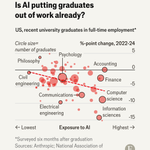
Interesting chart from @TheEconomist.
If AI is affecting employment, the first casualties may be the junior roles that once served as pathways into many professions.
Ironically, computer science itself appears among the hardest hit.

24
Mission: Mars!
After the recent @SpaceX IPO, it's worth revisiting the mission:
spacex.com/humanspaceflight/…

20
High-level design (macro) isn't a blurry version of detailed design. It should reveal different things.
At the macro level, you design how the system works.
At the detail level, you design how it shows up.
A lot of product mistakes happen when we confuse system design with implementation details.
Worth reading this thread from @rjs.

You can split any design into two levels. There's a macro level, which is how it works as a system. And there's a detail level of how those things are actually implemented.
In hardware, there's system design vs. parameter design.
In non-fiction, there's outline vs. prose.
In UX, there's breadboard vs. high-fidelity.
42
Always exciting to see one of the companies I've founded push forward.
The team is adapting the IoT platform into a dedicated solution for worker health & safety monitoring across industrial environments, from petrochemicals to mining.
Field devices + connectivity + software, all converging into a single operational layer.
Tech only gets interesting when it leaves the lab and survives the field.

16


Total data center construction spending has now surpassed transportation infrastructure spending (roads, highways, and related infrastructure).
Remarkable shift.
(The diagram via @a16z)

1
22
The essay “How to Be Successful” is one of those pieces that tends to read differently depending on where you are in your career.
Despite the title @sama gave it, it’s not motivational content. It's a dense set of operating principles for building leverage, judgment, and long-term compounding outcomes.
I don’t think it can be meaningfully summarized further, but I extracted a few key points from each section that stood out, as a way to encourage reading (or re-reading) it.
1- Compound yourself
“Most careers progress fairly linearly. You want one that compounds.”
“The furthest out years are the most important.”
2- Self-belief
“Without self-belief, it’s hard to hold contrarian views about the future.”
“Truth-seeking is what separates confidence from delusion.”
3- Independent thinking
“School rewards the opposite of original thinking.”
“The entrepreneur’s way is: fail many times, be really right once.”
4- Get good at “sales”
“Almost all careers become sales jobs.”
“Selling what you truly believe in feels great; everything else feels awful.”
5- Make it easy to take risks
“Most people overestimate risk and underestimate reward.”
“Look for small bets with asymmetric upside.”
“Don’t let lifestyle inflation remove your optionality.”
6- Focus
“Focus is a force multiplier on work.”
“Most people would benefit from spending more time deciding what to focus on.”
7- Work hard
“Getting to the 99th percentile requires both intelligence and extreme effort.”
“Work stamina is one of the strongest predictors of long-term success.”
8- Be bold
“It’s easier to build a hard, ambitious startup than an ‘easy’ one.”
“Things that seem exciting to you will often seem exciting to other people too.”
9- Be willful
“You can bend the world to your will more often than people think.”
10- Be hard to compete with
“If what you do can be done by someone else, it eventually will be for less money.”
11- Build a network
“Your network becomes the limiter for what you can accomplish.”
“Help people generously over long time horizons. It compounds unexpectedly.”
12- Ownership
“Time scales linearly, equity does not.”
13- Be internally driven
“Externally driven people optimize for consensus and approval.”
“The most durable motivation is internal compulsion, not status.”
He ends with a small but very real reminder:
Even much of his trajectory was shaped by luck, timing, and people who took early bets on him. A recognition that not everyone starts from the same position.
That part is often overlooked, but probably one of the most honest parts of the essay.
Full article:
blog.samaltman.com/how-to-be…

1
2
102
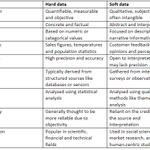
A lot of market sizing fails because it relies on top-down surveys rather than transaction data. Intent surveys tell you how people feel; actual cap tables, spending and investment figures show you what they really do.
Hard data > Expert sentiment

1
31
The table is from: smartsurvey.com/blog/hard-da…

21
What do VCs actually look for in founders? According to data from The VC Factory, ability (67%) and industry experience (60%) top the list.
Passion sits at 54%, while teamwork and prior entrepreneurial experience are right behind at 50%.
thevcfactory.com/how-venture…

24
"A genius in isolation will produce less than a mediocre thinker inside a dense exchange of other mediocre thinkers."
Fascinating!

A British biologist looked at 200,000 years of human history and found that the entire reason humans broke out of poverty was not intelligence, not language, not even agriculture, but one mechanism so simple a 6-year-old could explain it.
His name is Matt Ridley.
He is a zoologist by training, an evolutionary biologist by career, and in 2010 he wrote a book called The Rational Optimist that quietly argued the most important fact about human progress had been hiding in plain sight for the entire history of economics.
Naval Ravikant has been telling people to read everything Ridley has ever written for the last 15 years. The reason is the argument inside this one book.
For 200,000 years, anatomically modern humans walked around with the same brain you have right now. Same skull size. Same neural architecture. Same raw capacity for language, planning, and abstract thought.
For roughly 190,000 of those years, almost nothing happened. Generation after generation lived and died inside the same Stone Age toolkit their great-great-grandparents had used. Then somewhere around 50,000 years ago, the line on the chart of human progress started to tick upward. Then it bent. Then it exploded.
The question Ridley spent years on was the only question that mattered. What changed.
It was not the brain. The brain had been the same for 190,000 years. It was not language, which had existed long before the takeoff. It was not even agriculture, which arrived only 10,000 years ago and was actually preceded by the upward bend, not the cause of it.
What changed was that humans started trading with strangers.
This sounds too small to be the answer. Ridley argues that it is the answer to almost everything. The moment one human exchanged a useful object with another human from a different group, something happened that no other species on earth had ever done.
Two ideas that had developed in isolation came into contact. The flint knapper learned what the spear maker had figured out. The fisherman from the coast learned what the hunter from the forest had figured out. The two pieces of knowledge fused into something neither side could have produced alone.
Ridley calls this ideas having sex. The phrase sounds frivolous and it is meant to. The point is that ideas, like genes, get better when they combine with other ideas from different lineages.
An idea sitting inside one head, no matter how brilliant the head, eventually hits a ceiling. The same idea exposed to ten thousand other ideas does something genes do under sexual reproduction. It mixes. It recombines. It produces offspring nobody planned.
The cleanest proof of this argument is the most uncomfortable case study in the book. Tasmania.
Around 10,000 years ago, rising sea levels cut Tasmania off from mainland Australia. A population of roughly 4,000 humans was now isolated on an island, with no possibility of contact with the rest of humanity. They had the same brains. The same language. The same starting toolkit as their cousins 150 kilometers north. The natural experiment was now running.
What happened next is something no economist or geneticist had ever predicted.
The mainland Australians kept inventing. Boomerangs. Spear-throwers. Fishing nets. Bone needles for sewing fitted clothes. Watercraft with paddles. Their technology compounded slowly across the centuries.
The Tasmanians went the other way. They did not just fail to invent the new tools their cousins were developing. They started losing the tools they already had. Fishing was abandoned within a few thousand years. Bone tools disappeared. Fitted clothing disappeared. They forgot how to make fire from scratch and started carrying lit firebrands from camp to camp instead, relighting their fires from a neighbor's whenever their own went out.
By the time European explorers arrived in the 17th century, the Tasmanians had the simplest toolkit of any human society ever recorded. Their material culture had gone backward for 8,000 years.
The archaeologist Rhys Jones called it a slow strangulation of the mind.
Joseph Henrich at Harvard later proved with formal mathematical models that there was nothing wrong with Tasmanian brains. There was something wrong with their network. A toolkit requires a critical mass of people exchanging skills to maintain itself.
The act of teaching a skill is imperfect. Every generation loses a small percentage of what the last generation knew. If your population is large enough and trading widely enough, those losses get caught and corrected by someone else who still remembers.
If your population shrinks below a certain threshold and stops mixing with outsiders, the small losses compound until entire technologies disappear.
This is the part that should haunt anyone reading this in 2026.
Intelligence is not a property of the individual brain. Intelligence is a property of the network the brain is connected to. A genius in isolation will produce less than a mediocre thinker inside a dense exchange of other mediocre thinkers.
The thing your ancestors needed in order to break out of 190,000 years of stagnation was not better brains. It was better connections between brains they already had.
The implication for any individual is direct and uncomfortable. If you are smart and isolated, you will be outproduced by people half as smart who are connected.
The most successful people in any field are almost never the smartest people in it. They are the ones positioned at the intersection of the most idea flows. They are reading more authors than their competitors. They are talking to more people from more disciplines. They are in the rooms where ideas from different lineages bump into each other.
Ridley ends the book on the line that sounds optimistic but is actually a warning its this "The future will be invented by people who connect ideas, not by people who guard them."

35
Funny enough, I just ran into this diagram on @endeavor_global. Really interesting to see the actual connection between where climate tech founders get their degrees vs. where they launch their startups.
#greentech #startup

19
Interesting chart from @endeavor_global on 200 unicorn founders.
Elite schools and top employers matter less than we think. Startup experience is everywhere.
Reality is messier than the myths!
Its webpage is cool. Check it here:
endeavor.org/stories/unicorn…

1
13
One of the first UX lessons came from aviation.
Paul Fitts showed that many "pilot errors" were actually #design flaws. In the B-17, landing gear and wing flap controls looked almost identical, leading to hundreds of accidents.
Sometimes the system is the problem, not the user!

16
“Retail options traders have traded roughly ~2.8x their average daily semiconductor volume this month, nearly ~25% above the prior record set in June 2024, during NVDA’s stock split and run to surpass MSFT … .”
by @Citadel:
citadelsecurities.com/news-a…

34
Interesting how @MarsGlobal uses open innovation and collaborates with @PlugandPlayTC. Honestly, wished they shared a few actual case studies, but it's still a great watch.
The best part was the point about re-engaging with startups 2 or 3 years later.
youtu.be/UUDXZVp2bq0
1
19
The Solow paradox is the lag between a technology’s arrival and its measurable effect on productivity:
new tech shows up → everyone uses it → macro productivity barely moves → people assume it “didn’t work”
5–15 years later, everything re-architects and the curve shifts.
1
22
As this article describes, AI may feel similar.
We’re still mostly in the “overlay phase”: better tools on top of old workflows.
real impact probably shows up when orgs stop adding AI to work, and start rebuilding work around it.
Read more:
stripeeconomics.com/p/solopr…

22