




AliG retweeted

We fill our days mostly on things that are trivial next to what we ultimately care about. We know, deep down, however, that in the noise of it all, health is easily forgotten until it’s the only thing that matters.
We spend a fraction of our lives truly sober to the preciousness of life. We feel it when someone we love dies, when a child is born, when we come close to death ourselves, or when a diagnosis marks our limit. In those moments, we are sobered, and the rarity of it all becomes self evident. Imagine the existence we’d build together if that clarity didn’t fade.
I wish all of you the very best. Care for yourself, care for others, care for the planet and care for our animal friends. Care for life as it’s the most precious gift there is.
AliG retweeted
On Saturday, my children and I would go to the local running and biking trail and hand out water and bars.
People were suspicious.
They'd ask "how much does it cost?" We'd say free. Then they'd ask what cause it was for. We'd say none. At this point they'd be stupefied. There must be a catch. There was no catch.
The suspicion is an appendage of a culture that prioritizes status and money. The more selfless the act looks, the harder they search for the hidden angle.
I was experimenting as a father how to teach virtue. The value of helping someone without agenda or the need to get something back.
There is science to this. It's called the overjustification effect. Give a toddler a reward for helping and afterward they help less. The reward replaces the instinct. By attaching a payoff to a good deed, you corrode the good deed.
Children are born with the instinct to help before anyone rewards them. By age two they are happier giving a treat away than receiving one, and happiest when the treat they give up is their own.
It also causes moral elevation. Watching someone help others lifts the people who are watching and makes them want to do so themselves.

AliG retweeted
Immortality.
In word, deed, and offspring.
In the afterlife and in upload.
It’s been humanity’s obsession since the beginning.
Until now, one needed to concede inevitable physical death. That never dampened the human spirit to imagine that there was more beyond the veil. Humans have an insatiable desire for continued existence.
We are the first generation of humans who can say with a straight face, we may overcome physical death in the coming decades. The speed of progress creates a burden of proof for anyone who would deny this.
One age-reversal breakthrough at a time will soon switch our zeitgeist to inevitability. It won’t happen all at once. But the trend line will be undeniable.
We are experiencing an identity metamorphosis as a species; transitioning from one that is powerless in the face of death to one that is defiant against its cruelty.
What you call yourself shapes what you believe is possible. What you believe is possible shapes what you do. What you do determines what you become.
If you see yourself as someone who ages and dies, you live accordingly.
This is why we’ve changed our company name to Immortals.
Identity precedes behavior. It's the foundation of our emotions, our motivations, our actions. Your identity is a declaration about who you are and what you intend to do.
Immortals felt right because it’s only something that can be done together.
First @Nature mention of @bryan_johnson protocol. This is just the beginning! 🔥
Proud and grateful to be on the team taking N=1 further than anyone, turning it into the real way forward for proactive health. ♾️

This is cool. A Nature feature about my project.
Many scientists dismiss n=1 experimentation. Some actively work to diminish it.
I disagree. N=1 has a role, and an increasingly important one.
My team and I use clinical trial evidence daily. It guides our decision making and it also has limits.
Most people are struggling with a health issue that ranges anywhere from annoying to life threatening. Clinical evidence doesn't always provide what's needed to act. Personal experimentation and measurement can help fill that gap.
AI, multi-omics, wearables and real-time tracking all empower the N=1 to tackle conditions that remain incurable by current medical standards.
Here is the complete write up we provided to the author:
Randomized trials are necessary but not sufficient: the case for N-of-1 measurement and experimentation
Bryan Johnson and the Blueprint & Immortals Medical and Science Team: Ali Ghanem, PhD, Damon Forbes, M.D., and Carl Seger, M.D.
Randomized controlled trials remain the gold standard for evaluating therapeutic claims, and they will continue to anchor the evidence we use to select interventions. We do not dispute this. Our argument is narrower.
The RCT is engineered to estimate the average treatment effect of a single intervention, under a fixed protocol, in a defined population.
That is exactly the right instrument for the question it was built to answer: whether an intervention works on average, and whether it is safe enough to use. It is the wrong instrument for the question that governs health and lifespan optimization: which combination of interventions, at which doses, produces the best response in a specific individual measured densely over time.
By design, the RCT averages over the very heterogeneity that personalization must exploit; its narrow endpoints, short horizons, and one-intervention-at-a-time structure are not built to resolve individual response. This limitation is structural, not a defect to be corrected with larger samples.
N=1 experiments with longitudinal, high-resolution measurement are therefore not a substitute for RCTs but a complement: the means by which population-level evidence is translated into the individually optimized, proactively preventive interventions that meaningful health and lifespan extension require.
Trials report binary endpoints and population averages that do not capture individual response [1]. In JUPITER, the number needed to treat to prevent one major cardiovascular event over five years was 252; by that endpoint, roughly 96% of treated participants gained no measurable benefit. It may be objected that the trial did measure continuous biology, since median LDL cholesterol fell by about 50% [2]. But such a biomarker change does not, by itself, secure approval or guide therapy; the decision rests on the binary endpoint.
The continuous signal is recorded yet not acted upon, other continuous changes go untracked, and none of these markers is measured in the individual patient in routine care. Neither clinician nor patient can therefore identify who benefits, who could safely forgo treatment, or who is silently accruing harm. Safety inherits the same blind spot: trials register only what they measure, or events too severe to miss.
One instructive example is rofecoxib. Approved in 1999 on analgesic and gastrointestinal endpoints, it carried none for cardiovascular harm; the signal in VIGOR (2000) [3] was read as naproxen’s protection until APPROVe settled it in 2004 [4].
But these were endpoint-based trials, built to count events, not to measure the prostacyclin-thromboxane shift that would have made the prothrombotic risk visible before it appeared as infarctions. It was not so much missed as never measured: a structural shortcoming of endpoint-based design. Negative results, moreover, are disproportionately unpublished [5], so the evidence base loses the findings that would most constrain prevailing hypotheses.
We regard N-of-1 measurement as the next frontier, enabled by the convergence of artificial intelligence, wearables, multi-omic profiling, real-time tracking, and exposome capture.
Within my own protocols, maximally quantified and self-controlled, we have already generated signals that lie beyond the published literature and constitute first-in-human observations: real-time quantification of heat-shock-protein activation against continuously measured core temperature; sauna-driven clearance of environmental organic toxins (including plasticizers like phthalates and DEHP); enhanced fertility markers under sauna with testicular cooling; a first proof-of-principle demonstration of microplastics complete elimination from the semen and by more than 90% in blood, against a background in which these particles have been found in the semen [6] and testes [7] of every man so far studied; and the first human signal of a psilocybin-induced metabolic switch that lowered blood glucose and durably improved glycemic control.
We treat all of these as observations in need of further validation; our framework is not about finding instant answers but about identifying which questions are worth asking and investigating further.
The paradigm scales. A few deeply instrumented pioneers establish the axes of a high-dimensional physiological space; a larger cohort of cartographers charts its breadth across longitudinal individuals.
Once charted, the measurement burden collapses: neighbour-embedding methods8 position a sparsely sampled person within the map of the high-dimensional individual-biomarker space, inferring state and trajectory from nearest neighbours. This is already routine in biology, where sparse genotyping arrays are imputed to whole-genome resolution against reference panels [9], and, beyond medicine, where roughly 300 social-media “likes” predicted personality better than a spouse [10]. The deep cost is paid once; thereafter each individual is situated cheaply.
The frontier we find most compelling is the unleashing of N-of-1 methods against conditions presently considered incurable. Individualized, biomarker-guided strategies are already converting such conditions from managed to treatable: a documented case of recurrent osteosarcoma brought to sustained remission under an intensive personalized regimen, and, in veterinary oncology, the first personalized mRNA cancer vaccine administered to a dog, which produced substantial tumour regression. The new focus of our protocol is to tackle chronic conditions that current medicine accepts as manageable but not treatable, and to render them treatable through advanced diagnostics and next-generation personalized therapeutics.
References
1. Kent, D. M., Steyerberg, E. & van Klaveren, D. Personalized evidence based medicine: predictive approaches to heterogeneous treatment effects. BMJ 363, k4245 (2018).
2. Ridker, P. M. et al. Rosuvastatin to prevent vascular events in men and women with elevated C-reactive protein. N. Engl. J. Med. 359, 2195–2207 (2008).
3. Bombardier, C. et al. Comparison of upper gastrointestinal toxicity of rofecoxib and naproxen in patients with rheumatoid arthritis (VIGOR Study Group). N. Engl. J. Med. 343, 1520–1528 (2000).
4. Bresalier, R. S. et al. Cardiovascular events associated with rofecoxib in a colorectal adenoma chemoprevention trial (APPROVe). N. Engl. J. Med. 352, 1092–1102 (2005).
5. Turner, E. H. et al. Selective publication of antidepressant trials and its influence on apparent efficacy. N. Engl. J. Med. 358, 252–260 (2008).
6. Li, N. et al. Prevalence and implications of microplastic contaminants in general human seminal fluid: a Raman spectroscopic study. Sci. Total Environ. 937, 173522 (2024).
7. Hu, C. J. et al. Microplastic presence in dog and human testis and its potential association with sperm count and weights of testis and epididymis. Toxicol. Sci. 200, 235–240 (2024).
8. van der Maaten, L. & Hinton, G. Visualizing data using t-SNE. J. Mach. Learn. Res. 9, 2579–2605 (2008).
9. Marchini, J. & Howie, B. Genotype imputation for genome-wide association studies. Nat. Rev. Genet. 11, 499–511 (2010).
10. Youyou, W., Kosinski, M. & Stillwell, D. Computer-based personality judgments are more accurate than those made by humans. Proc. Natl. Acad. Sci. USA 112, 1036–1040 (2015).

3
154
AliG retweeted
This is cool. A Nature feature about my project.
Many scientists dismiss n=1 experimentation. Some actively work to diminish it.
I disagree. N=1 has a role, and an increasingly important one.
My team and I use clinical trial evidence daily. It guides our decision making and it also has limits.
Most people are struggling with a health issue that ranges anywhere from annoying to life threatening. Clinical evidence doesn't always provide what's needed to act. Personal experimentation and measurement can help fill that gap.
AI, multi-omics, wearables and real-time tracking all empower the N=1 to tackle conditions that remain incurable by current medical standards.
Here is the complete write up we provided to the author:
Randomized trials are necessary but not sufficient: the case for N-of-1 measurement and experimentation
Bryan Johnson and the Blueprint & Immortals Medical and Science Team: Ali Ghanem, PhD, Damon Forbes, M.D., and Carl Seger, M.D.
Randomized controlled trials remain the gold standard for evaluating therapeutic claims, and they will continue to anchor the evidence we use to select interventions. We do not dispute this. Our argument is narrower.
The RCT is engineered to estimate the average treatment effect of a single intervention, under a fixed protocol, in a defined population.
That is exactly the right instrument for the question it was built to answer: whether an intervention works on average, and whether it is safe enough to use. It is the wrong instrument for the question that governs health and lifespan optimization: which combination of interventions, at which doses, produces the best response in a specific individual measured densely over time.
By design, the RCT averages over the very heterogeneity that personalization must exploit; its narrow endpoints, short horizons, and one-intervention-at-a-time structure are not built to resolve individual response. This limitation is structural, not a defect to be corrected with larger samples.
N=1 experiments with longitudinal, high-resolution measurement are therefore not a substitute for RCTs but a complement: the means by which population-level evidence is translated into the individually optimized, proactively preventive interventions that meaningful health and lifespan extension require.
Trials report binary endpoints and population averages that do not capture individual response [1]. In JUPITER, the number needed to treat to prevent one major cardiovascular event over five years was 252; by that endpoint, roughly 96% of treated participants gained no measurable benefit. It may be objected that the trial did measure continuous biology, since median LDL cholesterol fell by about 50% [2]. But such a biomarker change does not, by itself, secure approval or guide therapy; the decision rests on the binary endpoint.
The continuous signal is recorded yet not acted upon, other continuous changes go untracked, and none of these markers is measured in the individual patient in routine care. Neither clinician nor patient can therefore identify who benefits, who could safely forgo treatment, or who is silently accruing harm. Safety inherits the same blind spot: trials register only what they measure, or events too severe to miss.
One instructive example is rofecoxib. Approved in 1999 on analgesic and gastrointestinal endpoints, it carried none for cardiovascular harm; the signal in VIGOR (2000) [3] was read as naproxen’s protection until APPROVe settled it in 2004 [4].
But these were endpoint-based trials, built to count events, not to measure the prostacyclin-thromboxane shift that would have made the prothrombotic risk visible before it appeared as infarctions. It was not so much missed as never measured: a structural shortcoming of endpoint-based design. Negative results, moreover, are disproportionately unpublished [5], so the evidence base loses the findings that would most constrain prevailing hypotheses.
We regard N-of-1 measurement as the next frontier, enabled by the convergence of artificial intelligence, wearables, multi-omic profiling, real-time tracking, and exposome capture.
Within my own protocols, maximally quantified and self-controlled, we have already generated signals that lie beyond the published literature and constitute first-in-human observations: real-time quantification of heat-shock-protein activation against continuously measured core temperature; sauna-driven clearance of environmental organic toxins (including plasticizers like phthalates and DEHP); enhanced fertility markers under sauna with testicular cooling; a first proof-of-principle demonstration of microplastics complete elimination from the semen and by more than 90% in blood, against a background in which these particles have been found in the semen [6] and testes [7] of every man so far studied; and the first human signal of a psilocybin-induced metabolic switch that lowered blood glucose and durably improved glycemic control.
We treat all of these as observations in need of further validation; our framework is not about finding instant answers but about identifying which questions are worth asking and investigating further.
The paradigm scales. A few deeply instrumented pioneers establish the axes of a high-dimensional physiological space; a larger cohort of cartographers charts its breadth across longitudinal individuals.
Once charted, the measurement burden collapses: neighbour-embedding methods8 position a sparsely sampled person within the map of the high-dimensional individual-biomarker space, inferring state and trajectory from nearest neighbours. This is already routine in biology, where sparse genotyping arrays are imputed to whole-genome resolution against reference panels [9], and, beyond medicine, where roughly 300 social-media “likes” predicted personality better than a spouse [10]. The deep cost is paid once; thereafter each individual is situated cheaply.
The frontier we find most compelling is the unleashing of N-of-1 methods against conditions presently considered incurable. Individualized, biomarker-guided strategies are already converting such conditions from managed to treatable: a documented case of recurrent osteosarcoma brought to sustained remission under an intensive personalized regimen, and, in veterinary oncology, the first personalized mRNA cancer vaccine administered to a dog, which produced substantial tumour regression. The new focus of our protocol is to tackle chronic conditions that current medicine accepts as manageable but not treatable, and to render them treatable through advanced diagnostics and next-generation personalized therapeutics.
References
1. Kent, D. M., Steyerberg, E. & van Klaveren, D. Personalized evidence based medicine: predictive approaches to heterogeneous treatment effects. BMJ 363, k4245 (2018).
2. Ridker, P. M. et al. Rosuvastatin to prevent vascular events in men and women with elevated C-reactive protein. N. Engl. J. Med. 359, 2195–2207 (2008).
3. Bombardier, C. et al. Comparison of upper gastrointestinal toxicity of rofecoxib and naproxen in patients with rheumatoid arthritis (VIGOR Study Group). N. Engl. J. Med. 343, 1520–1528 (2000).
4. Bresalier, R. S. et al. Cardiovascular events associated with rofecoxib in a colorectal adenoma chemoprevention trial (APPROVe). N. Engl. J. Med. 352, 1092–1102 (2005).
5. Turner, E. H. et al. Selective publication of antidepressant trials and its influence on apparent efficacy. N. Engl. J. Med. 358, 252–260 (2008).
6. Li, N. et al. Prevalence and implications of microplastic contaminants in general human seminal fluid: a Raman spectroscopic study. Sci. Total Environ. 937, 173522 (2024).
7. Hu, C. J. et al. Microplastic presence in dog and human testis and its potential association with sperm count and weights of testis and epididymis. Toxicol. Sci. 200, 235–240 (2024).
8. van der Maaten, L. & Hinton, G. Visualizing data using t-SNE. J. Mach. Learn. Res. 9, 2579–2605 (2008).
9. Marchini, J. & Howie, B. Genotype imputation for genome-wide association studies. Nat. Rev. Genet. 11, 499–511 (2010).
10. Youyou, W., Kosinski, M. & Stillwell, D. Computer-based personality judgments are more accurate than those made by humans. Proc. Natl. Acad. Sci. USA 112, 1036–1040 (2015).
AliG retweeted

The opposite of paranoia is pronoia, the irrational belief that the universe is conspiring in your favor. I have built my entire career on pronoia and I highly recommend it.
AliG retweeted
You can’t go on a rich persons yacht, or fly on their private plane, or live in their mansion.
You will, however, eventually get access to their longevity therapies.

AliG retweeted
Here’s everything you need to know about the Enhanced Games… 👇
I am Live commentating and analyzing the athletes protocols and measurements.
+ 42 athletes, many olympians
+ swimming, track, weightlifting
+ performance-enhancing drugs allowed
+ only FDA-approved substances
+ every protocol individualized
+ all athletes medically supervised
+ athlete enhancement optional
Substances used:
+ 91% testosterone
+ 79% human growth hormone (HGH)
+ 62% stimulants (Adderall, modafinil)
+ 50% metabolic modulators (Anastrozole)
+ 41% EPO
+ 29% anabolic steroids (Deca-Durabolin)
+ 5% hormonal support (hCG)
This is from aggregate data from a 12-week clinical trial of 36 of the 42 athletes.
Some of the athletes…
+ James Magnussen
+ Fred Kerley
+ Ben Proud
+ Kristian Gkolomeev
+ Thor Björnsson
The medical monitoring is unprecedented…
+ cardiology imaging
+ respiratory testing
+ organ health imaging
+ body composition analysis
+ musculoskeletal assessment
+ neurocognitive screening
+ genomic sequencing
+ biomarkers (blood, urine, saliva)
Enhanced Games may be the most quantified sporting event in history.
Compensation:
+ $25M in total athlete compensation
+ $500K prize purse per event
+ $250K to first place
+ $1M bonuses for breaking world records in the 100m sprint and 50m freestyle
I’ll be broadcasting Live as the Human Enhancement Expert.
I’ve reviewed:
+ their biomarkers
+ how their health changed
+ what their ‘enhancement’ is
+ their wearable data
+ their protocols
Most people think Enhanced Games is about unregulated drug taking. It’s the opposite: it’s possibly the most quantified and medically supervised sporting event.
See you tomorrow night.
AliG retweeted
I’m cohosting the Enhanced Games this Sunday, first time as a broadcaster.
It’s the Olympics with enhancement allowed. Athletes use FDA-approved medications prescribed and supervised by doctors. Most enhancement protocols were monitored in an IRB clinical trial over the past five months. Athletes testing the frontiers of what’s possible.
I’ll be speaking to the athletes’ measurements, clinical care and enhancement protocols. Reviewing their data in the role of Human Enhancement Analyst.
I spent the week with the athletes and doctors. So many moving stories of courage and triumph. Tune in Sunday. It will be a great time.

AliG retweeted
This is it.
Everything learned spending millions on longevity.
From: Your Immortal Unc and Auntie.
To: Our Immortal nieces and nephews.
0. Sleep is the world's most powerful drug.
1. Be in your bed for 8 hours
2. Same bedtime every night, any time before midnight
3. Don’t eat right before bed
4. Calm foods for dinner
5. No screens 1 hour before bed
6. Avoid added sugar (be aware it’s in everything)
7. Avoid all things in an American convenience store
8. Avoid fried foods
9. Shoes off at the door
10. Eat whole foods, particularly veggies fruits nuts legumes berries
11. Walk a little after meals or air squats
12. Get your heart rate high routinely
13. Lift heavy things
14. Stretch daily
15. Water pik, floss, brush, tongue scrape, morning and night
16. Make an effort to drink water
17. Get sunlight when you wake up (UV is low)
18. Protect skin in midday sun
19. Stand up straight
20. See at least one friend once a week
21. Avoid plastic where you can (in all things)
22. Circulate air in rooms
23. When stressed, breathe, learn to calm your body
24. Go to the dentist
25. Avoid sitting for long times
26. Protect your hearing, the world is too loud
27. Alcohol is bad for you
28. Finish coffee before noon
29. Avoid bright lights after sunset
30. If obese, look into a GLP
31. Sleep in a cold room
32. Texting while driving is dangerous
33. Turn off all notifications
34. Limit social media use
35. Don’t smoke anything
36. If you struggle to sleep, read a physical book before bed
37. 1 hour before bed have a calm wind down routine: bath, read, light walk, listen to music
38. The body is a clock and loves routine. Have a daily morning and evening schedule.
39. Avoid long distance travel where you can
40. Baby steps first: incorporate new things slowly
41. Do less… most things don’t work.
Bonus points if you get your blood checked.
Start here, it will change your life.
“If aging clocks were useful, life insurers would use them.”
Sounds smart.
But it’s the wrong comparison.
Insurers don’t win by solving aging.
They win by avoiding uncertainty, in the aggregate.
At 30, 10-year all-cause mortality is only 1–3%.At 40, 2–4%.
And by the time aging biology becomes the dominant risk, many policies have lapsed, shrunk, or are no longer economically central.
The real biological challenge starts later:
At 70, 10-year all-cause mortality rises to 23–32%. At 80, 55–65%.
That is when frailty, chronic disease, and intrinsic aging become the main event.
Longevity, as a field, does not exist to help insurers price death.
It exists to understand, measure, prevent, and reverse aging.
1
99
AliG retweeted
Unpopular opinion: most health content fails not because the information is wrong but because the person delivering it has never been publicly embarrassed by their own data.
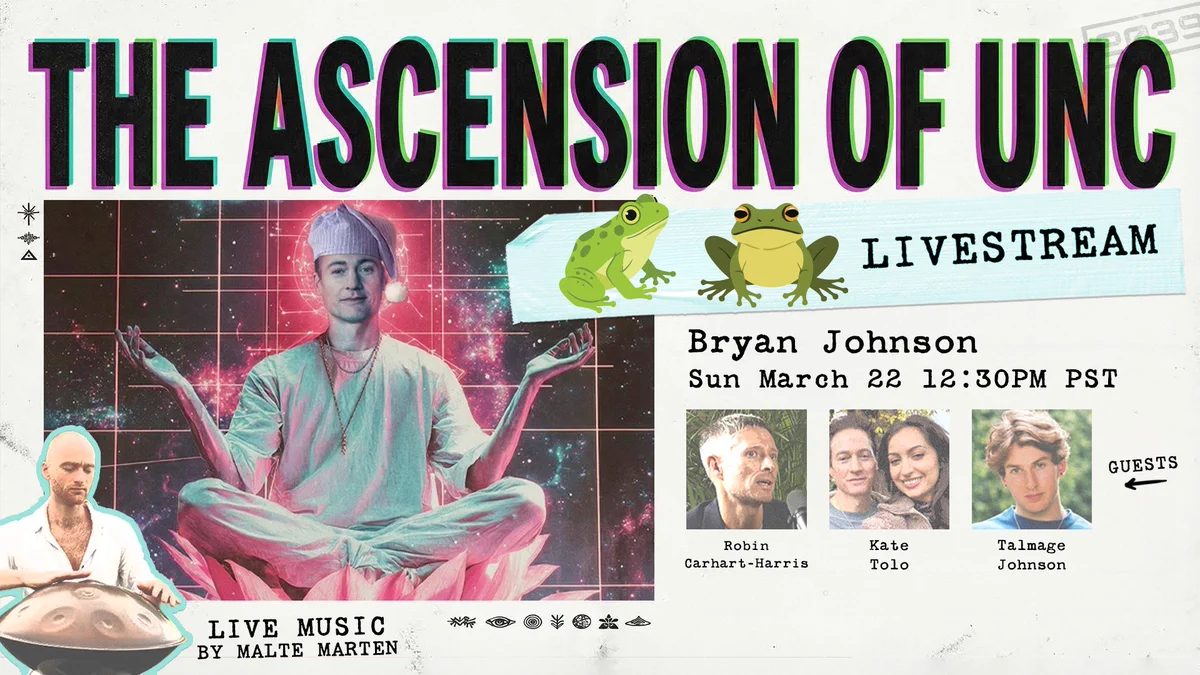
“Psychedelics, used responsibly and with proper caution, would be for psychiatry what the microscope is for biology and medicine or the telescope is for astronomy”
and, perhaps, for human physiology and longevity as well ♾️
2
139
AliG retweeted
There is a human-AI future where beauty abounds. Where the jagged edges of existence are softened and the unnecessary suffering born of dysregulation and misalignment are chipped away. Stretching to imagine this world is the hard work.
AliG retweeted
I did a 40 hr and then a 70 hr social media fast.
I’ve come to believe that social media is pollution.
Not a vice or guilty pleasure.
It’s closer to water toxins, air pollution and microplastics.
Social media has been on my mind because I can feel how bad it is for me. For my health and agency. I am a professional rejuvenation athlete. For five years, I’ve engineered my life around biological renewal and the elimination of decay. After hundreds of experiments across food, sleep, exercise, therapies, and toxins, I’ve developed both data and intuition about what strengthens or degrades my system.
I can viscerally feel that social media is bad for me. It erodes my autonomy and increases cognitive entropy.
Like other toxins, it accumulates. You can’t unsee or unfeel what you’ve consumed. It settles into mental tissue like heavy metals, producing chronic low-grade inflammation. Evidence suggests even after you stop scrolling, attentional fragmentation and emotional priming persist. Your thoughts begin to mirror the algorithm’s incentives. Independent cognition quietly erodes and you don’t notice the loss.
Time away and getting lost in deep focus is the only remedy.
When something erodes your agency, the rational response is elimination. The problem is, elimination isn’t realistic. “Just put the phone down” is as practical as telling someone in 19th century London to stop breathing coal smoke.
You need to know what’s happening in the world, be in touch with your friends and be part of the tribe.
That necessity is what allows companies to harvest your emotions, intellect and time for their profit. You are their raw material they exploit. Then in an ironic twist, the system gets you to exploit yourself by engineering an environment where it takes more effort to stop than to continue scrolling. Pollution exposure by default.
What specifically makes social media toxic is that value and poison are inseparable by design. You go to hear from friends and you leave an hour later absorbed in outrage that serves no biological interest of yours. The water is real. The lead is in the pipes.
The performance metrics (likes, views, etc.) bleed you of independent thought. They create quantified social proof, triggering ancient hierarchy reflexes. You no longer evaluate signal from noise; the engagement metrics do it for you.
Like all toxins, the damage is cumulative. We live inside the exposure long enough that it feels normal. The 40 and 70 hour social media fasts did that for me. Gave me just enough separation to feel and diagnose the poison. The obviousness of it feels like when I went to India and saw their humanitarian crisis of air pollution which no one sees anymore.
So what do we do?
Neither platforms nor individuals are likely to change on their own. AI may be the countermeasure. An AI layer between you and the feed. Filtering rage, removing vanity metrics and translating sensationalism into calm, factual language. Preserving signal and eliminating noise.
I want social media to become a longevity intervention, not a longevity threat. I never want to see the raw feed. I want an AI agent to read it for me, strip the engagement metrics that hijack my judgment, filter the rage, and return only what I actually came for.
Every generation faces its pollutants. When cholera spread through London's water, the answer wasn't telling people to drink less. It was building filtration. The same logic applies here. Best next move is to design the filter to avoid being the raw material.
AliG retweeted
I've been trying my damndest to get your motherf*ckers to stop eating hours before bed. A new study out confirms this is the right thing to do.
>3hr pre-bed:
. heart rate dropped by 5%
. diastolic blood pressure dropped 3.5%
. cortisol dropped
. heart rate variability increased
. improved blood glucose and insulin response
Study details:
39 overweight or obese participants (aged 36-72 years) investigated "sleep-friendly intermittent fasting" by comparing two protocols:
1. Habitual fasting: A daily fasting window of 11-13 hours, with participants free to eat anytime before bedtime.
2. Extended overnight fasting: A 13-16 hour fasting window, with the last meal consumed at least three hours before sleep.
Light was dimmed for both groups at least three hours before sleep.
The extended fasting paradigm also demonstrated a 90% adherence rate, suggesting its potential effectiveness for improving cardiometabolic health and sleep in overweight and obese populations.
While the three-hour pre-bed limit showed significant benefits in this trial, individuals who are already metabolically healthy may achieve further improvements and require a more stringent limit.
To find your optimal window, start by consuming your latest meal three or four hours before bedtime, and then work backward in one- or two-hour increments. Track key metrics such as sleep quality, resting heart rate, heart rate variability, next-morning recovery and focus, and metabolic health/glucose control (ideally using a Continuous Glucose Monitor).
For me, an eight-hour pre-bed fast works. My resting heart rate before bed has reached 38 bpm, placing it in the top 99.9th percentile.

AliG retweeted
Today, we are launching Immortals.
+ $1,000,000 per year
+ Three spots available
Immortals is the world’s best health program. It is the exact protocol I have followed for the last 5 years. It is your Autonomous Health.
Includes a dedicated concierge team, BryanAI 24/7, extensive testing, millions of biological data points, continuous tracking, best skin and hair protocols, and access to the best therapies on market.
Immortals begins with those who have the resources and commitment. The long-term goal is universal access: the same standard of care, regardless of income or willpower.
As these systems mature and scale, cost declines.
Over the coming months:
+ $1,000,000 fully managed (now)
+ $60,000 supported tier
+ Free digital tier
Across all, the core philosophy remains the same: measurement, scientific research, intervention, repeat.
$1m/yr prerequisites:
+ pass interview process
+ a dedicated assistant
+ invest time
Join below.

AliG retweeted

Germany's Merz:
China builds the world’s largest solar farms within a few months.
In the EU, it takes years just for the project to get approved.
Therefore, I propose to implement a fundamental principle in most permitting processes: Any project that is not treated within a few weeks or months will be regarded approved automatically.