

Connecting families with care for their kids, parents, pets, and home at @CareGuide
Toronto 🇨🇦
Joined January 2010
- Tweets757
- Following311
- Followers685
- Likes1.5K





Watching your kids grow up is the most fun way to learn about psychology and human development
Our 3yo has an imaginary sister named Nina who joins us at every meal and has a specific spot at the dinner table
Our 9mo old learned to crawl and now attempts to climb every surface in sight
Watching these two grow up is simply magical
118
Ali Dinani retweeted

“Can you believe Jeff Bezos just dropped $165 million on what, his tenth house?” he said. “Unreal! He’s just so fucking rich!”
“Wait, aren’t you worth billions of dollars?” I replied, genuinely confused. “What can Bezos buy that you can’t?”
The billionaire thought for a moment, then his eyes went glassy.
“I have nice yacht money. Bezos has superyacht money.”
I couldn’t believe what I was hearing.
This man had more wealth than the GDP of entire nations, but his demeanour was that of someone who believed he was falling short.
Chris and I sat by the pool of our host's palatial mansion, exchanging silent glances, both struggling to hide our disbelief.
It was the summer of 2021, and we were in the middle of one of the most exciting periods of our lives.
We were on the verge of taking our company, Tiny, public, having spent months in late-night strategy meetings and intense negotiations.
The highlight of it all? We had struck a deal with none other than Charlie Munger.
We met Charlie through my friend Andrew Marks, who had introduced us when Charlie needed help with a software company he owned.
What started as a casual connection evolved into a once-in-a-lifetime opportunity: Charlie suggested we merge our companies, making Tiny a publicly traded entity in the process.
It was exhilarating, a dream deal with our investing hero.
But little did we know, this very trip would cause us to reconsider everything.
Since we were newbies to the world of high finance and public markets, we spent weeks meeting with some of the most successful financiers and business leaders in our network. We wanted their valuable advice and guidance to help us on our journey.
As we looked through the names of people we were going to talk to, we realized that there had been a strange, almost comical, fluke in the scheduling: each meeting had been set up with someone who was progressively richer than the person from the prior meeting.
The first investment banker we met with, a guy who was worth around $50 million, immediately greeted us in his beautiful waterfront home by referring to it as his “shack.”
We didn’t know if he was kidding or what, but it turned out that his home, which was easily a $10 million property, was sandwiched between two other homes that were each worth around $25 million—and this bothered him, immensely.
We chatted over coffee about his career and potential investment opportunities. While he was pleasant and cordial, he kept mentioning his “shack.” Like his home was embarrassing.
His mood turned downright sad when he asked who else we were meeting with. It was clear he knew all of the people on our list and that they were all wealthier than him.
“If I’d invested in Airbnb when I had the opportunity, I’d be worth double what I am now,” he quipped sadly. “I’d be the guy in the house next door.”
Chris and I both noted the banker’s melancholic tone. But he wasn’t alone.
When we made it to Woodside in San Francisco, where the homes were even more expensive, we heard a similar sentiment.
“My neighbor won’t let me tear down those trees over there,” a startup founder who was worth over $250 million lamented to us, while standing in the foyer of his $25 million second home.
“I just need to buy the adjacent property and do it myself.”
Another investor in Silicon Valley walked us through his mega mansion and said, unironically, “You know, I could’ve gone for a bigger house. I just opted for something more modest.”
Not everyone we met on our trip was ostentatious with their wealth, and most were actually very nice people.
But each had their own uniquely surprising behavior and lamentations.
We had breakfast with one investor who was worth well over a billion dollars, but who lived in the same suburban home he had been in with his family since before he had made his fortune.
As we sat in his kitchen eating bagels, which he made clear he had personally picked up at the nearby bagel store, like he was just a regular Joe, he leaned in and whispered about his net worth to us, even though we were in his house, for fear that someone would hear him say it aloud.
He wanted people to think he was poor because he didn’t want to deal with the slew of problems that came with the wealth.
From people he had just met asking him to invest in some far-flung idea, or a distant family member needing help with some debt, or people simply treating him differently because they knew how wealthy he was.
To him, being rich seemed like the world’s worst burden, and the weight of it was clearly all he could think about.
And yet, he was obsessed with making more when he had many lifetimes’ worth.
Continuing to invest and buy businesses, obsessively counting his winnings.
Having learned something of this burden earlier that year, I nodded in sympathy.
We weren’t getting advice from these people. We were hearing the envy they had of other people’s lives, completely blind to what was exceptional about their own.
When we made it to Bel Air, where the homes are the same size as the hotels, the irony was truly astounding.
The investors and CEOs we met there, many of whom were vacationing in their second, third, or even fourth or fifth homes, complained about the idiocy of the super-super-super rich, who lived nearby.
An investor who had made a billion dollars investing in tech startups gave us a tour of his nine-bedroom, sixteen-bathroom home—yes, sixteen bathrooms, for what reason I don’t know—complete with a movie theater and indoor swimming pool, but spent the entire time complaining that a neighbor had a home with three swimming pools (yes, three).
“Who needs three swimming pools?” he asked, then, without the slightest bit of irony, changed the topic to one even more garish, asking, “What kind of plane did you guys fly down here on?”
We told him we had chartered a Challenger, a plane twenty years older than his $44 million Gulfstream G650.
“Oh... nice,” he replied as he fiddled with his phone. We’d lost his interest.
All of them seemed to be caught up in a game of Who Has What, and yet they had everything.
Even those who lived in normal-sized homes by most standards still managed to “leak” (a term Chris and I had come up with to describe when someone told us something they pretended they didn’t want us to know) the amount of money they had spent by making their yacht less grandiose.
“I kept telling the builder to make it 30 percent smaller,” one billionaire told us, while showing off photos of the custom superyacht he was building.
“Sherry and I don’t need all this stuff; we don’t need twenty staterooms and a helicopter.”
Ignoring the fact that he was still spending many tens of millions of dollars on a yacht he’d likely use a few weeks a year.
(Chris had started referring to this kind of “leaking” as “grandiose humility.”)
By the time we got to our last meeting with the richest of them all, a CEO worth several billion dollars, we were in shock at the amount of wealth we had been around in the past couple of days, and we both felt inadequate and gross all at the same time.
The last house we pulled up to told us this person was different. I’ve stayed in smaller hotels.
It was filled with glass and marble and massive, strange sculptures.
His home felt more like a sprawling office complex than a family home.
This CEO had a quality to him that I can only describe as being tiger-like, an apex predator incredible at what it did, charming, fleet-footed and regal, but still, four hundred pounds of brawn with adamantine teeth and claws as sharp as Ginsu knives.
You can’t get close, you can’t pet it, you certainly don’t want to step in the cage with it, because that tiger simply can’t help himself: he’s going to rip your fucking throat out.
He had a cabal of servants who waited on our every whim as he talked about his latest acquisitions and how he’d taken down this competitor or that one.
He also had a way of telling us how much everything cost without seemingly realizing how crass he sounded.
“Eighty-two Lafite Rothschild,” he said, motioning to the wine a servant was pouring me.
“Four-and-a-half-grand a bottle.”
“Wow, it’s... really something,” I said, unsure what else to say about the wine, which tasted like... wine.
Later, as I looked over at a huge painting that was just a solid flat color, he interrupted my gaze to let me know that it was an “original Newman,” and boasted that “we paid two for it. Two, can you believe it? It’s worth about twenty now.”
(Chris and I looked at each other, unsure if he paid two thousand or two million.)
It wasn’t until after dinner that he showed us his most recent purchase.
We walked through the house, and he opened a door to reveal a vast garage filled with all kinds of vehicles that he had probably only driven once or twice.
He walked us past a Bentley and a custom, completely blacked-out Tesla Model X until we came upon a Porsche 911 that was unlike anything I’d ever seen before.
“What is this?” I asked, mesmerized.
“A Singer,” the tiger said, as he opened the door and invited me to sit in the driver’s seat.
Nothing he had shown me had tweaked my desire, but this, this was different.
It was a custom, mid-’90s Porsche that had been restored with meticulous detail and glistened like a piece of automotive jewelry.
As we were told, it was as bespoke as a tailor-made suit with a molded carbon fiber body, hand-stitched leather, and a hand-crafted exposed manual shifter that looked like it might have been made from a rare, polished metal.
I had purchased a Porsche 911 Turbo a few years earlier, but I had never felt the need to upgrade it.
That was, until now.
“This only cost me $600,000,” the CEO said.
“It’s gorgeous,” I said.
“Yeah,” Chris echoed. “Never seen anything like it.”
“Maybe,” I thought to myself, “I’ll buy myself one as a present once the Munger deal closes.”
Half a million—the cost of an entire home for most people.
The CEO knew what I was thinking.
“I’ll give you the guy’s number who makes them,” the CEO boasted.
“There’s a five-year wait, but I’m sure we can get you moved up on the list.”
The following day, Chris and I drove to the airport in silence and boarded our jet back to Victoria.
We were both lost in thought about the trip.
We had set out to glean some wisdom from these business titans, which we did. However, we came away feeling that they lived in a bottomless pit of envy.
There was something that I couldn’t shake about these individuals: no matter what they owned, they were always comparing themselves to their increasingly wealthy peers—looking up, never down.
They never took a moment to appreciate what they had, obsessively trying to add more zeros than the next billionaire.
What could be more miserable than that?
More disturbingly, I was starting to realize that I might be no different. I often criticized the garishness and waste of owning a yacht while traveling in private jets.
Grandiose humility: “I’m not like those other rich people—that’s just silly.”
If I liquidated all my assets, I’d be worth close to a billion dollars, and yet I still wanted to be worth more. I could already afford to fly on a bigger jet if I wanted, but for what? There were already ten empty seats on the one I was currently flying in.
And ultimately, what about my kids? Would I, should I, give them my money? On this, I was torn. At fifteen, my parents had told me that if I wanted nice clothes or other non-critical items, I had to buy them myself.
There would be no handouts: money was something that had to be earned. It built a work ethic, but you know how that turned out. The difference was that I knew my parents were broke—it’s not like they were withholding anything from me; they flat-out didn’t have the money.
I’d recently bought my eldest son his first piggy bank and had started building little business lessons into our daily life. I explained that when we purchased things at a café, it came from my bank account, and that money came from working.
I then shared all the different ways that I made money. He nodded along sagely. I had just helped him put his first lemonade stand together, and he’d made $45.
Yes, I want my children to have a work ethic, to understand the value of money and the privileges it affords them. But was it not insane to make them go through the same, sometimes torturous path I had if we already had so much?
One friend had posed an interesting question on this topic: “If you came from a long line of subsistence farmers who had been toiling in the fields for millennia just to survive, with a total inability to pursue their true intellectual passions and interests, but you, due to luck and timing, built an industrial farm and went from a subsistence farmer to a millionaire, would it be logical to teach your children how to toil the soil and grow root vegetables?”
The answer seemed deafeningly obvious.
And then there was the potential resentment. If you have a warehouse full of chocolate chip cookies and your child asks you for one, it feels a bit harsh, and maybe even borderline psychopathic, to tell them to bake their own.
All this was bubbling in my head as our plane began its descent into Victoria.
“Did we learn anything from this trip?” I asked Chris, who sat across from me in the same melancholic state.
“How not to be a whacko?” he replied.
----------
This is an excerpt from my book, Never Enough.
If you want to keep reading, you can buy it on Amazon or get the first chapter free at the website linked on my Twitter profile.
Enjoy :-)
Toddlers are insane
3yo: Am I going to get birthday gifts at school today?
me: I don't think so, but you'll have a really fun day
3yo, angrily: That's not kind. I'm going to push you out the car and you will have to see the doctor
139
Interesting
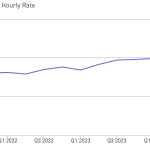
The average hourly rate for a nanny has been steadily increasing over the past 3 years
Increased by 15% over this time horizon
Surprising trend considering the economic environment

1
1
152
A thought exercise I regularly come back to:
I ask myself: "If we could hire 3 more people, what would they do?"
And then I ask myself why we aren't already doing it
1
86
I'm sure the person who made the song "5 little monkeys jumping on the bed" is happy to know that their song has dramatically increased the number of kids jumping on their bed
1
113
If you're hiring someone to take over a job that takes you a few hours a week
Remember that this person is now going to spend 40 hours focused on it
Not all problems deserve that level of attention
1
105
My 3yo, throwing the biggest tantrum of her life:
"YOU'RE NOT MY BEST FRIEND ANY MORE"
Somehow, both heartbreaking and hilarious
1
94

Building a new marketing channel is so much harder than scaling & optimizing an existing one
There are unlimited new ideas, but only a handful that'll actually work
1
67
How do small to midsize companies justify spending money on brand marketing??
I know that I can throw $100 at Google Ads and make $150
If I throw $100 at YT or TT ads, I have no confidence in the $$ that's generated
But I know I'm not making the $50 profit I would have on Google Ads
1
96


Ali Dinani retweeted

⚖️Marketplace Founders: Go-to-market strategy is something you should be thinking about before building product.
I wrote about the most capital efficient gtm strategy used by creator economy platforms like OnlyFans, Patreon and Gumroad: Zero Player Mode
alexfmac.substack.com/p/-mar…
Our team just fixed a bug that only impacted iPhone SE running Safari on iOS 14.3.
You'd think we would have found a better way to eliminate these damn cross-device/browser bugs by now.
The first browser was well over 30 years ago.