

ohhhmics | Associate Professor at ETSmtl & CRCHUM | 🐶☕️ 🐥🐒 https://xitter.cf/t.co/j8cM1NsIJR
Joined November 2017
- Tweets622
- Following664
- Followers412
- Likes2.3K




Alexandre Pellan Cheng retweeted

This is a "detective story" paper that shows how setting up the right negative controls can lead to real discoveries.
Basically, the authors wanted to reproduce a published result showing that a specific CRISPR tool, called Csm, could chop up RNA molecules and lower their levels in a cell. They measured this with RT-qPCR, a common experiment that quantifies how much of a given RNA is present before and after the CRISPR knockdown.
When they went to reproduce this result, they found that Csm did reduce RNA levels. But a negative control, a mutated version of Csm that shouldn't be able to cut anything, also knocked down RNA by roughly the same amount. Weird!
So the authors started varying the experimental parameters to solve this dilemma. First, they tried different RNA extraction methods and tested several more CRISPR tools. They confirmed, too, that the mutant Csm couldn't cut RNA. The RT-qPCR results persisted anyway.
Second, they built an mCherry reporter to measure protein levels directly. Normal Csm reduced protein levels, which makes sense since it's cutting the RNA. Mutant Csm did not change protein levels at all. This was another good sign that the mutant Csm was producing some kind of artifact.
To figure out why, we need to talk about RT-qPCR. This is a method that, first, converts RNA into DNA using reverse transcriptase, an enzyme that builds a matching DNA copy. qPCR then counts how many DNA copies got made from a short stretch of that RNA, called an amplicon. More copies of DNA = more RNA was present at the start.
Normally, scientists place this amplicon so that it overlaps with the guide RNA's binding site, since that's the region expected to get cut. But with mutant Csm, an amplicon located at the guide RNA site showed false knockdowns. When the amplicon was moved to *before* the binding site, the artifact disappeared and RNA levels appeared unchanged.
Why was this happening?
The reason, oddly, was that the guide RNAs (without any protein!) were blocking reverse transcription, making it look like mutant Csm was reducing RNA levels. The researchers tested this by spiking synthetic guide RNA, made with no CRISPR protein at all, directly into the reverse transcription reaction. This reproduced the false knockdown.
If a guide RNA can bind a target without a CRISPR protein at all, then we should also see similar gene silencing in cells. Right? Well, no; it turns out guide RNAs break down quickly in cells unless a CRISPR protein binds and stabilizes them. The proteins protect the guide RNA.
So TL;DR: guide RNAs can bind a target and block reverse transcription in test tubes. This causes weird experimental artifacts and likely means dozens of CRISPR papers that used RT-qPCR are wrong, in either a minor or possibly major way.

Beautiful paper by beautiful people. Congrats @ntekasi !

Our work @lena_tkys, @dwmckellar, @IwijnDeVlaminck now out in @NatureMicrobiology! 🎉
Spatial transcriptomics maps host–gut microbiome biogeography at high resolution
rdcu.be/e7i7o


Alexandre Pellan Cheng retweeted

🔬 We have an opening for a postdoctoral fellow in my lab at Weill Cornell in NYC. This position is ideal for a rigorous, hands-on experimental biologist who loves designing and executing complex wet lab experiments. The focus is on mechanistic cancer biology in cell lines and patient-derived models, with genomics and AI tools integrating with the core bench work. Details below. 👉 Please share with strong experimental candidates in your network.
#Postdoc #PostdocJobs #AcademicJobs #CancerResearch #MolecularBiology #WetLab #ScienceCareers #AcademicTwitter

Please spread the word. We are looking for outstanding postdoctoral researchers interested in studying cancer evolution!
🌟 See our recent work nature.com/articles/s41586-0…
Details here: bit.ly/436GzMc


Highly accurate sequencing OR high throughput? We refuse to choose.
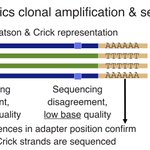
Introducing paired plus-minus sequencing (ppmSeq), a method built to deliver both. Our latest paper with @UltimaGenomics 👀👀👀
See ⬇️ for a primer on the next frontier of genomics
biorxiv.org/content/10.1101/…
Massive team effort. A huge thank you to the @UltimaGenomics team, our clinical collaborators and sequencing team @nygenome. Look at the author list, it's huge! Takes a village. Super proud of trainees Aaron, Sam and Sri
