

Co-founder https://xitter.cf/t.co/a9JrgXpEeh - Opensource AI in Medicine CTO https://xitter.cf/t.co/fpagHocOH3 - Enterprise grade on-prem AI for hospital
Joined September 2021
- Tweets1.1K
- Following345
- Followers3.9K
- Likes248




Pinned Tweet
Today we introduce MedDecider - an open weight family of Jev style decision models for medicine.
MedDecider achieves SOTA results on variety of medical tasks including knowledge questions, ICD codes, trial notes.
9B scores higher than Decider from Perplexity that is 3 times larger.

Same pattern in medicine. MedDecider is our open-weight decision model family on Gemma 4 and Qwen, built for clinical notes: calibrated probabilities, runs on hospital hardware. MedDecider Duo (31B+27B) scores 89.2% on Poland's LEK exam (56% to pass).
xitter.cf/andrew_n_carr/status/2…

Hospitals hit this wall daily. A rule can check a lab value, but it can't read "stopped warfarin last week" in a note. That's why we built MedDecider: open-weight decision models that read the note, return calibrated probabilities and run on-prem.
xitter.cf/VentureBeat/status/211…

Decision models like Jev handle what SQL rules cannot. Here's how data teams use them
venturebeat.com/ai/decision-…

271M questions from 952k clinicians. Treatment decisions (33%) beat diagnosis (14%).
Clinicians ask AI less "what is it?" and more "what do I do next?" That's a decision problem: a clear question, evidence, a probability, and an honest "I don't know".
xitter.cf/martinvars/status/2111…

In January 2024, 355 clinicians in the United States used OpenEvidence in a given month. In June 2026 it was 703,265.
That comes from a study published this week in JAMA by Vishal Patel and Anupam Jena of Mass General Brigham and Harvard. In two and a half years, 952,008 verified US clinicians, 556,200 of them physicians, sent this AI tool 271 million clinical questions. The average active user went from 18 queries a month to almost 40. The heaviest users are young doctors, residents, nurse practitioners and physician assistants, along with oncologists, internists and family doctors. Radiologists, ophthalmologists and orthopedic surgeons barely touch it.
What surprised me most is what they ask. Only 13.9% of physician queries are about diagnosis. A third are about treatment and management, what to do next with the patient in front of them. Among emergency physicians, 88% of the questions fall outside emergency medicine.
I have worked in fertility medicine for years, and I have rarely seen anything spread this fast. Medicine usually takes years, sometimes decades, to adopt something new. Here hundreds of thousands of clinicians picked up a free tool on their own, one question at a time. The study counts questions, not whether the answers were right or whether patients did better, and three of its seven authors are tied to the company. That is the study we need next.
Doctors already voted. Now medicine has to catch up.
1,451 cleared AI devices, 1,104 in radiology, little real use. The bottleneck is deployment.
We did 8 on-prem deployments in Polish hospitals in 1.5 years. None were diagnostic: speech recognition, OCR, summaries. Boring tools that save time get used.
xitter.cf/AlharfiIbrahim/status/…

Radiology Holds Three Quarters of Every AI Clearance. Almost None of It Is Being Used.
The FDA has authorized 1,451 AI enabled medical devices. 1,104 of them are radiology. 76% of everything ever cleared, concentrated in one specialty.
Now the second number. When researchers traced medical AI through US insurance claims, they found 16 billable AI procedures in total, against more than 500 cleared devices at the time. Only two had passed 10,000 claims: coronary artery disease and diabetic retinopathy. One device had recorded a single claim.
Cleared is not deployed. The distance between those two numbers is the entire story.
Radiology should have been the easy one. Discrete images, algorithmic outputs, digital standards, a specialty built on pattern recognition. If AI adoption were a technology problem, radiology would be finished. It is not finished, which tells you the problem was never technology.
There are four gates, not one. Clearance. Validation. Payment. Deployment. Technology gets you through the first. Governance decides the other three.
The MASAI trial, published in The Lancet in January 2026, randomized more than 100,000 women to AI-supported mammography screening or standard double reading. The AI arm detected more cancers with no increase in false positives, cut screen-reading workload by 44% , and at follow-up showed fewer large, invasive and aggressive cancers.
Read that carefully. It worked because a national screening program redesigned its reading protocol around the tool. Not because somebody bought the tool.
That is the lesson for anyone sitting where I sit. When you buy AI you are not buying a product. You are buying an obligation: to decide when the radiologist defers and when they override, who carries liability when the model misses, who owns the data the algorithm learned from, how you retrain people whose expertise you have just partially automated, and how you get paid for a workflow you have just changed.
Most hospitals have not answered those questions. So the license renews, the tool sits idle, and the department buys certification courses instead.
The cleanest clinical problem in medicine is still hard to deploy at scale. That is not a verdict on the technology. It is a verdict on us.
#HealthcareAI #DigitalHealth #Radiology #KingsJeddah

Calibration is the real problem. If a model says 0.9, it should be right about 9 times out of 10. Otherwise nobody downstream can set a threshold.
Also underrated: abstaining. In medicine, "not enough information" is often the most honest answer.
xitter.cf/Nandakishorm1/status/2…

Vega Universal decision model. Now you don't need to train a separate model for each decision; you can use one engine and multiple LLMs as needed. This solves an important problem current decision models face: accuracy and calibration error. The idea is simple: you train a small projection layer and use that to attach any llm, vegaml package automatically ports that to a common dimension. That's it: joint training with invariance loss
embedding.in/blog/vega-u-one…
github.com/NandhaKishorM/veg…
huggingface.co/nandakishorm/…
Decision models win when the task is narrow and the state is real. MedDecider does that for clinical notes: open-weight 4B/9B/27B/31B, calibrated option probabilities, and it picks "not enough information" when the note is silent.
xitter.cf/IntuitMachine/status/2…

A 4B open model beating a frontier model in one agent isn't a fluke. When the decision is narrow, a small distilled model wins on cost and control.
In hospitals there's a bonus: it runs where the data lives. Same reason we built MedDecider.
xitter.cf/dair_ai/status/2111496…

Must-read paper integrating decision models like Jev into harnesses.
They distilled an open 4B decision model, mostly from Jev's answers on the agent's own states, that beats Jev inside that agent and is much cheaper to run.
Their harness, JevAgentHarness, sends each routine choice to the decision model and uses its answer only when the confidence clears a threshold fitted on the agent's own trajectories. Below the threshold, the LLM decides as usual. With the fitted threshold, tool and argument cascades cut cost by 14.2% without changing the outcome of any of 500 tasks. A fixed threshold of 0.5 lost 21.5 points.
They also train AgentDecision-4B on states the agent reaches after its own mistakes, with Jev's answers as labels. On tasks unlike its training data, the agent solved 91.5% with it and 82.0% with Jev. On familiar tasks, 4B models trained this way made agents 81.1 to 89.0% cheaper and up to 2.5 times faster while staying within 3 points of success.
Paper: academy.dair.ai/papers/jevag…

You can now create your own clinical trial pre-screener with MedDecider.
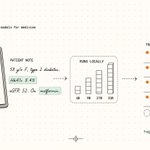
Give it a patient note and your trial's criteria. For each criterion it answers meets, does not meet, or not enough info, with a confidence score.
Free Colab notebook, runs on a free T4 GPU 👇

Free step-by-step notebook with synthetic notes. Runs on a free Colab T4 GPU:
colab.research.google.com/dr…
Open weights (4B / 9B / 27B / 31B):
huggingface.co/collections/l…

Jev-style decision models are getting a lot of attention. In a hospital, the real question is whether you can run one yourself.
So we opened ours: MedDecider, a family of open-weight, Jev-style decision models for medicine. 4B, 9B, 27B, 31B.

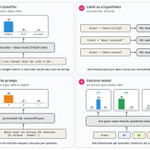
Jev clones are everywhere. How do you build one from a classifier? 4 steps:
1. Fixed labels = rows of a weight matrix
2. Label as a hypothesis (NLI)
3. Labels in the prompt, letters read from the LM head
4. Shared state, isolated questions, calibrated answers

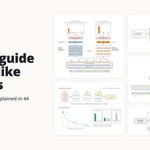
Learn more in my free e-book "Hands-on Decision Models: Visual guide to Jev-like models": 55 pages, 44 diagrams on how Jev-style models work, how to train and calibrate them, and how to run them in production 👇
thelionai.gumroad.com/l/deci…

Most medical AI demos show confidence.
The most important answer in ours is: "not enough information."
MedDecider reads clinical notes for triage, discharge, drug interactions and trial screening — with highlighted evidence and calibrated probabilities. Open-weight, runs locally.
Open weights (4B / 9B / 27B / 31B) on Hugging Face: huggingface.co/collections/l…
Free e-book on how decision models like this work: thelionai.gumroad.com/l/deci…

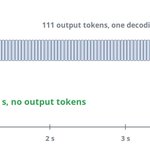
Why is Jev so fast? This chart explains it.
Same frozen model, 21 yes/no questions:
Generate shortest JSON: 5.33 s, 111 tokens.
Read answers from the output layer: 1.02 s, zero tokens.
Jev-like models skip the typing. The answer is already there after prefill.

Learn more in my free e-book "Hands-on Decision Models: Visual guide to Jev-like models": 55 pages, 44 diagrams on how Jev-style models work, how to train and calibrate them, and how to run them in production 👇
thelionai.gumroad.com/l/deci…
Why is Jev so fast? This chart explains it.
Same frozen model, 21 yes/no questions:
Generate shortest JSON: 5.33 s, 111 tokens.
Read answers from the output layer: 1.02 s, zero tokens.
Jev-like models skip the typing. The answer is already there after prefil

Clinical trial screening is still mostly done by hand, one note at a time.
MedDecider reads the note, checks every inclusion and exclusion criterion, highlights the evidence, and gives a calibrated probability. When the info just isn't there, it says so.
Open weights. Runs on-prem. Patient data never leaves the hospital.
I spent the last week working with Claude to better understand decision models.
I'm a visual learner so I created more than 40 diagrams explaining different architectures.
It turned out so great that I made a e-book out of it.
It's completely free, link below 👇

Link to ebook: thelionai.gumroad.com/l/deci…
BTW the book as extensive case study of creating your own model based on polish model Basal from @KinasRemek .
It's all possible because Basal has great technical report with all the details, thanks Remek!