
Bioinformatics, genetics and population genomics. Professor @HHU_de. MHC/HLA, graphs, long reads, SARS-CoV-2, microbiome. Own opinions.
Düsseldorf, Germany
Joined September 2012
- Tweets2K
- Following2.5K
- Followers1.3K
- Likes4.7K




Pinned Tweet
Out now in @naturemethods: Emu, a new method for 16S rRNA @nanopore-based profiling of microbial communities! Great transatlantic collaboration with @kristendcurry, @traingene, et al.. Brief thread follows. nature.com/articles/s41592-0…
Alexander Dilthey retweeted

In March 2024, at the age of 35, I was diagnosed with stage IV rectal cancer with a metastasis in my liver. This was a shock: I had no family history, and none of the doctors suspected it. After two years of chemotherapy, radiation, and multiple surgeries, I'm still not cured. Now I'm asking for help to get a personalized cancer vaccine.
This is my story so far.
Following diagnosis, I was treated with total neoadjuvant therapy at UCLA. I had 6 weeks of radiation and chemotherapy (Xeloda). This was followed by 6 rounds of oxaliplatin infusions and Xeloda. I tolerated this unusually well. During this period, I managed to hike up to over 11,000ft multiple times in the Sierras, and I wrote the main text of a 72 author meta-analysis paper and submitted it to Nature where it is still in review.
I showed a good clinical response, and at the end of October I had surgery: I was under for 9 hours, and they cut out a bit of my rectum, 1/3rd of my liver, and gave me a temporary ileostomy. Waking up from this was probably the strangest experience of my life: I felt more machine than man, and I had wild hallucinations form such a large dose of anesthesia.
It took a while to feel OK after that surgery. However, I still had the ostomy. I had that reversed at the end of January in another surgery, which took a greater toll on me than I expected.
I only just started to feel OK again and I got bad news: I got a positive circulating tumor DNA test (ctDNA), the signatera test from natera. Unfortunately, the ctDNA carried on rising, and in July 2025 a new lesion appeared in a lymph node near my liver (periportal).
I was treated with irinotecan and panitumumab infusions, which showed a good response, followed by live MRI guided SBRT radiation treatment to the lesion. However, after finishing this treatment, the ctDNA remained positive and began rising again. I restarted irinotecan and panitumumab infusions, which brought ctDNA back to negative (signatera), although it remained positive on the more sensitive Personalis assay.
During this period I had begun to develop stomach pain and digestive symptoms. Then I collapsed vomiting blood while out in Santa Monica and was rushed to the ER. They found out I had a duodenal ulcer that had bled. I had some blood transfused, and I was sent home to complete an intensive course of antibiotics for H. Pylori infection.
However, after about a week, I started to get very weak. I collapsed again and went back to the ER in an ambulance. They found my hemoglobin was 5g/dL, a dangerously low level (normal is over 13.5). Multiple blood transfusions didn't bring it up and I collapsed again in the night after passing a large amount of blood. They took me to intensive care and performed an emergency endoscopy where they clipped and sprayed the ulcer. Thankfully this worked and I was discharged after another 3 nights in hospital.
Unsurprisingly, nearly bleeding to death wasn't good for me, and my ctDNA began to spike rapidly. I had a PET-CT and it revealed 3 new disease sites in abdominal lymph nodes. I restarted irinotecan and panitumumab infusions after barely recovering from the ulcer incident. This showed an excellent response, with the sites resolving on imaging, although ctDNA remained positive.
I've now started bot/bal immunotherapy, a not yet approved immunotherapy treatment that is the first of its kind to show strong results in my kind of cancer, micro-satellite stable colorectal cancer. This was possible thanks to a donation from an anonymous benefactor and supporter of free and open inquiry in science.
Hopefully this treatment will be effective, but it is unlikely to be enough on its own to prevent future disease recurrence.
I am asking for help to get a personalized neoantigen cancer vaccine, which could substantially increase my chances of surviving this deadly disease that is likely incurable under standard care.
While cancer vaccines have shown promising results, they are not yet approved, meaning one has to pay for the design, manufacture, and administration of the vaccine. The total cost of which is $104,133, beyond my means or those of my family.
Any help would be greatly appreciated! I've started a GoFundMe here: gofundme.com/f/cancer-vaccin…. Please donate and share with anyone who might be interested in helping.
I've carried on working throughout this period and I'm still running a research group in statistical genetics at UCLA. I'm hoping to continue making contributions to science for as long as I can, hopefully longer with your help.

Alexander Dilthey retweeted

Very excited to announce ENCODE GRAMMAR (Genomic Regulatory Atlas of sequence Models, Motifs, Annotations & Rules): 3,865 experiment-specific deep learning model sets and sequence annotations for decoding human regulatory DNA. 1/

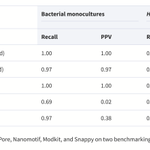
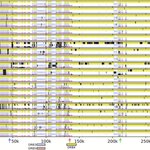
We are very happy to present MPore (academic.oup.com/bioinformat…), by Azlan Nisar et al., a novel method for the investigation of methylation in bacterial genomes from Nanopore data. MPore identifies active methyltransferases and their associated methylation motifs.

In two real-data validation experiments on 10 well-characterized bacterial monocultures and on 2 H. pylori genomes with highly complex methylomes, we show that MPore achieved higher sensitivity (93%) and PPV (96%) than other current state-of-the-art methods.

MPore is implemented in a user-friendly Snakemake pipeline and, of course, on GitHub: github.com/DiltheyLab/MPore

Alexander Dilthey retweeted

🌾 We have an open postdoc position in Plant Genomics in our group at HHU Düsseldorf!
If you enjoy plant genomics, asking big questions, and the satisfaction of code working on the first try, check out schneebergerlab.org/career/
Apply by Mar. 31 | 3-year postdoc | German required

Alexander Dilthey retweeted

🆕@Nature
Genome sequencing of >800,000 people finds Epstein-Barr virus reads and their association with other autoimmune diseases besides multiple sclerosis, including type 1 diabetes, inflammatory bowel disease, and hypothyroidism
nature.com/articles/s41586-0…

Alexander Dilthey retweeted
I'm happy to share this free link to our new paper on the perils of trying to find microbes in human cancers, which appeared today in @NatureCancer. Co-authors include Nobel laureate @barjammar and ancient DNA expert Eske Willerslev: rdcu.be/e4IaU
Alexander Dilthey retweeted

🚀 We’ve launched the Night Science Institute! Our mission: to champion a cultural shift in science toward embracing the creative scientific process – as a vital complement to rigorous hypothesis testing.
Watch the launch video with @ItaiYanai: drive.google.com/file/d/1qpu…

Alexander Dilthey retweeted

🚀Today we're launching the 'Night Science Institute', a non-profit to lead a cultural shift in science! You may say we're dreamers, but we think we're not the only ones. Perhaps today you will join us to make the Day Science and Night Science parts of the process live as one! 😉
Alexander Dilthey retweeted

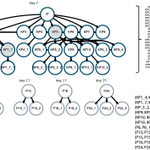
Excited to share our paper on somatic variant calling in HLA genes and genes related to antigen presentation across a cohort of 136 patients with diffuse gliomas published in @CIR_AACR: doi.org/10.1158/2326-6066.CI…
A thread ...
#Bioinformatics #Immunology #CancerResearch

Alexander Dilthey retweeted

I have been listening to EconTalk since I was an undergraduate student. I listened to the first episode, with Milton Friedman, within the first or second month after it was placed online. A great deal of knowledge was acquired by listening to it.

It's finally here!!!
@econtalker celebrates his 1,000ths episode- a remarkable accomplishment! Today, he reflects on his journey and where he wants to go from here: loom.ly/bSeHkGU

Alexander Dilthey retweeted
In March last year, at the age of 35, I was diagnosed with advanced stage III rectal cancer with a metastasis in my liver. This was a shock: I had no family history, and none of the doctors suspected it. In fact, I'd had a negative occult blood test when I went to ER with severe digestive symptoms a few months before.
The first lesson I learnt from this was that there's no substitute for the proper diagnostic procedures: if you have any bleeding, get a colonoscopy, even if you don't have family history.
I was treated with total neoadjuvant therapy at UCLA. I had 6 weeks of combination radiation and chemotherapy (Xeloda). The photo shows me after completing that first step of my treatment along with my parents in Yosemite. My mother has already survived two breast cancers, and my father had recently had a knee replacement (at the age of 70), so getting all three of us to the top of Sentinel Dome felt like an achievement.
The chemoradiation was followed by 6 rounds of combination chemotherapy: oxaliplatin infusions followed by two weeks of Xeloda. I tolerated this unusually well. During this period, I managed to hike up to over 11,000ft multiple times in the Sierras, and I wrote the main text of a 72 author meta-analysis paper and submitted it to Nature where it has passed first round reviews (currently working on revisions).
I showed a good clinical response, with the tumor in my rectum nearly completely disappearing and the liver metastasis shrinking substantially.
At the end of October I had surgery: I was under for 9 hours, and they cut out a large bit of my rectum, 1/3rd of my liver, and gave me a temporary ileostomy. Waking up from this was probably the strangest experience of my life: I felt more machine than man, and I had wild hallucinations form such a large dose of anesthesia.
It took a while to feel OK after that surgery. However, I still had the ostomy. I had that reversed at the end of January in another surgery, which took a greater toll on me than I expected.
There's a cumulative effect of having so many major medical interventions, and it reveals anything weak in body or mind. Surprisingly, my mind held up well during this process. This was thanks to the love and support I received from friends and family and the great care I received from UCLA — in particular Dr Anand (medical oncology), Dr Kazanjian (colorectal surgery), Dr Agopian (liver surgery), and the radiation oncology team.
I only just started to feel like I was starting to feel OK again and I got bad news: I got a positive circulating tumor DNA test (ctDNA), the signatera test from natera. Unfortunately, the second test I had done recently showed the level of ctDNA in my blood is increasing. This means disease recurrence is almost certain, likely within a year from the first positive test.
Since then I've been put on celecoxib based on recent data indicating this can reduce risk of disease recurrence, although it doesn't seem to agree to well with my digestion. I've had CT, MRI, colonoscopy and there's been nothing to see, but it's only a matter of time. My oncologist thinks it is very likely (90%+) that it will be a local recurrence in my liver, which should be fairly easy to cure. But there's a small chance it is something worse, even potentially incurable. This is the reality of cancer for many patients: years of uncertainty.
It's still not clear why this happened. Genetic testing returned nothing. My polygenic risk score (PRS) — something close to my own research — gave me totally average risk, at least according to 23andMe. I've always been slim, fit, eaten a pretty healthy diet. I was even raised vegetarian by hippy parents. I probably drank and partied more than is medically advised, but nothing extreme.
However, there's been a well-documented uptick in cases like mine. A recent paper indicated this may be due to colobactin, a bacterial mutagen associated with E. coli among other bacteria. I may look at my Tempus tumor data to see if the somatic mutation in the APC gene they found (the only driver mutation) has a signature matching colobactin.
If anyone knows anyone with a worthwhile expert opinion on how to manage my situation I'd be interested to hear!

Alexander Dilthey retweeted

A decade ago, we had thousands of bacterial genomes. Now, we have millions. How to scale computational methods?
Our paper in @naturemethods answers this: use evolutionary history to guide compression and search.
…From terabytes to tens of GBs…
w/@Baym @ZaminIqbal et al. 🧵1/

Alexander Dilthey retweeted

The 3rd annual Symposium on Big Data Algorithms for Biology (BDBio) is happening this May! Join us for insightful talks and discussions on comp-bio topics
Register, submit abstract, and see program details at bdbio.in
@iiscbangalore @cdsiisc @CBR_IISc
