

🇬🇧🇺🇦🇮🇱 “Only those who risk going too far can possibly find out how far they can go.” — T.S Eliot
Leicester, England
Joined July 2015
- Tweets16.4K
- Following975
- Followers305
- Likes11.1K






Pinned Tweet
The grandfather I never would meet, you did you duty and then re-enlisted because you knew you were needed. Mum was only 16 months old when her dad died. RIP Archie, maybe one day we might meet.


Alan Taylor retweeted

Once a culture is gone, it's gone forever 🏴
The pubs. The dialect. The village traditions. The slower pace of life. None of it exists by accident and none of it is guaranteed to still be here in another generation.
It's the little things that disappear first:
🍻 The village pub with the fire lit and a seat for everyone
🗣️ Words like nowt, owt, ginnel and mardy, passed down at kitchen tables
🎺 Brass bands practising in a village hall
🧱 Dry stone walls built by hand, stone by stone
🌾 Village shows, scarecrow festivals and Sunday roasts
📯 A hornblower in Ripon, sounding the same horn at 9pm every night since 886 AD
These things survive because people choose to keep them alive. They turn up, they teach their kids and they refuse to let them go.
Worth remembering, before it's too late. – at Yorkshire and The Humber, England

Alan Taylor retweeted

My thoughts on stepping up if asked.
I absolutely ADORED my life in service but was broken by it. Not just mentally, but physically. I was actually medically discharged for a neck injury caused by my heavy weight flying helmet, despite lighter versions being available…
I could no longer do the ONLY job I had ever been trained to do from 19 years old and was out aged 37 with a specialist skill set that was now useless.
I barely got enough compensation to cover a years physio. Add to that a cold weather injury, also due to lack of appropriate equipment and the non existent MH support for those like me, who had done multiple deployments.
HAD the MOD looked after me and my body better, I may be in a position to step up now if and when they need me. I would willingly fight for my friends, neighbours and family..but would I work for the least caring employer I’ve ever had, absolutely not.
Maybe if they had treated many of us better upon leaving, we may have a different view. Maybe if those in power appreciated and valued us, we would consider it…
Relationships, trust, and respect are all a two way street.
Defence also goes both ways.
The Government haven’t respected nor defended our service men and woman when it came to it.
We defend the things we hold dear….
I wouldn’t step up for Wes Streeting, but I would stand in front of ANY enemy for my little 90 year old neighbour Vicky.
Who would you fight for?
Alan Taylor retweeted

Everyone knows that in November 1942, Zhukov trapped a German army at Stalingrad.
Almost nobody knows that five days later he launched a second giant offensive, and it was a disaster the Soviet Union spent 50 years trying to erase.
It was called Operation Mars.
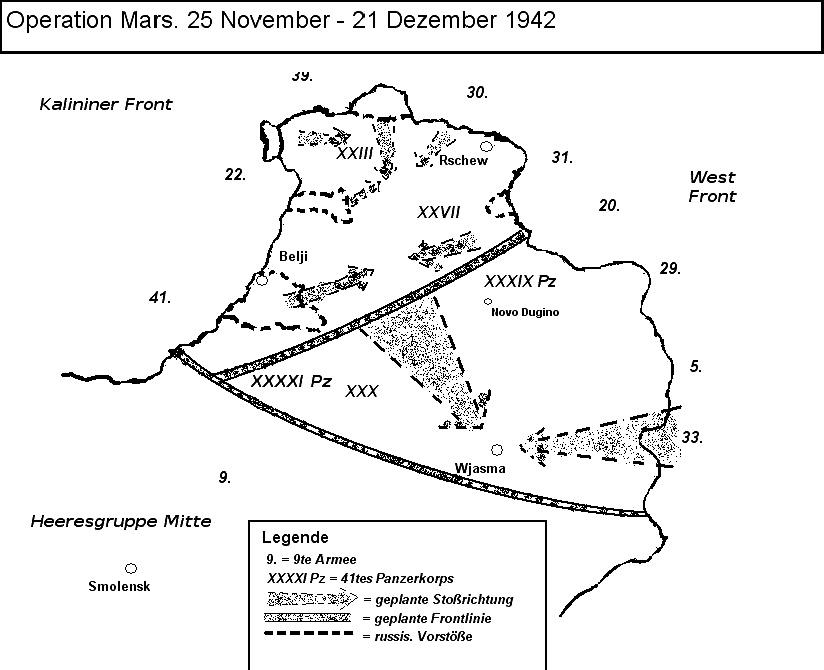
The target was the Rzhev salient, a huge bulge in the German line about 150 miles from Moscow. The Red Army had already thrown itself at Rzhev all summer, and the soldiers called it the "meat grinder."
Zhukov personally took charge of the new attack. Hundreds of thousands of men and thousands of tanks attacked in the early hours of November 25.
It went wrong right away. Fog and snow grounded the Soviet air support. The Germans of the 9th Army under Walter Model were dug into fortified villages and forests that they had spent months preparing.
Soviet tank corps broke through in places and then got cut off and destroyed. Infantry attacked over open snow into machine guns, again and again, for almost four weeks.
By December 20, it was over. The Germans still held the line.
Historian David Glantz estimates the Soviets lost about 100,000 men killed, 235,000 wounded, and around 1,600 tanks. Even the official Soviet figures admit more than 200,000 casualties.
Then it disappeared. Soviet histories barely mentioned it. In his memoirs, Zhukov wrote it off as a diversion to help Stalingrad.
A Soviet spy chief later claimed something darker: that Moscow deliberately leaked the plans for Mars to the Germans through a double agent so they'd look away from Stalingrad.
The full story didn't come out until Glantz's book in 1999.
It's still called Zhukov's greatest defeat.
Alan Taylor retweeted
On April 26, 1945, a woman landed a plane on a street in the middle of Berlin, less than a mile from Hitler's bunker, with the Red Army closing in. Two days later she took off from that same street and got out.
Hitler could have been on that plane. Most people picture him trapped in the bunker with no way out. He wasn't, and what actually happened is stranger than any conspiracy theory.
April 20 was his 56th birthday. Soviet artillery could already reach the city. The top Nazis came to the bunker to congratulate him, then most of them left. Göring drove south that night with a convoy of trucks. Over the next two nights, planes flew staff and files to Bavaria. The plan was to run the war from the Alps, and Hitler was supposed to follow.
He never went. On April 22 he fell apart in the afternoon briefing, screamed that the army had betrayed him, and admitted for the first time that the war was lost. He said he would stay in Berlin and die there. Keitel and Jodl begged him to fly south. He told them anyone who wanted to leave could go. That same day Goebbels moved his wife and six kids into the bunker.
Leaving was still easy. Gatow and Tempelhof were open, and the Soviets didn't finish surrounding Berlin until April 25. People were even flying in. On April 23 Albert Speer landed a small plane near the Brandenburg Gate, confessed he'd been ignoring Hitler's orders to destroy German industry, and flew out the next morning.
Then came the wildest flight of the war. Hitler had just fired Göring and wanted to name General Robert Ritter von Greim head of the Luftwaffe in person. Greim brought test pilot Hanna Reitsch. She rode to Gatow crammed into the tail of a Fw 190 fighter. There they switched to a Fieseler Storch, a tiny plane that could land almost anywhere, and came in low over the trees. Soviet fire tore through the plane and hit Greim in the foot. Reitsch reached over him, grabbed the controls, and put it down on the East-West Axis near the Brandenburg Gate with the city burning around them.
In the bunker, Hitler promoted Greim to field marshal while he lay there bandaged. Reitsch said she wanted to stay and die with him. He handed her cyanide capsules. On April 28 he learned Himmler had been secretly negotiating with the Western Allies and ordered the two of them out to arrest him. That night Reitsch took off from the same boulevard in an Arado trainer, under fire, and made it.
His personal pilot, Hans Baur, was in the bunker too. Baur said he had planes ready and begged Hitler to let him fly him out. In his memoir he claimed he offered to take him as far as Argentina or Japan. Hitler said no.
After midnight on April 29 he married Eva Braun and dictated his will. He had a cyanide capsule tested on his dog Blondi. He also heard Mussolini had been shot and hung upside down in Milan. He was not going to be taken alive. On April 30 he was told the defenders would be out of ammunition by nightfall. Around 3:30 that afternoon he shot himself. The bodies were carried into the garden, soaked in petrol, and burned.
The next night the people left in the bunker tried to break out. Baur was captured and spent 10 years in Soviet prisons. Bormann died near Lehrter Station, and his skeleton wasn't found until 1972.
So why won't the escape story die? Stalin. The Soviets found the remains in early May and kept it quiet. Zhukov told reporters the body hadn't been identified, and at Potsdam Stalin told the Americans Hitler was probably in Spain or Argentina. Meanwhile the Soviets had already brought in Käthe Heusermann, his dentist's assistant, who identified his teeth from the bridgework. They thanked her with about 10 years in prison. In 2018 French researchers examined those same teeth in Moscow and confirmed it again.
So could Hitler have escaped? Easily until April 25, and maybe even after, since Reitsch proved a plane could still get in and out. He had the planes, the pilot and the time. He chose the bunker.

Alan Taylor retweeted

The eagle is about to fly free…
.
Geographically, this is one of the most isolated areas of the planet.
Historically life here was a battle, against the elements, and all manner of ferocious creatures.
People adapted to survive, but it still seems extraordinary they’d take baby eagles from nests.
.
For five years this great bird has been part of this family. Circbo and his daughter Umit have trained her and hunted with her.
They keep the eagles for several years. But as they reach adulthood - they’re released back into the wild.
For generations Circbo’s family have released their birds from the same sacred mountain.
and it’s time to say goodbye…
.
The #AltaiMountains #Mongolia
.
WILDERNESS2 series available at:
tinyurl.com/4nmw732w
.
@BBCTwo @BBCiPlayer @TheGardenTV
.
#Wilderness
#PapuaNewGuinea #SeaofCortez #Mexico #Yukon #TheYukon #Mongolia #TheGobi #TheGobiDesert


Alan Taylor retweeted

One Afghanistan(10 years) in 2 weeks xitter.cf/JaneLytv/status/212527…

Mediazona's map of Russian deaths is jarring. Reporters broke down the number of deaths per settlement.
An estimated 15,000 Russians died in Bahmut in the East.
In the south, in Robotyne, 4,000 died. The village used to have a population of about 500.
200.zona.media/


Alan Taylor retweeted

O filhote se perdeu da mãe e ficou rosnando chamando por ela, enquanto era observado por turistas. Até que a leoa chega e o leva embora.
Mas a olhada que a mãe dá pro carro em que as pessoas estão JÁ DIZ TUDO.
Alan Taylor retweeted

Today’s global climate framework rests on a glaring contradiction: the greatest manufacturing superpower in world history is still officially classified as a 'developing' nation.
China builds nearly all the wind turbines and solar panels on Earth (around 90%), operates the largest fleet of coal-fired power stations in history (roughly 1,200), and produces nearly a third of global carbon emissions — more than the United States, the European Union and India combined.
How did this happen? Through the blundering architecture of the United Nations — that's how: the world's largest unelected bureaucracy, commanding over 120,000 personnel and nearly $70 billion funding from member states.
While Western economies dismantle their coal and gas infrastructure to chase strict net-zero targets — triggering soaring energy costs, deindustrialisation, and economic strain — China operates under exemptions designed for impoverished nations like Bangladesh.
Backed by abundant and cheap coal power, Beijing continues to approve and build new coal capacity at a rapid pace, sometimes up to two new plants a week, to guarantee reliable electricity for its factories.
Handed heavy industry on a plate by wayward UN leadership, China now produces over half the world's steel. It virtually controls rare earths processing. It dominates the supply chains for the very wind turbines and solar panels Western nations are spreading across their countrysides.
The paradox? The West hollowed out its industrial base to cut emissions, while the world’s largest carbon emitter expanded its fossil-fuel-driven dominance to superpower status — under UN protection.
This collision of policy and reality is no freak accident. It stems from a structural flaw built into the UN Framework Convention on Climate Change ahead of the 1992 Rio Earth Summit — long before 'net zero' became global dogma. To secure signatures for a single global treaty, negotiators divided the world into two rigid camps based on the economic realities of 1990.
Annex I covered wealthy, industrialised nations deemed responsible for historical emissions and tasked with bearing the immediate burden of cutting them.
Non-Annex I grouped every other country — including China and India, which were portrayed as rural at the time — granting them exemptions so their economic growth would not be capped.
Thirty-four years later, that map from the past is etched in time. Unlike World Bank mechanisms, this treaty has no graduation clause — no off switch. The excuse is simple: because the UN operates by consensus, a country cannot be moved out of the 'developing' tier without its own permission. Nor does the UN even try.
Beijing and New Delhi flatly refuse to yield that status, arguing their per-capita wealth still trails the West and large rural populations remain poor. That single technicality shields their industrial sectors from binding emission caps regardless of aggregate economic or manufacturing might.
Look at the result: the West is shedding its industrial core while yesterday's 'developing' nations have become global superpowers. What began as a diplomatic cushion for struggling economies has hardened into an entrenched, one-sided geopolitical advantage.
It is just one more legacy from a UN that has long outlived its use-by date.

Alan Taylor retweeted
I’m excited to share that this shot of @conrad_anker made @TIME’s Top 100 Photos of the Year. This is on the Pigeon Spire in the Bugaboos, BC, Canada. I’m grateful that Conrad & I have been climbing together for decades.
Shot on @Apple iPhone 18 Pro.
👉🏽 time.com/article/2026/11/24/…

Alan Taylor retweeted

Excellent post on the legendary Major General John Frost, CB DSO MC - have written about him and his men extensively in my book on Operations Biting, and Operation Colossus, and am in regular contact with his family.
History - those who came before: At 31 years old, Lieutenant-Colonel John “Johnny” Frost led around 740 airborne soldiers in the desperate defence of Arnhem Bridge. They held its northern approach against German attacks for over three days, awaiting relief that never came.
Born on 31 December 1912 in Poona, British India, John was the son of an Army officer. After training at Sandhurst, he was commissioned into the Cameronians (Scottish Rifles) in 1932 and later served in Palestine and Iraq.
In 1941, he volunteered for Britain's new airborne forces. A knee injury nearly ended his parachute training, but he qualified in time to lead the Bruneval radar raid in occupied France in February 1942, earning the Military Cross.
Later that year, Frost took command of 2nd Parachute Battalion. In Tunisia, his men parachuted behind enemy lines near Oudna, but the expected relief never came. Frost used a hunting horn to rally survivors during their dangerous withdrawal. His leadership earned him the Distinguished Service Order.
He went on to fight in Sicily and Italy.
On 17 September 1944, during Operation Market Garden, Frost's battalion advanced towards Arnhem's road bridge in the Netherlands. They seized the northern end and, joined by men from other units, faced repeated German infantry, tank and artillery attacks.
As supplies dwindled, the defenders fought from shattered buildings while wounded men sheltered in cellars. On 20 September, Frost was wounded in the legs and captured. The last resistance at the bridge ended during the night of 20–21 September.
He survived captivity and continued his Army career, eventually rising to Major-General. Awarded a Bar to his DSO for Arnhem, he lived to see the bridge named in his honour in 1978.
John died at his home in West Sussex on 21 May 1993, aged 80. He was buried at Iping Marsh Churchyard.
Remembering:
Major-General John Dutton “Johnny” Frost
53721
Cameronians (Scottish Rifles) / 2nd Battalion, The Parachute Regiment
31 December 1912 – 21 May 1993
CB, DSO and Bar, MC, DL
Lest We Forget.
Link here to Facebook post:
facebook.com/photo.php?fbid=…

🫡

Matthew MacKinnon-Pattison obituary: Second World War veteran & SAS solider dropped behind enemy lines for three months and last-known member of his regiment to have fought in the Second World War, dies aged 102. We remember them.
thetimes.com/article/5e39692…

8
Alan Taylor retweeted

My annual Thanksgiving tradition, with friends. My first Thanksgiving in America came from the kindness of strangers. Bill Drake and his family hosted me when nobody knew who I was. I’ve been paying their generosity forward ever since, donating turkeys and handing them out with friends at the @hollenbeckpbc for 35 years. I did it today with my friends @nithyavraman @jeffdunham @MilanKCarter @TomArnold & Gabriel Luna!
Whatever you do, find a way to give back this year. Pay the generosity you have experienced forward.

Alan Taylor retweeted

HOLY F*CK!! Their parasail harness DETACHES mid-air and they PLUMMET straight into the ocean! 😱
Writer: Bri
Alan Taylor retweeted

Bom dia. Uma homenagem ao Pink Floyd.
Um café na mão, um sorriso no rosto e um ótimo dia para vocês.
Alan Taylor retweeted
China now dominates the entire manufacturing world; it produces more than half of all steel, almost all the renewables and component parts, and has industrial power second to none.
This represents the largest, quietest transfer of industrial might in history. It is nothing short of a modern-day miracle. Yet the Western world — paralysed by the imminent crisis of dismantling its own baseload power — slumbers at the wheel.
But brilliant China is not asleep. This inspired, red-hot industrial powerhouse manufactures 80% of all solar panels, 75–80% of all batteries, 60–65% of wind turbine parts and 55% of the world's crude steel.
In manufacturing dominance, it is greater than the next 15 countries combined — larger than the US, EU and Japan together. To power this industrial onslaught, China has been commissioning around six state-of-the-art coal units a month (50–80 GW a year).
Beijing operates roughly 1,200 coal plants totaling over 1,200 GW — more than half the world’s total coal energy capacity. Its coal mining output is more than four times larger than second-place India.
As a result, China’s share of global manufacturing has soared from 6% to 30% since 2000. Meanwhile, America’s has plunged from 25% to around 12%, and Europe’s has collapsed from 25% to around 14%.
China uses abundant, reliable coal power and refuses to bind itself to Western net-zero timelines. Its leadership treats factories and steel mills as critical assets — unlike leaders in the West.
In geopolitical terms, this should be a lightning rod for decaying Western preeminence. Instead, the job is just about done: the Western green transition is almost completely dependent on hardware manufactured by its chief global competitor.
This rise to world supremacy was only possible by using the very same dense hydrocarbon energy whose demonisation has already sent the Western world broke.
China's glittering rise against the odds should be the biggest, loudest and most outrageous news story in history — but it hardly rates a mention.
