
PhD student in the HGID lab Critical Care and Infectious Diseases - MD
Paris, France
Joined September 2022
- Tweets116
- Following329
- Followers70
- Likes425





Pinned Tweet
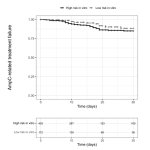
1/ We are very pleased to share our recent work just published in @CIDJournal to improve the management of infections caused by wild-type AmpC beta-lactamase-producing Enterobacterales.
@BleibtreuAlexa1
academic.oup.com/cid/advance…

Alexis Maillard retweeted

1/ Excited to share our paper in @NEJM today, reporting that autoantibodies neutralizing type I IFNs (autoAb-IFN) underlie the fatal case of H7N7 avian flu in the Netherlands 23 years ago! #AvianFlu #BirdFlu nejm.org/doi/full/10.1056/NE…

Alexis Maillard retweeted

Clemmensen et al. investigated the heredity of IFN-I #autoantibodies in adults in a large Danish twin cohort of 1,318 twin pairs. Overall, the data do not support a strong familial aggregation, as reflected by a low concordance rate for IFN-I auto-Abs. hubs.la/Q04zMRHg0

Alexis Maillard retweeted

Since my previous post got some attention, let me use the opportunity for something more positive: to explain why Antoine Maillard’s work on ellipsoid fitting matters so much to me personally.
Cargèse, 2023. A conference I had organised with @zdeborova A blackboard, and d²/4. That is where I first learned about this work from Antoine. I still have these photos from the lecture! You can see the threshold on the board. What you cannot see is everything those ideas would help set in motion.
Looking back, a surprising amount of what I now understand about neural networks, the relation between spectra and generalization, feature learning, emergence, power-law scaling, traces back to this line of work.
Because its importance was never just the number 1/4. The important thing was the IDEA. The statistical-physics analysis of Antoine Maillard and Dmitriy Kunisky predicted the threshold and the geometry of the solutions.
The work of Afonso Bandeira and Antoine Maillard made a crucial part of the programme rigorous, establishing the sharp threshold for approximate fitting through Gaussian equivalence.
arxiv.org/abs/2310.01169
arxiv.org/abs/2310.05787
For me, the powerful lesson was not simply “here is the answer to this problem.”
It was “here is a way to attack other problems.” And we did.
The next step in our own story came in 2024, when I invited Simon Martin to EPFL to tell us about his work with Francis @BachFrancis . That visit helped bring these ideas together around a different question: what can we actually understand about learning in a two-layer neural network?
Together with Antoine Maillard, Emanuele Troiani, Simon and Lenka Zdeborová, we asked what happens when one learns a two-layer neural network with quadratic activation, whose width grows proportionally to the input dimension, from quadratically many samples.
And the key technical observation was precisely a connection to extensive-rank matrix denoising AND TO THE ELLIPSOID-FITTING PROBLEM.
We derived the asymptotic Bayes-optimal learning curve and introduced GAMP-RIE, an algorithm combining approximate message passing with rotationally invariant matrix denoising to achieve that performance.
This is the kind of thing we like here in Lausanne :-)
Maillard, Troiani, Martin, Krzakala & Zdeborová:
“Bayes-optimal learning of an extensive-width neural network from quadratically many samples”
NeurIPS 2024
arxiv.org/abs/2408.03733
Then Yizhou Xu, Antoine, Lenka and I pushed this further, putting the statistical-physics predictions on a rigorous footing.
We developed rigorous asymptotics and universality results for a broad class of structured matrix-sensing problems, including matrices whose rank grows proportionally to their dimension. Among the applications: establishing Bayes-optimal learning predictions for extensive-width quadratic neural networks.
Xu, Maillard, Zdeborová & Krzakala:
“Fundamental Limits of Matrix Sensing: Exact Asymptotics, Universality, and Applications”
COLT 2025
arxiv.org/abs/2503.14121
And then came one of the most satisfying consequences of this whole programme.
With Vittorio Erba, Emanuele Troiani and Lenka, we studied empirical risk minimization in overparameterized quadratic networks. L2 regularization on the network weights becomes NUCLEAR-NORM regularization in an equivalent convex matrix-sensing problem.
The mapping itself was not new. What excited us was bringing statistical-physics ideas and AMP to bear on it to derive sharp predictions.
Suddenly, we could connect global minima, generalization, memorization, weight spectra and the low-rank bias induced by weight decay.
This was exciting!!!
And d²/4 CAME BACK—as the interpolation threshold in the noise-dominated limit! More generally, the threshold depends on the target structure and the noise.
Erba, Troiani, Zdeborová & Krzakala:
“The Nuclear Route: Sharp Asymptotics of ERM in Overparameterized Quadratic Networks”
NeurIPS 2025
arxiv.org/abs/2505.17958
But this was not the end of the story.
In a complementary direction, Simon Martin, Giulio Biroli and Francis Bach have analyzed the actual gradient-flow dynamics of extensive-width quadratic networks. They developed a high-dimensional dynamical description and characterized the resulting spectra, generalization and recovery thresholds.
Martin, Biroli & Bach:
“High-Dimensional Analysis of Gradient Flow for Extensive-Width Quadratic Neural Networks”
JMLR 2026
arxiv.org/abs/2601.10483
Meanwhile, for us, the matrix/spectral viewpoint opened another door.
What if the target itself has a nontrivial spectrum? What if that spectrum follows a power law? How are different spectral modes learned as the amount of data increases?
Can this explain neural scaling laws? Can it give us a concrete mechanism for the emergence of newly learned features?
This led us to:
Defilippis, Xu, Girardin, Troiani, Erba, Zdeborová, Loureiro & Krzakala:
“Scaling Laws and Spectra of Shallow Neural Networks in the Feature Learning Regime”
ICLR 2026
arxiv.org/abs/2509.24882
There, connections with matrix compressed sensing, LASSO and sparsity allowed us to derive phase diagrams for scaling exponents and connect generalization directly to the spectrum of the learned weights.
The spectral viewpoint makes the question concrete: which signal components are detectable, which remain unlearned, and how does that balance change as we get more data?
And remarkably, essentially the same viewpoint extends beyond quadratic neural networks.
In our work on a simplified single-head attention model, we again characterize learning through the spectrum of a learned matrix.
We obtain training and test errors, interpolation and recovery thresholds, and the full singular-value distribution of the learned query–key map, including low-rank structure and spectral outliers.
For power-law targets, learning proceeds through sequential spectral recovery: progressively weaker signal directions become learnable as the amount of data increases.
A concrete mechanism for emergence in this model—and scaling laws come out of the same analysis!
Boncoraglio, Erba, Troiani, Xu, Krzakala & Zdeborová:
“Single-Head Attention in High Dimensions: A Theory of Generalization, Weights Spectra, and Scaling Laws”
ICML 2026
arxiv.org/abs/2509.24914
And this brings me back to why I care so much about the original story.
A good scientific paper does not merely produce an answer to one isolated problem.
Sometimes it gives a community a new connection, a new mapping, a new proof strategy.
A PATH.
For us, one path ran through:
Ellipsoid fitting → Gaussian equivalence → extensive-rank matrix estimation → quadratic neural networks → feature learning → spectra → scaling laws → attention.
Gaussian equivalence itself has a long, crazy history (don’t get me started on that one...)
Of course, this is not a single linear chain. Many researchers and ideas contributed at every stage, and several of these connections long predate the papers I have mentioned.
But having watched part of this story develop from very close by, I wanted to explain how Antoine’s work, with his collaborators, helped set this particular programme in motion—and how much we owe to it.
Looking at that blackboard again, I do not just see a threshold. I see ideas that helped us do research we did not know how to do before.
To me THAT is what “empowering researchers” actually looks like.

Alexis Maillard retweeted
Thinking of Asimov’s The Feeling of Power (1958): a future where humans have forgotten arithmetic because machines do it all, until someone rediscovers how to calculate by hand.
It hits rather differently in 2026.
ia800806.us.archive.org/20/i…
Alexis Maillard retweeted
This is outrageous framing. Quite frankly, given the current tensions around AI and mathematics, this kind of announcement does not help.
After the recent Buckmaster/OpenAI dispute over scientific credit and provenance, the last thing we need is more promotional PR language that blurs the history of a research problem.
Meta presents its work by asking: “Can AI contribute when a problem is genuinely open and without an existing solution path?”
Seriously?! For the ellipsoid-fitting example, this is misleading and insulting. There was an established research programme, substantial rigorous progress, and by the time of their announcement, publicly available proofs of the exact threshold.
Let us be specific:
- In 2023, Antoine Maillard and Dmitriy Kunisky gave a statistical-physics derivation of the conjectured transition at n/d² = 1/4, using the replica method. Their analysis also predicted the geometry of the solutions and suggested directions for rigorous proofs. This was not a proof, but it was a detailed and successful theoretical picture, not an absence of a path.
arxiv.org/abs/2310.01169
- Afonso Bandeira and Antoine Maillard then rigorously established the sharp threshold for approximate fitting, using methods inspired by the statistical physics of disordered systems, using actually spin glass mathematical technics. Their preprint appeared in 2023 and was published in the Electronic Journal of Probability in 2025. Their Gaussian-equivalence framework provided a foundation for further work (including many of mine!). At this point, the "exact" fitting and removing the spectral restriction were the outstanding gaps, but these are technical problems, it was not about not discovering the threshold from scratch. arxiv.org/abs/2310.05787
- On 10 August 2026, Theodor Misiakiewicz and Garrett Wen posted a proof of the exact Gaussian threshold, explicitly closing those two gaps.
arxiv.org/abs/2608.10184
- On 12 August, Sofia de la Cerda, Aaron Potechin, Madhur Tulsiani and Jeff Xu posted another proof, establishing both sides of the transition up to a vanishing multiplicative factor. arxiv.org/abs/2608.12415
- On 27 August, Frederic Koehler and Youngtak Sohn posted a broader universality theorem that includes the Gaussian threshold. arxiv.org/abs/2608.27372
These were not researchers merely “on the verge” of solving the problem. THE PROOFS WERE ALREADY PUBLIC. Meta's announcement comes in October, and Section 3 of their paper begins:
“We use the groundbreaking approximate-fitting theorem of Bandeira and Maillard…”
Dear META: Those are your words. This is not simply a reference in the bibliography: your feasibility proof explicitly starts from their theorem.
How is that consistent with advertising this example through the suggestion that there was “no existing solution path”?
Yes, your social post mentions independent solutions, and your paper and blog identify the August results and describe your work as independently developed. That does not answer the objection to the framing. A generic acknowledgement of parallel work does not make clear that the exact threshold already had publicly available proofs before this announcement.
An independently developed AI-assisted proof, released after other proofs, should be presented as exactly that. Readers should not have to reconstruct the chronology to understand what is, and is not, new.
A new proof can contain valuable ideas. But a new proof and a newly solved problem are not the same claim. Nor does a problem being open when a project begins mean it is still open when the marketing campaign launches.
You say the aim is to “empower researchers”? Nothing more “empowering” than seeing years of collective research turned into the backdrop for a cheap marketing stunt.
Correct the announcement! Give the scientific history the same prominence as the product. Give Antoine, Afonso, Theo and all the other researchers involved the public credit they deserve.


1️⃣ Probability: Mathematicians worked with Muse Spark to answer a question about fitting random points onto the surface of a stretched sphere. For the setting studied, they proved a sharp cutoff between when an exact fit is likely and when it is unlikely.
Read the paper: ai.meta.com/research/publica…

Alexis Maillard retweeted
1/ We are thrilled to share our new study on the risk of hypoxemic COVID-19 pneumonia in Myasthenia Gravis (MG) patients with autoantibodies (auto-Abs) neutralizing type I IFNs in @PNAS. pnas.org/doi/10.1073/pnas.25…

Alexis Maillard retweeted

Excited to share the latest work of our team published in Cell @CellCellPress 🎉
Congratulations to the team and all the collaborators!
@NeckerInem @casanova_lab @institutpasteur @PChappert @GorochovG
Read the paper here 👇doi.org/10.1016/j.cell.2026.…

Alexis Maillard retweeted

1/ Why do some genetic diseases remain unsolved even after whole-genome sequencing? The 5′UTR could hold the answer. In @AJHGNews, we present 5ULTRA, a new computational method to decode how these variants affect protein translation.
doi.org/10.1016/j.ajhg.2026.…

Alexis Maillard retweeted
1/ We are excited to report in @SciImmunology that human complete and selective LFA-1 deficiency causes isolated Epidermodysplasia Verruciformis (EV). This surprising phenotype revealed a surprising mechanism 🙂science.org/doi/10.1126/scii…

Alexis Maillard retweeted
1/ We are excited to share our new report in @PNASNews: all three cases of encephalitis triggered by the live-attenuated chikungunya (CHIKV) vaccine (IXCHIQ®) are due to pre-existing autoantibodies neutralizing type I IFN (AAN-I-IFN) (doi.org/10.1073/pnas.2532212…).

Alexis Maillard retweeted

This is the 2nd severe live-attenuated viral vaccine disease, the 7th Arbovirus related disease, and the 11th severe viral disease, caused by human type I IFN autoantibodies: chikungunya live-attenuated vaccine encephalitis | PNAS pnas.org/doi/10.1073/pnas.25…

Alexis Maillard retweeted
Yet another reason to screen people over 65 years of age for type I IFN autoantibodies:
Type I IFN autoantibodies underlie chikungunya live-attenuated vaccine encephalitis | PNAS pnas.org/doi/10.1073/pnas.25…
Alexis Maillard retweeted

🧬 New in @CellGenomics 🧵
1/ With @CasanovaLab, we propose a rethinking of monogenic disorders of immunity:
👉 common variants can matter — a lot.

Alexis Maillard retweeted
Human inborn errors of the alternative NF-κB pathway rupress.org/jhi/article/2/1/…


Alexis Maillard retweeted
Luciani, @BeziatV et al. report that patients with TAP1/TAP2 deficiency develop rubella-associated skin granulomas due to impaired HLA-I antigen presentation. Markedly elevated rubella IgG levels may support diagnosis when PCR is unavailable. hubs.la/Q03ytSL-0

Alexis Maillard retweeted
Alioua, Rosain @JRosain @hopital_necker and colleagues describe seven intronic pathogenic variants underlying inborn errors of immunity. hubs.la/Q03xKk7M0
#InbornErrorsOfImmunity

Alexis Maillard retweeted

Case report: an atypical postvaccinal encephalitis in a 60-year-old man, with radial perivascular enhancement consistent with inflammation of glial fibrillary acidic protein–rich white matter loci. ja.ma/3SXju9r

Alexis Maillard retweeted
Materna, @BeziatV et al. @institutimagine report children with complete TCRα deficiency, a lack of αβ T cells, & a severe condition. Previously characterized TCRα deficiency, which wasn't as severe as expected, was partial, as opposed to complete hubs.la/Q03qMb0m0

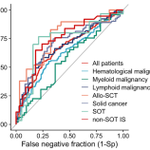
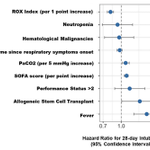
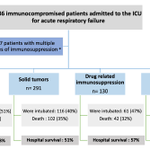
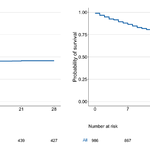
1/ Thrilled to share our latest study from the GRRR-OH group on critically ill immunocompromised patients, led by @ElieAzoulay5, and just published in Intensive Care Medicine (@ICM).
rdcu.be/eiTJp
👇

2
1
101
10/ 🙏 Grateful to @ElieAzoulay5 for his leadership, and to the entire GRRR-OH group and co-authors for their incredible work on this study.
📄 Published in @ICM: doi.org/10.1007/s00134-025-0…
Free link: rdcu.be/eiTJp

1
1
35