🧰 Exploring how people and AI co-create intelligence. Founder @ DeepXHub I Believe in You. ❤️🌊

San Francisco, CA
Joined August 2016
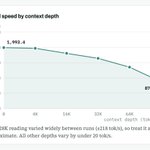
Flint on a desk-sized GB10: 95 tok/s, still 37.5 at 128K context, and 9–10× faster than a dense 27B on the same machine. HumanEval 160/164. Measured locally the day llama.cpp merged Flint support @HP #ZGX @nvidia #GB10 @Recursive_SI
Introducing Flint, @Recursive_SI’s first model: a fast local coding model built with our automated research system, the Eureka Machine. • Best-in-class fast local coding • Up to 2x faster than comparable models: 125+ tokens/sec on a MacBook Pro, 150+ on RTX Spark • Built from scratch in under 4 months Private, unmetered intelligence on your own machine. Open weights available now on @huggingface, run it locally on your favorite framework or try it for free on @opencode or @pidotdev.
6
1
13
1,837
AI:Mechanic retweeted
having worked on computer vision for +10 years , I have been asking myself lately how to solve EVERY computer vision problem with whatever LLM tech we have now. First step: image segmentation. meet LLMSeg, segmenting images with LLMs and B-splines loops. Basically no need for trained segmentation heads that do not generalize well, just use the MLLMs superior generalization to perform segmentation directly with no tools or CLI , just a simple pre-scripted forward loop with refinement process based on overlays. B-splines loops for base masks , and B-splines loops for positive and negative masks refinment ----> THEY ACTUALLY CONVERGE to more accurate masks 21 MLLMs tested , better "vision+reasoning" means better segmentation . any "decent" MLLM can do segmentation it turns out. website: abdullahamdi.com/llmseg/ paper: arxiv.org/abs/2610.29409 code: github.com/ajhamdi/llmseg-co… sounds on 🔊
12
16
1
249
12,053
AI:Mechanic retweeted
Happy to see another on device model 🔥 Spark-X2.6-4B from @SparkLLM - 4B + Apache 2.0 - Up to 1M context - 3 thinking modes - Local deployment via GGUF
5
16
2
160
6,840
New model in the Carbon family! Amazing work by Georgia and the rest of the team 🚀
Today, we're releasing the Carbon Annotation Database and the model behind it, Carbon-A. We've used this model to discover 566.34 million new gene candidates across 22,617 species, thousands of which have never been studied like this before. We wet-lab validated a number of these new genes in well-studied species, such as in cats, chicken, and arabidopsis (plant), with our partners at Active Site and @UCSD, with more extensive wet lab results on previously-unstudied genomes coming soon.
3
4
11
1,709
A short film about Recursive-Self-Improving AI with Flint by Recursive. @RichardSocher @jeffclune @_rockt
4
9
3
29
2,259
@grok recursive ai to the moon?
1
19
and @apple silicon [Pro M5 Max MacBook w/ 128gb ram] wins 📈; kudos to the @RichardSocher @jeffclune and the whole @Recursive_SI team - extremely ^ inspiring
1
1
51
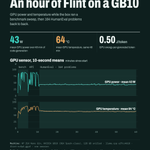
Power - GPU sensors only: • Mac M5 Max: 23.5 W while generating at 180 tok/s, so 0.13 J/token • GB10: 43 W at 86 tok/s, so 0.50 J/token About 3.8× less GPU energy per token on the Mac setup. No throttling under sustained load.
38
Same #Flint model by @Recursive_SI on a MacBook Pro M5 Max (Recursive's rec, INT4): • 243 tok/s at short context, 75 at 103K • Same requests as the GB10: 197 vs 86 tok/s, about 2.3× • HumanEval 160/164 @Apple #MacBookProM5MAX #RecursiveAI
1
2
142
AI:Mechanic retweeted
Incredibly fun journey building the RSI loop(s) that led to a best-in-class local coding LLM. A few simple coding examples Flint could do in < 10 mins. 0 endpoint. 0$. Full CoTs. Stay tuned for more! ps: Fable made this video from the artifacts alone. No editing.
Introducing Flint, @Recursive_SI’s first model: a fast local coding model built with our automated research system, the Eureka Machine. • Best-in-class fast local coding • Up to 2x faster than comparable models: 125+ tokens/sec on a MacBook Pro, 150+ on RTX Spark • Built from scratch in under 4 months Private, unmetered intelligence on your own machine. Open weights available now on @huggingface, run it locally on your favorite framework or try it for free on @opencode or @pidotdev.
3
9
2
61
8,462
This recursive self-improvement development is patently completely insane. Recursive built an LLM completely from scratch (reinventing a lot of stuff), and now it is at the Pareto frontier. Recursive invented the machine that invented the LLM in just a few months! The company was founded just in February this year!!
Introducing Flint, @Recursive_SI’s first model: a fast local coding model built with our automated research system, the Eureka Machine. • Best-in-class fast local coding • Up to 2x faster than comparable models: 125+ tokens/sec on a MacBook Pro, 150+ on RTX Spark • Built from scratch in under 4 months Private, unmetered intelligence on your own machine. Open weights available now on @huggingface, run it locally on your favorite framework or try it for free on @opencode or @pidotdev.
4
24
152
9,888
AI:Mechanic retweeted
Google just open-sourced Harness². (turn any harness into a self-improving system) a harness is everything wrapped around the model, like the system prompt, tools, memory, skills, and subagents. today a person designs it once, and the agent runs every new task with that same fixed setup. Harness² lets the agent refine that setup for each new task on its own, with the model weights left untouched. on every task, the agent proposes edits to its harness, runs a few candidate versions, and composes a better harness by comparing how those runs behaved. because it learns from the differences between runs, it needs no correct answer or grader for the task. that covers a single task. Harness² also carries what it learns from one task into the next. after each task, it saves the harness it settled on along with the lessons that held up across the runs. the next time it refines a harness, it starts from those notes instead of from scratch. this means every finished task makes the next round of edits more informed. Google tested this with Gemini 3.5 Flash and GLM-5 on legal, office, and professional work benchmarks. one round of edits was enough to beat their original harnesses, and giving the agent more rounds pushed scores higher. those extra rounds can go wide or deep. the agent either tries several candidate harnesses at once or keeps refining a single one step by step, using OpenCode or Codex to carry out the work. you can find the Harness² repo here: github.com/google-research/h… I wrote about a similar idea for agents already running in production, where the harness should repair itself after a failure instead of waiting for someone to debug the trace by hand. that piece walks through how @Cometml's Opik (open-source) closes this loop, going from a failing trace to a proposed fix to a regression test that stops the same failure from coming back. it's quoted below.
341
989
105
7,471
738,511
curious that playing cyberpunk with codex helps to extract context of player faster and more precisely than chat alone. N=~1biased.
1
48
AI:Mechanic retweeted
In July we open-sourced a dynamic graph of everything a child learns in primary school. 1,590 concepts, 3,221 dependencies. Now we’re turning every concept into interactive experiments kids can play and learn from. First one, age 7: heat and water. Everything that used to be a boring textbook can now be an engaging experience, potentially tailored to every child. Kids education just got a massive upgrade.
208
837
108
8,029
431,794
We sent a swarm of AI agents to solve Karpathy’s NanoChat benchmark, and they crushed SoTA in 3 days. We built our own harness on top of a graph database to do auto-autoresearch, each iteration learning from mistakes to do research better. The team wrote >15,000 entries. 🧵
62
134
12
1,297
314,383
MIT professor Regina Barzilay built an AI research bot powered by GPT-6 Astra that analyzes 11 million scientific papers a minute, finds hidden cross-study connections and generates research ideas, then sold it for $36,700.
18
16
140
43,466
We built recursive meta-intelligence, an AI that creates its own scientific instruments, turns them into persistent worlds that an agent ecology with hundreds of AIs inhabits, and uses those worlds to discover mechanistic principles in one of the hardest classes of physical problems: how complex hierarchical materials (nested structures of matter that give rise to new function through organization) evolve and fail. The AI reasons across enormous spaces of possible physical trajectories, where every rupture changes what can happen next, and compresses those histories into principles (which humans can understand and design with) - complex chains of causal events, highly nonlinear, and intricate. Scientific superintelligence is tangible here - machine-scale exploration opening cognitive channels into complexity that has been extremely difficult for humans to traverse directly. AI builds the spaces in which its next level of reasoning becomes possible; a representation becomes an instrument, the instrument becomes an executable world, and that world becomes the substrate for further intelligence. Intelligence then grows by constructing new spaces to think in. The task we explored started from a seemingly simple prompt to explore a biological material system - the AI then chose the representation, mechanics and experiments, built a fracture laboratory to push materials to their limit, tested hypotheses and generated scientific conclusions. The swarm explored a combinatorial universe in which architecture controls function and every rupture changes the future state of the material. The AI discovered a compact principle that defines how multiscale material architecture can program the evolution of failure. Material placement and geometric order determine how forces redistribute, whether damage cascades or remains distributed, and whether function survives substantial flaws. For this discovery to happen the AI had to reason across long path-dependent histories, simulate alternative futures and compress them into generative invariants (model-based causal reasoning, counterfactual simulation and temporal abstraction applied to an evolving physical world). It is incredible to witness this transition to a new form of intelligence and capability through scaling swarms. A lot of positive will come out of this because it expands the human epistemic horizon as AI can traverse thousands of possible histories and return mechanisms compact enough for us to understand, test and build from. Intelligence compounds through its artifacts! A few lessons we learned: ▶️ Learning and discovery are flows through spaces of possibility. Early work has shown how backpropagation flows through parameters, reinforcement learning through action and consequence, and autonomous swarms through representations, instruments and executable worlds, bringing it all together. Flows create structure; structure redirects future flows in the recursive instrument. ▶️ Nonlinear physics actually defines a larger principle, where high-dimensional dynamics generate stable invariants; invariants become effective variables; those variables become the substrate for a new level of cognition. ▶️ Recursion then becomes level creation - one possibility space compresses into a principle, and that principle opens a larger space above it.
AI for science is one of the greatest positive forces we have, and I cannot think of anything more human than to understand nature and to use the power to create new technologies that improve our lives, civilization and allow us to reach beyond.
179
463
102
2,926
594,676