

Nairobi,Kenya
Joined October 2013
- Tweets1.9K
- Following408
- Followers90
- Likes1.8K





Adovuvuzela retweeted
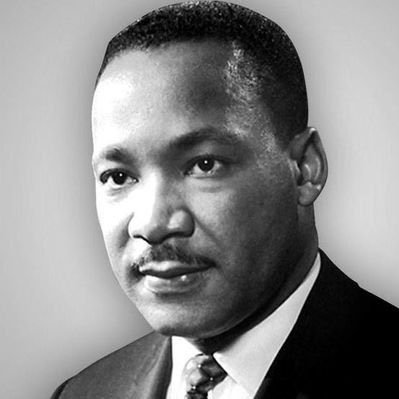
This song titled Maya was composed by Simaro Lutumba for the group TPOK Jazz.
Simaro was a composer and a guitarist. In fact, he is famously known as Le Poète (The Poet).
The song Maya, released in 1985, achieved immediate commercial success.
It was sung by Carlyto Lassa, an artist recognised for his mellow vocal style.
Carlyto Lassa, who served as a pastor from 2000 until his death, passed away last Monday in Cincinnati, United States, at the age of 65. He had been invited to the city to deliver a sermon.
During the mid-1980s, while Franco led TPOK Jazz on a European tour, Vice President Simaro Lutumba assumed leadership of the group that remained behind in Africa. In this capacity, Lutumba recruited emerging vocalists, including Carlyto Lassa and Malage de Lugendo.
These young artists, including Denis Bonyeme, Kiesse Diambu and Lokombe Ntal, injected the much-needed youthful energy into the band.
Rest in peace, Carlyto Lassa.
The image on the LP of the song Maya is Simaro. Carlyto is on Frame 2 of this carousel.

Adovuvuzela retweeted

Watching Chelsea vs Brighton yesterday on Tactical Camera View, one thing stood out very clearly.
A new season, but a familiar tactical challenge.
For the best part of two years, man to man marking structures have become increasingly prominent across the Premier League. As a consequence, there has been a growing premium placed on power, strength, athleticism and, above all, the individual qualities required to dominate direct duels.
When spaces become occupied man for man, the game changes.
You cannot always rely on numerical superiority to progress the ball. Players have to manipulate their direct opponent, escape pressure, protect possession and create separation through movement, timing and individual quality.
This is why rotations and coordinated movement have become so important for teams who want to dominate these games.
The rotation itself is not the solution. The purpose of the rotation is to disrupt reference points.
Can you move an opponent away from the space you want to attack?
Can one player's movement release another?
Can you create hesitation within an aggressive marking structure?
Can you recognise the precise moment when the game stops being about structure and becomes about winning your individual duel?
That last point is becoming increasingly important.
If man to man pressing continues to develop across elite football, we may also see the profile of the elite player begin to change.
Technical quality will always matter, but perhaps technical quality under direct physical pressure becomes the real separator.
Midfielders who can receive with an opponent tight to their back.
Defenders who can carry the ball past the first line of pressure.
Forwards who can secure possession against physical defenders and still connect the next action.
Wide players who can repeatedly eliminate opponents in one versus one situations.
And players everywhere who possess the intelligence to recognise when to combine, when to rotate and when simply to beat the player standing in front of them.
The interesting question is where this takes the game next.
Does the continued growth of man to man football produce more complete and adaptable players?
Does it place an even greater value on individual creativity and one versus one ability?
Or do we risk physical qualities becoming prioritised too heavily at the expense of smaller, highly intelligent technical players?
Could academy recruitment begin selecting more aggressively for athletic capacity because coaches know players will be exposed to more individual duels?
And perhaps most importantly, if every tactical trend eventually creates its own solution, what will the next generation of coaches develop to consistently punish man to man structures?
Football always evolves.
The fascinating part is understanding what the current tactical landscape is quietly demanding from the player of the future.


Adovuvuzela retweeted

Global icon and humanitarian, Dolly Parton, known to the world as a beloved singer, songwriter, philanthropist, actress, playwright, and author died peacefully today in Nashville, Tennessee. She was 80 years old.
Dolly is preceded in death by her beloved husband of 59 years Carl Thomas Dean (1942 – 2025), her mother Avie Lee Caroline Owens (1923 – 2003), and father, Robert Lee Parton, Sr. (1921 – 2000).
A rhinestone life that shone bright enough for the world to see, Dolly will forever stand as an inspiration not only through her timeless music and prolific songwriting, but also her wit, warmth, and kindness that made us all feel like family. Dolly Parton’s legacy is one of love, compassion, and resilience. With a seven-decade career, she inspired multiple generations of artists and fans with her music and an unwavering commitment to making the world a better place. Her songs will continue to resonate with people of all ages, and her philanthropic work will have a lasting impact.
At Dolly’s request, a small, private service will be held for immediate family. Dolly’s fans and friends from around the world are encouraged to pay tribute to Dolly on social media by tagging @DollyParton or by leaving a message at dollyparton.com
In lieu of flowers the family asks for donations to be made to Dolly Parton’s Imagination Library at imaginationlibrary.com

