






Pinned Tweet
The internet is Alt + F4-ing itself
Being born right at the turn of the century in 2000 let me try @YouTube for the first time when I was 7 years old. @Snapchat a few years later. The first iPod, socials, @facebook before most even knew what social media was.
But it's changing:

Adei retweeted
HOW ANTISLOP REWRITES AI SLOP WITHOUT AI
So the running theme of the industry is to solve AI slop in two ways, and we’ve combined both and also invented our own. I know founders, content creators, developers and all of them, including anyone who has interacted with AI ever, knows that AI has patterns, often referred to in general as “AI slop” is actually a combination of burstiness, patterns, robotic sentences, and phrasing.
HOW AI REWRITERS WORK:
Let’s take a standard boilerplate AI rewriter. The approach of any AI software company or AI user is to solve the problem using AI. Why not right? It’s a large language model perfectly capable of doing one thing extremely well: Generating text.
The thing is, no matter how you prompt it, the model is always prone to a certain set of tendencies, without going too technical, frontier in AI in general, general purpose models in particular, are engineered incredibly well for their use case. Yet, whether you use Astra 6, Sol, Opus 5.5 or Sonnet or Gemini or Grok there are certain generic patterns and tendencies that you will encounter.
Particularly painful for anyone who uses the actual writing (from text generation) for some form of profession. Additionally, society is adapting by using AI detection methods. An AI rewriter or ‘’humaniser’’ exists to evade detection. Currently the marketplace has both, 1/ AI detection and 2/ humanisers or rewriters with some software focused on writing styles or ‘’brand-aligned content’’.
The issue with AI rewriters in general is that while this solves one problem A/ writing or text being detected and flagged as AI, it doesn’t actually resolve the bigger one B/ text sounding like AI, and it contends with yet another C/ systems where AI is used to cheat (education, contests, originality). This is because
AI rewriters will typically use a frontier model anyway, rarely do they have their own in-house AI systems and even if you did avoiding the generic patterns and tendencies requires a significant amount of training effort.
Large language models generate sentences that cluster around a remarkably uniform length
They pad out thoughts with introductory clauses, passive voice, or standard filler words to maintain a mathematically safe, "optimized" flow
Let’s say you solve that too, then you have to deal with another issue, “burstiness”. Regardless of how you set your LLM up, fundamentally it’s still predicting text word by word. Or token by token.
Burstiness measures the variation in sentence length, rhythm, and structure across a piece of writing.
Humans write in bursts, often varying massively. For example we may write dense longer sentences full of commas, clauses, parentheticals. Factor in vocabulary too. And then they will follow up with a short one and write a coordinating conjunction at the start of a new sentence.
While AI tends to produce sentences of a relatively similar length and grammatical complexity one after the other.
The industry solutions at present only focus on rewriting in a more ‘’human way’’ by generating new text that is more varied in burstiness.
Software for writers focuses on telling an LLM to follow a certain style, which it can do reasonably well, yet fails burstiness and introduces new issues, grammar, generic patterns etc…
Templated systems of the 2021 Era that writers still pay for are failing them in multiple ways.
Solving “generic sounding AI” has by user feedback and obvious investigation NOT been achieved. Using AI to rewrite AI either evades detection while still sounding robotic or copies a certain style reasonably well but still sounds robotic with uniform sentences.
WHAT ANTISLOP DOES:
So we do none of that.
X evading detection
X rewriting whole text using another AI
X humanizing
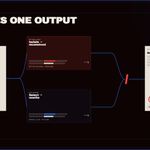
We just… deslop it. Actually, from the ground up, Antislop is not a traditional rewriting engine because it uses linguistics not tokens. Existing solutions rewrite in tokens while we rewrite in syntax. As a result there are two things we do (at present).
1- (Antislop deslopper) The first thing we do is isolate generic AI patterns, known as slop, and structurally rewrite it using linguistic mathematics.
Basically think of a phrase or a pattern that you just KNOW is AI. We take that, deconstruct it, preserve the meaning or fact within it, and then restructure it. Because all of our ‘’reconstruction’’ is specifically designed to be a solution to slop, and NOT a simple rewrite, Antislop rewrites fundamentally do not re-introduce new slop.
We also realised that if we built this system solely on using AI for rewrites, two things would be impossible: Achieving consistent rewrites and avoiding re-introduction of slop.
2- (Antislop naturaliser) The second thing we do is take natural human writing quirks, tendencies and patterns that AI does not use and focus on overall writing structure to make it sound natural.
So sentences, word choices, language as a whole is pointedly restructured rather than rewritten wholesale. So one could ask if we do this to avoid detection, we don’t.
Not once have we or will we ever test whether our system can evade detection, it’s simply not even a consideration in our mission to provide professionals, writers, AI users and the general population with less slop and a more human, more natural and more opinionated, experience driven internet.
If we provide AI users with a way to easily, quickly and reliably remove those patterns from their text we improve the experience for them, their readers, and the wider internet who are sick of constantly reading those same patterns. AI is a beautiful tool for individual innovation, yet that innovation is overshadowed by its generic patterns and tendencies that readers avoid and professionals spend hours fixing, painfully.
No one thought we could do it but we can.
HOW ANTISLOP WORKS:
Our core product is a deterministic, source-bound linguistic rewrite engine with variance capture, a constrained Formula VM, parser-backed evidence, typed edit programs, unified multipass composition, and Ledger-backed publication.
In other words, it doesn’t use an LLM for rewrites.
Instead LLMs, or AI, is used in our systems for what it is genuinely brilliant at. Antislop is currently engineering its AI proofer for increased reliability and accuracy. We want to provide the best possible rewrite experience for users. Using AI to catch errors, broken meaning, or broken grammar is a great way to deliver reliability, since our system is deterministic at its core such errors across all users varying inputs are unpreventable to 100% reliability. AI can and will also play an influential role in our next product iteration, which we can’t reveal yet. Either way the distinction will be clear and optional via the UI.
Antislop started as an AI first project with innovative prompting systems. It’s now a combination of AI and non-AI tooling, with rewrites focused on the latter. Antislop is product first above all. Our core product is AI first, and foremost simple input/output frontend available at app.antislop.pro

Adei retweeted

Antislop is basically Ctrl + Z for the internet!
Check it out: @antisloppers
Together, we can save the internet!
Web: app.antislop.pro/

The internet is Alt + F4-ing itself

HOW ANTISLOP REWRITES AI SLOP WITHOUT AI
So the running theme of the industry is to solve AI slop in two ways, and we’ve combined both and also invented our own. I know founders, content creators, developers and all of them, including anyone who has interacted with AI ever, knows that AI has patterns, often referred to in general as “AI slop” is actually a combination of burstiness, patterns, robotic sentences, and phrasing.
HOW AI REWRITERS WORK:
Let’s take a standard boilerplate AI rewriter. The approach of any AI software company or AI user is to solve the problem using AI. Why not right? It’s a large language model perfectly capable of doing one thing extremely well: Generating text.
The thing is, no matter how you prompt it, the model is always prone to a certain set of tendencies, without going too technical, frontier in AI in general, general purpose models in particular, are engineered incredibly well for their use case. Yet, whether you use Astra 6, Sol, Opus 5.5 or Sonnet or Gemini or Grok there are certain generic patterns and tendencies that you will encounter.
Particularly painful for anyone who uses the actual writing (from text generation) for some form of profession. Additionally, society is adapting by using AI detection methods. An AI rewriter or ‘’humaniser’’ exists to evade detection. Currently the marketplace has both, 1/ AI detection and 2/ humanisers or rewriters with some software focused on writing styles or ‘’brand-aligned content’’.
The issue with AI rewriters in general is that while this solves one problem A/ writing or text being detected and flagged as AI, it doesn’t actually resolve the bigger one B/ text sounding like AI, and it contends with yet another C/ systems where AI is used to cheat (education, contests, originality). This is because
AI rewriters will typically use a frontier model anyway, rarely do they have their own in-house AI systems and even if you did avoiding the generic patterns and tendencies requires a significant amount of training effort.
Large language models generate sentences that cluster around a remarkably uniform length
They pad out thoughts with introductory clauses, passive voice, or standard filler words to maintain a mathematically safe, "optimized" flow
Let’s say you solve that too, then you have to deal with another issue, “burstiness”. Regardless of how you set your LLM up, fundamentally it’s still predicting text word by word. Or token by token.
Burstiness measures the variation in sentence length, rhythm, and structure across a piece of writing.
Humans write in bursts, often varying massively. For example we may write dense longer sentences full of commas, clauses, parentheticals. Factor in vocabulary too. And then they will follow up with a short one and write a coordinating conjunction at the start of a new sentence.
While AI tends to produce sentences of a relatively similar length and grammatical complexity one after the other.
The industry solutions at present only focus on rewriting in a more ‘’human way’’ by generating new text that is more varied in burstiness.
Software for writers focuses on telling an LLM to follow a certain style, which it can do reasonably well, yet fails burstiness and introduces new issues, grammar, generic patterns etc…
Templated systems of the 2021 Era that writers still pay for are failing them in multiple ways.
Solving “generic sounding AI” has by user feedback and obvious investigation NOT been achieved. Using AI to rewrite AI either evades detection while still sounding robotic or copies a certain style reasonably well but still sounds robotic with uniform sentences.
WHAT ANTISLOP DOES:
So we do none of that.
X evading detection
X rewriting whole text using another AI
X humanizing
We just… deslop it. Actually, from the ground up, Antislop is not a traditional rewriting engine because it uses linguistics not tokens. Existing solutions rewrite in tokens while we rewrite in syntax. As a result there are two things we do (at present).
1- (Antislop deslopper) The first thing we do is isolate generic AI patterns, known as slop, and structurally rewrite it using linguistic mathematics.
Basically think of a phrase or a pattern that you just KNOW is AI. We take that, deconstruct it, preserve the meaning or fact within it, and then restructure it. Because all of our ‘’reconstruction’’ is specifically designed to be a solution to slop, and NOT a simple rewrite, Antislop rewrites fundamentally do not re-introduce new slop.
We also realised that if we built this system solely on using AI for rewrites, two things would be impossible: Achieving consistent rewrites and avoiding re-introduction of slop.
2- (Antislop naturaliser) The second thing we do is take natural human writing quirks, tendencies and patterns that AI does not use and focus on overall writing structure to make it sound natural.
So sentences, word choices, language as a whole is pointedly restructured rather than rewritten wholesale. So one could ask if we do this to avoid detection, we don’t.
Not once have we or will we ever test whether our system can evade detection, it’s simply not even a consideration in our mission to provide professionals, writers, AI users and the general population with less slop and a more human, more natural and more opinionated, experience driven internet.
If we provide AI users with a way to easily, quickly and reliably remove those patterns from their text we improve the experience for them, their readers, and the wider internet who are sick of constantly reading those same patterns. AI is a beautiful tool for individual innovation, yet that innovation is overshadowed by its generic patterns and tendencies that readers avoid and professionals spend hours fixing, painfully.
No one thought we could do it but we can.
HOW ANTISLOP WORKS:
Our core product is a deterministic, source-bound linguistic rewrite engine with variance capture, a constrained Formula VM, parser-backed evidence, typed edit programs, unified multipass composition, and Ledger-backed publication.
In other words, it doesn’t use an LLM for rewrites.
Instead LLMs, or AI, is used in our systems for what it is genuinely brilliant at. Antislop is currently engineering its AI proofer for increased reliability and accuracy. We want to provide the best possible rewrite experience for users. Using AI to catch errors, broken meaning, or broken grammar is a great way to deliver reliability, since our system is deterministic at its core such errors across all users varying inputs are unpreventable to 100% reliability. AI can and will also play an influential role in our next product iteration, which we can’t reveal yet. Either way the distinction will be clear and optional via the UI.
Antislop started as an AI first project with innovative prompting systems. It’s now a combination of AI and non-AI tooling, with rewrites focused on the latter. Antislop is product first above all. Our core product is AI first, and foremost simple input/output frontend available at app.antislop.pro
Adei retweeted

this will be needed.
because internet is gradually becoming one massive ai agent, and without even realizing it, we are all positioning ourselves as sub agents within this massive network.
that’s why ai detection, labeling, and similar tools will become increasingly useful and important, especially for video and visual content, both technically and ethically.
i think projects like this will play a huge role in the future.
good luck!
Adei retweeted
Kudos for this innovative tooling. You don’t know what you’ve done for the internet.
With Antislop, we’ll finally be able to read content that actually sounds different instead of the same flat tone everywhere. Reading the same robotic style over and over has always been boring.
Adei retweeted

Personally I think the concerning part is a future where we can’t even tell when original from fake and it gets crazier each passing day
Thinking has been replaced by recycled ideas, overused phrases, and the same content wearing a different outfit each time
Although i still don't think ai should be eliminated tho but used as a proper tool not the other way around
That’s one reason I’ve been keeping an eye
on @antisloppers. Worth to keep an eye on.
Adei retweeted

We're losing the ability to tell real from fake, and it's getting crazier by the day. Everything is just recycled ideas in a new outfit. I don't think AI needs to go away, but we have to use it right, not let it use us. That's why `@antisloppers` is a must-follow.

Adei retweeted
The internet is Alt + F4-ing itself
Being born right at the turn of the century in 2000 let me try @YouTube for the first time when I was 7 years old. @Snapchat a few years later. The first iPod, socials, @facebook before most even knew what social media was.
But it's changing:
Adei retweeted

𝗔𝗻𝘁𝗶𝘀𝗹𝗼𝗽 𝗕𝗲𝘁𝗮 𝗶𝘀 𝗹𝗶𝘃𝗲.
Earlier today, @arkadianworld introduced one of its GTM products; @antisloppers, developed by @AdeiWeb2.
📝 app.antislop.pro/
The goal is simple but powerful: save the internet from the flood of AI garbage content.


Adei retweeted

the first brand illuminated by Lumens.
excited to see Antislop take to the streets with two variations of their core product already live and more coming soon.
once this takes off, we'll be opening our doors for more brands.
The MVP is even simpler and more urgent:
Antislop provides one click slop rewrites that focus on naturalising text and removing proven generic patterns and tendencies, instead of rewriting text with more AI.
We're also crowdsourcing more slop to save the internet.
Join us at our Reddit community.
We're actively integrating more solutions, building out the tooling, and soon will be providing more great features.
Submit slop you want removed from the internet via reddit.com/r/antisloppers/
