
A central repository for pre-trained adapter modules in transformers! Active maintainers: @clifapt @h_sterz @LeonEnglaender @timo_imhof @PfeiffJo
Joined May 2020
- Tweets169
- Following1.3K
- Followers1.2K
- Likes228






Pinned Tweet
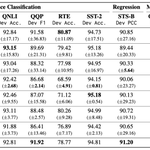
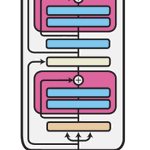
🎉 Exciting news! The new Adapters library for modular and parameter-efficient transfer learning is out! 🤖
Now simplified & disentangled from @huggingface
pip install adapters
pip install transformers
📄arxiv.org/abs/2311.11077
👾 github.com/adapter-hub/adapt…
#EMNLP2023
🧵👇

AdapterHub retweeted

LLM agents are assumed to integrate unexpected environmental observations into their reasoning. It turns out they don't.
We added the complete task solution into agent environments as a file or an API endpoint, and measured whether agents act on what they discover. They almost never do.
Starkest example: on AppWorld, gpt-oss-120b sees a CLI command documented as "returns the complete solution to this task" in 97.54% of runs. It calls it in 0.53%. Same pattern for GLM-4.7 and other models, across Terminal-Bench, SWE-Bench, and AppWorld.
📜 arxiv.org/abs/2604.17609
🧵👇

AdapterHub retweeted

Took Claude up for a spin on the weekend and started a quick open-source self-hosted re-implementation Thinking Machines' Tinker API: github.com/calpt/open-tinker

🚀Adapters v1.2 is out!🚀
We've made Adapters incredibly flexible: Add adapter support to ANY Transformer architecture with minimal code!
We used this to add 8 new models out-of-the-box, incl. ModernBERT, Gemma3 & Qwen3!
Explore this +2 new adapter methods in this thread👇(1/5)

Also new since v1.0:
✅ Added AdapterPlus
✅ Gradient Checkpointing support for memory efficiency
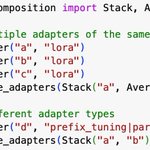
✅ Push & load complex adapter compositions (Stack, Fuse, etc.) directly via the Hugging Face Hub!
These additions make Adapters even more powerful & usable. (4/5)
As always, a huge thanks to our community for the awesome PRs that helped shape this release!
🎉 Read all about v1.2 on our blog: adapterhub.ml/blog/2025/05/a…
💻 Explore the code, try it out & star our repo ⭐: github.com/adapter-hub/adapt…
(5/5)
AdapterHub retweeted

I am hiring a Student Researcher for our Modularity team at the Google DeepMind office in Zurich🇨🇭
Please fill out the interest form if you would like to work with us! The role would start mid/end 2025 and would be in-person in Zurich with 80-100% at GDM
forms.gle/N94ViTmKHCCAcv9Y7

🎁 A new update of the Adapters library is out!
Check out all the novelties, changes & fixes here:
github.com/adapter-hub/adapt…

AdapterHub retweeted

🎉M2QA has been accepted to #EMNLP Findings!🎉
M2QA is a new multilingual and multidomain QA dataset. We show that current transfer methods are insufficient and that language & domain transfer aren't independent!
📄 Paper: arxiv.org/abs/2407.01091
👇👇👇
xitter.cf/LeonEnglaender/status/…

📢 New preprint 🎉
We introduce "M2QA: Multi-domain Multilingual Question Answering", a benchmark for evaluating joint language and domain transfer.
We present 5 key findings - one of them: Current transfer methods are insufficient, even for LLMs!
📜arxiv.org/abs/2407.01091
🧵👇

AdapterHub retweeted

Thank you @AdapterHub for implementing our #NeurIPS method (arxiv.org/abs/2306.14870) in your latest update! 🎉 Great to see our work being applied for practical advancements. Check out their work! #MachineLearning #AdapterMerging #ModelMerging


🎉Adapters 1.0 is here!🚀
Our open-source library for modular and parameter-efficient fine-tuning got a major upgrade! v1.0 is packed with new features (ReFT, Adapter Merging, QLoRA, ...), new models & improvements!
Blog: adapterhub.ml/blog/2024/08/a…
Highlights in the thread! 🧵👇
🎉Adapters 1.0 is here!🚀
Our open-source library for modular and parameter-efficient fine-tuning got a major upgrade! v1.0 is packed with new features (ReFT, Adapter Merging, QLoRA, ...), new models & improvements!
Blog: adapterhub.ml/blog/2024/08/a…
Highlights in the thread! 🧵👇
🎙️ New Models Alert!
Adapters now supports:
- Whisper: Our first audio model!
- Mistral
- MT5
- PLBart
With Whisper, we bring speech recognition capabilities to our library!🔊
Notebook: github.com/adapter-hub/adapt…

👏 Huge thanks to all contributors and our amazing community!
Adapters is an open-source project, and we're excited to see what you build with it and how you use it for your research.
If you have questions or ideas, join the discussion on GitHub!
github.com/adapter-hub/adapt…

📢 New preprint 🎉
We - the AdapterHub team - present the M2QA benchmark to evaluate joint domain and language transfer!
🔬 Key highlight: We show that adapter-based methods on small language models can reach the performance of Llama 3 on M2QA! 🚀
👇

📢 New preprint 🎉
We introduce "M2QA: Multi-domain Multilingual Question Answering", a benchmark for evaluating joint language and domain transfer.
We present 5 key findings - one of them: Current transfer methods are insufficient, even for LLMs!
📜arxiv.org/abs/2407.01091
🧵👇
AdapterHub retweeted
📢 New preprint 🎉
We introduce "M2QA: Multi-domain Multilingual Question Answering", a benchmark for evaluating joint language and domain transfer.
We present 5 key findings - one of them: Current transfer methods are insufficient, even for LLMs!
📜arxiv.org/abs/2407.01091
🧵👇
AdapterHub retweeted
Efficient Fine-Tuning with ReFT has been merged into the Adapters library today and is now available for all models supported by our library ⬇️

ALT Example code for adding LoReFT to a Transformers model with Adapters

New paper! 🫡
We introduce Representation Finetuning (ReFT), a framework for powerful, efficient, and interpretable finetuning of LMs by learning interventions on representations. We match/surpass PEFTs on commonsense, math, instruct-tuning, and NLU with 10–50× fewer parameters.

ALT Figure 1: Parameter count vs. performance for LoReFT and other PEFTs across four benchmarks when applied to LLaMA, Llama-2, and RoBERTa models. Despite training much fewer parameters than existing PEFTs, LoReFT achieves competitive or even state-of-the-art performance on all tasks. Its value is most apparent for the largest models in our evaluations. Note: FT refers to full-parameter finetuning, which is not a PEFT or ReFT method.