

Philosophy of Science. Libertarian. Everton FC & Cristiano Ronaldo 🐐. [email protected]
Seoul
Joined January 2026
- Tweets643
- Following386
- Followers87
- Likes1.3K





Pinned Tweet
My First Article for @mises
mises.org/power-market/polit…


김경훈 Gyeonghoon Kim 🇰🇷 retweeted

Message à la droite française.
Vous allez probablement gouverner en 2027. Alors je vous parle franchement, de l'extérieur : je suis économiste de l'école autrichienne et je vous écris de Suisse.
Hier soir, à Limoges, une mairie de 1883 a brûlé et son clocher est tombé. Elle avait été payée par une France qui produisait encore. Elle a été brûlée par une France qui ne fait plus que distribuer. Les formes survivent longtemps à leur raison d'être. Puis elles brûlent.
Rien de ce que l'État pleure aujourd'hui n'a été bâti par lui. Les banques, les lettres de change, la comptabilité, les bourses : les villes les ont faites, entre marchands qui se devaient des comptes. La couronne les a encaissées et a appelé le produit « la France ». Le comité a hérité du tout. Les fruits de la liberté se récoltent dans des phases de non-liberté croissante, et c'est pourquoi l'on prend si facilement le centralisme pour la cause de la prospérité.
Je le dis comme je le pense : la Révolution française fut une erreur, et le centralisme qui la suivit en fut une autre. La théorie étatique de la monnaie n'a fait en 1789 que changer d'habit, de l'hermine au comité. Le comité est devenu ministère, le ministère déficit.
Écoutez la rue : elle veut plus d'État. Un des plus gros déficits de la zone euro, et une foule qui le veut plus gros. Une religion de salut dont le dieu est en faillite ne perd pas de fidèles ; elle hausse la voix et, hélas, ses briquets.
Il n'y a pas de complot, ni à gauche ni à droite. L'Occident s'est relâché après une surtension excessive et névrotique, et dans le vide s'est avancée la religion de substitution de l'étatisme : le salut par l'État, la rédemption dans le nous collectif. La plus grande part de la faute, aussi paradoxal que cela paraisse, revient aux prétendus conservateurs. Un appareil se nourrissait en parasite des institutions et consommait leur capital, et les conservateurs appelaient cela préserver. Ils ont donné bonne conscience au déclin.
Et l'immigration ? Vous pouvez la régler demain matin, vous n'aurez soigné que la fièvre. L'immigration de masse subventionnée vers l'État-providence, menée sous le mensonge du réfugié, est le dernier symptôme : le point culminant d'une naïveté hors du réel, d'un formalisme aveugle et de la consommation de statut et de revenu dans l'État thérapeutique. Qui y voit la cause confond la poussée de fièvre avec la maladie.
Et ne comptez pas sur le patriotisme pour vous sauver de l'étatisme : il en est la forme d'origine. La nation est née en 1789 avec le comité, la conscription et l'impôt pour tous, et la droite « patriote » vit aujourd'hui du même jeu à somme nulle que la gauche : servir les nôtres contre les autres avec l'argent d'une machine qui ne produit rien. Sans la machine, elle n'aurait rien à promettre. L'électoralisme est le cœur du système, pas une faiblesse de vos candidats : il sélectionne une classe qui distribue et une foule qui attend la distribution. Il est trop tard pour le patriotisme ; il faisait partie du problème.
Ne cherchez pas non plus le moment où revenir. Ce moment n'existe pas : tout moment que l'on voudrait ramener est une récolte, et les récoltes ne se répètent pas, mais bien les semailles. Ce qui demeure de la nostalgie, c'est le costume, et le costume pris au sérieux devient un jeu de rôle qui ne veut plus que célébrer sa certitude de salut.
On ne renoue pas avec un moment. On renoue avec un momentum : l'autonomie des villes, la décentralisation, la confiance entre étrangers, l'ambition culturelle, l'esprit d'entreprise, l'invention, l'individu qui ose quelque chose et en répond. La France en avait plus que quiconque, dans ses villes, ses foires, ses salons et ses ateliers.
Il n'y faut pas de programme ; les programmes sont la figure sous laquelle un moment se défend contre le temps. Il y faut des hommes qui fondent, découvrent, inventent, tiennent une maison sur des générations et contredisent une autorité lorsqu'ils savent mieux qu'elle. Et des institutions qui leur donnent durée, dignité et liberté, au lieu de les traiter en suspects.
On ne ramène pas 1883. On peut ramener ce qui l'a bâti.
김경훈 Gyeonghoon Kim 🇰🇷 retweeted

Es el interés de los europeos que Europa esté dividida en tantos pedazos como sea posible.


김경훈 Gyeonghoon Kim 🇰🇷 retweeted

4.19혁명, 부마민주항쟁, 5.18광주민주화운동, 87민중항쟁, 그리고 촛불혁명과 빛의혁명을 거치며 어렵게 만들어낸 민주주의입니다.
인권과 자유, 평화와 안전을 보장하는 민주주의는 저절로 오지도 저절로 지켜지지도 않습니다.
수많은 사람들이 죽고 다치며, 고문받고 영어의 몸이 되어가면서 어렵게 어렵게 만들어낸 것입니다.
그래서 민주주의는 피를 먹고 자란다고 합니다.
그러나 이제 다시는 그런 역사가 재발되면 안됩니다.
누군가의 피와 목숨이 아니라 우리의 일상적 관심과 실천으로 어렵게 만든 민주주의를 꼭 지켜냅시다.
다시는 모두를 위해 대신 죽어가는 사람이 생겨나지 않도록..


김경훈 Gyeonghoon Kim 🇰🇷 retweeted

Economics is primarily a way of thinking about the world that uncovers the true mechanisms and processes behind, and helps us understand, what we can all observe. This is a forever thread collecting my #econthread tweets. #PerBylundthreads
김경훈 Gyeonghoon Kim 🇰🇷 retweeted

Capitalism is good when:
(ln(a)/ln(b))*((1+i)^(n/-π^rt)) + (log(log(log(c)))*sqrt(𝜕c/𝜕b)) + b^3-a^3 +(𝜆sqrt(N) * ∫U(x)
And it can be bad when:
sqrt(x)+log(y)sin(cot(b))+𝜆*z)ln(ln(ln(a))) - 
∑∞ x^n/n! + ∮F *dr
C
- economists, probably
김경훈 Gyeonghoon Kim 🇰🇷 retweeted
In graduate school, students learn that one idea is one paper. Don't waste more than one idea when writing a paper. It also dilutes and risks obfuscating the argument. The paper needs to be focused and make the one point forcefully and persuasively. Every word and claim needs to be fully intentional, nothing left open to interpretation or that can unnecessarily raise doubts.
Writing a scholarly paper thus takes a lot of thinking and a lot of crafting before it can be submitted. And then it goes through rounds of (often extensive) revisions before it is considered good enough to be accepted for publication.
Granted, not all papers are well written or make their points clearly enough. But the rule "one idea - one paper" still holds true. A paper is about presenting the idea, producing the complete argument for it, positioning it within the scholarly conversation, and making clear why and how it matters.
If you understand this, then you also understand what "taken out of context" means. No scholarly argument can be dismissed or rejected based on a singular statement or phrase. To critique the argument requires addressing it in its entirety: the gist of it including the nuances presented, the rationales, and all the pieces of the puzzle that contribute to the conclusion.
Very rarely does an argument stand or fall with one of the claims made in support of it. And those claims must still be read (and critiqued) from the perspective of the argument made. Scholarly discourse demands that an argument is assessed and scrutinized as stated. Many arguments certainly end up, after much discussion, not holding water - or being replaced by other, better arguments.
But scholars are not peddlers of mere opinion and thus a scholarly argument cannot be rejected by simply stating a different opinion. Those who disagree do so because the argument does not hold, which means valid critiques must point to flaws, errors, insufficiencies in the argument itself. This is how we have through centuries of study made enormous progress in our understanding of how the world works. Every addition and subtraction from the body of knowledge is a contribution to it. We are homing in on the truth.
Had scholarship been about mere opinions, we would have seen no progress but only hot air. A debate between someone advocating traditional conservative values and someone advocating progressive values will not lead to better understanding of the world. This too is an art of persuasion but based in normativity and opinion rather than truth or fact. Scholarly discourse is also, in the end, about persuasion - but it has fundamentally different starting point and purpose. Getting someone to side with you does not necessarily make your argument true (or truer). Instead, our knowledge tends to progress through scientific revolutions as a paradigm's tensions become intellectually unbearable and it is replaced by a new paradigm that better explains the world.
This progress requires that every paper (and thus argument) is produced according to the highest scholarly standards, that it is the result of much reading and thinking and rethinking. As each argument is aiming to add to our knowledge by breaking new ground, there is no "key" or "right answer." The argument's truth value can only be established over time as it is scrutinized and contrasted to other arguments, many of which have not yet seen the light of day. Most arguments are wrong in some sense, but it is only through allowing the process to continue that we can learn which ones, how, and to what extent.
This process, and the slow refinement of our body of knowledge that it implies, is the only way we know of to home in on real knowledge about the world. It has served us well despite attacks from both political power and popular opinion. It is also constantly undermined by faux scholars producing arguments that are made out to be in service of finding the truth but in reality are "informed" by personal opinion and, sometimes, intended to prop up the writer's worldview. These are costly but unavoidable issues in scholarship - and the process can and does overcome these obstacles as long as there is a somewhat open scholarly discourse. As soon as some opinion is used as "key" and thus leveraged to rid the conversation of some perspectives or viewpoints, scholarship is undermined, loses its value, and becomes unreliable.
For this reason, we should welcome anyone who wishes to contribute to the conversation. New viewpoints and perspectives are not threats but opportunities to learn and progress.
Graduate training is not about learning a certain sets of beliefs but about learning the art of scholarly pursuit of knowledge. Part of this is to acquire extensive knowledge of what has already been said, which means learning the current state of knowledge in the particular subject matter and what questions are being asked in the ongoing scholarly conversation. This training is also about how to formulate arguments and write papers, such as being honest and comprehensive in one's presentation of both pros and cons. Many papers have "limitations" sections where the limits of the presented argument are listed. That does not mean the argument fails, but an admission by the writer that there are unknowns that are relevant to the argument yet remain to be studied.
None of this means that graduate training is necessary in order to contribute to the conversation. You do not need a PhD in order to discuss a topic or point out (what appear to you to be) flaws. But it does mean that one must adhere to the basic standards of scholarship in order to have a say. No one has time (or interest) to listen to the random guy vocally expressing opinions based on poor understanding of what he thinks he has "debunked."
But it is also a matter of form: if you do not understand that a paper is an argument and that the paper is the presentation of that one argument, then you are unlikely to find a valid reason to reject it. You cannot, as many do on this platform, skim an article until you find a phrase or sentence that you disagree with and then, on this basis, dismiss the argument. (Or, as I suspect is also often the case, instruct an AI to find anything wrong with a paper.)
Undergraduate students are sometimes asked to critique a text. What they usually come up with is a list of quotes from the text that they can make out to be false (and sometimes they are indeed false or at least suspect). If their professor is any good, then s/he will inform the student that this is not how to critique an argument. The points may be valid but unless they are core to the argument and not merely supportive, they do very little to scrutinize the argument.
In a better world, no one should be able to graduate from college (or high school!) without being able to recognize what is an argument, identify its strengths and weaknesses, and produce an insightful assessment. Unfortunately, very few get this training. Even fewer understand this.
It really is a sad intellectual state of our contemporary society that so many, even otherwise well-educated and with life experience, think they have found valid flaws in a scholarly argument after spending several minutes looking for something to disagree with. This behavior should be fundamentally embarrassing for anyone who is beyond his teens. Especially if you have some form of education.
My questions about the productivity of professional scholars: As a graduate student, my primary task is to read and understand major research findings that have already been produced. In most cases, I spend the majority of my time reading well-known, authoritative texts that were published long ago. Studying the latest research findings takes up a relatively small portion of my time. And producing scholarly knowledge that incorporates my own original ideas takes up even less time.
How do scholars manage to do all of this at the same time? Do their days have 72 hours? Or is it simply that one must be able to handle such a workload in order to earn a PhD?
김경훈 Gyeonghoon Kim 🇰🇷 retweeted

Why I Was Against Brexit stephankinsella.com/2026/10/… @propfreedom
김경훈 Gyeonghoon Kim 🇰🇷 retweeted

I've got a new paper at Economics & Philosophy (open access), reconciling just price theory with the Austrian account of the market process. Read more about it below.

Austrianism in the Misesian-Rothbardian tradition is fundamentally opposed to pluralism, but I believe that the only way this position can gain traction in contemporary discussions of the philosophy of science and economic methodology is by appealing to methodological pluralism. In fact, the Austrian School seems to be recognized as a serious contender in this trend; one example of this is that Guido Hulsmann’s introduction to the Austrian School was included in a textbook on pluralist economics.
김경훈 Gyeonghoon Kim 🇰🇷 retweeted

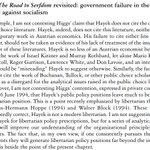
In fact, Hayek dismissed free banking, on grounds which, I’m sorry to say, revealed complete ignorance of how it actually worked historically, and this despite having had a student (Vera Smith) who knew the subject well. cato.org/blog/hayek-free-ban…

김경훈 Gyeonghoon Kim 🇰🇷 retweeted

Although F. A. Hayek had many important contributions to economic theory, both Rothbard and Mises had major disagreements with Hayek's book, The Constitution of Liberty because of Hayek's support of public welfare measures
mises.org/friday-philosophy/…

While Hoppe’s claim that social time preference plays a decisive role in generating social welfare appears to require further empirical examination, the argument that personal time preference is the most decisive factor in individual welfare—assuming, ceteris paribus, that factors beyond an individual’s control are held constant—seems relatively more defensible.

