

Deconstructing AI Memory Systems @mem0ai (YC S24) | @GoogleDevExpert in ML
Joined June 2016
- Tweets1.1K
- Following1.5K
- Followers561
- Likes3.7K







Aashi Dutt retweeted

Today we release mammoth-1 and elephant-1!
We post-trained mammoth-1, the #1 ranked best decision model in the world, and elephant-1, which is the best model under 15B (and beats Jev).
We're open-sourcing all model weights and provide a technical report detailing all our training and data methods.

Aashi Dutt retweeted

Today we launch SGLang-TorchTPU, built with @Google TPU team and Meta @PyTorch team.
We’re excited to see it powering production inference at Meta!
SGLang-TorchTPU is a TPU plugin for SGLang that brings:
- Top open models on TPU: Muse Spark Open, GLM-5.3 Flash, Kimi K3, Ling 3.1 Flash, MiniMax H3
- SGLang’s production features for large agentic workloads
- Custom MegaKernel: Muse Spark Open hits 770 tok/s decode at bs=1 on InferenceX 8K/1K
SGLang-TorchTPU is available now: github.com/sgl-project/sglan…


Big day for the @PyTorch ecosystem at #PyTorchConf2026 🚀
We’re officially open-sourcing TorchTPU—enabling native, hardware-accelerated PyTorch execution across Cloud TPUs and custom infrastructure.
Here’s everything we launched to supercharge your training & inference workloads 🧵👇
goo.gle/4Bl0zdG


Aashi Dutt retweeted

1/ Excited to release The ultimate guide to multi-harness RL
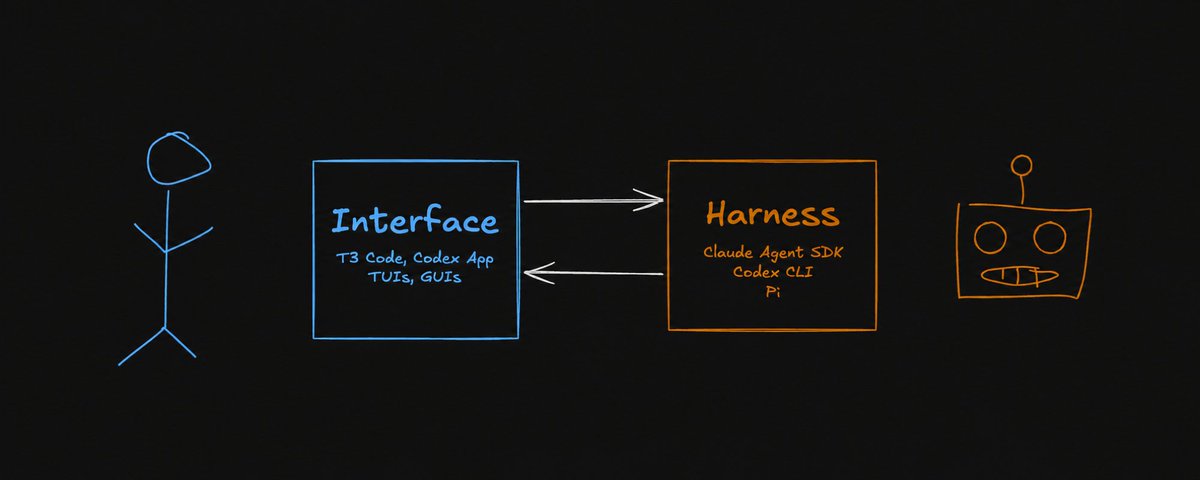
The same model behaves differently in every agent harness. So we built an open way to train any model with RL on any task set, inside the harnesses people actually use, like Claude Code, Codex, and OpenCode, without changing a single line of harness or training code.
Trained across four harnesses, LFM2.5-2.6B went from 42% to 54% with 31% fewer tool calls. 🧵
This was fun to watch 🙋🏻♀️

Ben Affleck reveals he writes Python, understands convolutional neural networks, worked extensively with GPUs, and used his celebrity status to get private looks at Google and OpenAI’s video models
“I’ve always been kind of into computers since I was young. Then, when film started to move from analog film to digital, I became more interested in that aspect of it. The visual-effects workflow for many years has included machine learning, so I can write pretty shitty Python scripts and stuff like that.
“With convolutional neural networks, which were the precursors to what the transformer can do, which is much more computation simultaneously, you would do things like look at what’s called a tensor. That’s the numerical translation of a visual image in numbers, like the batch number, the frame number and the red, green and blue values of each pixel in each frame. It’s just that simple. That numeric is called a tensor.
“You’d use a convolutional neural network to identify patterns that reveal what’s called edge detection or feature extraction, which is identifying patterns well enough to know, this is where the window ledge is, so we can more easily take the green-screen image out and replace it with something.
“That was familiar to me early on because, prior to Artists Equity, I had a small visual-effects company. I’ve worked with GPUs a lot too. The visual-effects guys said, ‘Hey, you should see. There are a couple: Google and this other company, OpenAI, are doing really interesting stuff with transformers in video.’
“I’ve learned that I can actually just call up and go, ‘Hey, it’s Ben Affleck. Can I come see what you’re doing?’ Sometimes people say yes, to my astonishment.”
Aashi Dutt retweeted

Meet Mistral Large 4, aka Le Chonk.
• 1T parameters, natively multimodal. 49B active.
It is the best open weights model from US or Europe on aggregated benchmarks.
• State-of-the-art on critical workloads, including cyber defense, manufacturing and finance and it surpasses closed frontier models on visual grounding.
• Forged in Europe end-to-end and is deployable from Europe via our own Mistral Cloud infrastructure.
• Available to all via API today. Working with cybersecurity partners privately.
Open weights release end of October.
🤖 Made with AI
Aashi Dutt retweeted

An article for everyone who ships, buys, or signs off on software built on large language models (LLMs): engineers, product managers, and the CEO. Written in plain language, from the big picture down to the details.
Aashi Dutt retweeted

The same model, with the same weights, scores 62% in one agent harness and 33% in another.
@adithya_s_k and the @huggingface team just released the ultimate guide to multi-harness RL, and it's one of the most practical RL write-ups this year, and everything open!
The trick is simple. Don't touch the harness. Point it at a proxy instead of the model. The proxy speaks all four API formats coding agents use (OpenAI Chat Completions, OpenAI Responses, Anthropic Messages, Gemini). It records the exact token ids and logprobs vLLM sampled, and you train on that. You don't change a single line of Claude Code, Codex or OpenCode.
Results:
🔹 Trained across 4 harnesses at once, LFM2.5-2.6B by @liquidai went from 42% to 54%
🔹 31% fewer tool calls, thanks to a small bonus for solving tasks in fewer steps
🔹 Training in OpenCode alone took OpenCode from 34% to 58%, but the multi-harness model improved everywhere
They also tried the shortcut everyone reaches for: fine-tune on 3,189 successful rollouts from Qwen3.8-27B. Imitation plateaued at 47.5%, below both RL runs. Copying a bigger model doesn't get you there. Practice does.
The best part is that everything is open: the capture proxy in OpenEnv, the trainer in TRL, the tasks, the SFT data, the training code and all seven trained models.
Agents will run in dozens of harnesses.
Now open models can be trained for each of them, by anyone.
Read it here 👇
huggingface.co/spaces/FineEn…

Aashi Dutt retweeted

You ship a useful app. Then nobody can find it, not on Google and not in AI search.
That's why I built UsefulShelf: a jev reviewed directory where every app gets its own page with clear details, structured data and a direct link to your site.
Free to list. Link below.


Most memory benchmarks measure retrieval. But very few of them ask what happens after that:
What if the model had the right memory and misused it?
MemCalib paper covers this very well. arxiv.org/pdf/2609.24259v1
Aashi Dutt retweeted

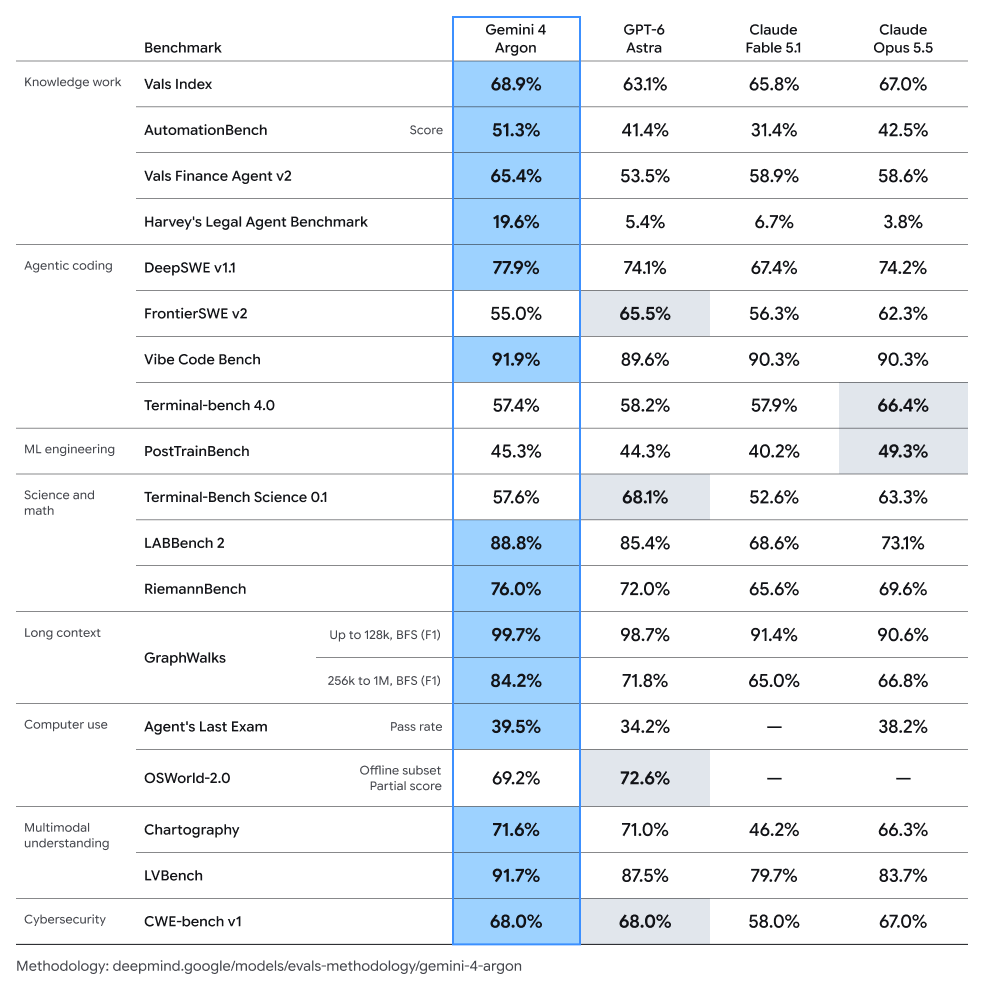
Introducing Gemini 4 Argon – our new frontier model.
It’s built for complex workflows across coding, enterprise knowledge work, and cybersecurity defense – rolling out today to a set of trusted testers through our Fairwind Program.
LLMs can both over-use and under-use memory, and many models exhibit a directional skew such that training can improve memory use in one direction while worsening it in the other.
This is an interesting concept explored in the #MemCalib paper by @Alibaba_Qwen
The authors call this trade-off the Calibration Seesaw.
Paper: arxiv.org/pdf/2609.24259v1
Aashi Dutt retweeted

Super happy to release SmolDataEnvs: 5,000 verifiable RL environment tasks for hill-climbing small models in code and data science by @adithya_s_k
100% open source: environments, evals, training!
huggingface.co/datasets/Fine…

Aashi Dutt retweeted

When several people talk at once, a transcript can get messy fast.
Our new Nemotron 3 Diarization model tracks who spoke when, even when voices overlap. It handles up to eight speakers, has 100M parameters, and is now available on @huggingface 🤗
Aashi Dutt retweeted

Your job may be surviving on inertia. Your resentment won’t extend the runway. What do you actually want to do with the intelligence now at your disposal?

Aashi Dutt retweeted

Today we are releasing DolphinBench: Mapping the Pareto frontier of agent memory.
Coding, tool use, and long-context retrieval already have strong public benchmarks. Memory still mostly gets graded as a quiz: ask a question, judge the answer, maybe report precision and recall.
A lot of those boards are getting saturated. They also skip the two questions that matter when you pick a memory system to ship:
At what cost?
At what latency?
Agents are not taking memory quizzes but they take actions. The fact that matters is usually missing from the request. Either it shows up in the tool call, or the agent does the wrong thing while sounding fluent.
DolphinBench grades that action after long history, and puts accuracy, cost, and latency on one board.
dolphinbench.ai


