

African Wildlife Foundation CEO | Member The Club of Rome @ClubOfRome | @AWF_Official | #Wildlife | #Conservation | #AfricanVoices | #AfricaWeWant
Nairobi, Kenya
Joined July 2016
- Tweets6.4K
- Following1.1K
- Followers13.4K
- Likes5.2K


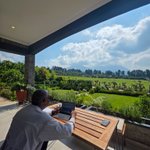
It was great to be featured by @BenGoldsmith on Rewilding the World for a conversation about Africa’s conservation future and the leadership needed to shape it.
We discussed why conservation priorities and decisions must be led by Africans, with governments, communities and institutions at the centre. Africa’s natural wealth is fundamental to the continent’s future, yet it is too often discussed separately from development, investment and economic planning.
Recognising nature as an asset means asking how its value can support livelihoods and opportunity while safeguarding the ecosystems on which people and economies depend.
That conversation feels especially timely as world leaders convene in New York for the United Nations General Assembly #UNGA. Decisions on development, climate and the global economy cannot be separated from the future of nature.
Africa’s experience and leadership must help shape those discussions, including how global commitments translate into locally grounded action and lasting value for people across the continent.
Thank you, Ben, for making space for this important exchange.
Tune in to hear the full conversation or through your preferred podcast platform: lnkd.in/eQH64aTA


Kaddu Sebunya retweeted
1/6 - Black or white? Neither.
On #WorldRhinoDay, join us in this thread 🧵 as we explore what really sets Africa’s two rhino species apart.

In my latest op-ed for Kenya's @BD_Africa Newspaper, I reflect on what Africa’s successful push for a more accurate map of the world can teach us about the next stage of our influence.
The map’s correction matters because it reflects a shift in authorship: African states coordinated, put forward a proposal and carried it through the @UN. But visibility is only a starting point. The harder work is applying that same focus to decisions with greater consequences—from reform of the UN Security Council to shaping the G20 agenda and the financial rules that affect how our economies and natural assets are valued.
This includes recognising that Africa’s forests, rangelands and river basins are sovereign assets, and that the communities and countries safeguarding them bring expertise that belongs at the decision-making table. Africa has made the case. Now we need the coordination, proposals and sustained engagement to turn representation into influence.
Catch the full conversation here: businessdailyafrica.com/bd/o…

Kaddu Sebunya retweeted

@AWFCEO @AWF_Official @Kwitaizina @RDBrwanda @nsapatric @AndreaAthanas1 @Innocentmugabo5 @CityofKigali @visitrwanda_now

It is great to be in Washington, DC, spending valuable time with my colleagues and, by extension, connecting with our partners and friends of the @AWF_Official. These conversations are an important reminder that advancing conservation in Africa requires strong relationships across continents—relationships that ensure African priorities, perspectives and leadership remain central to global discussions on biodiversity, climate and sustainable development.
I am especially encouraged by the commitment of our partners and friends who continue to stand with AWF as we work to build a future in which Africa’s people and wildlife thrive together. Meaningful conservation progress is achieved when we bring together African leadership, local knowledge, sound policy and sustained investment around a shared vision.
A special acknowledgment to our exceptional Washington, DC team for the important work they are doing to strengthen these connections and advance AWF’s mission. Thank you for the warm welcome, the thoughtful engagements and your continued dedication to Africa’s conservation agenda.

Africa’s conservation ambition must go beyond protecting biodiversity. We must build the institutions, markets and investment systems that allow Africans — particularly communities living alongside wildlife — to capture more of the value our natural assets generate.
In my latest op-ed published in the @NewTimesRwanda, I reflect on what #KwitaIzina teaches us about that opportunity: moving from conservation as protection to natural capital as a foundation for African prosperity. Africa must own, invest in and build its biodiversity economy on its own terms.
Read the oped here - newtimes.co.rw/article/38562…


Kaddu Sebunya retweeted
As Rwanda prepares for #KwitaIzina, the spotlight turns to the mountain gorilla. But conservation success must go beyond species recovery.
It means landscapes where people, wildlife, and economies thrive together — through locally led conservation, sustainable livelihoods, and long-term investment.
Read how Rwanda is helping shape this next chapter: awf.org/news/beyond-gorilla-… @nsapatric


As Rwanda prepares to mark the 21st edition of Kwita Izina, I am reminded that this celebration has always represented something much bigger than naming mountain gorillas. It is a reflection of what becomes possible when conservation is embraced as part of a country’s development story.
Having had the privilege of participating in @Kwitaizina as a namer, I have seen how Rwanda has built a model where protecting wildlife goes hand in hand with investing in the people and communities who live alongside it. The mountain gorillas we celebrate are part of a much bigger story of livelihoods, leadership, culture and shared responsibility for nature.
This week, as the world returns to Rwanda for #KwitaIzina2026, we celebrate the new gorilla families while also recognizing the communities, conservationists and partners whose commitment continues to make their future possible.
This is what conservation must ultimately deliver: a future where Africa’s people and wildlife thrive together.
Kaddu Sebunya retweeted
3/5
More water sources can mean more space for wildlife to move and less pressure concentrated around a single water point.
With AWF support, Amaka is strengthening water infrastructure alongside ranger capacity and protection—investing in the landscape elephants depend on.
Because conservation happens beyond the photograph of the elephant.

Kaddu Sebunya retweeted
2/5
At Amaka Conservancy in Kenya’s Tsavo landscape, as many as 250 elephants can visit a single borehole in one day.
That tells us something important: protecting elephants is not only about protecting the animal.
It is about securing the systems that allow them to remain wild.
#AfricanElephants #Tsavo

Kaddu Sebunya retweeted
5/5
For more than 60 years, AWF has worked toward an Africa where people and wildlife thrive.
At Amaka, that future is being built through water, protected habitat, committed rangers and communities invested in conservation.
This #WorldElephantDay, meet the people showing us what it means to be true Friends of Elephants.
Read their story: awf.org/news/friends-elephan…
#AfricanWildlifeFoundation #Elephants

Kaddu Sebunya retweeted
4/5
And this is where coexistence becomes tangible.
Amaka sits within an important wildlife corridor connecting Tsavo East National Park and Tanzania’s Mkomazi National Park.
Keeping landscapes like this connected, functional and resilient gives wildlife room to move while supporting the communities that share these spaces.
#Conservation #Coexistence

Kaddu Sebunya retweeted
1/5 🐘 WORLD ELEPHANT DAY
Did you know an elephant can drink up to 200 litres of water a day?
In a landscape like Tsavo, that makes access to water fundamental to the survival of elephants—and to how they move through landscapes shared with people.
But there is a bigger story behind that number. 🧵
#WorldElephantDay

I had a thoughtful conversation today with renowned journalist and media professional @Ian_Wafula about a question that deserves far more attention: what does conservation mean for Africa’s young people, and what role will they play in shaping its future?
For too long, young Africans have been invited into conservation after the priorities have already been defined. Yet if conservation is to contribute meaningfully to Africa’s development, young people must have the knowledge, skills and platforms to shape those priorities themselves. They must be able to ask difficult questions, challenge established approaches and bring forward solutions that reflect the realities and ambitions of their generation.
Throughout my own journey, some of the most important lessons have come through exchanging ideas with others — listening, debating, questioning assumptions and being willing to learn. Ian’s work to create interactive spaces where young people can do exactly that is important. We need more spaces across this continent where young Africans can develop their thinking, strengthen their voices and confidently participate in decisions about Africa’s natural assets and development.
The future of conservation in Africa will ultimately be shaped by this generation. Our responsibility is not to hand them a script, but to ensure they have a meaningful role in writing it.


It was a pleasure to welcome the African Wildlife Foundation Global Board Trustees, @MutasaShingai and @EmeryRubagenga, to the AWF Headquarters in Nairobi, Kenya.
Their visit was an opportunity to spend time with our team, meet and interact with staff, and exchange perspectives on our work and the opportunities ahead for conservation across Africa.
It was also provided a valuable opportunity to connect and exchange perspectives since they both bring a wealth of experience from their respective fields, and that diversity of expertise is invaluable to AWF.
We are grateful for their leadership, their commitment to our mission that they continue to bring as we work together to shape a future where Africa’s people and wildlife thrive.


What an interesting conversation I have just had this evening with @ricaviljoen and @emtambara during the webinar, Reimagining Conservation and Development in Africa. Together, we explored one of the most important questions facing our continent today: what if the choice between conservation and development is, in fact, a false one?
What emerged from our discussion was a shared conviction that Africa's natural capital must no longer be viewed as something to protect at the expense of development, but as productive capital that can drive economic resilience, create jobs, strengthen food systems, attract investment and improve livelihoods. The real challenge before us is not balancing conservation and development, but redesigning the systems that have artificially separated them for far too long.
We reflected on the importance of African leadership, community ownership and stewardship, and why conservation succeeds when people have both agency and a meaningful stake in the future of the landscapes they call home. We also discussed Ubuntu—not simply as a philosophy, but as a practical framework for shaping governance, investment and decision-making in ways that recognise our collective wellbeing is inseparable from the wellbeing of nature.
Ultimately, success will not be measured only by healthier wildlife populations. It will be measured by communities choosing conservation because it creates opportunity, by young Africans seeing conservation as a pathway to entrepreneurship and innovation, and by governments recognising that investing in nature is investing in long-term prosperity.
My sincere thanks to Dr @ricaviljoen , @emtambara , The Fifth Element and @ClubOfRome for convening such a timely discussion. The conversation does not end here.
The challenge before us is no longer to prove that conservation and development can coexist, but to demonstrate that Africa's future depends on integrating them.


The news of the loss of 15 elephants in Amboseli has deeply saddened me. Amboseli is one of the last places where Africa’s legendary Big Tuskers still roam freely;a landscape that embodies our continent’s extraordinary natural heritage. Every elephant lost is a reminder of what is at stake and why our responsibility to protect these landscapes can never waver.
We are closely watching the investigation. More than ever, this is a moment to reaffirm our collective commitment to science, partnership, and ensuring that Africa’s wildlife and the landscapes that sustain it endure as a source of pride and prosperity for generations to come.

The reported loss of 15 elephants in Amboseli National Park is deeply disturbing.
Amboseli is one of Africa’s most iconic wildlife landscapes and one of the last great strongholds of the continent’s legendary Big Tuskers. These elephants are more than a national treasure; they are an irreplaceable part of Africa’s natural heritage, inspiring generations and underscoring the importance of protecting healthy, connected landscapes.
The @AWF_Official is in close consultation with the @KWSKenya and other conservation stakeholders as investigations continue. We support a thorough, science-based process to establish the facts and look forward to a swift, transparent, and peaceful resolution based on verified evidence.
Our thoughts are with everyone dedicated to safeguarding Amboseli’s wildlife. We remain committed to working alongside governments, communities, and partners to ensure this extraordinary landscape and the wildlife that calls it home continue to thrive for generations to come.

Kaddu Sebunya retweeted

Conservation is emerging as a key economic opportunity for Africa, creating jobs, supporting businesses, and improving livelihoods while protecting the continent’s natural resources, according to African Wildlife Foundation CEO Kaddu Sebunya.
Read more: newtimes.co.rw/article/37691…


What an inspiring week in Rwanda for the @AWF_Official
This visit reflected what makes AWF's approach distinct: bringing together governments, communities, the private sector, and development partners to ensure conservation delivers lasting value for both people and wildlife.
From strengthening strategic partnerships and advancing innovative conservation finance, to supporting community enterprise, restoring critical landscapes, and investing in Africa's next generation of conservation leaders, each engagement reinforced that conservation is not a standalone goal; it is a catalyst for sustainable development.
This highlights video captures some of the moments that made the week so memorable and, more importantly, the collective effort behind them. It is a glimpse into how AWF is working alongside our partners to build an Africa where wildlife and wild lands are an engine for prosperity, resilience, and opportunity.
I invite you to watch the highlights and see what is possible when conservation is led by Africans, for Africa.
@nsapatric, @BeatriceCyiza, @AWF_Official, @AndreaAthanas1, @visitrwanda_now, @MusanzeDistrict , @RDBrwanda , @CityofKigali ,