

Official Twitter account of Atherosclerosis Plus, an open access journal published by Elsevier. Facebook Page: https://xitter.cf/t.co/l2LEsUCyLV
Joined June 2021
- Tweets470
- Following155
- Followers509
- Likes244




Could homoarginine help predict long-term CV risk?
In 4,164 patients with chronic coronary syndrome, higher serum homoarginine was associated with lower CVD mortality, particularly in non-obstructive CAD, and added prognostic value beyond arginine.
sciencedirect.com/science/ar…

YTHDF1, an RNA-regulating protein, promotes changes in endothelial cells that contribute to plaque formation.
Its genetic deletion reduces atherosclerosis in mice, highlighting a potential new therapeutic target.
sciencedirect.com/science/ar…

Nearly 1 in 4 adults with infectious mononucleosis hepatitis had HDL-C ≤20 mg/dL.
HDL-C recovered after the acute phase, but very low levels were linked to ~2× higher long-term MACE risk.
A transient drop with potentially lasting prognostic relevance.
🔗sciencedirect.com/science/ar…

🩸 Clonal hematopoiesis was found in ~20% of patients undergoing carotid endarterectomy and independently predicted 5-year MACE, particularly in those with <90% stenosis, supporting its potential role in residual CV risk stratification.
sciencedirect.com/science/ar…

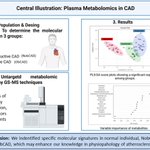
Plasma metabolomics reveals distinct signatures across normal coronaries, non-obstructive CAD and obstructive CAD.
🔎Differences involve amino acid, carbohydrate and lipid metabolism ➡️ new insights into the molecular mechanisms underlying atherosclerosis.
sciencedirect.com/science/ar…

Atherosclerosis Plus retweeted

❤️ Today, we celebrate FH Awareness Day! Our message this year is clear: early detection and optimal management of familial hypercholesterolaemia (FH) can change the course of a lifetime.
But making a lasting difference takes more than awareness. It requires shared responsibility, strong collaboration, and coordinated action - working together to ensure people with FH are identified early and receive the care they need.
Together, we can turn awareness into action and help build a healthier future, aligned with the EU Safe Hearts Plan.
🔗 Learn more: eas.to/FHWeek2026 #FHWeek #FindFH #FHAware #FHAware2026

Atherosclerosis Plus retweeted


Our paper is online! In 1,482 ASCVD pts, age/education largely explained LDL-C sex gap, yet lower statin use in women persisted after matching. Thanks, EPHESUS team! doi.org/10.1016/j.athplu.202… #ASCVD #LDLC #Women #Statins @Ozcan_Basaran @ATH_Plus @society_eas @kugurmert @TKDResmi


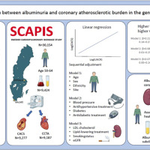
Can albuminuria be an early marker of coronary atherosclerosis?
In >9,000 SCAPIS participants, higher UACR was associated with greater coronary calcium burden, even after excluding CKD and CVD.
sciencedirect.com/science/ar…
@society_eas

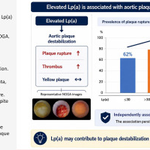
Low LDL-C, but persistent plaque vulnerability?
Elevated Lp(a) was independently associated with #AorticPlaque rupture, even at LDL-C <55 mg/dL.
🔗sciencedirect.com/science/ar…
@society_eas

Can the retina reveal vascular health in diabetes?
Retinal abnormalities are linked to carotid vascular changes, and OCT/OCTA may offer a window into systemic vascular injury. Promising—but prospective evidence is needed.
@society_eas
sciencedirect.com/science/ar…

📢 Now available in Ath Plus!
Explore the oral abstracts and moderated posters from the HEART UK 39th Annual Medical & Scientific Conference 2026 – “Advancing CVD Prevention” 🫀
🔬 Discover the latest research!
sciencedirect.com/science/ar…

What happens to the aortic valve after major surgery?
New findings in atherosclerosis-prone mice show that orthopedic surgery triggers early compositional remodeling of the aortic valve.
sciencedirect.com/science/ar…

Atherosclerosis Plus retweeted
Our paper is online! In 1,482 ASCVD pts, age/education largely explained LDL-C sex gap, yet lower statin use in women persisted after matching. Thanks, EPHESUS team! doi.org/10.1016/j.athplu.202… #ASCVD #LDLC #Women #Statins @Ozcan_Basaran @ATH_Plus @society_eas @kugurmert @TKDResmi
Why can FH vary so much within the same family?
Protective PCSK9 variants may attenuate the phenotype associated with an LDLR variant.
🔎 Extended genetic testing may help explain discordant FH phenotypes and improve their interpretation.
sciencedirect.com/science/ar…
@society_eas

Same disease, different care?
Women with ASCVD were less likely to receive statins and reach LDL-C targets. Age and education explained much—but not all—of the gap.
Sex differences matter. So may gender-related factors.
sciencedirect.com/science/ar…
@society_eas
#Women #Cardiology

Long-term vitamin K antagonist therapy was associated with accelerated coronary artery calcification, while direct oral anticoagulants were not.
🔗doi.org/10.1016/j.athplu.202…
@society_eas

Is cholesterol in ALS a bystander, a biomarker, or a therapeutic target?
This new review in Atherosclerosis Plus explores the complex links between plasma lipids, metabolic status, prognosis, and lipid-lowering therapies in ALS.
Read more: doi.org/10.1016/j.athplu.202…

Meet the Editorial Board of #AtherosclerosisPlus!
Meet the experts helping shape the journal’s mission to advance research in atherosclerosis, lipids, vascular biology, and cardiovascular prevention.
sciencedirect.com/journal/at…
📢 Call for papers!
Submit your work to the Special Issue “Gender Difference in ASCVD and Therapeutic Treatments of Dyslipidemia”.
🗓️ Deadline: 1 October
sciencedirect.com/journal/at…
@society_eas
Evolocumab markedly reduces LDL-C and Lp(a) levels in patients with FH, without reducing plasma CoQ10.
These findings may be relevant for patients susceptible to statin-associated muscle symptoms.
Read the open-access article:
doi.org/10.1016/j.athplu.202…
@society_eas
