

African Union Special Envoy for Gabon and Equatorial Guinea & Former MoFa of Burundi & PR to the UN, UN Nelson Mandela Prize committee (2020)
Burundi & earth 🌎
Joined October 2014
- Tweets25.8K
- Following4.7K
- Followers117K
- Likes34.3K


Amb. Albert SHINGIRO retweeted

H.E. Selma Malika Haddadi, @DCP_Haddadi, Deputy Chairperson of the African Union Commission, leads the African Union delegation to the 2026 IMF–World Bank Annual Meetings in Bangkok, #Thailand.
The AU delegation will engage partners and stakeholders to advance Africa’s priorities, including development financing, private capital mobilization, job creation, regional integration and reform of the global financial architecture.
The African Union will continue to advocate for stronger partnerships and increased investment to support Agenda 2063 and Africa’s transformation.
Read @ au.int/en/pressreleases/2026…
#Africa #Agenda2063 #WBGMeetings #IMFMeetings #Bangkok2026 @WBG_Digital @IMFNews


Amb. Albert SHINGIRO retweeted
AU Commission Chairperson Helps Officially Launch Africa Credit Rating Agency (AfCRA)
This evening in St. Louis, #Mauritius, Chairperson of the African Union (AU) Commission, H.E. Mahmoud Ali Youssouf, joined H.E. Dhananjay Ramful, Minister of Foreign Affairs, Regional Integration and International Trade of Mauritius; H.E. Dr. Jyoti Jeetun, Minister of Financial Services and Economic Planning of Mauritius; H.E. Nestor Ntahontuye, Prime Minister of the Republic of Burundi; H.E. Ahunna Eziakonwa, United Nations Assistant Secretary-General and UN Special Adviser for Africa; and H.E. Denys Denya, Executive Vice President of the African Export-Import Bank (Afreximbank), alongside members of the private sector and the diplomatic community, for the official launch of the Africa Credit Rating Agency (AfCRA).
Earlier in the day, the Chairperson briefed the media ahead of the launch, describing AfCRA as an important milestone in Africa’s efforts to strengthen its financial architecture, advance economic sovereignty and ensure that African economies are assessed with greater depth, context and independence.
He @ymahmoudali expressed appreciation to the Government and people of Mauritius for hosting AfCRA, noting that the choice of Mauritius was not accidental. The country’s financial and economic development, established international financial centre, regulatory framework and connectivity with African and global markets make it a valuable platform for this continental initiative.
Addressing why AfCRA and why now, H.E. Mahmoud Ali Youssouf stressed that Africa is building a stronger and more resilient financial architecture, with AfCRA set to become an important pillar. The agency will provide African and international investors, as well as economic partners, with reliable, independent and technically rigorous analysis of African economies and credit risk.
He underscored that credit ratings directly affect the cost and availability of capital. Where assessments do not sufficiently reflect African data, realities and context, countries can face higher borrowing costs, constraining their ability to finance infrastructure, health, education, energy, industrialisation and other development priorities, at a time when many Member States are already facing significant debt-servicing pressures.
AfCRA, he explained, will help address information and analytical gaps by bringing African data, expertise and realities more fully into the assessment process. It is not intended to replace existing international credit-rating agencies, shield borrowers from scrutiny or guarantee favourable ratings. Rather, it will provide an additional, independent and Africa-focused perspective to the market.
The Chairperson stressed that AfCRA’s credibility will depend on its independence, professionalism, transparency and adherence to internationally recognised standards. Its ratings must be evidence-based and free from political considerations and conflicts of interest. At the same time, African countries must continue strengthening macroeconomic management, fiscal responsibility, transparency and debt sustainability.
The initiative, he noted, is fully aligned with the ambitions of Agenda 2063 and Africa’s pursuit of greater self-reliance and financial sovereignty. A stronger African financial architecture is essential to mobilising the resources required to transform African economies and advance sustainable development.
Speaking alongside the Chairperson,
H.E. Dr. Jyoti Jeetun described AfCRA’s launch as a landmark moment for Mauritius and Africa, highlighting its potential to reinforce Africa’s financial architecture, deepen capital markets and strengthen the continent’s capacity to mobilise capital for development. She underscored Mauritius’ commitment to serving as a platform connecting capital with African opportunities, including in infrastructure, renewable energy, telecommunications, healthcare and agribusiness, while stressing that AfCRA’s independence, professionalism and robust methodology will be critical to building market confidence.
H.E. Amb. Marie-Antoinette Rose Quatre, CEO of the African Peer Review Mechanism (APRM), provided the institutional context behind AfCRA, recalling that the AU endorsed its establishment in 2017 and that the APRM was subsequently entrusted with supporting the process of translating that decision into an operational institution.
She highlighted the APRM’s contribution to generating evidence on limitations and biases in the assessment of African sovereign risk; developing AfCRA’s technical, operational and institutional framework; strengthening Member States’ understanding of credit-rating methodologies; and establishing governance arrangements to safeguard its analytical and operational independence.
The APRM CEO emphasised that credibility will be AfCRA’s greatest asset. Its ratings must be evidence-based, transparent, technically rigorous and independent. She called on African governments and institutions to provide accurate and timely information, while encouraging investors, financial institutions and the media to scrutinise AfCRA’s work rigorously.
At the official launch, H.E. Mahmoud Ali Youssouf described the establishment of AfCRA as a watershed moment in Africa’s economic history and a significant step towards strengthening the continent’s financial sovereignty.
He acknowledged the leadership of AfCRA, H.E. Amb. Marie-Antoinette Rose Quatre and the APRM team, as well as AU policy organs, African financial institutions, the African Development Bank, the United Nations and other partners whose commitment and support have contributed to bringing AfCRA to fruition.
The Chairperson underscored that Africa must become a leading participant in shaping the evolving global economic and financial order. AfCRA will contribute to this objective by strengthening African capacity, improving understanding of economic trends, providing objective assessments of risks associated with African economies and contributing to the work of Africa’s shared financial institutions.
He stressed that Africa must meet global standards while ensuring that its economies are assessed through greater access to African data, expertise and economic realities. AfCRA is therefore not about seeking favourable ratings, but about ensuring credible, independent and context-sensitive assessments that contribute to a more balanced global financial architecture.
He further noted that perceptions of African risk have consequences for the cost of capital and the continent’s ability to mobilise resources for development. African institutions therefore have a responsibility to advocate for the interests of African economies and help address structural challenges in global financial markets.
The Chairperson commended the APRM, AU institutions, African financial institutions, development partners and other stakeholders for their sustained efforts in establishing AfCRA, and congratulated Mauritius for its leadership and for providing a conducive environment for this important continental institution.
The official launch of AfCRA marks another step towards an Africa that is more confident, economically sovereign and better positioned to shape its own narrative and destiny.
Read @ au.int/en/pressreleases/2026…
@APRMorg


Amb. Albert SHINGIRO retweeted
" The African Union is taking concrete steps to strengthen Africa's financial sovereignty and reshape the continent's financial architecture.
The launch of the African Credit Rating Agency (#AfCRA) marks an important historic milestone towards developing transparent, independent, credible, and Africa-focused credit assessments that better reflect the continent's economic realities and investment potential, while addressing longstanding concerns about structural biases in global credit assessments.
Africa is investable. Africa is bankable. Africa is ready to define its own financial future.
Congratulations to the APRM Secretariat for this major milestone on behalf of the Union."
- H.E Amb. Selma Malika Haddadi, @DCP_Haddadi, Deputy Chairperson, African Union Commission
@APRMorg

Amb. Albert SHINGIRO retweeted

La 8ème Réunion de coordination mi-annuelle de l’Union africaine tenue dimanche 4 octobre 2026 à Alamein en République arabe d'Egypte a constitué un important cadre de concertation sur l’avenir de l’intégration du continent.
Réunie autour du Président en exercice de l’Union africaine, S.E. Évariste Ndayishimiye, la rencontre a rassemblé plusieurs Chefs d'Etat et de Gouvernements ainsi que les dirigeants des Communautés économiques régionales et des mécanismes régionaux et les responsables des principales institutions de l’Union africaine.
Au cœur des échanges figuraient les priorités de l’intégration africaine, le renforcement de la coordination entre l’Union africaine, les Communautés économiques régionales et les mécanismes régionaux, ainsi que l’accélération de la mise en œuvre des grandes orientations de l’Agenda 2063.
Présidant les travaux, Son Excellence Évariste Ndayishimiye a réaffirmé la nécessité de renforcer la coordination, la complémentarité et la cohérence de l’action collective africaine.
Il a notamment insisté sur l’urgence de traduire les décisions prises au niveau continental en résultats tangibles pour les populations. Cette ambition concerne notamment l’intégration économique, le développement des infrastructures, la promotion du commerce intra-africain, la paix et la sécurité, la transformation agricole, la création d’emplois pour les jeunes ainsi que la mobilisation des investissements.
La réunion a également souligné l’importance de consolider le partenariat entre les institutions continentales, les Communautés économiques régionales, les mécanismes régionaux et les États membres. Une meilleure articulation entre ces différentes composantes doit permettre d’éviter les duplications d’efforts, d’optimiser les ressources disponibles et de renforcer l’efficacité de l’action collective en faveur de l’intégration africaine.
Une attention particulière a été accordée au rôle du secteur privé et des opérateurs économiques dans la réalisation des ambitions de l’Afrique.
Les participants ont reconnu que la transformation économique du continent ne saurait reposer sur les seuls pouvoirs publics. Elle nécessite également un environnement favorable à l’investissement, à l’entrepreneuriat, à l’industrialisation et au développement de chaînes de valeur africaines compétitives.
Dans cette perspective, l’accélération de la mise en œuvre de la Zone de libre-échange continentale africaine (ZLECAf) apparaît comme un levier majeur pour dynamiser le commerce intra-africain, soutenir la croissance des entreprises africaines et créer davantage d’opportunités économiques, notamment pour les jeunes et les femmes.
Les dirigeants africains ont réaffirmé leur détermination à renforcer les mécanismes de coordination, à accélérer la mise en œuvre des projets et initiatives continentaux et à mobiliser davantage de ressources africaines pour financer le développement du continent.
Cette orientation s’inscrit dans la vision d’une Afrique plus autonome, plus résiliente, plus prospère et davantage maîtresse de son destin.
La qualité de la participation, le niveau des échanges et les engagements exprimés au cours de la rencontre témoignent de l’importance accordée à cette 8ème Réunion de coordination mi-annuelle considérée comme un espace essentiel de dialogue et d’harmonisation des priorités continentales.
Sous la conduite de S.E. Évariste Ndayishimiye, les travaux d’El-Alamein ont ainsi permis de renforcer le dialogue entre les différentes composantes de l’architecture institutionnelle africaine et de dégager des orientations destinées à accélérer la marche vers une intégration effective du continent.


Amb. Albert SHINGIRO retweeted
H.E. Mahmoud Ali Youssouf, Chairperson of the African Union Commission, @ymahmoudali, has arrived in the Republic of Mauritius to attend the official launch of the Africa Credit Rating Agency (#AfCRA), scheduled to take place tomorrow.
The Chairperson was received upon arrival at Sir Seewoosagur Ramgoolam International Airport by H.E. Ms. Jyoti Jeetun, Minister of Financial Services and Economic Planning of the Republic of Mauritius.
Read @ au.int/en/pressreleases/2026…
@PMOMauritius
@Ramgoolam_Dr
@EDBMauritius


Amb. Albert SHINGIRO retweeted

On behalf of the citizens of the Republic of #Burundi and in my capacity as the Chair of the African Union, I extend my warm congratulations to His Excellency Dr. Abiy Ahmed Ali (@AbiyAhmedAli ) upon his re-election as Prime Minister of the Federal Democratic Republic of #Ethiopia.
I wish Prime Minister Abiy Ahmed every success during his renewed mandate. It is my sincere hope that the people of Ethiopia will experience continued progress, unity, and prosperity as the nation works toward achieving its strategic national priorities.
The African Union reiterates its steadfast commitment to partnering with the Government and the people of Ethiopia to promote enduring peace, regional stability, enhanced cooperation, and shared economic development across the continent.
Amb. Albert SHINGIRO retweeted
The Chairperson of the African Union (AU) Commission, H.E. Mahmoud Ali Youssouf, @ymahmoudali, warmly congratulates H.E. Abiy Ahmed Ali on his re-election as Prime Minister of the Federal Democratic Republic of Ethiopia for another five-year term.
As host of the AU Headquarters and the diplomatic capital of Africa, #Ethiopia holds a special place in the continental family, said the Chairperson.
The Chairperson looks forward to continued close cooperation with Prime Minister Abiy Ahmed and his government in advancing Africa’s integration, peace, security and development agenda.
Read @ au.int/en/pressreleases/2026…
@AbiyAhmedAli @PMEthiopia @MFAEthiopia

Amb. Albert SHINGIRO retweeted
Statement of H.E. Mahmoud Ali Youssouf, Chairperson of the African Union Commission, @ymahmoudali, at the Opening Ceremony of the 8th Mid-Year Coordination Meeting of the AU and RECs, in El Alamein, #Egypt
Amb. Albert SHINGIRO retweeted
The 8th African Union Coordination Meeting between the African Union (AU), Regional Economic Communities (RECs) & Regional Mechanisms (RMs) #AUMYCM opened in New Alamein, Arab Republic of Egypt, bringing together African leaders & representatives to advance coordination, integration & the implementation of the continent’s shared priorities under #Agenda2063.
H.E. Mahmoud Ali Youssouf, Chairperson of the AU Commission, @ymahmoudali, expressed profound appreciation to H.E. President Abdel Fattah El Sisi, the Government & people of the Arab Republic of #Egypt for hosting the meeting, & for the warm welcome, generous hospitality & excellent organisation extended to all participating delegations.
The Chairperson underscored that the Annual Coordination Meeting remains a critical platform for strengthening cooperation between the AU, RECs & RMs & for harmonising efforts towards the implementation of Africa’s continental integration agenda.
Against a complex & rapidly changing global geopolitical environment, the Chairperson stressed the need for Africa to deepen its collective reflection & strengthen its capacity to respond to the challenges affecting peace, security, stability & socio-economic development across the continent.
Africa’s integration agenda must move decisively from aspiration to implementation, he said.
The Chairperson emphasised that, while important progress has been made, institutional & operational obstacles continue to constrain regional & continental integration. The second decade of Agenda 2063 requires renewed political commitment, stronger coordination & effective implementation of the continental frameworks & instruments already adopted, & clearer division of labour between the Union, RECs & RMs is essential. Such a division must be based on solidarity, complementarity & comparative advantage, while avoiding duplication & ensuring that collective efforts are directed towards tangible results for African citizens.
Mr. Youssouf also highlighted the importance of strengthening Africa’s financial architecture & mobilising predictable, sustainable & sufficient resources for the implementation of Agenda 2063.
Africa cannot realise its infrastructure & development ambitions without the capacity to finance its own priorities, he said and added that strengthening continental financial institutions & transforming Africa’s financial architecture are therefore central to achieving greater economic sovereignty & advancing the continent’s development.
The Chairperson stressed that Africa’s integration must also be driven by stronger intra-African trade & productive capacity.
The objective cannot simply be to create a larger market. Africa must have the capacity to produce, transform and add value to its own resources.
The continent possesses enormous natural resources, a large and dynamic population and significant human capital. These assets must be transformed into productive capacity, stronger African value chains, increased manufacturing, technology transfer, employment opportunities & greater intra-African trade.
He also appreciated the vision of the African Continental Free Trade Area as it provides an important framework for this transformation, but said its success will depend on the ability of Member States & regional institutions to address the infrastructure, financing, institutional & productive-capacity gaps that continue to constrain integration.
Peace & stability remain fundamental to this process.
The Chairperson reaffirmed the commitment of the AU Commission to working with Member States, RECs & RMs to strengthen peace & stability across the continent.
Without peace, development and integration cannot be sustained, he said. The continent must therefore continue strengthening its preventive diplomacy, conflict prevention & early-warning capacities while ensuring that early warning translates into early action.
In his remarks, H.E. President Abdel Fattah El Sisi, @AlsisiOfficial welcomed African leaders & delegations to Egypt & stressed the importance of strengthening coordination between the AU, RECs & RMs.
President El Sisi emphasised that coordination must serve a practical purpose: moving Africa from fragmented efforts towards greater integration, & from shared aspirations towards concrete, implementable projects that deliver tangible benefits to African peoples.
He highlighted New Alamein as a powerful example of the transformation that can be achieved when development, investment, knowledge, innovation & sustainable urban development are placed at the centre of national and continental priorities.
New Alamein, President El Sisi noted, demonstrates how a place associated with the legacy of conflict can be transformed into a platform for development, cooperation and opportunity.
The Egyptian President reaffirmed the importance of respect for the sovereignty & territorial integrity of States, good-neighbourly relations, mutual respect, dialogue & consultation as essential principles for peace & stability among African countries.
He stressed that differences, including those relating to borders & shared natural resources, should be addressed through dialogue, cooperation & respect for international law.
President El Sisi further emphasised the close relationship between peace, economic integration & development.
The stronger the economic links among African countries, the greater the opportunities to expand trade, create employment, strengthen prosperity & build a more stable future.
Africa must therefore move beyond its traditional role as a supplier of raw materials.
The continent must develop integrated value chains, strengthen manufacturing & productive capacity, add value to its resources within Africa, promote technology transfer & expand intra-African trade.
President El Sisi also highlighted the importance of the African private sector, investors and financial institutions in driving continental integration & development.
H.E. President Évariste Ndayishimiye, Chairperson of the AU & President of the Republic of #Burundi , @GeneralNeva expressed profound gratitude to President Abdel Fattah El Sisi, the Government and people of Egypt for the warm welcome and excellent organisation of the meeting.
President Ndayishimiye commended the work of the AU Commission & its partners across the continent & stressed the importance of close cooperation between the AU, RECs & RMs.
He described the Annual Coordination Meeting as the principal framework for harmonising the actions of the AU, RECs & RMs & advancing the implementation of the continental integration agenda.
President Ndayishimiye identified several key obstacles to Africa’s integration, including insufficient productive capacity, infrastructure deficits, inadequate financing, challenges surrounding shared water resources & persistent insecurity and conflicts.
He stressed that creating a continental free-trade area alone will not be sufficient to achieve Africa’s integration ambitions.
Africa must produce in Africa, transform in Africa and add value to its resources in Africa, he said.
He further emphasised that the continent’s integration must therefore be accompanied by stronger productive & manufacturing capacity, greater investment, improved infrastructure, technology transfer & increased intra-African trade.
President Ndayishimiye highlighted the importance of infrastructure connecting African countries through roads, railways, energy networks, ports & digital infrastructure.
Effective connectivity is essential for facilitating the movement of people, goods & services and for unlocking the full potential of the African Continental Free Trade Area.
On water, he stressed that water is central to health, agriculture, energy, industry & peace.
Shared water resources must be managed through wisdom, solidarity & cooperation, in the interest of African peoples & sustainable development, he added.
On peace & security, President Ndayishimiye emphasised that insecurity & instability undermine every dimension of development.
He called for stronger African efforts to resolve conflicts peacefully & welcomed the work of the AU-led inter-regional platform on early warning & conflict prevention.
President Ndayishimiye encouraged the effective implementation of the platform’s action plan & implementation matrix & called for a decisive transition from early warning to early action.
President Ndayishimiye also welcomed progress in continental economic integration, including advances in the implementation of the African Continental Free Trade Area & steps towards strengthening Africa’s financial sovereignty.
He underscored the need for predictable, sustainable & sufficient resources to enable the African Union to implement the decisions and priorities adopted by Member States.
He highlighted progress in health, governance and the implementation of Agenda 2063, including the contribution of Africa CDC & the African Peer Review Mechanism.
Looking ahead, President Ndayishimiye called for a clearer division of responsibilities between the AU, RECs & Member States, founded on solidarity & complementarity.
The objective should be to avoid duplication, strengthen collective action and concentrate efforts on measurable results, he said.
Read @ au.int/en/pressreleases/2026…
@ecowas_cedeao @jumuiya @SADC_News


Amb. Albert SHINGIRO retweeted

« Le plus grand pouvoir n’est pas celui de dominer.
Mais celui de bâtir un avenir qui profite à tout le monde. »
@antonioguterres rappelle que notre avenir commun dépend de notre capacité à utiliser le pouvoir avec sagesse.

Amb. Albert SHINGIRO retweeted
President Abdel Fattah El-Sisi of Egypt & President João Lourenço of the Republic of Angola, Chairperson of the AUDA-NEPAD Heads of State and Government Orientation Committee, co-chaired this evening in New Alamein, Egypt the Summit of the Founding Member States of @NEPAD_Agency, held ahead of the 8th African Union (AU) Mid-Year Coordination Meeting #AUMYCM, which will take place tomorrow.
In his intervention, H.E. Mahmoud Ali Youssouf, Chairperson of the AU Commission, @ymahmoudali, marked the 25th anniversary of NEPAD by congratulating its founding Member States successive leadership for sustaining its Pan-African development vision. He recalled NEPAD’s establishment in 2001 & its subsequent institutional evolution into AUDA-NEPAD, noting that its founding objectives; advancing integrated & sustainable development in Africa & overcoming the continent’s marginalisation, remain highly relevant.
The Chairperson highlighted AUDA-NEPAD’s central role in advancing the implementation of Agenda 2063 across key development sectors & stressed the importance of a clear division of responsibilities
He called for continued institutional complementarity & coherence in advancing Africa’s development & integration.
The Summit brought together Heads of State and representatives of the five founding Member States of NEPAD:- Egypt, Algeria, Nigeria, Senegal & South Africa, as well as H.E. Évariste Ndayishimiye, President of the Republic of Burundi & Chairperson of the African Union @GeneralNeva .
The Summit discussed ways to strengthen AUDA-NEPAD’s role in supporting Africa’s development priorities & mobilising the financial & technical resources required to accelerate the implementation of transformative projects across the continent.
Read @ au.int/en/pressreleases/2026…


Amb. Albert SHINGIRO retweeted
LIVE NOW - Follow the Opening Ceremony of the Eighth (8th) Mid-Year Coordination Meeting of the African Union and the RECs xitter.cf/i/broadcasts/1OxwbnapD…

Amb. Albert SHINGIRO retweeted
8th Mid-Year Coordination Meeting of the African Union and the RECs xitter.cf/i/broadcasts/1OxwbnapD…
Amb. Albert SHINGIRO retweeted


At the 5th African Union Regional Knowledge Exchange High-Level Platform on the African Standby Force (ASF) on the sidelines of the 8th African Union (AU) Mid-Year Coordination Summit is taking place in New Alamein City, Egypt, H.E. Mahmoud Ali Youssouf, Chairperson of the AU Commission, @ymahmoudali, described the adoption of the Memorandum of Understanding (MOU) between the AU, Regional Economic Communities (RECs) & Regional Mechanisms (RMs) as a watershed moment in strengthening Africa’s collective peace & security architecture.
He stressed that regional integration begins with peace, security & political stability, & called for the ASF to reflect the realities of today’s security environment. He underscored the importance of formally recognising & incorporating deployments undertaken by RECs within the ASF framework, while strengthening subsidiarity, interoperability, ownership & legitimacy.
He also called for the standardisation of the interpretation & implementation of subsidiarity, systematic use of lessons learned, stronger resource mobilisation & continued efforts to operationalise the ASF.
H.E. @parfait_onanga , Special Representative of the UN Secretary-General, welcomed the MOU as more than an administrative instrument, describing it as a framework capable of enabling a more coherent & effective use of the ASF. He stressed that Africa’s security challenges, including armed conflict, terrorism, violent extremism, unconstitutional changes of government & climate-related instability, are increasingly borderless & require rapid, effective, politically coherent & strategically coordinated responses.
He emphasised that sustained political commitment by Member States remains the cornerstone of the ASF, including making military, police and civilian capabilities available when crises arise. He also highlighted the importance of predictable financing and noted that the MOU could help clarify modalities for implementing UN Security Council Resolution 2719, with AU-UN preparations continuing.
The Chairperson of the Peace & Security Council for October, described the MOU as one of the most significant institutional developments in the evolution of the ASF since the establishment of the PSC. He underscored that the cost of inaction is greater than investment in prevention & called for timely, coherent & effective African-led responses that place the protection of civilians at the centre.
He stressed that ASF readiness must be measured not only by troop numbers but by the competence, equipment and operational capacity of forces. Force generation, technical capabilities, financing, approval procedures & reporting timelines remain areas requiring further attention. He also highlighted the importance of the ASF strategic review in adapting the Force to asymmetric threats, terrorist networks and the growing use of technology.
The Platform reaffirmed that the MOU provides a stronger foundation for coordination between continental & regional levels, while preserving the essential role of RECs & RMs. Speakers stressed that operationalising the ASF will require sustained political ownership, predictable & sufficient financing, capable & properly equipped personnel, & stronger AU-UN cooperation.
The discussions further underscored that lasting peace requires addressing the root causes of conflict through inclusive governance, respect for constitutional order, human rights & sustainable development.
The AU Commission reaffirmed its commitment to the new cooperation framework, the operationalisation of the ASF & the realisation of the objectives of Agenda 2063: towards a peaceful, secure, stable & prosperous Africa.
Read @ au.int/en/pressreleases/2026…
@AUC_PAPS @Bankole_Adeoye #AUMYCM


Amb. Albert SHINGIRO retweeted
Eighth AU Mid-Year Coordination Meeting to Advance Continental Integration and Agenda 2063 Priorities.
The Eighth (8th) Mid-Year Coordination Meeting (MYCM) between the African Union (AU), the Regional Economic Communities (RECs) and the Regional Mechanisms (RMs) will take place on 4 October 2026 in El-Alamein, Arab Republic of Egypt, hosted by President Abdel Fattah El-Sisi of Egypt. The Meeting will bring together Heads of State and Government, the leadership of the African Union Commission, and Chairpersons of the RECs and RMs to advance continental integration and cooperation in line with Agenda 2063, “The Africa We Want.”
The opening ceremony will feature statements by H.E. Mahmoud Ali Youssouf, Chairperson of the African Union Commission; H.E. Abdel Fattah El-Sisi, President of the Arab Republic of Egypt and Host of the Eighth MYCM; and H.E. Évariste Ndayishimiye, President of the Republic of Burundi and Chairperson of the African Union.
The first substantive session will consider the status of continental integration, with H.E. Francisca Tatchouop Belobe, Commissioner for Economic Development, Trade, Tourism, Industry and Minerals, presenting an update on progress and priorities. The presentation will highlight the need to accelerate implementation of the African Continental Free Trade Area (AfCFTA), strengthen the domestication of regional and continental commitments, facilitate cross-border trade and payments, advance industrial development and regional value chains, and promote macroeconomic convergence.
The Meeting will also consider the contribution of AUDA-NEPAD to continental and regional integration. H.E. João Manuel Gonçalves Lourenço, President of the Republic of Angola and Chairperson of the AUDA-NEPAD Heads of State and Government Orientation Committee, will present an update on the organisation’s contribution to advancing Africa’s integration and development priorities.
On the implementation of the AfCFTA, H.E. William Samuel Ruto, President of the Republic of Kenya and Chairperson of the AU Assembly Committee of Heads of State and Government on the Implementation of the AfCFTA, will present a report highlighting progress in advancing preferential trade arrangements, supporting State Parties, removing barriers to intra-African trade, and developing regional and continental value chains.
The Meeting will further address coordination between the AfCFTA and the RECs. H.E. William Samuel Ruto, President of the Republic of Kenya and Chairperson of COMESA, will present on AfCFTA-REC coordination.
On the coordination and harmonisation of AU and REC policies, H.E. Ambassador Bankole Adeoye, Commissioner for Political Affairs, Peace and Security, will present on the Inter-Regional Knowledge Exchange (I-RECKE). The initiative serves as a strategic platform for strengthening cooperation, information sharing, early warning and early action among the AU, RECs and RMs.
The Meeting will also consider priorities related to water, sanitation and sustainable infrastructure development. H.E. Moses Vilakati, Commissioner for Agriculture, Rural Development, Blue Economy and Sustainable Environment, will present the Mid-Year Progress Report on the implementation of the African Union Theme of the Year 2026, “Assuring Sustainable Water Availability and Safe Sanitation Systems to Achieve the Goals of Agenda 2063.”
The Eighth MYCM will consider and adopt its Draft Declaration, consolidating the commitments and priorities emerging from discussions at the continental and regional levels. The Declaration is expected to reaffirm the collective commitment of the AU, RECs, RMs and Member States to advancing continental integration, strengthening institutional coordination, and promoting sustainable development, peace and prosperity across Africa.
The Meeting will provide an opportunity to further strengthen cooperation among African institutions and accelerate implementation of Agenda 2063 priorities, including economic integration, peace and security, water and sanitation, infrastructure and digital connectivity, and sustainable financing for Africa’s development.
The Eighth MYCM will conclude with the adoption of its Declaration, reaffirming the shared commitment of the African Union, RECs, RMs and Member States to building a more integrated, prosperous and peaceful Africa in accordance with the aspirations of Agenda 2063, “The Africa We Want.”
Read @ au.int/en/pressreleases/2026…
@GeneralNeva @ymahmoudali @AlsisiOfficial @Bankole_Adeoye @MosesVilakati #AUMYCM @NEPAD_Agency

Amb. Albert SHINGIRO retweeted
L’ONU est le seul endroit où toutes les nations, grandes et petites, se réunissent pour façonner notre avenir commun.
Lors de l’#UNGA en septembre, les dirigeants du monde entier ont porté leur message depuis l’Assemblée générale des Nations Unies.

Amb. Albert SHINGIRO retweeted
At the 5th African Union Regional Knowledge Exchange High-Level Platform on the African Standby Force (ASF) on the sidelines of the 8th African Union (AU) Mid-Year Coordination Summit is taking place in New Alamein City, Egypt, H.E. Mahmoud Ali Youssouf, Chairperson of the AU Commission, @ymahmoudali, described the adoption of the Memorandum of Understanding (MOU) between the AU, Regional Economic Communities (RECs) & Regional Mechanisms (RMs) as a watershed moment in strengthening Africa’s collective peace & security architecture.
He stressed that regional integration begins with peace, security & political stability, & called for the ASF to reflect the realities of today’s security environment. He underscored the importance of formally recognising & incorporating deployments undertaken by RECs within the ASF framework, while strengthening subsidiarity, interoperability, ownership & legitimacy.
He also called for the standardisation of the interpretation & implementation of subsidiarity, systematic use of lessons learned, stronger resource mobilisation & continued efforts to operationalise the ASF.
H.E. @parfait_onanga , Special Representative of the UN Secretary-General, welcomed the MOU as more than an administrative instrument, describing it as a framework capable of enabling a more coherent & effective use of the ASF. He stressed that Africa’s security challenges, including armed conflict, terrorism, violent extremism, unconstitutional changes of government & climate-related instability, are increasingly borderless & require rapid, effective, politically coherent & strategically coordinated responses.
He emphasised that sustained political commitment by Member States remains the cornerstone of the ASF, including making military, police and civilian capabilities available when crises arise. He also highlighted the importance of predictable financing and noted that the MOU could help clarify modalities for implementing UN Security Council Resolution 2719, with AU-UN preparations continuing.
The Chairperson of the Peace & Security Council for October, described the MOU as one of the most significant institutional developments in the evolution of the ASF since the establishment of the PSC. He underscored that the cost of inaction is greater than investment in prevention & called for timely, coherent & effective African-led responses that place the protection of civilians at the centre.
He stressed that ASF readiness must be measured not only by troop numbers but by the competence, equipment and operational capacity of forces. Force generation, technical capabilities, financing, approval procedures & reporting timelines remain areas requiring further attention. He also highlighted the importance of the ASF strategic review in adapting the Force to asymmetric threats, terrorist networks and the growing use of technology.
The Platform reaffirmed that the MOU provides a stronger foundation for coordination between continental & regional levels, while preserving the essential role of RECs & RMs. Speakers stressed that operationalising the ASF will require sustained political ownership, predictable & sufficient financing, capable & properly equipped personnel, & stronger AU-UN cooperation.
The discussions further underscored that lasting peace requires addressing the root causes of conflict through inclusive governance, respect for constitutional order, human rights & sustainable development.
The AU Commission reaffirmed its commitment to the new cooperation framework, the operationalisation of the ASF & the realisation of the objectives of Agenda 2063: towards a peaceful, secure, stable & prosperous Africa.
Read @ au.int/en/pressreleases/2026…
@AUC_PAPS @Bankole_Adeoye #AUMYCM
Amb. Albert SHINGIRO retweeted
At the inaugural #Alamein Africa Forum, the Chairperson of the African Union Commission, H.E. Mahmoud Ali Youssouf, joined H.E. President Évariste Ndayishimiye, President of the Republic of Burundi and Chairperson of the African Union, H.E. President Abdel Fattah El-Sisi of Egypt, Dr George Elombi, President and Chairman of the Board of Directors of Afreximbank, Mr Aliko Dangote, President and Chief Executive of Dangote Group, and other African leaders, institutions and business leaders in a powerful call to move Africa from ambition to implementation.
H.E. Mahmoud Ali Youssouf underscored that Africa does not lack vision or ambition. What is required is the capacity to translate ambitious plans into well-prepared, financed, implemented and successful projects. The African Union has therefore brought governments and the private sector to the same table to forge the continent’s future together.
Africa possesses enormous assets: vast agricultural potential, strategic minerals essential to the global energy transition, abundant energy resources, a rapidly growing and youthful population, and a continental market anchored by the African Continental Free Trade Area (AfCFTA). Yet Africa continues to import food it can produce, medicines it can manufacture and products that could be made from its own raw materials.
The message from the Forum was clear: Africa must use its resources to create value, build industries, generate jobs and strengthen its economic resilience.
President Évariste Ndayishimiye emphasised that Africa’s paradox is that it is a resource-rich continent that remains insufficiently transformed. The priority must be to bring governments, investors and businesses together to translate national strategies and Agenda 2063 into concrete, bankable projects.
He called for a shift from diplomatic partnerships to economic partnerships, investment partnerships and, ultimately, production partnerships. He stressed that AfCFTA must become a fully functioning market, supported by trade corridors, integrated border posts, harmonised customs procedures, mutual recognition of standards, cross-border payment systems, trade finance, logistics and regional value chains.
President Ndayishimiye proposed an African Investment and Implementation Dashboard to track strategic continental projects, investments, financing, responsibilities, timelines and measurable results.
His message was simple: every commitment should lead to a project; every project should find financing; every financing should produce results; and every result should contribute to Africa’s integration and prosperity.
President Abdel Fattah El-Sisi welcomed African leaders, institutions and business representatives to New Alamein, stressing that the Forum comes at a time of profound geopolitical and economic change.
He emphasised that African countries must strengthen their capacity to shape their own future, while peace, stability, strong national institutions, respect for sovereignty, good-neighbourly relations and peaceful resolution of conflicts remain essential foundations for investment and development.
President El-Sisi highlighted the critical role of Africa’s private sector, which is a major engine of growth and employment across the continent. He called for stronger connections among African businesses, greater access to information on opportunities in neighbouring markets, and practical measures to increase intra-African trade.
The Alamein Africa Forum, he stressed, provides a platform to bridge information gaps, connect investors and businesses, promote cross-border partnerships and accelerate implementation of AfCFTA and Agenda 2063.
Dr George Elombi, President and Chairman of the Board of Directors of Afreximbank, placed the Forum in a broader context of African ownership and economic sovereignty.
He recalled that Alamein was once known principally for a major battle of the Second World War. Today, Egypt has transformed the same landscape into a place where Africans can gather to discuss and shape their own future.
He recalled Egypt’s longstanding support for Afreximbank, including hosting the Bank in Cairo since its establishment and supporting major continental trade initiatives. He stressed that African institutions created and owned by Africans must be strengthened and defended.
Afreximbank, he noted, was created by African countries in 1993 and has demonstrated its ability to respond to major economic shocks, including the COVID-19 pandemic, the Ukraine crisis and the 2026 Gulf crisis. The Bank’s interventions, he argued, demonstrate the importance of African-owned financial institutions that can act rapidly when African economies face external shocks.
Dr Elombi called on African governments to continue capitalising their institutions, honour the legal commitments underpinning them, defend the creditor status provided under their treaties and stand together in strengthening African multilateral financial institutions.
His central message was that Africa’s institutions should be judged accurately on the basis of their substance, performance, ownership and demonstrated capacity — not simply against methodologies designed for different institutional models.
He also stressed the importance of combining political diplomacy with economic diplomacy, noting that African economic instruments can help reinforce peace, stability and development.
“ This bank is your bank. Please defend it.”
Mr Aliko Dangote called for a fundamental change in the way Africa thinks about economic growth.
Africa accounts for a significant share of the world’s population and possesses enormous agricultural, mineral, energy and human resources. Yet the continent’s share of global manufacturing remains limited.
The challenge, he argued, is therefore not simply to increase GDP, but to ask what Africa is producing, who participates in that growth, how much domestic capability it creates, how many productive jobs it generates and how resilient African economies become.
Africa must transform its natural endowments into productive capabilities.
Mr Dangote stressed that AfCFTA should be understood not merely as a trade agreement, but as continental economic infrastructure capable of creating the scale necessary for investment and industrialisation.
A factory serving 30 million consumers represents one investment proposition; a factory capable of reaching hundreds of millions of African consumers represents another. Integration can therefore become an instrument of industrial policy.
He called for harmonisation of regulations, standards, payment systems, border procedures and logistics, arguing that fragmentation creates an “African scale penalty” that increases production costs and constrains investment.
Energy, he stressed, must be treated as economic infrastructure, powering industrial corridors, agricultural processing zones, mining centres, technology clusters and cities.
Africa must also move beyond exporting raw materials and focus on processing, manufacturing and value addition in order to create jobs and prosperity.
Mr Dangote emphasised that Africa needs both effective governments and a dynamic private sector: governments establish the rules, maintain stability and provide infrastructure, while entrepreneurs take risks, invest capital, innovate and create jobs.
He urged African leaders to make AfCFTA work through the free movement of people, goods and services, and called for greater African investment in Africa.
He also highlighted Dangote Group’s Vision 2030 and its commitment to expanding investment across the continent, while stressing that African development ultimately requires Africans to work together.
“Africans must work together to develop Africa.”
AUDA-NEPAD CEO Nardos Bekele-Thomas reinforced the implementation agenda, warning that Africa does not suffer from a shortage of meetings or conferences, but from a shortage of deals, action, implementation and execution.
She called for government and business to remain at the same table and for the Forum to become a permanent mechanism for turning political ambition into investment and development outcomes.
She highlighted the scale of Africa’s infrastructure financing needs and the need for private capital, blended finance, project preparation and stronger regional economic integration.
AUDA-NEPAD, she noted, is working to move major projects through preparation and structuring towards financial close, while African development finance institutions can provide capital and AUDA-NEPAD can help bring forward projects that are ready for investment.
She called for a shift from national to regional projects, greater mobilisation of African pension and sovereign wealth funds, harmonised standards and stronger economic corridors.
By the time the Forum reconvenes in 2028, she urged, Africa should be able to demonstrate projects that have moved from preparation to investor-ready status and beyond — tangible proof that the Forum delivers.
The common message emerging from Alamein is therefore unmistakable: Africa has the resources, markets, institutions, entrepreneurs, young people and capital to transform its economic future. The challenge is execution.
From Agenda 2063 to AfCFTA; from political commitments to bankable projects; from raw materials to value addition; from fragmented national markets to regional value chains; and from dependence to greater African ownership — the task is to turn potential into production, projects into investment, and investment into jobs and prosperity.
The inaugural Alamein Africa Forum is a call to build that future together.
One Africa. One continental market. African capital for African development. African solutions, African institutions and African enterprise driving Africa’s transformation.
The time for action is now.
Read @ au.int/en/pressreleases/2026…
@ymahmoudali @GeneralNeva @AlsisiOfficial @afreximbank @NEPAD_Agency @AlikoDangote


Amb. Albert SHINGIRO retweeted
The 8th Mid-Year Coordination Meeting (MYCM) between the African Union, the Regional Economic Communities (RECs) and the Regional Mechanisms (RMs) will be held on 📅 4 October 2026 in El Alamein, #Egypt.
The Meeting will focus on strengthening the coordination, harmonisation and division of labour between the AU, RECs and RMs to accelerate continental integration, with particular emphasis on @AfCFTA implementation, infrastructure, water and sanitation, conflict prevention, institutional reform and continental financing.
More @ au.int/en/newsevents/2026062…
#Regionalintegration

Amb. Albert SHINGIRO retweeted
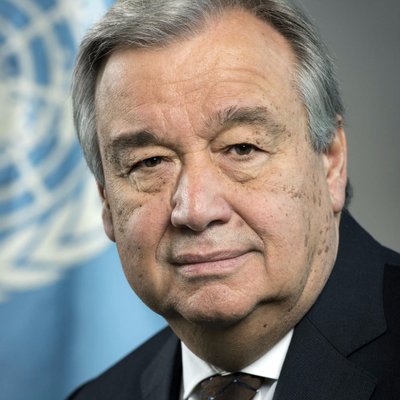
A heartfelt thank you to everyone who has contributed to #UNGA high-level week – from colleagues in New York & abroad to participants, activists & supporters.
I am proud and grateful for their work.


