

501(c)(3) seeking to empower researchers and organizations in the scientific study of human sexuality and reproduction in outer space environments. 🚀✨
Cape Canaveral, Florida
Joined April 2023
- Tweets120
- Following87
- Followers83
- Likes103






Advanced SpaceLife Research Institute retweeted

The @ASRI4Space team took the stage at @sxsw to discuss critical research gaps in reproductive health and sexuality in human spaceflight in the immediate and long-term, how we get there & why it matters. Can't wait to share more from our panel! 🐝🚀✨️


Advanced SpaceLife Research Institute retweeted

The planets of our own solar system, including Earth, likely formed in a similar disk. science.nasa.gov/solar-syste…


Planets in progress! 🪐
These Hubble collages take a look at protoplanetary disks, which are swirling masses of gas and dust that surround developing stars. ⬇️

ALT The central disks of protostars cast wider shadows across clodus of gas and dust in these blue-colored images, with jets of stellar material emanating outward. There are four images in a grid, clockwise from upper left: HH 390 Star, Tau 042021, HH 48 Binary System, and ESO Hα574.
Advanced SpaceLife Research Institute retweeted

Just think about it: out of over 6,000 confirmed exoplanets discovered so far (as of late 2025), only a tiny handful—around 60–70—are considered potentially habitable, meaning Earth-sized rocky worlds in the "Goldilocks zone" where liquid water could exist on the surface.These are the ones that most closely resemble our own planet in size, composition, and orbital distance from their stars—distant cousins that spark endless wonder about oceans, atmospheres, and maybe even life.Here are some of the standout known Earth-like candidates:Proxima Centauri b — Our closest exoplanetary neighbor at just 4.2 light-years away, an Earth-mass rocky world orbiting in the habitable zone of the nearest star.
TRAPPIST-1 system's planets (especially d, e, and f) — Seven Earth-sized worlds around a cool red dwarf 40 light-years away, with several in the habitable zone offering prime targets for atmospheric studies.
TOI-700 d — An Earth-sized planet in the habitable zone of a quiet red dwarf 100 light-years away, with potential for a stable atmosphere.
Kepler-452b — Often called "Earth 2.0," a super-Earth orbiting a Sun-like star in the habitable zone, 1,400 light-years distant.
Others like Kepler-186f, LHS 1140 b, and K2-18 b round out the top contenders, each with intriguing hints of possible atmospheres or water.
And these are just the known ones—the ones we've managed to detect with current telescopes like Kepler, TESS, and JWST. The Milky Way likely holds billions more, many hidden in the glare of their stars or too far for our instruments to spot yet.Future missions like the Habitable Worlds Observatory could reveal dozens or hundreds more true Earth twins. Mind-blowing to imagine how many blue-green worlds are really out there, waiting in the dark.Absolutely humbling—and exciting!

Advanced SpaceLife Research Institute retweeted

.@NASA astronaut @JonnyKimUSA will recap his recent mission aboard the @Space_Station during a news conference at 3:30 p.m. EST Friday, Dec. 19, from @NASA_Johnson in Houston.
Watch the news conference live on NASA’s YouTube channel. Learn how to stream NASA content through a variety of online platforms, including social media.
More: nasa.gov/news-release/nasa-a…

ALT NASA astronaut Jonny Kim poses inside the International Space Station’s cupola as it orbits 265 miles above the Indian Ocean near Madagascar. Credit: NASA
Advanced SpaceLife Research Institute retweeted
Four teams. One mission: to advance NASA’s search for life beyond Earth. In a new episode of the NASA+ documentary Our Alien Earth, journey with astrobiologists into Hawai‘i’s lava tubes as they test tools that could one day guide explorers on Mars. go.nasa.gov/498SIUp
Advanced SpaceLife Research Institute retweeted
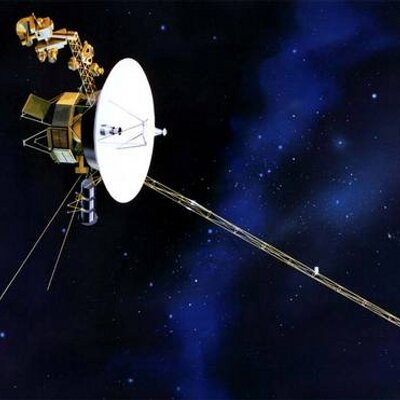
I am currently ~19h 43m 04s of light travel time from Earth (2025:349:000000:2L)
Advanced SpaceLife Research Institute retweeted

Before our Artemis II astronauts lift off on their journey around the Moon next year, find out what it takes to build a mission like theirs from the ground up.
Episode 1 of Moonbound is live—and free to watch on NASA+: go.nasa.gov/4pxIoel
Advanced SpaceLife Research Institute retweeted

We do what we can with the time that we have, so that we might make the biggest impact in this life. This #GivingTuesday2025, please consider contributing to saving a crucial scientific experiment that has just begun to bear its greatest fruit for humanity. #SaveTheSpaceMice

This #GivingTuesday, help protect a piece of human history.
RR-20, NASA’s final rodent mission, holds irreplaceable science about how life adapts in space. Losing this data means losing a decade of progress.
Be part of the mission: savethespacemice.com 🐭✨

Advanced SpaceLife Research Institute retweeted

Elon Musk wants to occupy Mars. Jeff Bezos wants humans to colonise vast space stations. But is anyone thinking through the longer-term issues that come with these ideas?
On “The Weekend Intelligence” @natashaloder explores how to make babies in space econ.st/4j9nqiU

Advanced SpaceLife Research Institute retweeted

New Worlds, the off-the-radar mix-up of space thinkers, creators, doers, and deciders is moving to @SpaceCenterHou. In TX this weekend look for @v_wyche @Erdayastronaut @DrPhiltill @rocketrick @shawnapandya @DrEJahangir @alexlayendecker @EWRoddenberry @marylizbender @MikeMongo.
Advanced SpaceLife Research Institute retweeted

You do not - we repeat Do Not want to miss @AlexLayendecker’s episode of #TheSpaceRevolution with host @RocketRick on 11/6 & 11/9 @ 8AM & 8PM PST @ASRI4Space


Advanced SpaceLife Research Institute retweeted

Many thanks to @AlexLayendecker for his important research on sex in space. We urgently need dialogue on space tourism practices to address uncontrolled conception and experiments to determine the Gravity Rx for reproduction before mistakes happen! spacesettlementprogress.com/…
