Ashik retweeted
Post-flight analysis confirms the Artemis II Orion heat shield performed as expected during its Mach 39 reentry, protecting the spacecraft and the astronauts aboard as they returned from the 694,481-mile journey around the Moon. go.nasa.gov/4B7EWNT
Ashik retweeted
NASA's Cassini spacecraft lifted off 29 years ago to begin its long voyage to Saturn.
For 13 years, Cassini orbited Saturn, revealing unexpected features of the planet, its rings, and its icy moons, and expanding our understanding of the kinds of worlds where life might exist.
Starship 40’s return to base
Ashik retweeted
Many of you are talking about the “space jellyfish” following this morning’s launch from Space Launch Complex 40 at Cape Canaveral Space Force Station in Florida.
More than 6,300 scientific investigations and cargo are on their way to the @Space_Station, as part of SpaceX's 35th commercial resupply services mission for NASA.
A jellyfish happens near sunrise or sunset when the exhaust plume from the rocket becomes brightly illuminated, creating a glowing shape resembling a jellyfish.
Show us where you captured the jellyfish?
Ashik retweeted
Welcome aboard, @reflectorbital. 🚀 Two dedicated launches on our Vikram rockets will take their future spacecraft to orbit.
Reflect Orbital builds mirrors that orbit Earth and reflect sunlight to chosen spots on the ground. Solar farms can generate power for longer, and rescue teams can find people in the dark.
This is a milestone for India’s private space sector. Just months after Vikram-1 reached orbit on its maiden flight, a US-based company is taking its spacecraft to orbit on rockets built in India. The agreement extends Skyroot’s launch manifest across the Vikram family and gives Reflect Orbital an assured schedule and capacity, alongside its planned launches from the United States.
Building for the world from India. 🇮🇳
#Vikram1 #SkyrootAerospace #OpeningSpaceForAll
Ashik retweeted
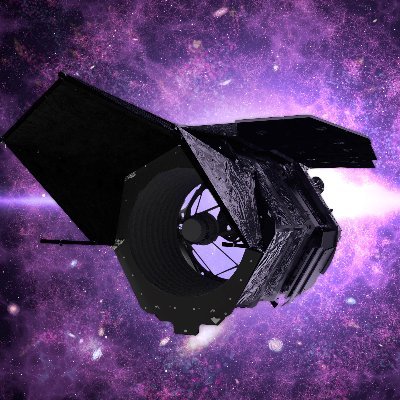
The Nancy Grace Roman Space Telescope has been named one of TIME's Best Inventions of 2026.
Roman continues its journey in space to its final orbit, completing critical milestones along the way. We expect first images by early 2027.
go.nasa.gov/4yQuwkb
Over 600 autonomous rocket landings so far
Most people don’t realize how insanely autonomous Falcon 9 already is
Once Falcon 9 lifts off, almost the entire mission is executed by the rocket itself
And the crazy part is
This autonomy does not depend on generative AI
It comes from brutally refined flight software, physics, sensors, control theory and advanced optimization.....improved across hundreds of missions
Falcon 9 autonomously handles:
→ Liftoff and ascent through closed-loop guidance
→ Stage separation at precisely calculated conditions
→ Engine ignition and shutdown sequences
→ Orbital insertion and payload deployment
→ Booster boostback, entry and landing burns
→ Real-time guidance corrections during descent
→ Landing on a floating droneship hundreds of kilometers offshore
→ Autonomous flight termination if mission safety rules are violated
A 70-meter orbital rocket launches itself, separates itself, puts a payload into orbit.....then the first stage falls back through the atmosphere and lands itself on a floating platform hundreds of kilometers offshore
Physics, software, and hardware engineered to absurd precision
Falcon 9 is one of the greatest autonomous machines humanity has ever built
And SpaceX made it look routine
Ashik retweeted
Another giant leap for India in Space!
Kudos to Team @isro on the successful launch of GSLV-F17/EOS-05.
EOS-05 is a state-of-the-art Earth Observation satellite and India’s first imaging satellite from Geosynchronous Orbit, enabling advanced imaging across visible, infrared, multi-spectral and hyperspectral bands.
With the visionary leadership of PM Shri @narendramodi Ji, India’s space capabilities continue to scale new heights, strengthening our position as a global space power.
Ashik retweeted
Congratulations to #ISRO on yet another remarkable achievement.
The #IndianAirForce congratulates the entire team of Indian Space Research Organisation (ISRO) on the successful completion of the GSLV-F17 mission, placing EOS-05 into its intended orbit.
#ISRO #GSLVF17 #EOS05 #SpaceIndia #NewIndia
@DefenceMinIndia
@SpokespersonMoD
@HQ_IDS_India
@adgpi
@indiannavy
@CareerinIAF
@air_veterans
@isro
Ashik retweeted
Mercury Transfer Module separation confirmed! 📡 ✅
After nearly eight years in space and billions of kilometres travelled, #BepiColombo's Mercury Transfer Module has successfully separated.
Signal acquired via our Cebreros deep-space antenna confirms the spacecraft is healthy and operating as expected.
The MPO and Mio spacecrafts are now on their way to Mercury orbit insertion on 21 November.
Farewell, MTM. Mercury awaits. ☀️🛰️
The Curiosity rover has now been exploring the surface of Mars for more than 5000 Martian days! Each day on Mars, or "sol," is about 24.6 hours long.
How did Curiosity and its team mark the occasion? By working, of course. 1/2
Ashik retweeted
The boosters for the Artemis III mission are getting stacked!
Technicians are stacking the twin solid rocket boosters for the Space Launch System rocket at @NASAKennedy. The boosters will provide more than 75% of the rocket’s total thrust at launch — scheduled for 2027.

ALT A portion of one of the twin solid rocket boosters for the Artemis III Space Launch System rocket can be seen inside of the Vehicle Assembly Building (VAB) at NASA’s Kennedy Space Center in Florida on Sept. 1, 2026. The perspective of the image is looking up from near the base of the booster. The booster is white, tube-shaped, and has black block-shaped markings near the base. The booster extends upward through several platforms of the VAB. Credit: NASA/Cory S Huston
GSLV-F17 carrying EOS-05 was moved from the Vehicle Assembly Building (VAB) to the Umbilical Tower (UT) on 28th August 2026 at Satish Dhawan Space Centre, SHAR, Sriharikota, as preparations continue for the scheduled launch on:
🗓️ 04 Sept 2026 | ⏰ 02:55 AM IST
Livestreaming starting from 02:25 AM IST onwards: youtube.com/live/Q9OdYc3KpEw
For more information: isro.gov.in/Mission_GSLVF17.…
#GSLVF17 #EOS05 #ISRO
Watch Falcon Heavy launch @NASA’s Nancy Grace Roman Space Telescope xitter.cf/i/broadcasts/1jxXgBanv…