

Matthew Johnson - National President of the Australian Special Education Principals' Association
Joined April 2019
- Tweets539
- Following359
- Followers432
- Likes536







The Silent Cost cannot end with a research report.
The findings of The Silent Cost brought attention to something many specialist education leaders have experienced for years - The emotional and psychological demands of leading schools that support students with complex needs.
The research helped make these challenges visible. Now comes the important part: what we do about them.
The Australian Special Education Principals Association is continuing to work towards practical resources and stronger support structures for leaders, with a focus on secondary trauma, professional supervision, peer support and the emotional load that often goes unrecognised. Principal wellbeing cannot simply come down to being more resilient, managing stress better or finding another way to cope.
We need systems that recognise the realities of school leadership and provide the support our leaders deserve.
This is about moving from understanding the problem to doing something meaningful about it...and that work continues!

Every graduate teacher will teach diverse learners.
Preparing teachers to teach students with disability cannot be an optional extra, nor should it depend on whether a pre-service teacher happens to complete a placement in a specialist setting.
The Australian Special Education Principals Association continues to advocate for stronger disability content within initial teacher education, alongside greater opportunities for pre-service teachers to learn from and experience specialist education settings.
Because preparation matters. Understanding adjustments matters. Communication matters. Behaviour support matters. Knowing how to work alongside families and other professionals matters.
And importantly, specialist expertise has something to offer the entire teaching profession.
When teachers enter the profession with greater knowledge, practical experience and confidence in supporting students with disability, we strengthen practice across both specialist and mainstream settings. Every teacher deserves to begin their career better prepared. And every student deserves a teacher prepared to teach them.

Taking Australia’s special education voice to the global conversation.
The Australian Special Education Principals Association President Matthew Johnson joined fellow members of the ICP Executive on stage at the ICP World Convention 2026 in Auckland for an important international conversation about what meaningful inclusion actually looks like in practice.
Matt brought a perspective that sits at the heart of ASEPA’s advocacy:
“Inclusion isn’t a place. It’s meeting a student’s needs where they are.”
The panel explored some of the difficult questions school leaders around the world are grappling with:
- How do we begin with the individual needs of each child?
- How do we ensure inclusion is backed by genuine specialist expertise?
- Are teachers sufficiently equipped and supported to respond to increasingly diverse needs?
- What happens when policy and the needs of the child do not neatly align?
Matt’s contribution reinforced an important principle: Inclusion cannot simply be about where a student is educated. It must also be about the quality, safety, expertise, adjustments and support surrounding that student.
Perhaps the simplest idea from the conversation was also one of the most powerful: One size fits one.
We’re proud to see Matt representing Australian special education leadership internationally, sharing the experiences of our schools while also bringing global perspectives back into the conversations we are having here at home.


The Australian Special Education Principals Association education leadership on the global stage.
It is wonderful to have our own Matthew Johnson, ASEPA President & CEO, in Tāmaki Makaurau, Auckland for the ICP World Convention 2026, connecting with school leaders from across the globe.
Matt serves as a General Representative on the Executive of the International Confederation of Principals (ICP), giving ASEPA an important connection into the world’s only global network of national school leader associations.
With school leaders gathering from across countries, cultures and education systems, events like this provide an invaluable opportunity to share perspectives, build relationships and ensure the experiences of Australian special education leaders are part of the global conversation.
Different contexts. Shared challenges. A global community of school leaders.

As Australia's Teacher Standards are reviewed, ASEPA is working to ensure disability and complex learning needs remain clearly visible in the national conversation.
Today's teachers need the capability to understand and respond to diverse learners.
That includes knowledge and practice around adjustments, communication, regulation, behaviour support and meaningful partnership with families.
These are not peripheral capabilities. They are increasingly part of the everyday work of teaching.
ASEPA will continue advocating for Teacher Standards that reflect the complexity and diversity of contemporary Australian classrooms.


A lack of services must never be mistaken for a lack of student need.
For rural and remote schools, access to specialist services, allied health professionals and appropriately skilled workforces can look very different from metropolitan Australia - Those realities matter.
ASEPA is advocating for NCCD processes and funding decisions that recognise the workforce and service challenges facing rural and remote communities.
Geography should not determine whether a student's needs are recognised or appropriately supported.
A genuinely equitable education system must understand context and respond accordingly.


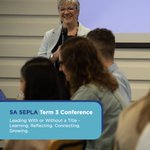
Great to see our SA SEPLA colleagues bringing specialist education leaders together to learn, reflect and grow.
Their Term 3 Conference explored practical strategies for navigating conflict, strengthening communication and leading effectively through challenge.
Another great example of our ASEPA member associations strengthening leadership across Australia.


The NCCD should ultimately help Australia better understand and respond to the needs of students with disability.
The Australian Special Education Principals Association is contributing to national work to strengthen the NCCD, bringing the experience of specialist education leaders into the conversation.
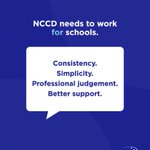
Our message is clear: Improve consistency, reduce unnecessary duplication, respect professional judgement and ensure the information collected contributes to better support for students.
Data collection should have a purpose.
When schools invest significant professional time in identifying adjustments and understanding student need, that work should contribute to better decision-making and stronger outcomes.

ASEPA continues to advocate for clearer, nationally consistent Disability Standards for Education that work in the reality of Australian schools.
Strong standards matter. But genuine inclusion also requires practical guidance, appropriate resourcing and clarity about the responsibilities shared between schools and education systems.
School leaders and educators need to understand not only what is expected, but to have the capability, resources and system support required to deliver it.
For ASEPA, the measure of effective policy is ultimately what changes for students.

Meet one of our member associations.
Today we're celebrating PASS (Principals' Association of Specialist Schools) in Victoria.
For more than 30 years, PASS has been supporting specialist school leaders through advocacy, collaboration, professional learning and leadership development.
With more than 200 members across Victorian specialist schools, PASS continues to play an important role in strengthening leadership and improving outcomes for students with disability.
Together, we're building stronger leadership across Australia.


One of ASEPA's key strategic goals has been strengthening the national leadership voice of specialist education.
Through engagement with government agencies, professional bodies and educational stakeholders, we have worked to ensure that the perspectives of special education leaders contribute to national discussions and decision-making.
Strong advocacy begins with strong representation.

Turning experience into influence.
ASEPA President Matt Johnson was proud to join education leaders at #QASELCon26, sharing how the experiences of school leaders are helping shape national conversations.
Over the past year, ASEPA has strengthened its role as Australia's national voice for special and inclusive education, transforming the lived experience of principals into research, policy influence, parliamentary engagement and practical action.
This includes national advocacy around quality, safety, equity and parental choice, advancing teacher capability and principal wellbeing, and ensuring the findings of The Silent Cost Report continue to highlight the challenges facing specialist education leaders.
Our next step is clear: turning national influence into practical resources that make a visible difference in every member's school.
Thank you to QASEL for another outstanding conference.


Three simple words have helped guide ASEPA's work over the life of our Strategic Plan.
Being connected strengthens collaboration.
Being united strengthens our voice.
Being visible ensures that the needs of students with disabilities and complex learning needs remain part of national conversations.
Together, these principles continue to shape the future of specialist education leadership across Australia.

Meet the Speakers | SEPLA-CON 2026
Some conversations stay with you long after the conference ends.
At SEPLA-CON 2026, award-winning journalist Leigh Sales will be joined by three remarkable young people from ABC's acclaimed series The Assembly for what promises to be one of the conference's most powerful keynote conversations.
Through The Assembly, autistic young adults developed journalism and interviewing skills before conducting thoughtful conversations with some of Australia's best-known public figures. Their honesty, curiosity and unique perspectives challenged assumptions and inspired audiences across the country.
At SEPLA-CON, delegates will hear directly from these young people as they reflect on their experiences, their aspirations, and what it means to be genuinely understood, supported and included.
This is more than a keynote. It is an opportunity to listen, learn and see inclusion through a different lens.

A strong national voice does not happen by accident.
Throughout the 2024-2026 Strategic Plan, ASEPA has remained committed to representing the interests of students, educators and leaders in specialist education across Australia.
As we reflect on the past three years, we recognise the importance of speaking with clarity, unity and purpose on behalf of our profession.
The need for informed advocacy, collaboration and leadership remains as important as ever.

As ASEPA approaches the conclusion of its 2024-2026 Strategic Plan, we are reflecting on the priorities that have guided our work and shaped our advocacy.
Over the past three years, the plan has provided a clear framework for strengthening leadership, supporting wellbeing, advancing advocacy, and building stronger national connections.
While much has changed across the education landscape, the need for a united voice for special education leaders remains as important as ever.

Strong reform must be matched by strong support for schools.
ASEPA supports WAESPAA’s advocacy through its recent position brief on the Thriving Kids Initiative, highlighting the importance of sustainable implementation, clear system responsibilities, specialist support and coordinated services for schools and families.
Special education leaders across Australia continue to advocate for practical, evidence-informed reform that supports both students and school communities.


At the latest ASEPA National Council meeting, leaders from across Australia discussed principal wellbeing, workforce shortages, disability reform, NDIS changes and the growing complexity facing schools.
ASEPA continues to advocate strongly for leaders, students and families across the sector.

Members of WAESPAA Leadership and Advocacy recently met with WA Minister for Education, Sabine Winton MLA, to discuss the landscape of specialised education in WA.
Important conversations supporting advocacy, leadership and student outcomes.


