

APS Support UK is dedicated to raising awareness of antiphospholipid syndrome (APS), supporting anyone affected by the condition and furthering research.
Basingstoke, England
Joined February 2012
- Tweets5.9K
- Following959
- Followers2.4K
- Likes3.8K

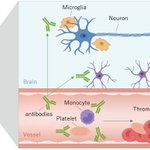






Meta-analysis (52 studies): aPL positivity in 19.1% of ischaemic stroke patients; higher odds of first stroke (OR 2.93), but no significant association with recurrence (OR 1.20). Single aPL positivity ≠ #APS diagnosis. ahajournals.org/doi/10.1161/…

New review by Maria Laura Bertolaccini & Giovanni Sanna: aPS/PT antibodies may add diagnostic and prognostic value in #APS, with associations with thrombosis, obstetric morbidity, LA positivity and #seronegativeAPS : pubmed.ncbi.nlm.nih.gov/4275…

APS Support UK retweeted

Acquired activated protein C resistance (APCr) and anti-protein C antibodies (anti-PC) antibodies are common in #antiphospholipid antibodies (aPL)-positive individuals, especially those with thrombotic antiphospholipid syndrome (APS), as demonstrated by a recent APS ACTION Registry study
𝗦𝘁𝘂𝗱𝘆 𝗣𝗼𝗽𝘂𝗹𝗮𝘁𝗶𝗼𝗻
◦ 370 aPL-positive patients, categorized as: aPL-only (n=77), pregnancy morbidity (PM, n=43), venous #thromboembolism (VTE, n=132), arterial #thrombosis (AT, n=87), or combined VTE+AT (n=31), and 51 healthy controls.
◦ Prospective follow-up available for 283 patients (median 8.3 years).
𝗠𝗮𝗶𝗻 𝗥𝗲𝘀𝘂𝗹𝘁𝘀
◦ APCr markedly higher in all aPL-positive patient subgroups compared to healthy controls (p < 0.001). Greatest APCr observed in patients with VTE + AT and in triple aPL-positive patients.
◦ Anti-PC antibodies were resent in 42% of patients overall. High-avidity anti-PC significantly more prevalent in the VTE+AT group (79%) compared to aPL-only patients (38%, p < 0.05).
→ Strong association between APCr and high-avidity anti-PC.
◦ New thrombosis occurred in 25/283 (8.8%) patients during follow-up.
→ No significant association between APCr or anti-PC and new thrombotic events overall (p > 0.60).
◦ In the non-anticoagulated subgroup, patients with APCr showed a higher rate of thrombotic events (HR 4.5, 95% CI 0.8–25.9, p=0.14), but this did not reach statistical significance.
In this study APCr was highly prevalent across aPL-positive patients and is strongly linked to high-avidity anti-PC antibodies. However, no clear overall association with future thrombosis was found, likely due to confounding by widespread anticoagulation at baseline and relatively few events.
*Tohidi-Esfahani I, Venturelli V, Tektonidou M, et al. Prevalence and prognostic value of activated protein C resistance and anti-protein C antibodies in patients with antiphospholipid antibodies: an APS ACTION Registry study. Rheumatology (Oxford). Published online June 13, 2026.
🔗doi.org/10.1093/rheumatology…

Case series: 7 adults (67–90) with #IschaemicStroke and aPL positivity. Authors support targeted #APS testing in cryptogenic/recurrent/multifocal stroke, with persistent high-specificity confirmation before attribution; not routine screening: cureus.com/articles/532462-a…

Systematic review of adrenal involvement in #APS/SLE-spectrum disease: 143 cases in the main analysis; 86.3% bilateral, 66.9% haemorrhage-dominant, and #AdrenalInsufficiency was the first manifestation in 73.6%: pmc.ncbi.nlm.nih.gov/article…

APS Support UK retweeted

I'm glad to hear the LA County Board of Supervisors is supporting our bipartisan resolution to expand prenatal screening for antiphospholipid syndrome (APS) by declaring November 24th APS Awareness Day.
I'm proud to have partnered with @RepKatCammack on this bipartisan effort—it’s a matter of basic human decency and a call for smarter, more compassionate healthcare policy.
Let’s get this passed nationwide!
mynewsla.com/hollywood/2026/…

APS Support UK retweeted

New evidance – Antiphospholipid Antibodies and Ischemic Stroke - @HeghinKhach2025
hemostasistoday.com/science/…
#HemostasisToday

Dutch cohort: among 140 CTEPH/CTEPD patients with aPL results, 9 (6%) met #APS criteria; 67% had recurrent VTE and 44% were triple-positive. Consistent with guideline-recommended APS screening in CTEPH; numbers were small: pubmed.ncbi.nlm.nih.gov/4271… #thrombosis


Neonatal APS-associated #thrombosis is exceptionally rare. Reported cases are mainly arterial, particularly neonatal arterial ischaemic stroke. Diagnosis remains challenging, with no validated neonatal-specific criteria. pubmed.ncbi.nlm.nih.gov/4273… #AntiphospholipidSyndrome #APS
APS Support UK retweeted
Antiphospholipid Syndrome After Unprovoked VTE - Christina (Tina) P.
hemostasistoday.com/voices/c…
#HemostasisToday

APS Support UK retweeted
Covering Associations of Antiphospholipid Antibodies with Stroke - Mary Cushman (@MaryCushmanMD)
hemostasistoday.com/science/…
#HemostasisToday

#APS registry data matter. A Colombian registry-based cohort of 355 adults with thrombotic APS found recurrence risk was highest in the first 2 years; estimated recurrence was 31% at 5 years and 42% at 10. More registry data are vital: pubmed.ncbi.nlm.nih.gov/4270… #PatientRegistry
JTH pre-proof: targeted LC-MS of 159 proteins found 6 with consistent differences in APS across 2 cohorts; 4 remained significant after multiple-testing correction. Findings may point to low-grade inflammation and renal involvement: pubmed.ncbi.nlm.nih.gov/4267… #APS
Cryptogenic stroke/TIA + persistent aPL: recurrent #IschaemicStroke incidence 0.045/person-year with weak vs 0.169 with strong positivity (HR 3.93; p=.03). Retrospective singlecentre study; larger prospective studies needed: pubmed.ncbi.nlm.nih.gov/4266… #AntiphospholipidSyndrome
Multicentre retrospective study of 897 patients with unprovoked VTE: APS was diagnosed in 11.7%. Universal aPL testing identified more #APS than selective testing. Clinical features alone poorly predicted APS. Prospective studies are needed: jthjournal.org/article/S1538…

Meta-analysis of 24 studies evaluating the 2023 @ACRheum/@eular_org APS criteria: pooled sensitivity 74%, specificity 99%. Sensitivity was lower in obstetric APS vs thrombotic #APS, reinforcing their role as classification, not diagnostic, criteria: pubmed.ncbi.nlm.nih.gov/4261…
#APS research combines bulk & single-cell transcriptomics, CMap screening and molecular docking. Type I interferon signalling and myeloid-like B-cell reprogramming emerged as candidate therapeutic axes. Hypothesis-generating; clinical validation needed: pubmed.ncbi.nlm.nih.gov/4264…
This case report describes 4 coexisting #AutoimmuneDiseases in one patient. Although the case does not involve #AntiphospholipidSyndrome, some people with #APS also have other autoimmune conditions, particularly #lupus: cutt.ly/UygqQmwN

New research highlights lengthy waits for #autoimmune and rheumatological diagnoses in Wales, with the Welsh sample reporting an average wait of around 11 years.
pembrokeshire-herald.com/136… #NHSWales
