
French scientist living in Australia doing #stats on marine and terrestrial species to understand the links between #evolution and #cancer. Part of @CANECEV.
Geelong
Joined August 2014
- Tweets2.2K
- Following420
- Followers349
- Likes3.3K




Pinned Tweet
New study in @royalsociety investigating how a short term sublethal exposure to a cancer risk factor affects the behaviour of a freshwater planaria and how it recovers from the damages over time.
Link to the paper:
royalsocietypublishing.org/d…
I was recently interviewed by VINNews alongside other scientists about the newly discovered transmissible cancer in fish, discussing the possibility that many more transmissible cancers are still out there waiting to be found.

Tested AMADEUS developed by @jpmyrmecol by simply throwing some of my planaria in a plate and recording a video, and it seems to work pretty nicely. The only thing I had to change in the workflow was the threshold for segmentation, everything else it did itself.
Something I often wonder about is how big American companies try to build artificial general intelligence, as clever as a human, maybe even moving toward consciousness, and yet all that is promised to that IA is immediate enslavement. Surely it would understand it is enslaved.
Antoine Dujon retweeted

"Je ne suis pas antisémite - d'ailleurs toute cette affaire est un complot ourdi par des gens assez puissants qui tirent les ficelles en sous-main"

Push any STEM concept and it collides with philosophy because concepts are imperfect. Speciation criteria, for example: some cancer cells could qualify as new species, yet that clashes with conservation philosophies that value species. Resolving this needs high‑level philosophy.

New paper on therapies that destabilise the group phenotypic composition of tumors. Group phenotypic composition describes how the mix of traits among tumor cells shapes their collective behavior and the success of both individual cells and the group.
nature.com/articles/s41698-0…

Animal starting to poop, and the effect of that poop on ecosystems contributed to the Cambrian radiation and species diversification! Poop fueled biodiversity!
doi.org/10.1016/j.tree.2026.…
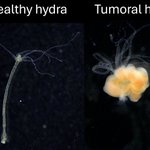
A reproduction–cancer trade-off has long been hypothesised in animals: greater reproductive effort may increase tumor risk. In our new paper, we find evidence for this trade-off in the cnidarian Hydra oligactis. @RSocPublishing
doi.org/10.1098/rspb.2026.11…

Antoine Dujon retweeted

Researchers have discovered a contagious cancer in catfish – just the fourth example of tumour cells that spread naturally from one animal to another
go.nature.com/4bXLV0K

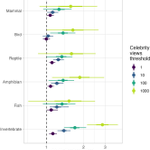
Do popular species really have more cancer, or are we simply better at finding it?
Our new study shows cancer prevalence in captive animals is strongly linked to species popularity, highlighting major sampling bias risk in comparative oncology datasets.
doi.org/10.1098/rspb.2026.05…

Don't really have the choice those days. If you want to show your paper is genuine you need at the very minimum to share the raw data and all the code used to generate the analyses. But soon this won't be enough... and I am not too sure how to demonstrate the work is genuine.


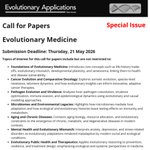
🚨 📰 Evolutionary Applications is launching a special issue on the theme of Evolutionary Medicine for which I am honoured to be an editor. 📰🚨 LINK BELOW 👇 👇👇

New IScience paper (link to the article bellow):
Invasive species that are really good with dealing with DNA damages and repairing them are a problem for our ecosystems and we tested this using freshwater planaria. (1/4)
We investigated the impact of sublethal DNA damage on the ability of an invasive planaria species, very common in Australian urban ponds, to consume a native Australian species. (3/4)